
What Is Laser Therapy After Hair Transplant?
Laser therapy after hair transplant is a non-invasive light treatment that supports scalp healing and hair follicle activity during the recovery period.
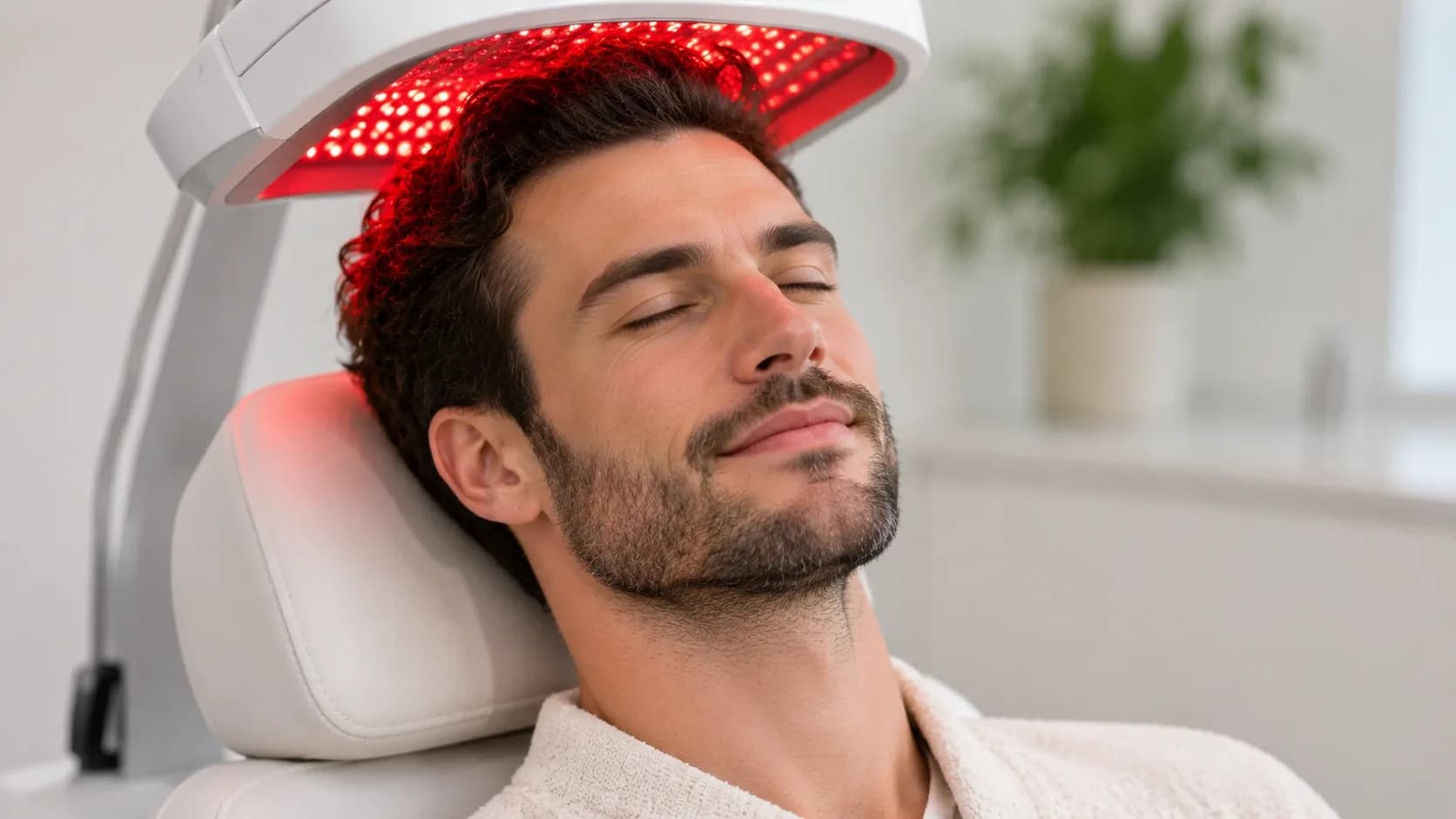
Laser therapy after hair transplant is a non-invasive light treatment that supports scalp healing and hair follicle activity during the recovery period. Doctors call it low-level laser therapy (LLLT), red light therapy, or photobiomodulation.
LLLT uses specific wavelengths of visible red or near-infrared light, usually between 630 and 680 nanometers, to stimulate cellular processes in the skin. The treatment delivers low-intensity light without heat, cuts, or needles. Patients apply it at home with wearable devices or receive it in clinical settings under specialist supervision.
Post-transplant laser therapy differs from laser treatment used alone for androgenetic alopecia. Standalone laser therapy targets existing follicles that miniaturize over time. Post-transplant laser therapy serves two goals at once: it supports the surgical healing of the recipient area and the donor area, and it creates conditions that may help both transplanted and native follicles function well. This dual role makes timing, device choice, and medical supervision essential parts of the protocol.
Understanding what the treatment is also requires understanding what it is not. Laser therapy does not replace surgery, and it does not create new follicles. It acts on the biology of cells that already exist. The next section explains that biology.
How Does Laser Therapy Work After Hair Transplant Surgery?
Laser therapy works through photobiomodulation, a process in which cells absorb red and near-infrared light and convert it into usable cellular energy. This energy supports tissue repair and follicular function during recovery.
The central mechanism starts inside the mitochondria, the structures that produce energy in every cell. Research shows that a mitochondrial enzyme called cytochrome c oxidase absorbs light in the red and near-infrared spectrum. This absorption increases the production of adenosine triphosphate, or ATP, the molecule that powers cellular work (Karu 1999). Cells with more available ATP can carry out repair processes faster and more completely.
A second proposed pathway involves microcirculation. Light exposure may stimulate the release of nitric oxide, a molecule that relaxes blood vessel walls. Relaxed vessels allow more blood to reach the scalp tissues. Better blood flow delivers more oxygen and nutrients to healing skin and to hair follicles that anchor in that skin (Avci et al. 2013).
These mechanisms explain why researchers study LLLT for wound healing and hair growth. However, laboratory findings do not guarantee clinical outcomes for every patient. Biological plausibility and proven patient benefit are different standards. Readers should keep this distinction in mind as the article moves from mechanism to practical benefits.
What Are the Benefits of Laser Therapy After Hair Transplant?
The main reported benefits include support for postoperative healing, reduced inflammation, stimulation of follicular activity, improved hair quality, and compatibility with other hair restoration treatments.
The first benefit concerns tissue recovery. Follicular unit extraction and implantation create thousands of small wounds in the donor and recipient areas. Photobiomodulation has documented effects on wound healing in dermatology, including faster re-epithelialization and organized collagen formation (Avci et al. 2013). Surgeons apply this knowledge when they consider light therapy as part of postoperative care.
The second benefit concerns inflammation. Redness, swelling, and scalp irritation often follow transplantation. Studies show that photobiomodulation can reduce pro-inflammatory signaling molecules while preserving the normal healing response (Hamblin 2017). A calmer scalp gives follicles a more stable environment.
The third and fourth benefits relate directly to hair. Randomized controlled trials in androgenetic alopecia show that regular LLLT use increases hair counts and hair shaft thickness compared with sham devices (Jimenez et al. 2014; Lanzafame et al. 2013). These results come from non-surgical patients, yet they demonstrate that light stimulation can improve hair quality in functioning follicles.
The fifth benefit is practical. LLLT fits into broader postoperative programmes alongside medications and injectable treatments because it is non-invasive and painless. This compatibility leads directly to the most common patient question: when should treatment begin?
When Can You Start Laser Therapy After a Hair Transplant?
Most specialists allow laser therapy after the first one to two weeks, once the recipient and donor areas have closed and grafts have anchored. Your surgeon must approve the exact starting date.
Timing matters because transplanted grafts remain fragile during the first days after surgery. The follicles sit in shallow channels and connect to the local blood supply gradually. Any device that presses, rubs, or heats the scalp can disturb this process. Early postoperative care therefore focuses on gentle washing, protection, and medication. Laser treatment belongs to the next phase, the stimulation phase.
Several factors influence the approved start date. The surgical technique plays a role: FUE and FUT create different wound patterns. Individual healing rates vary with age, health status, and smoking. Device type also matters, because contact-free helmets pose less mechanical risk than combs that touch the scalp.
The surgeon's approval protects the outcome. A specialist examines the scalp, confirms that crusts have resolved and skin has closed, and then sets the schedule. This medical checkpoint also protects the next variable that patients ask about most: graft survival.
Can Laser Therapy Improve Hair Graft Survival After Transplantation?
No clinical trial has proven that laser therapy increases graft survival rates. Improved scalp conditions may support transplanted follicles in theory, but surgical technique and postoperative care remain the decisive factors.
Graft survival and follicle stimulation are separate concepts. Graft survival describes the percentage of transplanted follicles that take root and produce hair permanently. Follicle stimulation describes the activity level of follicles that already survive. A treatment can plausibly influence the second without proven effects on the first.
The theoretical case for LLLT rests on blood supply. Transplanted follicles depend on rapid revascularization in the recipient area. Because photobiomodulation may improve microcirculation, researchers hypothesize that it could create more favorable conditions for anchoring grafts (de Freitas and Hamblin 2016). To date, this hypothesis lacks direct confirmation in controlled post-transplant trials.
What science does confirm is the importance of fundamentals. Correct graft handling, minimal time outside the body, precise implantation angles, and disciplined aftercare determine survival. Patients should view laser therapy as a possible addition to these fundamentals, not a substitute for them. The same evidence standard applies to the next concern, shock loss.
Does Laser Therapy Help Prevent Shock Loss After Hair Transplant?
Laser therapy may reduce the intensity of postoperative shedding in some patients, but current evidence does not show that it prevents shock loss completely. Most shedding is a temporary part of the hair growth cycle.
Shock loss describes the temporary shedding of hair after transplantation. It appears in two forms. Transplanted hairs often shed their shafts within the first month while the follicles enter a resting phase. Native hairs around the recipient area can also shed because surgery stresses nearby follicles. The second form worries patients more, because it involves hair they did not plan to lose.
The biological rationale for LLLT here connects to the anagen phase, the active growth stage of the hair cycle. Light stimulation may help follicles return to anagen sooner and resist premature entry into the resting phase (Chung et al. 2012). Some clinicians report lighter shedding in patients who follow laser protocols, but controlled studies on shock loss specifically remain scarce.
Patients should expect the normal cycle regardless of treatment. Transplanted follicles typically shed, rest, and regrow over three to six months. Laser therapy may support this timeline, yet it cannot cancel it. Choosing the right device shapes how well any protocol works, which is the subject of the next section.
What Types of Laser Devices Are Used After Hair Transplant?
Patients use four main device categories after hair transplant: low-level laser therapy units in general, laser caps and helmets, laser combs, and professional clinical devices. They differ in coverage, convenience, and supervision.
Laser caps and helmets cover the entire scalp at once. The patient wears the device for a set period, usually between six and thirty minutes per session. Hands-free design improves consistency, which matters because results depend on regular use.
Laser combs deliver light through spaced teeth that part the hair during application. The user moves the comb slowly across the scalp. This design reaches specific zones well but demands more time and discipline, and it touches the scalp, which requires extra caution in the early healing period.
Clinical laser devices operate under specialist supervision in medical settings. Professional units offer controlled energy delivery and documented session parameters. They suit patients who want monitored treatment or who respond poorly to home routines.
Device quality matters more than device category. Wavelength should fall within the studied red light range. Energy delivery must reach follicular depth without heat. Coverage should match the treated zones. Cleared or certified devices from traceable manufacturers give patients a safer baseline than unverified products (Anders, Lanzafame, and Arany 2015).
Device type | Coverage | Scalp contact | Supervision | Typical session |
Laser cap or helmet | Full scalp | None | Home use | 6 to 30 minutes |
Laser comb | Targeted zones | Direct | Home use | 8 to 15 minutes |
Clinical device | Adjustable | None | Specialist | 20 to 30 minutes |
The device determines the session structure, which raises the next practical question about total session counts.
How Many Laser Therapy Sessions Are Needed After Hair Transplant?
Most protocols recommend three to four sessions per week during the first months, followed by maintenance sessions at lower frequency. No universal session number suits every patient.
Treatment frequency depends on the device and the protocol the specialist sets. Clinical trials in pattern hair loss typically used schedules of three sessions per week over sixteen to twenty-six weeks before measuring results (Jimenez et al. 2014). Post-transplant protocols often follow a similar rhythm once the surgeon approves treatment.
The initial phase and the maintenance phase serve different purposes. The initial phase supports healing and stimulates follicles during the critical regrowth window. The maintenance phase protects gains and supports native hair over the long term. Stopping treatment after the first visible results often leads to gradual loss of benefit, because the underlying process of androgenetic alopecia continues.
Consistency outweighs intensity. Light therapy follows a dose-response curve in which too little light produces no effect and excessive exposure adds nothing. Regular, moderate sessions outperform sporadic, aggressive ones (Chung et al. 2012). Specialists assess progress at follow-up visits and adjust the schedule based on density measurements and photographic comparison. Session discipline also shapes the safety profile discussed next.
Is Laser Therapy Safe After Hair Transplant Surgery?
Low-level laser therapy is non-invasive and shows a strong safety record in clinical studies. Reported side effects are mild and temporary, but medical approval remains mandatory after surgery.
LLLT does not cut, burn, or puncture the skin. The light intensity stays far below the threshold that damages tissue. Controlled trials report side effect rates similar to sham devices, with occasional complaints of scalp itching, mild redness, or temporary discomfort (Jimenez et al. 2014).
Certain patients need extra caution. People who take photosensitising medications, such as some antibiotics, retinoids, or anti-inflammatory drugs, may react more strongly to light exposure. Patients with active scalp infections or unhealed wounds should delay treatment. Anyone with a history of light sensitivity should disclose it during the consultation.
The main safety rule after transplantation is mechanical rather than optical. Devices must not disturb the healing recipient and donor areas. This is why the surgeon controls the start date and why contact-based devices demand more care than helmets. Safety also extends to treatment combinations, and the most common comparison patients request involves PRP.
How Does Laser Therapy Compare With PRP After Hair Transplant?
Laser therapy stimulates cells with light from outside the body, while PRP therapy delivers concentrated growth factors through injections. Both support postoperative recovery through different mechanisms, and specialists often combine them.
PRP, or platelet-rich plasma, comes from the patient's own blood. A laboratory centrifuges the sample, concentrates the platelets, and injects the plasma into the scalp. Platelets release growth factors that signal tissue repair directly. LLLT instead triggers the cell's own energy machinery through light absorption (de Freitas and Hamblin 2016).
The two treatments differ in experience and logistics. PRP requires clinic visits, blood draws, and injections that some patients find uncomfortable. LLLT requires no needles and works at home, but it demands more frequent sessions. Cost structures also differ: PRP charges per session, while a laser device is a one-time purchase with unlimited use.
Criterion | Laser therapy (LLLT) | PRP therapy |
Mechanism | Light absorption boosts ATP production | Growth factors signal repair |
Invasiveness | Non-invasive | Injectable |
Session frequency | Several times per week | Every 4 to 6 weeks |
Location | Home or clinic | Clinic only |
Discomfort | None | Injection-related |
Because the mechanisms do not overlap, specialists may recommend both. Combination protocols use PRP for periodic biological signaling and LLLT for continuous stimulation between sessions. The same complementary logic applies to medications, especially minoxidil.
Can Laser Therapy Be Combined With Minoxidil After Hair Transplant?
Yes, specialists frequently combine laser therapy with minoxidil after the scalp heals, because the two treatments support hair growth through different mechanisms. The combination requires individual medical assessment.
Minoxidil works as a vasodilator and potassium channel opener. It widens blood vessels around follicles and prolongs the anagen phase of the hair cycle. LLLT works downstream at the cellular energy level. One treatment improves the supply side; the other improves the cellular response. This division of labor explains why combination protocols appear often in clinical practice.
The combination benefits native, non-transplanted hair most clearly. Transplanted grafts resist the hormones that drive androgenetic alopecia, but the surrounding native follicles do not. Protecting those follicles preserves the density that frames the transplant result.
Timing follows the same rule as laser therapy alone. The surgeon approves the restart of topical minoxidil after the recipient area heals, usually within the first few weeks. Patients apply the medication and use the laser device at separate times of day to avoid interaction between wet scalp and device hygiene. A coordinated schedule keeps every element of the plan working toward the same outcome, which patients measure over months, not days.
How Long Does It Take to See Results From Laser Therapy After Hair Transplant?
Healing benefits may appear within weeks, but visible hair improvements from laser therapy typically take three to six months. Full evaluation of the transplant result requires twelve months or more.
Patients must separate two timelines. Postoperative healing, meaning closed skin and resolved redness, completes within weeks. Visible hair growth follows the hair cycle and unfolds over months. Transplanted hairs shed in the first month, rest during months two and three, and regrow from month three or four onward.
Laser therapy does not produce immediate visible results because it acts on cellular processes that precede growth. A follicle must accumulate energy, re-enter anagen, and produce a shaft that reaches the skin surface. Clinical trials measure significant density changes only after sixteen to twenty-six weeks of consistent use (Lanzafame et al. 2013).
Individual factors shape the final timeline. Genetics set the growth rate. The severity of pre-existing hair loss determines how much native hair the treatment can support. Treatment consistency determines whether stimulation stays continuous. Specialists evaluate progress with standardized photographs and density counts rather than day-to-day mirror checks. These variables connect directly to the question of who benefits most.
Who Is a Suitable Candidate for Laser Therapy After Hair Transplant?
Good candidates include patients who want extra support during recovery, individuals with early-stage androgenetic alopecia, and patients with native hair they want to preserve. Advanced baldness without functioning follicles limits the benefit.
The strongest candidate group has functioning follicles to stimulate. Patients in early or moderate stages of hair loss retain miniaturized but living follicles that respond to light therapy. Clinical trials confirm the best responses in these stages (Leavitt et al. 2009).
A second group consists of transplant patients who want to protect their investment. The transplanted grafts will grow on their own, but the native hair around them continues to thin without intervention. Laser therapy offers a maintenance tool that fits alongside or instead of medication.
Candidacy has limits. Laser therapy cannot activate follicles that no longer exist. Smooth, long-standing bald areas lack the biological target the treatment needs. A specialist evaluation of medical history, scalp condition, medications, and expectations determines whether the treatment justifies its time and cost for each individual. These limits define what laser therapy can and cannot replace.
Can Laser Therapy Replace Medication or Hair Transplant Surgery?
No. Laser therapy is a complementary treatment. It cannot transplant new follicles, and it cannot block the hormonal process that drives pattern hair loss.
Hair transplant surgery solves a problem that no energy-based device can solve: it moves living follicles into areas that have none. Once an area loses its follicles completely, only surgery restores hair there. Laser therapy works on follicles that exist, which makes it a partner of surgery rather than an alternative.
Medications address different links in the hair loss chain. Finasteride reduces the hormone dihydrotestosterone that miniaturizes follicles. Minoxidil extends the growth phase and improves blood supply. LLLT increases cellular energy production. Each tool covers a mechanism the others do not, so treatment selection depends on the cause and severity of the individual case.
The practical conclusion is strategic. Long-term hair maintenance usually combines several tools matched to the patient's pattern of loss. Patients who understand this build realistic plans, and realistic plans depend on knowing which factors drive effectiveness.
What Factors Influence the Effectiveness of Laser Therapy After Hair Transplant?
Five factors determine effectiveness: treatment consistency, device specifications, hair loss stage, individual biological response, and the combined treatment approach.
Treatment consistency ranks first. Photobiomodulation effects fade when sessions stop, so patients who follow the schedule for months outperform patients who treat sporadically. Device specifications rank second. Wavelength, light intensity, and energy delivery must reach the follicle at a therapeutic dose, which is why certified devices outperform unverified products (Anders, Lanzafame, and Arany 2015).
Hair loss stage ranks third. Early-stage thinning responds better than advanced baldness because more living follicles remain available for stimulation. Individual biology ranks fourth. Healing speed, follicle sensitivity, and baseline circulation differ between patients and produce different results under identical protocols.
The combined approach ranks fifth. Patients who pair LLLT with medically appropriate medications or PRP address more mechanisms at once than patients who rely on a single tool. The table below summarizes how each factor shifts the outcome.
Factor | Favorable condition | Limiting condition |
Consistency | 3 to 4 sessions weekly for months | Irregular use |
Device | Certified, correct wavelength | Unverified specifications |
Hair loss stage | Early or moderate | Advanced, follicle-free |
Biology | Strong healing response | Slow or weak response |
Combination | LLLT plus medical plan | LLLT alone in aggressive loss |
With effectiveness factors clear, the final section answers the short questions patients ask most often.
Frequently Asked Questions About Laser Therapy After Hair Transplant
Does laser therapy speed up hair growth after a hair transplant?
Laser therapy may support earlier regrowth by stimulating cellular energy production, but no study proves a fixed acceleration of the growth timeline. Expect the standard three to six month regrowth window.
Can laser therapy damage newly transplanted hair grafts?
Approved low-level devices do not damage grafts when used after the surgeon clears the scalp. The risk comes from starting too early or using contact devices on unhealed skin, not from the light itself.
Does red light therapy help transplanted follicles recover?
Red light therapy is another name for LLLT, and it may create favorable conditions for recovery through improved microcirculation and ATP production (de Freitas and Hamblin 2016). Direct proof of faster graft recovery in humans remains limited.
Can I use a laser cap immediately after hair transplant surgery?
No. Most surgeons require one to two weeks of healing before any device touches or covers the scalp. Start only after your surgeon confirms that the recipient and donor areas have closed.
Does laser therapy reduce redness and swelling after transplantation?
Photobiomodulation shows anti-inflammatory effects in dermatological research (Hamblin 2017), so it may calm postoperative redness once treatment begins. Persistent or worsening swelling always requires a medical review, not more sessions.
Can laser therapy prevent shock loss completely?
No treatment prevents shock loss completely. Laser therapy may reduce its intensity and support faster regrowth, but temporary shedding remains a normal stage of the post-transplant cycle.
Is professional laser therapy better than at-home devices?
Professional treatment offers supervised dosing and documented parameters. Quality at-home devices offer frequency and convenience, which often matters more because results depend on consistency. Many patients combine both.
Do I need to continue laser therapy after my transplanted hair grows?
Continuation depends on your native hair. Transplanted grafts are permanent, but androgenetic alopecia continues to thin surrounding follicles. Maintenance sessions help protect that native hair over time.
Can laser therapy help maintain non-transplanted hair?
Yes. This is one of its strongest use cases. Trials in pattern hair loss show increased hair counts and thickness in existing follicles with regular use (Jimenez et al. 2014).
Is laser therapy necessary after a hair transplant?
No. It is optional and complementary. Successful transplants grow without it. Patients add laser therapy to support healing, protect native hair, and improve overall hair quality under medical guidance.
References
Anders, Juanita J., Raymond J. Lanzafame, and Praveen R. Arany. "Low-Level Light/Laser Therapy Versus Photobiomodulation Therapy." Photomedicine and Laser Surgery, vol. 33, no. 4, 2015, pp. 183-184.
Avci, Pinar, et al. "Low-Level Laser (Light) Therapy (LLLT) in Skin: Stimulating, Healing, Restoring." Seminars in Cutaneous Medicine and Surgery, vol. 32, no. 1, 2013, pp. 41-52.
Chung, Hoon, et al. "The Nuts and Bolts of Low-Level Laser (Light) Therapy." Annals of Biomedical Engineering, vol. 40, no. 2, 2012, pp. 516-533.
de Freitas, Lucas F., and Michael R. Hamblin. "Proposed Mechanisms of Photobiomodulation or Low-Level Light Therapy." IEEE Journal of Selected Topics in Quantum Electronics, vol. 22, no. 3, 2016, pp. 348-364.
Hamblin, Michael R. "Mechanisms and Applications of the Anti-Inflammatory Effects of Photobiomodulation." AIMS Biophysics, vol. 4, no. 3, 2017, pp. 337-361.
Jimenez, Joaquin J., et al. "Efficacy and Safety of a Low-Level Laser Device in the Treatment of Male and Female Pattern Hair Loss: A Multicenter, Randomized, Sham Device-Controlled, Double-Blind Study." American Journal of Clinical Dermatology, vol. 15, no. 2, 2014, pp. 115-127.
Karu, Tiina I. "Primary and Secondary Mechanisms of Action of Visible to Near-IR Radiation on Cells." Journal of Photochemistry and Photobiology B: Biology, vol. 49, no. 1, 1999, pp. 1-17.
Lanzafame, Raymond J., et al. "The Growth of Human Scalp Hair Mediated by Visible Red Light Laser and LED Sources in Males." Lasers in Surgery and Medicine, vol. 45, no. 8, 2013, pp. 487-495.
Leavitt, Matt, et al. "HairMax LaserComb Laser Phototherapy Device in the Treatment of Male Androgenetic Alopecia: A Randomized, Double-Blind, Sham Device-Controlled, Multicentre Trial." Clinical Drug Investigation, vol. 29, no. 5, 2009, pp. 283-292.