
How Does Low-Level Laser Therapy Work?
Low-level laser therapy applies non-thermal light energy to biological tissues to trigger photochemical reactions at the cellular level.
Low-level laser therapy uses red and near-infrared light to stimulate cellular energy production, reduce inflammation, and promote tissue repair through mitochondrial activation. This treatment goes by many names. Scientists call it photobiomodulation. Some clinicians use the term low-level light therapy. All these names describe the same process. Light enters the tissue. Cells absorb the light. Biological changes follow. Understanding this mechanism matters because it explains why LLLT helps with hair loss, wound healing, pain relief, and skin rejuvenation. The therapy works at the cellular level. It does not work by heating tissue. It works by triggering photochemical reactions. These reactions start inside the mitochondria. They spread throughout the cell. They affect surrounding tissues. Researchers have studied these effects for decades. The science continues to grow. New applications emerge every year. This article explains exactly how low-level laser therapy works. It breaks down the cellular processes. It explores the clinical evidence. It answers the most common questions.
What Is Low-Level Laser Therapy (LLLT)?
Low-level laser therapy applies non-thermal light energy to biological tissues to trigger photochemical reactions at the cellular level. This therapy differs from surgical lasers. Surgical lasers cut tissue. They burn tissue. They remove tissue. LLLT does none of these things. It stimulates tissue. It repairs tissue. It energizes cells without causing damage.
What Are the Definition and Core Principles of LLLT?
LLLT relies on three core principles. First, the light must be non-invasive. The device never breaks the skin. Second, the light must be non-thermal. The tissue does not heat up. Third, the light must use specific wavelengths. Red light and near-infrared light work best. These wavelengths range from 600 nanometers to 1100 nanometers. This range matches the absorption spectrum of cellular chromophores. Chromophores are light-absorbing molecules inside cells. When chromophores absorb light, they change shape. They release energy. They trigger downstream effects. Karu (1999) first described these primary mechanisms in detail. She showed that visible to near-infrared radiation affects cells through photochemical pathways.
Surgical lasers operate at high power. They deliver watts of energy. They ablate tissue. They coagulate blood. Low-level lasers operate at milliwatts. They deliver gentle energy. They stimulate rather than destroy. This difference defines the entire field.
Feature | Surgical Lasers | Low-Level Lasers |
Power Output | High (watts) | Low (milliwatts) |
Biological Effect | Thermal ablation | Photochemical stimulation |
Tissue Interaction | Cuts or destroys | Repairs and regenerates |
Typical Wavelength | Various | Red and near-infrared |
Recovery Time | Days to weeks | None required |
What Light Sources Do Clinicians Commonly Use in LLLT?
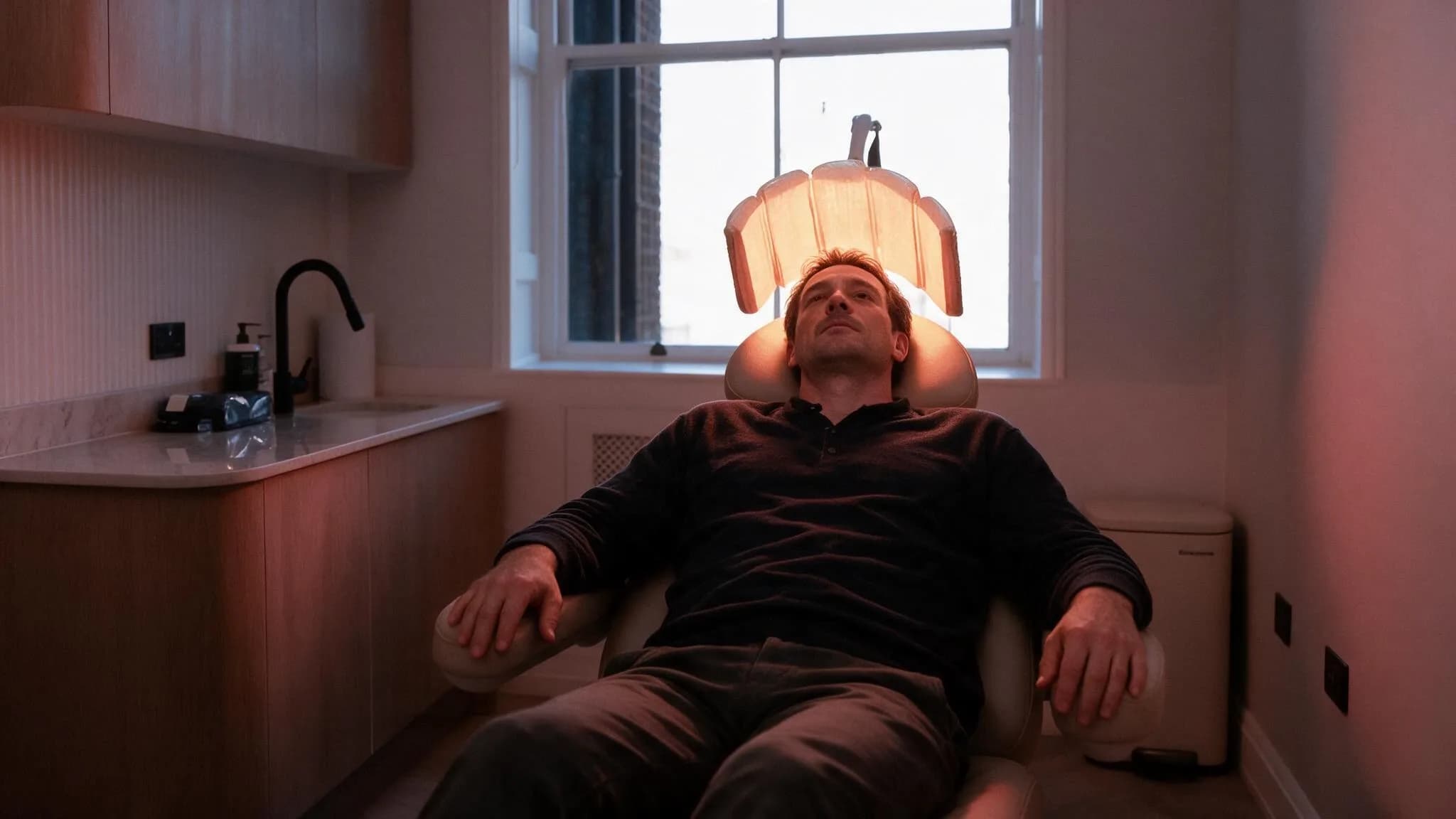
Clinicians use several light sources. Laser diodes produce coherent light. This light travels in phase. It delivers precise energy. LEDs produce non-coherent light. This light spreads more. It covers larger areas. Both sources work. Both trigger photobiomodulation. Wearable laser devices now dominate the home market. Hair growth caps contain dozens of laser diodes. Helmets cover the entire scalp. These devices deliver consistent dosing. Patients use them for 15 to 30 minutes per session. Whelan et al. (2001) pioneered LED technology for medical use at NASA. Their work proved that LEDs stimulate wound healing in space. This research opened the door to consumer devices.
What Wavelength Ranges Does LLLT Typically Use?
Red light spans 600 to 700 nanometers. This light penetrates 1 to 3 millimeters into tissue. It reaches the epidermis and superficial dermis. It works well for skin conditions and shallow wounds. Near-infrared light spans 760 to 1100 nanometers. This light penetrates 5 to 10 millimeters. It reaches deeper muscles, joints, and hair follicles. Tissue penetration depends on wavelength. It also depends on tissue type. Water absorbs some wavelengths. Melanin absorbs others. Hemoglobin affects penetration too. Clinicians select wavelengths based on the target depth.
Wavelength Range | Light Type | Penetration Depth | Best For |
600-700 nm | Red light | 1-3 mm | Skin surface, shallow wounds |
760-1100 nm | Near-infrared | 5-10 mm | Deep tissue, muscles, follicles |
What Is the Science Behind How Low-Level Laser Therapy Works?
Light energy enters the tissue. Cells absorb photons. Chromophores capture the light. Mitochondria respond. This sequence explains the entire process. Scientists call this photobiomodulation. The word means light changing biology. The changes start small. They grow large. One photon can trigger a cascade. This cascade alters cell metabolism. It alters gene expression. It alters tissue function.
How Does Light Energy Enter the Tissue?
Photons travel through the skin. They scatter. They reflect. Some absorb. The absorbed photons drive the therapy. Tissue penetration depth varies. Dark skin absorbs more light. Fair skin absorbs less. Fatty tissue transmits light well. Bone blocks light. Cellular photoacceptors capture the photons. These photoacceptors are chromophores. Cytochrome c oxidase serves as the main chromophore. It sits inside mitochondria. It absorbs red and near-infrared light. Other chromophores exist. Porphyrins absorb light. Flavins absorb light. But cytochrome c oxidase dominates the response.
Why Is Cytochrome c Oxidase the Primary Target?
Cytochrome c oxidase sits in the inner mitochondrial membrane. It plays a critical role in the electron transport chain. This chain produces ATP. ATP powers every cell. Cytochrome c oxidase accepts electrons. It passes them to oxygen. It creates water. It pumps protons. This process drives oxidative phosphorylation. Near-infrared light excites this enzyme. The enzyme absorbs photons. Its activity increases. More electrons flow. Cells consume more oxygen. Cells form more ATP. Chung et al. (2012) identified cytochrome c oxidase as the primary photoacceptor. Their review explained how photons boost mitochondrial function. Red light and near-infrared light match the absorption peaks of this enzyme. This match explains the therapeutic window.
How Does Nitric Oxide Release Activate Cells?
Nitric oxide binds to cytochrome c oxidase. This binding inhibits the enzyme. It slows respiration. It reduces ATP. Inflammation and hypoxia increase nitric oxide binding. This creates cellular stress. LLLT photodissociates nitric oxide. Light breaks the bond. Light releases nitric oxide. The enzyme frees up. Cellular respiration resumes. Oxygen utilization improves. This mechanism explains many LLLT benefits. It explains improved energy. It explains reduced inflammation. It explains better tissue oxygenation. De Freitas and Hamblin (2016) detailed this photodissociation process. They showed that nitric oxide release restores mitochondrial function.
How Does LLLT Stimulate Mitochondrial Energy Production?
Mitochondria produce ATP. LLLT boosts this production. The boost starts at cytochrome c oxidase. It spreads through the entire electron transport chain. Cells gain more energy. They work harder. They repair faster. They divide more. This energy surge drives tissue regeneration.
How Does LLLT Increase ATP Production?
ATP serves as the cell's energy currency. Cells spend ATP to move. They spend ATP to build proteins. They spend ATP to repair damage. LLLT increases ATP by 30 to 150 percent. The exact increase depends on dose and cell type. Enhanced mitochondrial membrane potential drives this surge. The membrane potential is the electrical charge across the mitochondrial membrane. LLLT increases this charge. More protons accumulate. The ATP synthase enzyme works faster. Cellular metabolism rises. Cells consume more oxygen. They produce more energy. Karu (1989) demonstrated these metabolic changes in early photobiology studies.
How Does LLLT Enhance Electron Transport Chain Activity?
The electron transport chain contains five complexes. Cytochrome c oxidase is complex four. LLLT improves the function of all complexes. Oxidative phosphorylation accelerates. This process combines oxygen with electrons. It forms water. It releases energy. Cells store this energy as ATP. LLLT increases oxygen consumption. Cells breathe harder at the molecular level. This improved cellular performance benefits every tissue. Muscle cells contract better. Nerve cells signal faster. Hair follicle cells grow more actively.
How Does Cellular Energy Drive Tissue Repair?
High energy levels trigger repair processes. Cells synthesize more protein. They build collagen. They build enzymes. They build structural molecules. Cell proliferation increases. More cells divide. More cells migrate to injury sites. Regenerative processes accelerate. Wounds close faster. Inflammation resolves quicker. Tissue remodels better. All these effects trace back to mitochondrial stimulation. The mitochondria sense the light. They respond with energy. The energy fuels repair.
What Secondary Biological Effects Does LLLT Trigger?
Primary effects occur at mitochondria. Secondary effects spread outward. They involve signaling molecules. They involve ion channels. They involve gene expression. These secondary effects amplify the primary response. They create lasting changes.
How Does ROS Signaling Work in LLLT?
Reactive oxygen species are unstable molecules. They contain oxygen. They react easily. High levels damage cells. Low levels signal cells. LLLT produces controlled ROS. These ROS act as messengers. They trigger protective responses. Cells strengthen their defenses. They activate antioxidant enzymes. This hormetic response follows a simple rule. Mild stress builds strength. Exercise works this way. Vaccines work this way. LLLT works this way too. Controlled ROS signaling explains many long-term benefits.
How Does LLLT Regulate Calcium Ions?
Calcium ions control many cellular processes. They signal muscle contraction. They signal nerve firing. They signal gene expression. LLLT opens light-sensitive ion channels. Calcium rushes into the cell. Intracellular calcium levels rise. This rise triggers multiple pathways. It activates enzymes. It alters transcription factors. It changes cellular communication. These calcium signals work with ROS signals. Together they coordinate the cellular response.
How Does LLLT Affect Gene Expression?
Light changes which genes turn on. It changes which genes turn off. This happens through transcription factors. Transcription factors are proteins that bind DNA. They control gene expression. LLLT activates several signaling pathways. The NF-kB pathway responds. The MAPK pathway responds. The PI3K pathway responds. These pathways regulate growth factors. They regulate cytokines. They regulate tissue regeneration mechanisms. Hamblin (2017) reviewed these anti-inflammatory signaling effects. He showed that photobiomodulation alters gene expression within hours.
What Anti-Inflammatory Effects Does Low-Level Laser Therapy Produce?
Inflammation protects the body. Chronic inflammation damages the body. LLLT reduces harmful inflammation. It preserves helpful inflammation. This selective modulation makes it unique. Drugs often suppress all inflammation. LLLT fine-tunes the response.
How Does LLLT Modulate Inflammatory Mediators?
Pro-inflammatory cytokines signal inflammation. TNF-alpha is one. Interleukin-1 beta is another. Interleukin-6 is a third. LLLT reduces these cytokines. It increases anti-inflammatory cytokines. Interleukin-10 rises. TGF-beta rises. The immune response balances. Macrophages shift from attack mode to repair mode. T-cells regulate better. The inflammatory environment improves. This modulation helps arthritis. It helps tendonitis. It helps skin inflammation.
How Does LLLT Reduce Oxidative Stress?
Oxidative stress damages cells. Free radicals attack membranes. They attack DNA. They attack proteins. LLLT activates antioxidant enzymes. Superoxide dismutase increases. Catalase increases. Glutathione peroxidase increases. These enzymes neutralize free radicals. They protect cellular structures. This protection preserves mitochondrial function. It preserves membrane integrity. It preserves DNA fidelity. Cellular protection mechanisms strengthen with each treatment.
How Does LLLT Improve Blood Flow and Tissue Oxygenation?
Nitric oxide released from mitochondria enters the bloodstream. It acts as a vasodilator. Blood vessels widen. More blood flows. Microcirculation improves. Capillaries deliver more oxygen. They deliver more nutrients. They remove more waste. This faster healing environment supports tissue repair. It supports hair growth. It supports pain relief. Improved circulation amplifies every other LLLT effect.
How Does Low-Level Laser Therapy Support Hair Growth?

Hair loss affects millions. Androgenetic alopecia is the most common cause. LLLT offers a non-surgical option. It works through follicular biology. It extends growth phases. It activates stem cells. It reduces miniaturization.
What Should You Know About Hair Follicle Biology?
Hair follicles cycle through phases. The anagen phase is the growth phase. It lasts two to seven years. The catagen phase is the transition phase. It lasts weeks. The telogen phase is the resting phase. It lasts months. Then the cycle restarts. Healthy scalps maintain 85 to 90 percent of follicles in anagen. Hair loss shifts this balance. More follicles enter telogen. Fewer re-enter anagen. Follicles shrink. This miniaturization produces thinner hairs.
How Does LLLT Stimulate Hair Follicles?
LLLT penetrates the scalp. It reaches the follicle bulbs. It enhances follicular metabolism. Cells in the follicle matrix gain more ATP. They divide faster. Improved nutrient delivery supports this growth. Blood vessels around the follicle widen. They bring more amino acids. They bring more vitamins. They bring more oxygen. Increased cellular energy within follicles powers the anagen phase. Follicles grow thicker hairs. They grow longer hairs.
What Mechanisms Help LLLT Treat Androgenetic Alopecia?
Androgenetic alopecia shrinks follicles. Dihydrotestosterone attacks follicles. LLLT fights back. It prolongs the anagen phase. Hairs stay in growth longer. It activates stem cells in the bulge region. These stem cells regenerate the follicle. It reduces follicular miniaturization. Follicles enlarge. Hairs thicken. These mechanisms work together. They require consistent treatment. They require proper dosing.
What Do Clinical Studies Show About Hair Regrowth?
Clinical evidence supports LLLT for hair loss. Jimenez et al. (2014) tested a low-level laser device on men and women. Participants saw significant hair count increases after 16 weeks. The treatment showed excellent safety. Side effects stayed minimal. Lanzafame et al. (2013) studied men using red light. Hair growth increased by 39 percent compared to placebo. Avci et al. (2014) reviewed all available evidence. They concluded that LLLT effectively treats pattern hair loss in both men and women. The safety profile remains excellent.
Study | Participants | Key Finding | Treatment Duration |
Jimenez et al. 2014 | Men and women | Significant hair count increase | 16 weeks |
Lanzafame et al. 2013 | Men | 39% more hair growth vs placebo | 16 weeks |
Avci et al. 2014 | Meta-review | Safe and effective for pattern hair loss | Variable |
What Other Medical Applications Does LLLT Have?
LLLT treats more than hair loss. Clinicians use it for wounds. They use it for pain. They use it for skin. The same cellular mechanisms apply. Mitochondrial stimulation helps every tissue.
How Does LLLT Help Wound Healing?
Wounds need energy to heal. LLLT provides that energy. Fibroblasts produce collagen faster. Keratinocytes migrate quicker. Blood vessels grow into the wound. Inflammation resolves sooner. Chronic wounds respond especially well. Diabetic ulcers heal faster. Pressure sores improve. Surgical incisions close with less scarring.
How Does LLLT Manage Pain?
Pain signals travel through nerves. Inflammation sensitizes these nerves. LLLT reduces nerve inflammation. It modulates nerve conduction. It increases endorphin release. It decreases substance P. Substance P is a pain neurotransmitter. Lower levels mean less pain. Patients with arthritis feel relief. Patients with neuropathy feel relief. Patients with muscle strains feel relief.
How Does LLLT Aid Musculoskeletal Recovery?
Muscles and joints heal slowly. LLLT speeds recovery. It reduces muscle fatigue. It repairs microtears. It decreases joint inflammation. Tendons regenerate faster. Ligaments strengthen sooner. Athletes use LLLT for recovery. Physical therapists use it for rehabilitation. The therapy fits sports medicine perfectly.
What Neurological Applications Does LLLT Offer?
Nerve cells contain mitochondria. They need ATP. LLLT supports nerve function. It reduces neuroinflammation. It promotes nerve regeneration. Researchers study LLLT for traumatic brain injury. They study it for stroke recovery. They study it for degenerative diseases. Early results show promise. The brain responds to near-infrared light. Light penetrates the skull. It reaches cortical neurons.
How Does LLLT Help Dermatology and Skin Rejuvenation?
Skin cells respond strongly to red light. Fibroblasts increase collagen production. Elastin production rises. Wrinkles soften. Skin texture improves. Acne inflammation decreases. Rosacea redness fades. Pigmentation evens out. Dermatologists combine LLLT with other treatments. They use it after peels. They use it with serums. The light enhances product absorption.
Application | Primary Mechanism | Evidence Strength |
Hair growth | Follicle stimulation | Strong |
Wound healing | Collagen production | Strong |
Pain management | Nerve modulation | Moderate to strong |
Skin rejuvenation | Fibroblast activation | Moderate |
Neurological support | Neuroinflammation reduction | Emerging |
What Factors Influence LLLT Effectiveness?
Not all LLLT treatments work equally. Parameters matter. Wavelength matters. Dose matters. Frequency matters. Understanding these factors ensures optimal results.
How Does Wavelength Selection Affect Results?
Different wavelengths target different depths. Red light treats surface conditions. Near-infrared treats deeper tissues. Hair follicles sit 4 to 6 millimeters deep. Near-infrared light reaches them better. Wound surfaces need red light. Joint tissues need near-infrared. The wrong wavelength wastes energy. It produces weak results.
How Do Energy Density and Dosage Matter?
Energy density measures light delivered per area. Scientists use joules per square centimeter. Too little energy produces no effect. Too much energy inhibits cells. The optimal range varies by condition. Hair loss treatments typically use 3 to 6 joules per square centimeter. Wound healing may use 4 to 10 joules. Pain relief may use higher doses. Hawkins and Abrahamse (2006) showed that laser fluence directly affects cell viability. Their research established safe and effective ranges.
How Do Treatment Duration and Frequency Impact Outcomes?
Treatment duration determines total energy delivered. A 15-minute session differs from a 30-minute session. Frequency matters too. Daily treatments work for hair loss. Weekly treatments work for pain. Acute conditions need frequent sessions. Chronic conditions need maintenance sessions. Consistency produces the best outcomes. Sporadic treatments yield weak results.
What Is the Biphasic Dose Response in LLLT?
LLLT follows a biphasic curve. Low doses stimulate. High doses inhibit. Scientists call this pattern hormesis. Small stress helps. Large stress harms. More light is not always better. A 5-minute session may help. A 50-minute session may hurt. Cells become overstimulated. They shut down protective responses. They enter defensive mode. This biphasic dose response explains why protocol standardization matters.
Dose Level | Cellular Response | Clinical Outcome |
Too little | Minimal ATP increase | No visible improvement |
Optimal | Strong ATP increase | Maximum therapeutic benefit |
Too much | Cellular inhibition | Diminished or negative results |
What Benefits Does Low-Level Laser Therapy Offer?
LLLT offers distinct advantages. It avoids drugs. It avoids surgery. It avoids downtime. These benefits attract patients and clinicians.
Why Is LLLT a Non-Invasive Treatment?
LLLT never breaks the skin. Devices sit on the surface. Light penetrates naturally. No needles enter. No blades cut. No sutures close. Patients feel no pain during treatment. They leave the clinic immediately. They return to work. They return to exercise. This non-invasive nature makes LLLT accessible. It suits patients who fear surgery. It suits patients who cannot tolerate invasive procedures.
How Does LLLT Provide a Drug-Free Approach?
Drugs carry side effects. Pills affect the stomach. They affect the liver. They interact with other medications. LLLT uses only light. It triggers natural healing. It works with the body's own systems. No chemicals enter the bloodstream. No organs process foreign substances. This drug-free approach appeals to health-conscious patients. It appeals to patients with medication sensitivities.
Why Does LLLT Require Minimal Recovery Time?
Surgery requires recovery. Patients rest for days. They manage wounds. They take pain medication. LLLT requires no recovery. Sessions last minutes. Patients resume normal life immediately. Some experience mild warmth. Some experience slight redness. These effects fade within hours. Minimal recovery time makes LLLT practical. It fits busy schedules.
What Therapeutic Applications Does LLLT Cover?
LLLT treats diverse conditions. It treats hair loss. It treats wounds. It treats pain. It treats skin aging. It treats inflammation. It supports neurological health. This wide range comes from universal cellular mechanisms. All cells contain mitochondria. All mitochondria respond to light. This universality makes LLLT versatile.
Why Does LLLT Have a Favorable Safety Profile?
Adverse effects are rare. Burns do not occur at low power. Eye damage requires direct exposure. Proper goggles prevent this risk. No long-term side effects have emerged. Decades of use support this safety. Regulatory agencies approve LLLT devices. The FDA clears many devices for home use. This favorable safety profile encourages widespread adoption.
What Limitations and Research Gaps Exist in LLLT?
LLLT is not perfect. Gaps remain. Devices vary. Protocols differ. Research needs more standardization.
Why Does Variability in Treatment Parameters Matter?
Every clinic uses different settings. Wavelengths vary. Power varies. Duration varies. Distance from skin varies. This variability confuses patients. It confuses researchers. One study uses 650 nanometers. Another uses 810 nanometers. Results differ. Comparisons become difficult. Standardization would improve reliability.
Why Do We Need Standardized Protocols?
Standardized protocols define exact treatment parameters. They specify wavelength. They specify dose. They specify frequency. They specify duration. Without standards, clinicians guess. They experiment. Patients get inconsistent care. Research progresses slowly. The field needs consensus guidelines. Organizations are working on these now.
How Do Differences Between Devices Affect Treatment?
Devices differ in quality. Some use medical-grade lasers. Others use cheap LEDs. Power output varies widely. Wavelength accuracy varies. Beam uniformity varies. A high-quality device delivers consistent results. A low-quality device delivers weak or inconsistent results. Patients should choose FDA-cleared devices. They should choose devices with clinical backing.
What Areas Require Further Clinical Research?
Researchers need larger studies. They need longer follow-ups. They need head-to-head comparisons. They need dose-optimization trials. They need research on combination therapies. LLLT plus minoxidil needs more study. LLLT plus finasteride needs more study. Neurological applications need more evidence. Pediatric use needs more safety data. These gaps will close. Research continues worldwide.
What Are the Most Common Questions About Low-Level Laser Therapy?
Patients ask many questions. Here are the most frequent ones.
Is Low-Level Laser Therapy Safe?
Yes, LLLT is safe. Decades of clinical use support this. Regulatory agencies approve devices for home and clinical use. Side effects stay minimal. Some patients feel mild warmth. Some see temporary redness. Serious adverse events are extremely rare. Proper eye protection prevents retinal exposure. Pregnant women should consult doctors. Cancer patients should avoid treatment over tumor sites. Overall, the safety profile exceeds most drug and surgical options.
Does LLLT Hurt?
No, LLLT does not hurt. Patients feel no pain. They feel no heat. They feel no vibration. Some feel a mild tingling. Some feel nothing at all. The therapy works silently. It works gently. Children tolerate it. Adults tolerate it. Elderly patients tolerate it. This painless nature makes LLLT ideal for sensitive individuals.
How Long Does It Take to See Results?
Results vary by condition. Hair growth takes three to six months. Patients see reduced shedding first. New growth follows. Wound healing accelerates within days. Patients may feel pain relief after one session. It may take several sessions. Skin improvements appear after four to eight weeks. Consistency matters. Stopping treatment reverses gains.
Can LLLT Regrow Hair Permanently?
LLLT maintains hair. It does not cure baldness permanently. It extends the anagen phase. It thickens existing hairs. It may activate dormant follicles. But stopping treatment allows hair loss to resume. Dihydrotestosterone continues its action. Genetic factors stay the same. Patients need ongoing maintenance. They use devices two to three times weekly. This maintenance preserves results long-term.
What Is the Difference Between LLLT and Red Light Therapy?
LLLT and red light therapy overlap. LLLT uses lasers and LEDs. Red light therapy typically uses LEDs only. LLLT emphasizes specific doses. Red light therapy sometimes uses broader ranges. Both use red and near-infrared light. Both trigger photobiomodulation. People often use these terms interchangeably. Technically, LLLT includes precise dosing. Red light therapy is a broader category.
Who Is a Good Candidate for LLLT?
Good candidates have early to moderate hair loss. They have thinning hair. They have active follicles. LLLT works best on miniaturized follicles. It does not work on scarred bald areas. It does not work on completely dead follicles. Candidates should commit to regular treatment. They should have realistic expectations. LLLT improves hair quality. It increases density. It does not create a full head of hair from nothing.
What Does the Future Hold for Low-Level Laser Therapy?
Low-level laser therapy works through clear cellular mechanisms. Light enters the tissue. Cytochrome c oxidase absorbs photons. Light releases nitric oxide. ATP levels rise. Cells gain energy. They repair. They regenerate. They reduce inflammation. These effects explain LLLT's success with hair loss, wound healing, pain relief, and skin rejuvenation. Mitochondrial stimulation stands at the center. ATP production drives every benefit. Anti-inflammatory effects amplify the healing. Regenerative effects rebuild tissue. Photobiomodulation continues to evolve. Researchers discover new applications. They refine protocols. They improve devices. The future holds promise. LLLT will likely expand into more medical fields. It will complement traditional treatments. It will serve as a standalone therapy. It offers a safe, drug-free, non-invasive path to better health. Patients and clinicians alike should understand these mechanisms. Understanding leads to better outcomes. It leads to wider acceptance. It leads to continued innovation.
References
Avci, Pinar, et al. "Low-Level Laser (Light) Therapy (LLLT) for Treatment of Hair Loss." Lasers in Surgery and Medicine, vol. 46, no. 2, 2014, pp. 144-151.
Chung, Hoon, et al. "The Nuts and Bolts of Low-Level Laser (Light) Therapy." Annals of Biomedical Engineering, vol. 40, no. 2, 2012, pp. 516-533.
De Freitas, Lucas Freitas, and Michael R. Hamblin. "Proposed Mechanisms of Photobiomodulation or Low-Level Light Therapy." IEEE Journal of Selected Topics in Quantum Electronics, vol. 22, no. 3, 2016, pp. 1-17.
Hamblin, Michael R. "Mechanisms and Applications of the Anti-Inflammatory Effects of Photobiomodulation." AIMS Biophysics, vol. 4, no. 3, 2017, pp. 337-361.
Hawkins, D., and H. Abrahamse. "The Role of Laser Fluence in Cell Viability, Proliferation, and Membrane Integrity." Photomedicine and Laser Surgery, vol. 24, no. 4, 2006, pp. 453-458.
Jimenez, Joaquin J., et al. "Efficacy and Safety of a Low-Level Laser Device in the Treatment of Male and Female Pattern Hair Loss." American Journal of Clinical Dermatology, vol. 15, no. 2, 2014, pp. 115-127.
Karu, Tiina. "Photobiology of Low-Power Laser Effects." Health Physics, vol. 56, no. 5, 1989, pp. 691-704.
Karu, Tiina. "Primary and Secondary Mechanisms of Action of Visible to Near-IR Radiation on Cells." Journal of Photochemistry and Photobiology B: Biology, vol. 49, no. 1, 1999, pp. 1-17.
Lanzafame, Raymond J., et al. "The Growth of Human Scalp Hair Mediated by Visible Red Light Laser and LED Sources in Males." Lasers in Surgery and Medicine, vol. 45, no. 8, 2013, pp. 487-495.
Whelan, Harry T., et al. "NASA Light-Emitting Diode Medical Applications." Space Technology and Applications International Forum, 2001, pp. 35-45.