
Laser Hair Therapy vs Hair Transplant: Which Hair Restoration Treatment Is Better?
Neither treatment is universally better. Laser hair therapy stimulates weakened but still functioning hair follicles, while a hair transplant physically relocates healthy follicles into bald areas.
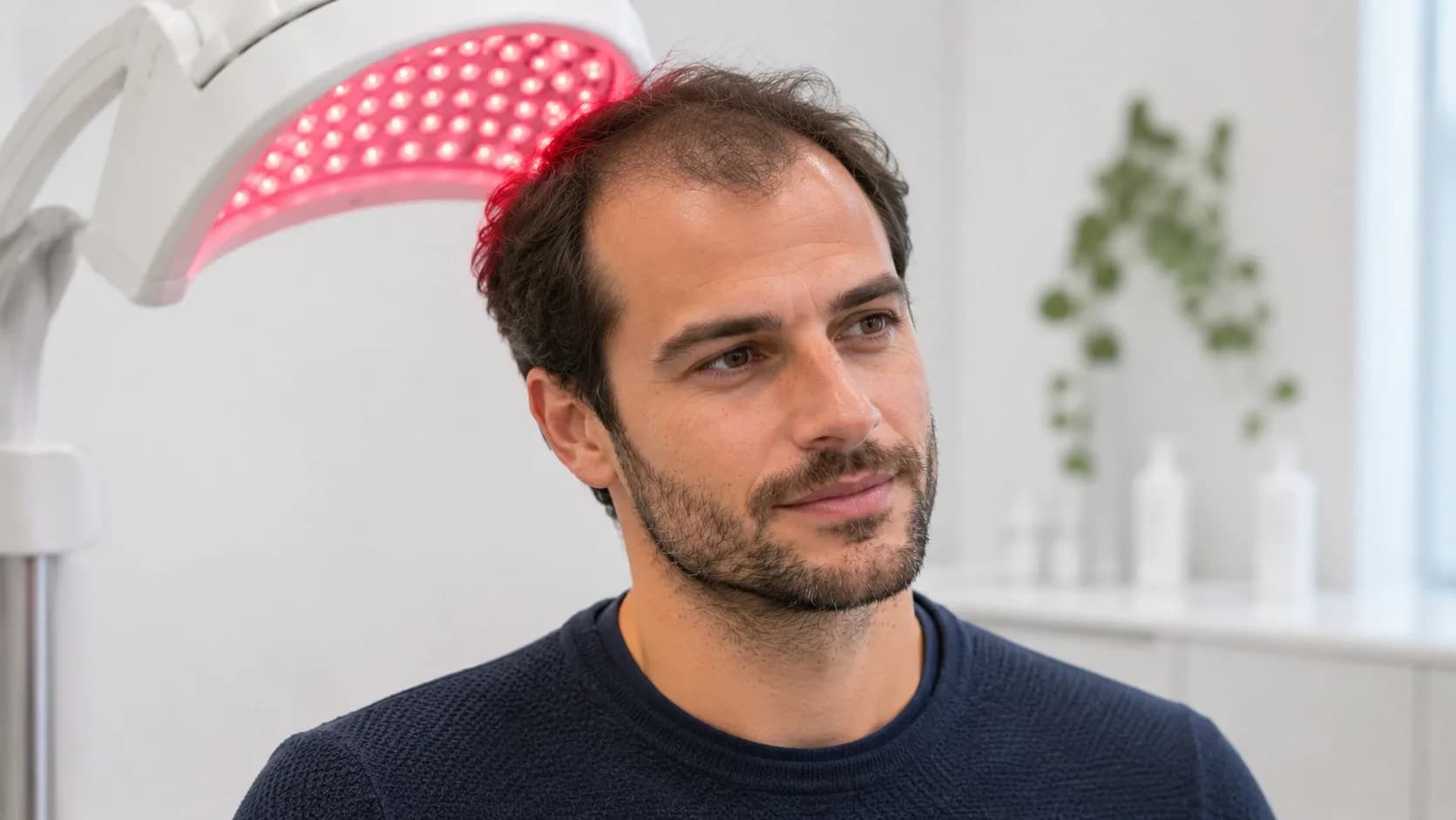
Neither treatment is universally better. Laser hair therapy stimulates weakened but still functioning hair follicles, while a hair transplant physically relocates healthy follicles into bald areas. The right choice depends on your type of hair loss, its stage, and the condition of your follicles.
Hair loss affects millions of men and women worldwide, and androgenetic alopecia is the most common cause. Two treatments dominate modern hair restoration: low-level laser therapy (LLLT) and hair transplant surgery. Patients often compare laser hair therapy vs hair transplant options as if they were interchangeable. They are not. Each treatment works through a completely different biological mechanism. LLLT aims to preserve and strengthen follicles that still exist. Hair transplant surgery redistributes follicles from a donor area to regions where hair no longer grows.
This distinction matters more than any marketing claim. A follicle that has miniaturized can sometimes respond to stimulation. A follicle that has disappeared cannot be stimulated back into existence. That is why identifying the type and stage of your hair loss must come before choosing any treatment. A dermatologist or hair restoration specialist can map your follicular miniaturization, measure your donor capacity, and determine which approach fits your condition. The sections below explain how each treatment works, who it suits, what results to expect, and how the two can work together.
What Is Laser Hair Therapy and How Does It Work?
Laser hair therapy, clinically called low-level laser therapy or photobiomodulation, uses red or near-infrared light to stimulate cellular activity inside weakened hair follicles. It aims to slow follicular miniaturization and support hair regrowth in thinning areas.
LLLT delivers low-energy light, usually in the 630 to 670 nanometer range, directly to scalp tissue. Unlike surgical lasers, this light does not cut or burn. Research suggests that cells absorb this light through cytochrome c oxidase, an enzyme inside the mitochondria. This absorption increases cellular energy production and may trigger beneficial signaling pathways (Karu 1999). Scientists call this process photobiomodulation.
Several biological mechanisms explain how LLLT may support hair growth. First, increased mitochondrial activity raises ATP production, which gives follicle cells more energy for division and protein synthesis. Second, the light may improve local blood circulation, delivering more oxygen and nutrients to the follicular units. Third, studies show that photobiomodulation can modulate inflammatory processes, which matters because inflammation around the follicle contributes to pattern hair loss (Hamblin 2017). Fourth, the treatment may shift follicles from the resting telogen phase back into the active anagen phase of the hair growth cycle.
These mechanisms connect directly to follicular miniaturization. In androgenetic alopecia, dihydrotestosterone (DHT) gradually shrinks genetically susceptible follicles. Each growth cycle produces a thinner, shorter hair. LLLT cannot remove this genetic sensitivity, but it may preserve weakened follicles before they stop producing visible hair entirely.
Patients access laser hair treatment for thinning hair through several device types. Laser caps and helmets cover the whole scalp. Laser combs and bands treat targeted zones. Medical-grade LLLT devices carry regulatory clearance and deliver calibrated wavelengths at tested energy levels. Ordinary red-light products often lack these specifications, so device quality directly affects outcomes (Avci et al. 2014).
What Happens During a Hair Transplant Procedure?
A hair transplant is a surgical procedure in which a medical team extracts healthy follicular units from a donor area, usually the back and sides of the scalp, and implants them into thinning or bald regions.
Hair transplant surgery treats the core problem of advanced hair loss: areas where follicles no longer produce hair. Because LLLT can only stimulate existing follicles, surgery remains the only method that restores hair to completely bald zones. During the procedure, the surgeon harvests grafts from the donor area, prepares them under magnification, and places them into the recipient area according to a planned density and hairline design.
Three main techniques define modern hair transplant surgery:
Technique | How It Works | Key Characteristic |
FUE (Follicular Unit Extraction) | The surgeon extracts individual follicular units with a micro-punch and implants them into the recipient area | No linear scar; suitable for short hairstyles |
DHI (Direct Hair Implantation) | Extracted grafts are loaded into specialized implanter pens and placed directly | Precise control over angle and depth of each graft |
Sapphire FUE | A variation of FUE where the surgeon opens recipient channels with sapphire blades | Finer incisions; potentially denser channel placement |
The biological foundation of transplantation is donor dominance. Follicles taken from the occipital and parietal scalp carry genetic resistance to DHT. After relocation, they generally retain this resistance and continue producing hair in their new position (Bernstein and Rassman 1997). This principle explains why transplanted hair can grow for decades.
Successful surgery depends on several clinical factors. Donor capacity limits how many grafts the team can extract safely. Graft quality affects survival after implantation. Hairline design determines whether the result looks natural. Recipient-area planning distributes limited grafts where they create the most visible density. A personalized consultation evaluates all four factors before any graft requirement is calculated (Unger et al. 2011).
What Are the Main Differences Between Laser Hair Therapy and Hair Transplantation?
Laser therapy stimulates existing follicles non-invasively, while transplantation surgically moves viable follicles into bald areas. They serve different medical purposes and suit different stages of hair loss.
Comparing hair transplant vs laser treatment requires separating their goals. LLLT is a preservation strategy. It works on follicles that still function. Transplantation is a redistribution strategy. It works even where follicles have already been lost, provided the donor area holds enough reserves. The table below compares both treatments across the factors patients ask about most.
Factor | Laser Hair Therapy (LLLT) | Hair Transplant Surgery |
Treatment method | Non-invasive light application | Surgical extraction and implantation |
Invasiveness | None | Minimally invasive surgery |
Best stage of hair loss | Early thinning, miniaturized follicles | Established bald patches, advanced loss |
Density improvement | Moderate improvement in existing hair | Physical restoration of hair-bearing skin |
Treatment duration | Ongoing sessions, several times per week | One or sometimes two procedures |
Recovery | No downtime | Several days of healing; scabs and redness |
Maintenance | Continuous use required | Transplanted hair needs no device; native hair may need medical therapy |
Cost structure | Lower upfront cost, recurring expense | Higher upfront investment, largely one-time |
Two limitations define the boundary between these treatments. Laser therapy cannot replace missing follicles in completely bald areas because there is nothing left to stimulate. Conversely, transplantation does not stop androgenetic alopecia from progressing in untreated native hair. A patient who receives grafts without managing ongoing loss may develop gaps around the transplanted zone years later. This is why many specialists view the two treatments as complementary tools rather than competitors.
Who Is a Suitable Candidate for Laser Hair Therapy?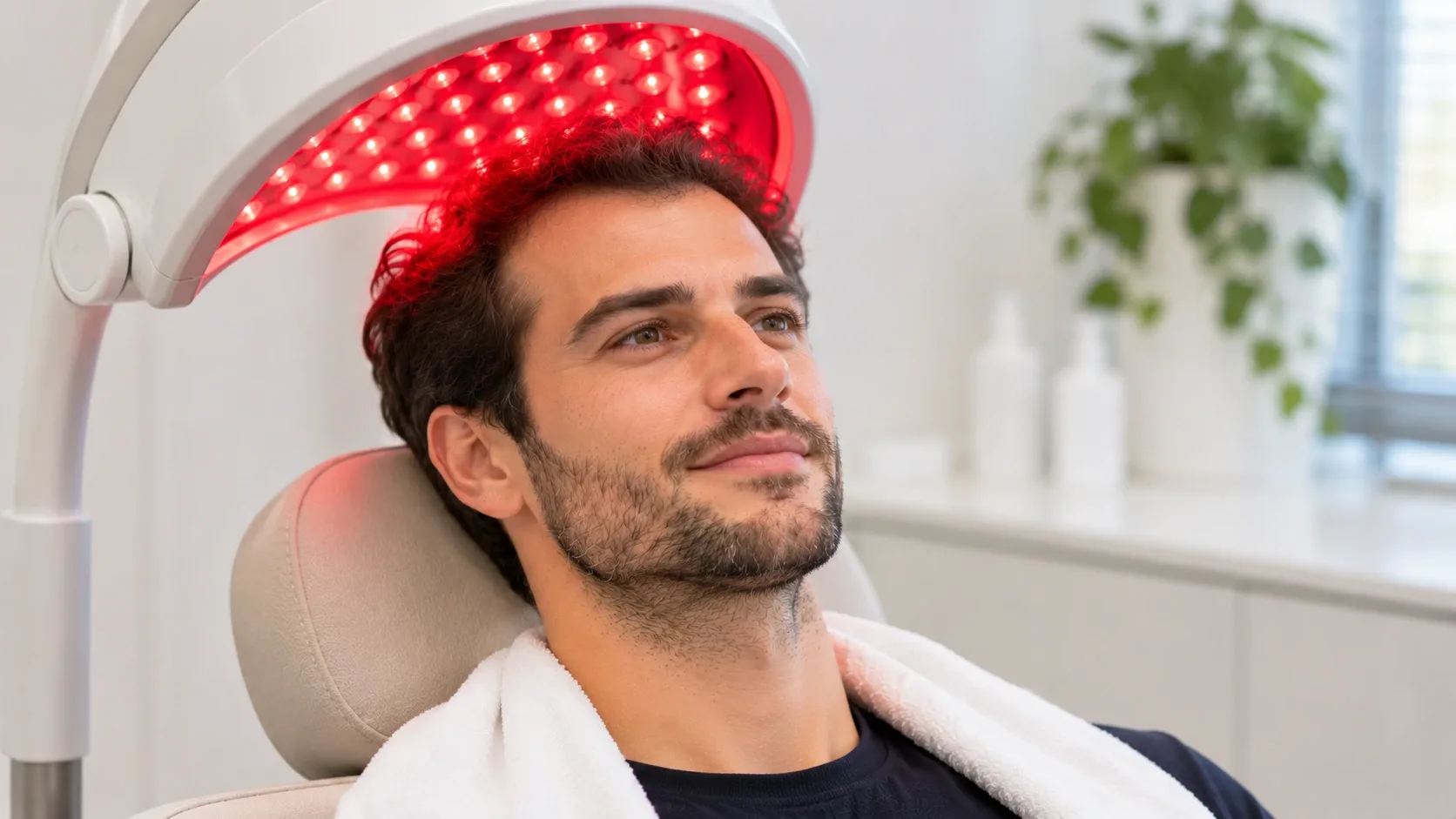
Patients with early-stage androgenetic alopecia and functioning but miniaturized follicles respond best to LLLT. Completely bald areas with absent follicles are unlikely to benefit.
The single most important candidacy factor is follicle viability. LLLT works on follicles that still produce hair, even if that hair is thin and short. Clinical studies report the clearest improvements in patients with mild to moderate thinning rather than extensive baldness (Liu et al. 2019). Typical candidates include men with early male pattern baldness, women with female pattern hair loss, individuals with diffuse thinning across the scalp, and patients who want a non-surgical hair restoration option.
Several conditions reduce the chance of a meaningful response. If an area has been shiny and bald for years, the follicles there have likely become inactive or disappeared. Stimulating that skin produces little change. Underlying causes also matter. Thyroid disorders, iron deficiency, hormonal shifts, and nutritional problems can drive hair loss that LLLT alone will not correct. A medical evaluation should identify these factors before treatment begins. When the diagnosis is unclear or the loss is progressing rapidly, a dermatologist or hair restoration specialist should assess whether laser therapy fits the treatment plan at all.
Who Should Consider a Hair Transplant Instead of Laser Therapy?
Patients with established bald patches, advanced androgenetic alopecia, and a stable, dense donor area should consider transplantation, because no non-surgical treatment can restore hair where follicles have been permanently lost.
Surgery suits a different patient profile than LLLT. Strong candidates include individuals with a receding hairline that has stabilized, patients with significant crown thinning or baldness, and people whose donor areas hold enough follicular reserves to cover the recipient zones. Anyone seeking hair in regions where follicles no longer produce visible growth falls into this group by definition.
Donor-area density sets the ceiling on what surgery can achieve. A specialist measures follicular units per square centimeter and estimates how many grafts the area can give without visible thinning. Age requires caution. A patient in his early twenties often has unpredictable future loss, so transplanting too early can leave an unnatural pattern as native hair recedes behind the grafts. Surgeons therefore evaluate expected progression before recommending a hairline position (Unger et al. 2011).
Medical conditions can also affect candidacy. Active scalp disorders, uncontrolled diabetes, bleeding problems, and certain autoimmune diseases may complicate surgery or healing. Because every variable interacts, a personalized hair transplant consultation remains the only reliable way to determine graft requirements and realistic outcomes.
How Effective Is Laser Hair Therapy Compared With Hair Transplantation?
Clinical studies show that LLLT can improve hair density and thickness in some patients with existing follicles, while transplantation can physically restore hair to bald areas when viable grafts and skilled technique are available. The evidence base for transplantation outcomes is stronger and more consistent.
Evaluating effectiveness means looking at clinical evidence rather than manufacturer or clinic claims. A randomized, double-blind, sham-controlled multicentre trial of a laser comb device in men with androgenetic alopecia reported a significant increase in terminal hair density over 26 weeks compared with a sham device (Leavitt et al. 2009). A separate multicenter trial in both men and women found similar density improvements with a different low-level laser device (Jimenez et al. 2014). A systematic review and meta-analysis later concluded that LLLT shows a real, though moderate, benefit for adult androgenetic alopecia across randomized controlled trials (Liu et al. 2019).
These findings come with limitations. Studies use different device specifications, wavelengths, and treatment protocols. Sample sizes are often small, and long-term follow-up beyond one year is rare. Individual responses also vary widely; some patients respond strongly while others show minimal change (Avci et al. 2014).
Hair transplantation answers a different question. It does not improve existing hair; it restores hair-bearing skin where follicles are gone. Outcomes depend on graft survival, extraction quality, implantation technique, and surgical expertise, with published series reporting high graft survival when experienced teams perform the procedure (Rose 2011). The honest summary is this: LLLT offers clinical improvement in hair that still exists, and transplantation offers physical restoration where hair no longer exists.
How Long Does It Take to See Results From Each Treatment?
Neither treatment delivers instant results. LLLT usually requires three to six months of consistent use before changes become visible, while transplanted hair typically reaches its final appearance around 12 months after surgery.
Laser therapy works gradually because it influences the hair growth cycle rather than creating new hair instantly. Follicles must complete their current phase, re-enter the anagen phase, and grow long enough to be visible. Most patients need several months of regular sessions before photographs show measurable improvement, and stopping too early makes the treatment impossible to judge fairly.
Hair transplantation follows a predictable recovery and growth timeline:
Phase | Typical Timeframe | What Happens |
Initial healing | Days 1 to 14 | Redness fades; scabs form and fall off |
Shock shedding | Weeks 2 to 8 | Transplanted hair shafts fall out; follicles remain |
New growth | Months 3 to 4 | Fine new hairs emerge from the grafts |
Density build-up | Months 6 to 9 | Hairs thicken and coverage improves |
Final result | Around 12 months, sometimes longer | Mature density and texture are assessable |
Individual growth rates vary, so two patients with identical graft counts can reach different timelines. Standardized photographs taken under the same lighting and angle give the most objective way to monitor progress for both treatments.
Are Laser Hair Therapy Results Permanent?
No. LLLT is a maintenance-based treatment. Benefits often fade after sessions stop, because the treatment does not remove the genetic drive behind androgenetic alopecia.
Understanding permanence requires returning to DHT. Genetically susceptible follicles remain exposed to dihydrotestosterone throughout life. LLLT supports these follicles while treatment continues, but it does not eliminate the underlying predisposition. When a patient stops regular sessions, the stimulation ends, and some of the gained density and thickness may gradually reverse (Avci et al. 2014).
This is why specialists frame laser hair restoration as ongoing management rather than a cure. Patients who respond well should expect to continue treatment indefinitely, just as they would with medical therapies for pattern hair loss. Consistency, not intensity, determines long-term value.
Does a Hair Transplant Provide Permanent Results?
Transplanted follicles are relatively permanent because they retain donor-area resistance to DHT, but permanence does not mean the overall appearance stays unchanged for life.
Donor dominance explains the durability of grafts. Follicles relocated from the back and sides of the scalp keep their genetic programming and generally continue growing for many years in the recipient area (Bernstein and Rassman 1997). In that narrow sense, a hair transplant provides permanent hair where grafts survive.
Lifetime appearance, however, depends on more than graft survival. Aging reduces hair caliber across the whole scalp. Progressive androgenetic alopecia thins native hair around the transplanted zone. Transplanted and non-transplanted hair can age at different rates, which may change overall density over decades. Protecting the remaining native hair after surgery, often with medical therapy or LLLT, helps maintain a balanced long-term result (Rose 2011).
What Are the Risks and Side Effects of Laser Hair Therapy and Hair Transplantation?
LLLT has a mild safety profile limited mostly to temporary scalp irritation, while transplantation carries the small but real risks of any surgical procedure, including swelling, infection, folliculitis, and scarring.
Safety differs because the treatments differ in invasiveness. Reported LLLT side effects are minor and temporary: scalp irritation, itching, dryness, mild warmth, and occasionally a brief increase in shedding at the start of treatment (Jimenez et al. 2014).
Surgical side effects follow the normal pattern of skin surgery:
Side Effect | Treatment | Typical Severity and Course |
Itching, dryness, irritation | LLLT | Mild; usually resolves with continued use |
Temporary shedding | LLLT | Mild; often part of the growth cycle shift |
Swelling and redness | Transplant | Common; resolves within days |
Scabbing and itching | Transplant | Expected during the first two weeks |
Folliculitis | Transplant | Occasional; treatable with topical care |
Infection | Transplant | Uncommon with proper hygiene and protocol |
Scarring | Transplant | Minimal with FUE-type techniques; technique-dependent |
Shock loss of native hair | Transplant | Possible; often temporary |
Uneven density or unnatural hairline | Transplant | Preventable with experienced planning |
Proper patient selection, correct device use, sterile technique, and professional supervision control most of these risks. Any unusual or persistent symptom after either treatment deserves prompt review by a medical professional.
How Much Does Laser Hair Therapy Cost Compared With a Hair Transplant?
Laser therapy costs less upfront but creates recurring expenses over years of maintenance, while a transplant requires a higher one-time investment that covers a permanent change in the treated area.
Comparing prices only makes sense when you compare total financial commitment, not the first invoice. Laser therapy costs depend on the type and quality of the device, whether treatment happens at home or in a clinic, how often sessions occur, and how many years the patient maintains the routine. A quality home device carries a moderate purchase price, while clinic-based programs charge per session.
Hair transplant pricing follows different variables:
Number of grafts required for the recipient area
Technique used: FUE, DHI, or Sapphire FUE
Experience of the surgeon and medical team
Clinic location and services included in the package
Whether one procedure is enough or a second session is needed
The practical conclusion is simple. LLLT spreads moderate costs across years. Transplantation concentrates cost into one decision. Patients should weigh expected outcomes and long-term value rather than the initial price alone.
Can Laser Hair Therapy and Hair Transplantation Be Combined?
Yes. The two treatments address different aspects of hair loss, so specialists often use LLLT before and after surgery to support native hair and scalp recovery, although evidence that it improves graft survival remains limited.
Combination planning follows the biology. Before transplantation, LLLT can support miniaturized native hair and establish a documented density baseline for later comparison. After transplantation, once the surgeon approves, laser therapy after hair transplant may support scalp recovery, help maintain surrounding native hair, and support the early growth phase of the grafts.
Honesty about the evidence matters here. Some clinicians report faster early growth with postoperative photobiomodulation, but controlled data proving better graft survival is limited (Gupta et al. 2021). Postoperative use must always follow the transplant surgeon's timing instructions, because the healing scalp needs protection in the first days and weeks. Combined correctly, the two treatments form one part of a broader hair loss management strategy, not a substitute for medical follow-up.
What Is the Difference Between Laser Hair Therapy and Laser Hair Transplantation?
Laser hair therapy means stimulating existing follicles with low-level light. Laser-assisted hair transplantation means using a laser as a surgical tool, for example to create recipient sites. They are entirely different concepts.
The terminology confuses many patients, so the distinction deserves its own explanation. LLLT is a non-surgical treatment applied for months to stimulate weakened follicles. Laser-assisted transplantation uses laser energy during surgery itself, typically to open channels in the recipient area instead of a blade.
Historical evidence illustrates this point. Bernstein and Rassman evaluated laser-created recipient sites in 1996 and reported problems with tissue damage and healing compared with conventional instruments (Bernstein and Rassman 1996). That research concerned surgical lasers, not modern low-level devices, and its findings should not be read as evidence about today's LLLT for hair growth.
The broader lesson is that using a laser during surgery does not guarantee better results. Tissue preservation, blood supply, graft handling, and recipient-site preparation determine outcomes. Surgical tools should be judged by clinical results, not by technological novelty.
How Can You Choose the Right Hair Restoration Treatment for Your Condition?
Start with a professional hair loss assessment. The right treatment depends on your hair loss pattern, follicular miniaturization, donor capacity, age, medical history, and personal goals.
Treatment selection is a diagnostic decision, not a product decision. A specialist will evaluate your hair loss pattern and severity, the degree of follicular miniaturization under magnification, donor-area capacity, your age and expected future loss, underlying medical conditions, and what you realistically expect from treatment.
The logic then follows the findings. If your follicles are miniaturized but active, a non-surgical approach such as LLLT, possibly combined with medical therapy, is a reasonable first step. If bald areas no longer contain functioning follicles, surgical restoration offers the appropriate solution. Some patients benefit from both: transplantation to rebuild lost zones and ongoing stimulation to protect native hair. Realistic expectations and a long-term maintenance plan determine satisfaction more than any single procedure.
Frequently Asked Questions About Laser Hair Therapy vs Hair Transplant
Can Laser Hair Therapy Regrow Hair in Completely Bald Areas?
No. LLLT can only stimulate follicles that still function. Miniaturized follicles may respond, but follicles that are permanently lost or inactive cannot be revived by light.
This is the central limit of the technology. Long-standing shiny bald skin usually contains no viable follicles, so stimulation produces no visible change. In such cases, transplantation is the only way to restore hair.
Is Laser Hair Therapy Better Than a Hair Transplant for Early Hair Loss?
For early thinning with active follicles, LLLT is often the more reasonable first option because it is non-invasive and preserves what you have.
The choice still depends on the diagnosis and individual response. Some patients stabilize early loss with LLLT and medical therapy for years, while others progress despite treatment and later become surgical candidates.
Can Laser Hair Therapy Prevent the Need for a Hair Transplant?
It may delay the need in some patients by supporting weakened follicles, but it cannot replace missing follicles or guarantee that surgery will never be necessary.
LLLT manages a process; it does not remove the genetic cause. Patients with strong hereditary loss should plan for the possibility of future surgery even while using laser therapy.
Does Laser Hair Therapy Improve Hair Transplant Results?
It may support scalp recovery and surrounding native hair after surgery, but strong clinical proof that it increases graft survival does not yet exist.
The complementary role is promising rather than established. Any postoperative use should follow the surgeon's protocol.
Can You Use Laser Hair Therapy After an FUE or DHI Hair Transplant?
Yes, but timing matters. Most surgeons ask patients to wait until the scalp has healed before restarting light-based treatment.
Restarting too early can irritate healing skin. Follow your surgical team's instructions exactly before resuming sessions.
How Often Should You Use Laser Hair Therapy for Hair Growth?
Frequency depends on the device and its approved protocol; most cleared devices require sessions several times per week.
Consistency matters more than session length. Sporadic use makes results impossible to evaluate and usually produces little benefit.
Does Laser Hair Therapy Work for Male and Female Pattern Baldness?
Yes, studies include both men and women with androgenetic alopecia, and both groups have shown density improvements in controlled trials (Jimenez et al. 2014).
Response still depends on the pattern, severity, and stage of loss. Early stages respond better than advanced baldness in both sexes.
Can Hair Transplants Stop Future Hair Loss?
No. Transplantation restores hair to selected areas, but it does not stop androgenetic alopecia from affecting untreated native follicles.
A long-term maintenance strategy, often including LLLT or medical therapy, protects the hair that surgery did not move.
Final Verdict: Which Treatment Should You Choose?
Choose laser therapy if your follicles are weakened but still active; choose a transplant if bald areas no longer produce hair. Many patients benefit from using both within one long-term plan.
The comparison of laser hair therapy vs hair transplant ends with the same principle it began with. LLLT stimulates. Transplantation relocates. Patients with early-stage thinning and functioning follicles are the best candidates for laser treatment. Patients with established bald areas and adequate donor reserves are the best candidates for surgery. Neither treatment guarantees identical results for every patient, and neither works outside its biological limits.
The most reliable path forward is a professional diagnosis. When a specialist maps your follicular condition, donor capacity, and restoration goals, the choice between stimulation, surgery, or a combination of both stops being a guess and becomes a plan.
References
Avci, Pinar, et al. "Low-Level Laser (Light) Therapy (LLLT) for Treatment of Hair Loss." Lasers in Surgery and Medicine, vol. 46, no. 2, 2014, pp. 144-151.
Bernstein, Robert M., and William R. Rassman. "Laser Hair Transplantation: Is It Really State of the Art?" Lasers in Surgery and Medicine, vol. 19, no. 2, 1996, pp. 233-235.
Bernstein, Robert M., and William R. Rassman. "Follicular Transplantation: Patient Evaluation and Surgical Planning." Dermatologic Surgery, vol. 23, no. 9, 1997, pp. 771-784.
Gupta, Aditya K., et al. "Meta-Analysis of Photobiomodulation for the Treatment of Androgenetic Alopecia." Journal of Dermatological Treatment, vol. 32, no. 6, 2021, pp. 643-648.
Hamblin, Michael R. "Mechanisms and Applications of the Anti-Inflammatory Effects of Photobiomodulation." AIMS Biophysics, vol. 4, no. 3, 2017, pp. 337-361.
Jimenez, Joaquin J., et al. "Efficacy and Safety of a Low-Level Laser Device in the Treatment of Male and Female Pattern Hair Loss: A Multicenter, Randomized, Sham Device-Controlled, Double-Blind Study." American Journal of Clinical Dermatology, vol. 15, no. 2, 2014, pp. 115-127.
Karu, Tiina I. "Primary and Secondary Mechanisms of Action of Visible to Near-IR Radiation on Cells." Journal of Photochemistry and Photobiology B: Biology, vol. 49, no. 1, 1999, pp. 1-17.
Leavitt, Matt, et al. "HairMax LaserComb Laser Phototherapy Device in the Treatment of Male Androgenetic Alopecia: A Randomized, Double-Blind, Sham Device-Controlled, Multicentre Trial." Clinical Drug Investigation, vol. 29, no. 5, 2009, pp. 283-292.
Liu, Kuo-Hsien, et al. "Comparative Effectiveness of Low-Level Laser Therapy for Adult Androgenic Alopecia: A Systematic Review and Meta-Analysis of Randomized Controlled Trials." Lasers in Medical Science, vol. 34, no. 6, 2019, pp. 1063-1071.
Rose, Paul T. "The Latest Innovations in Hair Transplant Surgery." Facial Plastic Surgery Clinics of North America, vol. 19, no. 2, 2011, pp. 385-399.
Unger, Walter P., et al. Hair Transplantation. 5th ed., Informa Healthcare, 2011.