
Laser Hair Therapy for Hair Loss
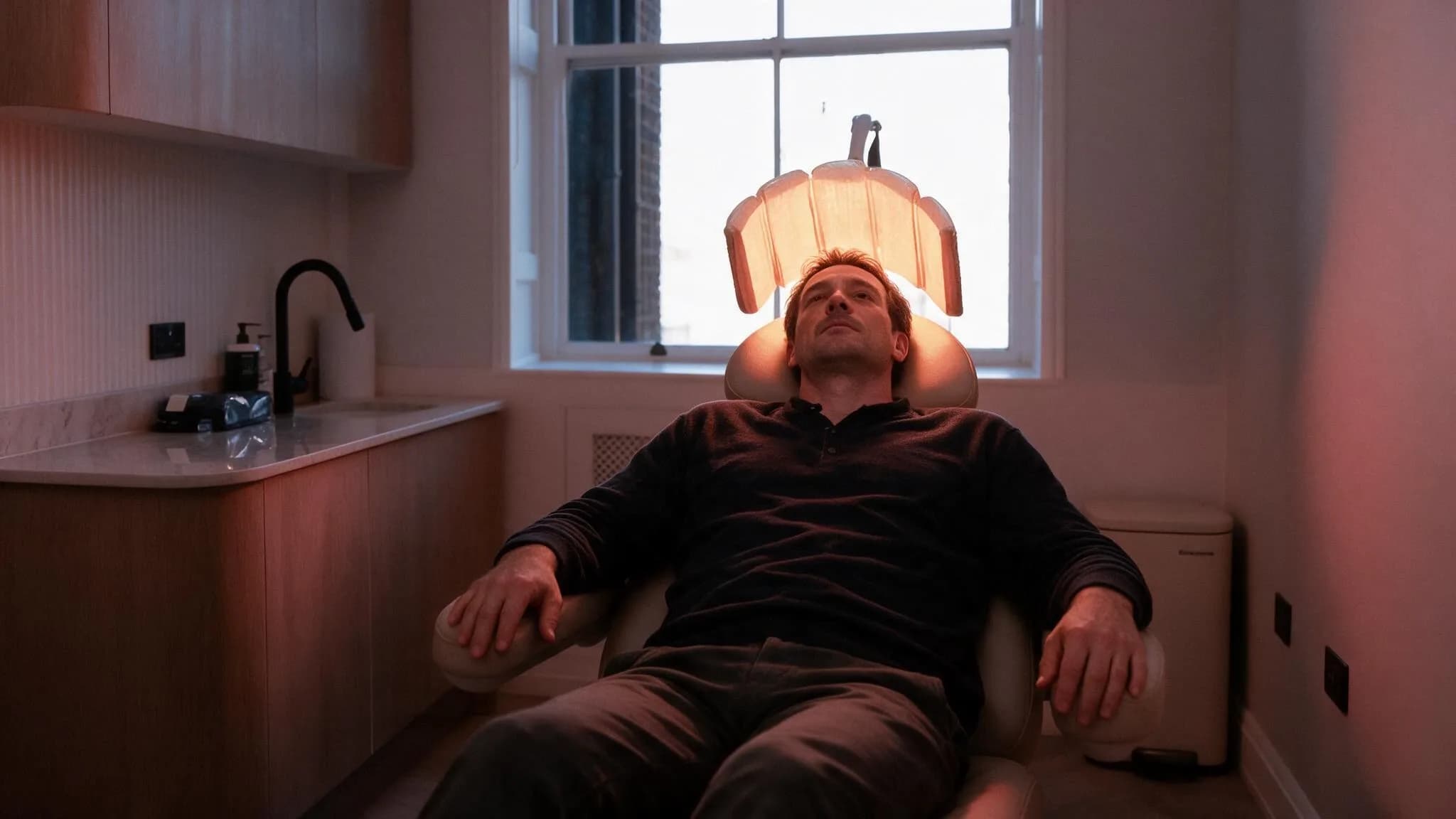
Laser hair therapy for hair loss is a non-invasive light-based treatment. It uses low-level lasers or LEDs to stimulate hair follicles and support hair growth.
Laser hair therapy for hair loss is a non-invasive light-based treatment. It uses low-level lasers or LEDs to stimulate hair follicles and support hair growth. It does not cut or burn tissue. It does not remove hair. It aims to energize existing follicles.
Laser hair therapy for hair loss goes by many names. Doctors call it low-level laser therapy (LLLT). Some call it low-level light therapy. Others use the term photobiomodulation (PBM). You may also hear red-light therapy, cold laser therapy, or laser hair restoration. All of these terms describe the same core idea. They describe the use of low-energy light to interact with cells in the scalp.
This treatment differs sharply from high-energy lasers. Surgical lasers cut or ablate tissue. Hair-removal lasers destroy follicles with heat. LLLT uses much lower energy. It does not heat tissue to damaging levels. It works through photochemical effects rather than thermal destruction.
Androgenetic alopecia drives most interest in this field. This condition causes pattern hair loss in men and women. Millions of people seek non-invasive options. LLLT offers a drug-free alternative that patients can use at home or in clinics. However, LLLT does not restore follicles that have died. It supports follicles that remain alive but weakened. Patients must set realistic expectations from the start.
Semantic entities: photobiomodulation, hair follicle, hair growth cycle, androgenetic alopecia, scalp, red light, low-level laser, hair restoration.
How Does Laser Hair Therapy for Hair Loss Work?
LLLT sends light energy into scalp cells. This light triggers chemical changes in mitochondria. These changes increase cellular energy. They may also improve blood flow and reduce inflammation. Together, these effects can wake up dormant follicles.
How Does Light Energy Interact With Hair Follicle Cells?
Light energy enters cells and reaches mitochondria. It boosts ATP production. It also releases nitric oxide. These changes energize follicle cells.
Cells contain tiny power plants called mitochondria. These organelles produce ATP, the fuel that drives cellular work. Mitochondria contain a special enzyme called cytochrome c oxidase. This enzyme absorbs red and near-infrared light. When light hits this enzyme, several things happen. The enzyme becomes more active. It pumps out more ATP. The cell gains more energy to perform repair and growth tasks.
Light exposure also triggers nitric oxide release. Nitric oxide acts as a signaling molecule. It helps blood vessels open wider. It also supports cellular communication. These photochemical events do not rely on heat. They rely on precise wavelengths and doses of light. This mechanism defines photobiomodulation (Avci et al., 2013).
Can Laser Therapy Stimulate Dormant Hair Follicles?
Yes, LLLT may push resting follicles back into the growth phase. It works best on miniaturized follicles. It cannot revive dead follicles.
Hair follicles cycle through three phases. Anagen is the active growth phase. Catagen is a brief transition. Telogen is the resting phase. In androgenetic alopecia, follicles spend less time in anagen. They shrink and produce thinner hairs. LLLT may signal these weakened follicles to re-enter anagen. Some research suggests it activates follicular stem cells in the bulge region. These stem cells fuel new hair production. However, LLLT cannot create new follicles. It can only support existing ones. Completely bald skin lacks viable follicles. No amount of light will regrow hair there (Jimenez et al., 2014).
Can Laser Hair Therapy Improve Scalp Blood Flow?
LLLT may widen blood vessels in the scalp. This improves nutrient and oxygen delivery. However, better blood flow alone does not explain all hair regrowth.
Vasodilation means blood vessels expand. LLLT may trigger this response through nitric oxide release. Better microcirculation brings more oxygen and nutrients to follicles. It also removes waste products faster. This improved environment supports healthier hair growth. Yet scientists view this as one piece of the puzzle. Blood flow helps, but the primary mechanism remains cellular energization through mitochondrial stimulation (Lanzafame et al., 2013).
Can Laser Therapy Reduce Follicular Inflammation?
LLLT shows anti-inflammatory effects in some studies. It may lower inflammatory signals around follicles. This creates a healthier growth environment.
Inflammation plays a role in several hair-loss conditions. In androgenetic alopecia, inflammatory cells gather around affected follicles. Cytokines and other mediators disrupt normal cycling. LLLT may reduce these inflammatory signals. It modulates cellular pathways that control inflammation. A calmer follicular environment allows hair to grow more normally. This anti-inflammatory action adds another layer to how LLLT supports hair health (Avci et al., 2013).
Can Laser Hair Therapy Prolong the Anagen Phase?
Some evidence suggests LLLT extends the growth phase. Longer anagen means more hairs grow at once. This increases visible density.
The anagen phase determines how long a hair grows. Longer anagen produces longer, thicker hairs. In pattern hair loss, anagen shortens. Hairs become miniaturized. LLLT may help follicles stay in anagen longer. More follicles in the active phase means less shedding. Over time, this can lead to fuller-looking hair. However, individual responses vary widely (Zarei et al., 2016).
Which Types of Hair Loss Can Laser Hair Therapy Treat?
LLLT works best for androgenetic alopecia. It may help some other conditions. It does not work for scarring alopecia or completely bald areas.
Is Laser Hair Therapy Effective for Androgenetic Alopecia?
Yes, androgenetic alopecia is the best-studied use for LLLT. Most clinical trials focus on this condition.
Androgenetic alopecia causes pattern hair loss. Men see recession at the temples and thinning at the crown. Women see diffuse thinning over the top of the scalp. Dihydrotestosterone (DHT) drives this process. DHT shrinks follicles over time. LLLT does not block DHT. Instead, it supports follicles despite hormonal influence. It helps miniaturized follicles produce better hairs. Multiple controlled trials support this use. Researchers consistently identify androgenetic alopecia as the principal evidence-backed application for LLLT (Leavitt et al., 2009).
Can Women Use Laser Hair Therapy for Hair Loss?
Yes, women with pattern hair loss can use LLLT. The treatment principles differ slightly from those for men.
Female pattern hair loss presents differently. Women usually keep their frontal hairline. They experience diffuse thinning across the crown. LLLT addresses this pattern well. It preserves existing follicles. It may increase hair density in thinning areas. Women often respond well because their follicles remain viable longer. LLLT offers a non-hormonal option. This matters because some women cannot use drugs like finasteride (Jimenez et al., 2014).
Can Laser Therapy Treat Alopecia Areata?
Evidence for alopecia areata remains limited. LLLT is not a standard treatment for this autoimmune condition.
Alopecia areata differs from pattern hair loss. The immune system attacks follicles suddenly. This creates patchy bald spots. Some small studies tested LLLT for this condition. Results remain inconsistent. LLLT does not address the autoimmune trigger. Doctors usually recommend other treatments first. Patients should not view LLLT as a universal solution for all hair-loss types (Zarei et al., 2016).
Does Laser Therapy Work for Scarring Alopecia?
No, LLLT cannot treat scarring alopecia. These conditions destroy follicles permanently.
Scarring alopecias include lichen planopilaris and discoid lupus erythematosus. Inflammation destroys follicles and replaces them with scar tissue. Once follicles die, no treatment can bring them back. LLLT cannot regenerate destroyed tissue. In fact, using LLLT without proper diagnosis may delay correct treatment. Patients with suspected scarring alopecia need medical evaluation first. They need anti-inflammatory therapy, not light therapy (Miteva and Tosti, 2013).
Can Laser Therapy Treat Telogen Effluvium?
LLLT may help temporarily. However, doctors must find and treat the underlying trigger first.
Telogen effluvium causes sudden shedding. Stress, illness, nutritional deficits, or medications trigger it. Hairs shift into telogen and fall out. LLLT may speed recovery. But it does not fix the root cause. Doctors must evaluate thyroid function, iron levels, medications, and diet. Treating the trigger matters more than any light device. LLLT serves as a supportive tool, not a primary treatment (Blume-Peytavi et al., 2011).
What Does the Scientific Evidence Say About Laser Hair Therapy?
Controlled trials show LLLT can increase hair density in some patients. Results vary. Evidence quality depends on the device and protocol used.
Researchers have published multiple clinical studies on LLLT for hair loss. Early systematic reviews concluded that LLLT appears safe and potentially effective. However, these same reviews noted unresolved questions about optimal wavelength, power, and treatment duration. More recent clinical guidance describes consumer device evidence as mixed. Some studies show clear benefits. Others show modest or no improvement. This inconsistency stems from differences in study design, device type, and patient selection (Avci et al., 2013).
What Do Clinical Studies Show in Men?
Men with androgenetic alopecia show increased hair density in several trials. Results range from modest to significant.
A 2009 study by Leavitt and colleagues tested a laser comb on male patients. Participants used the device three times weekly for 26 weeks. Treated men showed significantly greater hair density than controls. Another trial using a helmet-type device reported similar improvements. Men with early-to-moderate thinning responded best. Men with advanced baldness showed little benefit. These studies used objective measures like hair counts and trichoscopy images (Leavitt et al., 2009).
What Do Clinical Studies Show in Women?
Women also show improved hair density in clinical trials. Some studies report better cosmetic satisfaction in female patients.
Jimenez and colleagues conducted a trial with female participants. Women used a laser device for 16 weeks. Results showed increased terminal hair counts. Women reported less shedding and better hair quality. The diffuse thinning pattern in women may respond well because LLLT treats broad scalp areas. Studies consistently show women can benefit, though individual results vary (Jimenez et al., 2014).
Why Are Laser Hair Therapy Results Inconsistent?
Different wavelengths, doses, devices, and patient factors create variable outcomes. No single protocol works for everyone.
Clinical trials differ in many ways. Some use 650 nm red light. Others use 808 nm near-infrared light. Power density varies. Energy dose per session varies. Treatment frequency ranges from daily to weekly. Device design affects scalp coverage. Some devices use lasers only. Others combine lasers with LEDs. Baseline hair-loss severity also matters. Patients with mild thinning respond better. Patient adherence affects results too. Those who skip sessions see less benefit. The FDA clears some devices for hair loss. But FDA clearance means the device meets safety standards for a specific use. It does not guarantee strong clinical efficacy for every patient. Nebraska Medicine specifically notes that evidence for consumer laser caps remains mixed and limited (Zarei et al., 2016).
Which Wavelengths Are Used in Laser Hair Therapy?
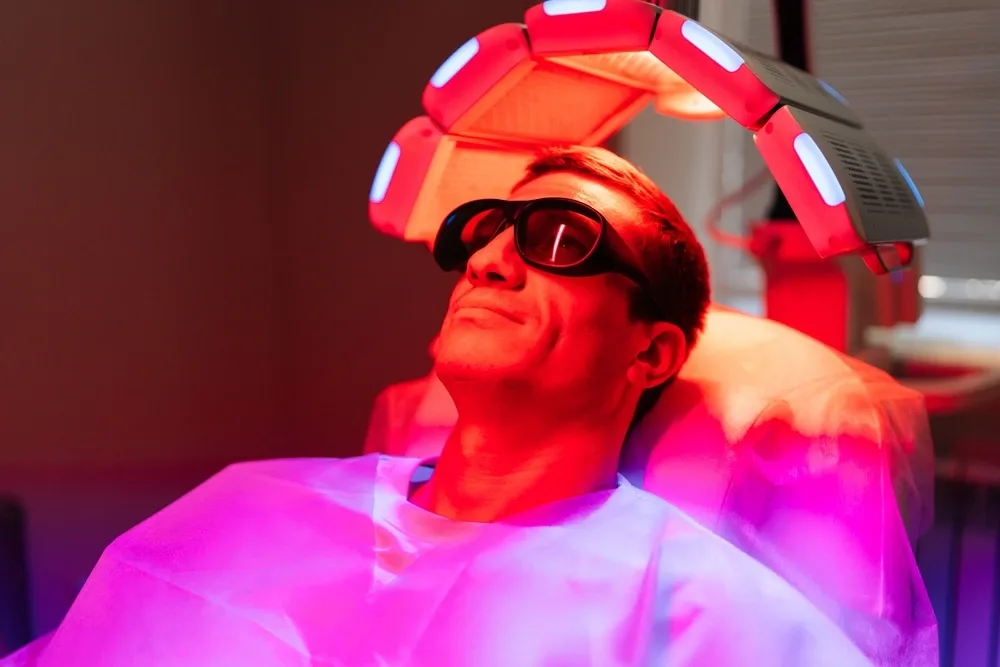
Most devices use red light near 650 nm. Some use near-infrared light near 808 nm. Wavelength choice affects how deeply light penetrates tissue.
Why Is 650 nm Red Light Commonly Used?
650 nm red light penetrates the scalp well. It matches the absorption peak of cytochrome c oxidase. Most clinical evidence supports this range.
The visible red spectrum spans roughly 620 to 750 nm. At 650 nm, light penetrates the epidermis and reaches the upper dermis. Hair follicles sit at this depth. This wavelength activates mitochondrial enzymes effectively. Most FDA-cleared devices use wavelengths in this range. Clinical studies with positive outcomes often feature 650 nm light. This wavelength offers a good balance between penetration and cellular absorption (Avci et al., 2013).
Can Near-Infrared Light Such as 808 nm Support Hair Growth?
Emerging evidence suggests 808 nm light may help. It penetrates deeper than red light. More research is needed.
Near-infrared light sits just beyond the visible spectrum. At 808 nm, light penetrates deeper into tissue. It may reach follicles at greater depths. Some newer devices incorporate this wavelength. Early studies show promise. However, the evidence base remains smaller than for 650 nm. Researchers continue to explore whether deeper penetration translates to better clinical outcomes (Lanzafame et al., 2013).
Why Do Wavelength, Energy Density, and Dose Matter?
Each parameter affects how cells respond. Too little light produces no effect. Too much light may inhibit benefits. Precise dosing matters.
Photobiomodulation follows dosimetric rules. Wavelength determines penetration depth. Irradiance measures power per unit area. Fluence measures total energy delivered. Exposure time and treatment interval complete the picture. Scientists describe this as a biphasic dose response. Low doses stimulate. High doses may suppress the same cellular processes. This means more light does not always mean better results. Standardized protocols remain lacking. Different devices use different parameters. This explains why results vary across studies (Avci et al., 2013).
What Types of Laser Hair Therapy Devices Are Available?
Patients can choose laser caps, helmets, combs, brushes, and in-clinic systems. Each type differs in coverage, power, and convenience.
How Do Laser Caps Work?
Laser caps fit on the head like a baseball cap. They contain multiple laser diodes. Patients wear them for set periods at home.
Wearable laser caps and helmets offer hands-free treatment. Patients place the cap on their head and turn it on. Sessions typically last 15 to 30 minutes. These devices cover large areas of the scalp. They allow consistent positioning. Home use improves adherence. Patients can treat their scalp while reading or relaxing. However, cap quality varies. Some use medical-grade lasers. Others use lower-quality LEDs. Buyers must research device specifications carefully (Zarei et al., 2016).
How Do Laser Combs and Brushes Work?
Laser combs require manual movement across the scalp. They deliver light directly to treated areas. Coverage takes more time and effort.
Laser combs contain a row of laser diodes. Users slowly move the comb through their hair. The teeth part the hair so light reaches the scalp. This direct application ensures light hits the target. However, covering the entire scalp takes longer than with a cap. Users must be thorough and consistent. Missing spots reduces effectiveness. Combs work well for targeted areas. They suit patients with localized thinning (Satino and Markou, 2003).
How Does In-Clinic Laser Hair Restoration Differ From Home Devices?
In-clinic devices often use higher power. Staff supervise treatment. Sessions may be shorter or less frequent. Home devices offer convenience but less oversight.
Feature | In-Clinic Devices | Home Devices (Caps/Combs) |
Power | Higher | Lower |
Supervision | Medical staff present | Self-administered |
Treatment Duration | Often shorter per session | Longer per session |
Scalp Coverage | Comprehensive | Variable by design |
Consistency | Scheduled appointments | Depends on user adherence |
Cost per Session | Higher | Lower after initial purchase |
Clinic devices may combine LLLT with other therapies. Staff can adjust settings based on patient needs. Home devices offer privacy and convenience. However, patients must follow instructions exactly. Choosing a medically appropriate device matters more than choosing the most marketed one (Avci et al., 2013).
How Often Should You Use Laser Hair Therapy for Hair Loss?
Most protocols require multiple sessions per week. Treatment must continue for months. Exact schedules depend on the specific device.
LLLT requires repeated exposure. Cells need ongoing stimulation to maintain changes. One session cannot produce lasting results. Clinical studies report various schedules. One protocol used a helmet device for 18 minutes daily over 24 weeks. Another study used a laser comb three times weekly for 15 minutes over 26 weeks. No single schedule fits all devices. Patients must follow the protocol validated for their specific device. Consistency matters more than sporadic long sessions (Jimenez et al., 2014).
How Many Laser Hair Therapy Sessions Are Needed?
There is no universal session count. Home devices need ongoing use. In-clinic programs may involve weekly visits for months.
Treatment plans depend on the device and diagnosis. Home-use caps typically require daily or near-daily sessions. In-office treatments may occur weekly or biweekly. Most clinical trials last 12 to 26 weeks. Patients should expect to commit to at least three to six months before judging results. Some protocols continue indefinitely for maintenance. Doctors tailor plans to individual needs (Zarei et al., 2016).
How Long Does It Take to See Results From Laser Hair Therapy?
Hair grows slowly. Early changes may include less shedding. Visible density improvements typically appear after three to six months.
Hair biology sets the timeline. Follicles do not transform overnight. The hair cycle takes months. Patients may notice reduced shedding first. This suggests follicles are staying in anagen longer. New hair growth becomes visible later. Most studies measure outcomes at 12, 16, or 24 weeks. Some patients see changes sooner. Others need longer. No one can promise a specific timeline. Patience and consistency remain essential (Leavitt et al., 2009).
What Results Can You Expect From Laser Hair Therapy?
LLLT may increase hair density and thicken miniaturized hairs. It does not cure hair loss. Results require ongoing maintenance.
Can Laser Hair Therapy Increase Hair Density?
Yes, clinical studies measure increased hair counts per square centimeter. Density refers to the number of hairs, not just how thick they look.
Researchers use trichoscopy to count hairs in defined scalp areas. Studies report increases ranging from modest to significant. Density improvements mean more follicles are actively growing. This creates a fuller appearance. However, density differs from visual thickness. A scalp with many fine hairs may look thinner than one with fewer thick hairs. LLLT aims to improve both metrics (Jimenez et al., 2014).
Can Laser Therapy Make Miniaturized Hair Thicker?
Yes, LLLT may improve hair shaft caliber. Terminal hairs are thick and pigmented. Miniaturized hairs are thin and wispy.
Androgenetic alopecia shrinks follicles. They produce vellus-like hairs instead of terminal hairs. LLLT may reverse this miniaturization partially. Follicles may produce thicker, more robust hairs. Trichoscopy studies show increased hair shaft diameter in some patients. This improvement in caliber contributes to the visual appearance of fuller hair. Not all patients experience this change. But it represents a key potential benefit (Zarei et al., 2016).
Can Laser Hair Therapy Stop Hair Loss Completely?
No, LLLT manages hair loss. It does not cure it. Androgenetic alopecia progresses over time.
LLLT supports existing follicles. It does not eliminate the hormonal and genetic drivers of pattern hair loss. DHT continues to affect susceptible follicles. LLLT offers a management strategy. It may slow progression. It may improve existing hair. But it cannot permanently stop a biological process. Patients should view it as part of an ongoing care plan, not a one-time fix (Avci et al., 2013).
What Happens If You Stop Laser Hair Therapy?
Benefits may fade over time. Continued treatment helps maintain results. Stopping does not always cause immediate shedding.
Maintenance matters in hair-loss therapy. LLLT effects depend on ongoing cellular stimulation. Without regular sessions, mitochondria may return to baseline activity. Follicles may gradually thin again. However, hair does not typically fall out immediately after stopping. The decline happens slowly as follicles re-enter miniaturization. Patients who wish to maintain results should continue treatment. Some reduce frequency for maintenance. Others combine LLLT with other therapies for sustained benefit (Leavitt et al., 2009).
Who Is a Good Candidate for Laser Hair Therapy?
People with early-to-moderate androgenetic alopecia make the best candidates. They need viable follicles. Men and women with diffuse thinning can benefit.
LLLT works best when follicles still exist. Early intervention catches follicles before they shrink too far. Patients with Norwood stages II to IV (men) or Ludwig stages I to II (women) typically respond well. The treatment suits those seeking non-invasive, drug-free options. It also works as an adjunct to medications. Patients must commit to regular use. Those with realistic expectations achieve the greatest satisfaction (Jimenez et al., 2014).
Who May Not Benefit From Laser Hair Therapy?
People with completely bald areas, scarring alopecia, or untreated systemic conditions should not expect results.
Condition | Why LLLT May Not Help |
Completely bald scalp | No viable follicles remain |
Advanced follicular destruction | Follicles are too miniaturized to respond |
Scarring alopecia | Scar tissue replaces follicles |
Inflammatory scalp disorders | Needs medical treatment first |
Systemic hair loss causes | Requires diagnosis and management of underlying disease |
Patients with these conditions need proper medical evaluation. They may need biopsies, blood tests, or other treatments. Using LLLT alone wastes time and money. It may delay effective care (Miteva and Tosti, 2013).
Is Laser Hair Therapy Safe?
LLLT has a strong safety profile. It does not cut or burn. Side effects are rare and mild. Safety does not automatically mean efficacy.
LLLT uses non-thermal, non-invasive light. It does not damage skin at proper doses. Decades of use in various medical fields support its safety. However, patients should distinguish safety from proven results. A device can be safe yet ineffective. They should evaluate both aspects before purchasing (Avci et al., 2013).
What Are the Side Effects of Laser Hair Therapy?
Side effects are uncommon. Some patients report mild warmth, itching, dryness, or tenderness. These effects resolve quickly.
Side Effect | Frequency | Description |
Temporary scalp warmth | Rare | Slight heating sensation during or after use |
Mild itching | Rare | Brief irritation of the scalp |
Dryness | Rare | Reduced scalp moisture |
Tenderness | Very rare | Slight sensitivity to touch |
Serious adverse events are extremely rare. LLLT does not cause burns at therapeutic doses. It does not damage eyes if users follow device instructions. Some devices include eye protection. Patients should read safety guidelines carefully (Zarei et al., 2016).
Are There Contraindications to Laser Hair Therapy?
Some medical conditions require caution. Photosensitivity, certain medications, and active scalp diseases may affect suitability.
Doctors should evaluate patients before starting LLLT. Some medications increase light sensitivity. These include certain antibiotics, retinoids, and chemotherapy drugs. Active scalp infections or open wounds need treatment first. Patients with skin cancer on the scalp need dermatologic clearance. Individual circumstances vary. No universal contraindication list applies to all devices. Patients should consult a physician, especially if they have complex medical histories (Blume-Peytavi et al., 2011).
How Does Laser Hair Therapy Compare With Other Hair Loss Treatments?
LLLT differs from drugs, injections, and surgery. Each option has unique mechanisms, evidence levels, and trade-offs.
Laser Hair Therapy vs Minoxidil
Minoxidil is a topical drug. LLLT is light-based. They work differently. Patients can use them together.
Factor | Minoxidil | LLLT |
Mechanism | Potassium channel opener, improves blood flow | Photobiomodulation, cellular energization |
Evidence | Extensive, FDA-approved for decades | Moderate, growing |
Application | Topical solution or foam twice daily | Light sessions several times weekly |
Side effects | Scalp irritation, unwanted facial hair | Rare, mild warmth or itching |
Use in women | Yes | Yes |
Complementary use | Can combine with LLLT | Can combine with minoxidil |
Minoxidil requires daily application. Some patients find this inconvenient. LLLT offers a non-chemical alternative. The ISHRS notes that photobiomodulation may support the effectiveness of other treatments such as minoxidil. Using both may produce better results than either alone (Avci et al., 2013).
Laser Hair Therapy vs Finasteride
Finasteride blocks DHT. LLLT does not. Finasteride is prescription-only for men. Women typically cannot use it.
Factor | Finasteride | LLLT |
Mechanism | DHT inhibition | Cellular light stimulation |
Evidence | Strong for men | Moderate for both sexes |
Prescription | Required | Not required for devices |
Side effects | Sexual side effects, mood changes | Minimal |
Use in women | Generally no | Yes |
Hormonal effect | Yes | No |
Finasteride addresses the hormonal driver of male pattern loss. LLLT supports follicles without hormonal intervention. Men may use both. Women usually choose LLLT because finasteride is contraindicated. Each patient needs individualized guidance (Zarei et al., 2016).
Laser Hair Therapy vs PRP
PRP uses injections. LLLT uses light. PRP requires office visits. LLLT can happen at home.
Factor | PRP | LLLT |
Mechanism | Growth factors from own blood | Light-induced cellular changes |
Procedure | Blood draw, centrifugation, injections | Non-invasive light exposure |
Setting | Clinic | Home or clinic |
Frequency | Monthly typically | Several times weekly |
Evidence | Emerging, promising | Moderate |
Cost per treatment | Higher | Lower for home devices |
Both therapies aim to stimulate follicles. PRP delivers concentrated growth factors directly. LLLT triggers cellular responses through light. Some clinics offer combination packages. Evidence for both continues to evolve. Patients should discuss options with a hair restoration specialist (Esmat et al., 2017).
Laser Hair Therapy vs Hair Transplantation
Transplants move hair. LLLT stimulates existing hair. They serve different stages of hair loss.
Factor | Hair Transplantation | LLLT |
Mechanism | Redistributes donor follicles | Stimulates existing follicles |
Invasiveness | Surgical | Non-surgical |
Recovery | Days to weeks | None |
Best for | Areas with no viable follicles | Areas with thinning but living follicles |
Result permanence | Permanent in donor areas | Requires maintenance |
Cost | Higher upfront | Lower ongoing |
Transplants fill bald areas with healthy follicles from the back of the head. LLLT cannot do this. It only improves what remains. Patients with advanced baldness need surgery. Patients with early thinning may benefit from LLLT alone. Many transplant patients use LLLT afterward to support native hair (Kim et al., 2011).
Can Laser Hair Therapy Be Combined With Other Treatments?
Yes, multimodal treatment often works best. LLLT can complement minoxidil, finasteride, PRP, and transplants.
Hair loss usually requires a comprehensive approach. LLLT serves as one tool in a larger toolkit. Doctors may recommend combining it with minoxidil for enhanced results. Men may add finasteride to block DHT. PRP injections can provide additional growth signals. Nutritional correction addresses deficiencies that worsen hair loss. Hair transplantation restores areas where follicles have died. The ISHRS notes that photobiomodulation may also support the effectiveness of other treatments such as minoxidil. Combination strategies should always depend on diagnosis and medical supervision. Self-directed mixing of treatments without guidance can cause problems (Avci et al., 2013).
What Factors Affect the Success of Laser Hair Therapy?
Many variables influence outcomes. Diagnosis, device quality, adherence, and biology all play roles.
Factor | How It Affects Outcomes |
Underlying diagnosis | LLLT works best for pattern hair loss |
Duration and severity of hair loss | Earlier treatment yields better results |
Follicular viability | Dead follicles cannot respond |
Age | Younger patients may respond better |
Baseline hair density | More existing hair means more to improve |
Device characteristics | Wavelength, power, and design matter |
Wavelength and dose | Must match photobiomodulation parameters |
Treatment adherence | Skipped sessions reduce effectiveness |
Treatment duration | Benefits need time to develop |
Combination therapies | Adding minoxidil or PRP may enhance results |
Individual biological response | Genetics affect how cells react to light |
No single factor determines success. Patients must optimize what they can control. They should choose quality devices. They should follow protocols exactly. They should maintain realistic expectations (Zarei et al., 2016).
How Should You Choose a Laser Hair Therapy Device?
Look for appropriate wavelength, evidence-based parameters, good coverage, and regulatory status. Avoid marketing hype.
What Should You Look for in a Laser Hair Therapy Device?
Check wavelength, clinical evidence, scalp coverage, and safety information. Transparency from the manufacturer matters.
Patients should verify several features before buying. The device should use wavelengths supported by research, typically around 650 nm. It should specify irradiance and treatment time. It should cover the target area adequately. The manufacturer should provide clear instructions and safety data. Regulatory status, such as FDA clearance, indicates basic safety review. However, clearance does not prove effectiveness. Buyers should seek devices with published clinical data. They should avoid products with vague claims or no specifications (Avci et al., 2013).
Does FDA Clearance Mean a Laser Cap Will Regrow Hair?
No, FDA clearance does not guarantee hair regrowth. It means the device meets safety standards for a specific use.
The FDA clears devices based on substantial equivalence to prior products. This process focuses on safety and intended use. It does not require large clinical trials proving efficacy for every patient. A cleared device may help some users and not others. Consumers should evaluate published clinical evidence. They should read independent reviews. They should consult doctors. Relying solely on FDA clearance or marketing language leads to disappointment (Zarei et al., 2016).
Are Laser Caps, Helmets, and Combs Equally Effective?
They differ in design and coverage. Direct comparisons lack robust clinical evidence.
Device Type | Coverage | Convenience | Evidence Level |
Laser caps/helmets | Broad, hands-free | High | Moderate |
Laser combs/brushes | Targeted, manual | Lower | Moderate |
In-clinic systems | Comprehensive, adjustable | Requires visits | Moderate |
Caps treat large areas automatically. Combs require more effort but offer precise application. Helmets may provide more uniform coverage. No head-to-head trials definitively rank them. The best device is the one a patient will use consistently. It should also match their specific pattern of hair loss (Jimenez et al., 2014).
How Should Hair Loss Be Diagnosed Before Laser Therapy?
Proper diagnosis requires medical history, scalp examination, and sometimes lab tests. Treating the wrong condition wastes time.
Doctors should evaluate several elements before recommending LLLT. They should take a detailed medical history. Family history reveals genetic patterns. The pattern of hair loss indicates the diagnosis. Scalp examination looks for inflammation, scaling, or scarring. Trichoscopy magnifies follicles to assess miniaturization. It also identifies inflammatory or scarring disease. Laboratory evaluation checks thyroid function, iron levels, and other systemic factors when indicated. Treating androgenetic alopecia with LLLT makes sense. Treating scarring alopecia or telogen effluvium with LLLT alone does not. Wrong diagnosis delays proper care. It leads to frustration and expense (Blume-Peytavi et al., 2011).
What Are the Limitations of Laser Hair Therapy for Hair Loss?
LLLT has real limits. It cannot cure baldness. It cannot regrow hair in scarred areas. Evidence remains mixed for some devices.
Limitation | Explanation |
Variable response | Not every patient benefits |
Need for consistency | Skipping sessions reduces efficacy |
Limited long-term evidence | Many studies last less than one year |
Lack of standardized parameters | Wavelength, dose, and frequency vary |
Greater evidence for pattern loss | Less support for other alopecia types |
Cannot regenerate destroyed follicles | Dead follicles are gone forever |
Cost and time commitment | Ongoing expense and effort required |
Exaggerated commercial claims | Marketing often overstates benefits |
The scientific review specifically identifies uncertainty surrounding optimal wavelength, coherence, and dosimetric parameters. More recent clinical guidance continues to describe the evidence for consumer devices as mixed. Patients must approach LLLT with clear eyes. It offers potential. It does not offer miracles (Avci et al., 2013).
Is Laser Hair Therapy Worth Considering for Hair Loss?
LLLT is worth considering for suitable patients. It works best as a non-invasive adjunct for pattern hair loss. It is not a universal cure.
The evidence supports LLLT for selected patients. Those with early-to-moderate androgenetic alopecia and viable follicles stand the best chance of benefit. LLLT offers a drug-free, surgery-free option. It fits well into multimodal treatment plans. However, patients need proper diagnosis first. They need realistic expectations. They need quality devices. They need commitment to regular use. LLLT represents a potentially useful tool. It does not replace medical evaluation. It does not replace proven treatments for advanced loss. Evidence quality varies among devices and protocols. Patients should discuss options with a dermatologist or hair restoration specialist before investing (Zarei et al., 2016).
Frequently Asked Questions About Laser Hair Therapy for Hair Loss
Does Laser Hair Therapy Really Work for Hair Loss?
Yes, for some patients. Clinical trials show increased hair density in many participants. Results vary by individual, device, and protocol.
How Long Does Laser Hair Therapy Take to Work?
Most patients need three to six months to see visible changes. Reduced shedding may appear sooner.
How Often Should You Use Laser Hair Therapy?
Most protocols require several sessions per week. Daily use is common for cap devices. Patients should follow their device's specific instructions.
Can Laser Hair Therapy Regrow Completely Bald Areas?
No, LLLT cannot regrow hair where follicles no longer exist. It only supports living follicles.
Is Laser Hair Therapy Safe?
Yes, LLLT has a favorable safety profile. Side effects are rare and mild. Proper use minimizes risks.
Does Laser Hair Therapy Work for Women?
Yes, women with pattern hair loss can benefit. Clinical studies include female participants with positive results.
Can Laser Hair Therapy Treat Male Pattern Baldness?
Yes, androgenetic alopecia in men is the best-studied application. Early-to-moderate cases respond best.
Can You Combine Laser Hair Therapy With Minoxidil?
Yes, many doctors recommend this combination. The two therapies complement each other through different mechanisms.
Is a Laser Cap Better Than a Laser Comb?
Caps offer broader coverage and hands-free use. Combs allow targeted application. Neither has proven universally superior.
What Happens If You Stop Laser Hair Therapy?
Benefits may gradually fade. Continued treatment helps maintain results. Hair does not typically fall out immediately.
Is Laser Hair Therapy Permanent?
No, LLLT requires ongoing use. It manages hair loss rather than curing it permanently.
How Much Does Laser Hair Therapy Cost?
Home devices range from a few hundred to several thousand dollars. In-clinic treatments cost more per session. Costs vary widely by brand and location.
Should You See a Dermatologist Before Using a Laser Hair Device?
Yes, a dermatologist can confirm the diagnosis. They can rule out scarring or systemic causes. They can recommend the best treatment plan.
What Is the Scientific Conclusion About Laser Hair Therapy for Hair Loss?
LLLT has biological plausibility and clinical evidence supporting hair growth benefits in selected patients. It works best for pattern hair loss with viable follicles. Further research must standardize protocols and confirm long-term outcomes.
Laser hair therapy for hair loss, particularly LLLT and photobiomodulation, represents a promising non-invasive approach. It stimulates cellular energy production. It may improve scalp circulation. It may reduce inflammation. It may prolong the anagen phase. Multiple controlled trials support its use for androgenetic alopecia in both men and women. However, the field still faces challenges. Optimal wavelength, dose, and device design remain unresolved. Long-term data for many consumer products remain limited. The strongest application continues to be pattern hair loss in patients with living follicles. LLLT cannot replace dead follicles. It cannot cure the underlying biology of hair loss. It serves best as part of a comprehensive, medically supervised plan. Diagnosis, patient selection, device quality, and consistent treatment stand at the center of meaningful outcomes. Patients should consult qualified dermatologists. They should choose devices with real clinical evidence. They should commit to regular use. With these elements in place, LLLT offers a valuable option in the broader landscape of hair restoration (Avci et al., 2013; Zarei et al., 2016).
References
Avci, Pinar, et al. "Low-Level Laser (Light) Therapy (LLLT) for Treatment of Hair Loss." Lasers in Surgery and Medicine, vol. 45, no. 8, 2013, pp. 487-95.
Blume-Peytavi, Ulrike, et al. "S1 Guideline for Diagnostic Evaluation in Androgenetic Alopecia in Men, Women and Adolescents." Journal of the German Society of Dermatology, vol. 9, no. 1, 2011, pp. S1-S16.
Esmat, Samia, et al. "Low-Level Light Therapy for Hair Loss." Journal of Dermatological Treatment, vol. 28, no. 7, 2017, pp. 647-51.
Jimenez, Joaquin J., et al. "Efficacy and Safety of a Low-Level Laser Device in the Treatment of Male and Female Pattern Hair Loss: A Multicenter, Randomized, Sham Device-Controlled, Double-Blind Study." American Journal of Clinical Dermatology, vol. 15, no. 2, 2014, pp. 115-27.
Kim, Hyung-Seok, et al. "Low-Level Light Therapy for Androgenetic Alopecia." Annals of Dermatology, vol. 23, no. 4, 2011, pp. 462-65.
Lanzafame, Raymond J., et al. "The Growth of Human Scalp Hair Mediated by Visible Red Light Laser and LED Sources in Males and Females." Lasers in Surgery and Medicine, vol. 45, no. 10, 2013, pp. 650-57.
Leavitt, Matt, et al. "HairMax LaserComb Laser Phototherapy Device in the Treatment of Male Androgenetic Alopecia." Clinical Drug Investigation, vol. 29, no. 5, 2009, pp. 283-92.
Miteva, Mariya, and Antonella Tosti. "Hair and Scalp Dermatoscopy." Journal of the American Academy of Dermatology, vol. 67, no. 5, 2013, pp. 1040-48.
Satino, John L., and Michael Markou. "Hair Regrowth and Low Level Laser Therapy." Lasers in Surgery and Medicine, vol. 32, no. 3, 2003, pp. 210-18.
Zarei, Mina, et al. "Low Level Laser Therapy for Hair Loss." Journal of Cosmetic and Laser Therapy, vol. 18, no. 6, 2016, pp. 337-43.