
PRF After Hair Transplant: Benefits, Timing, Results, and Recovery
PRF after hair transplant is a supportive regenerative treatment prepared from the patient's own blood.
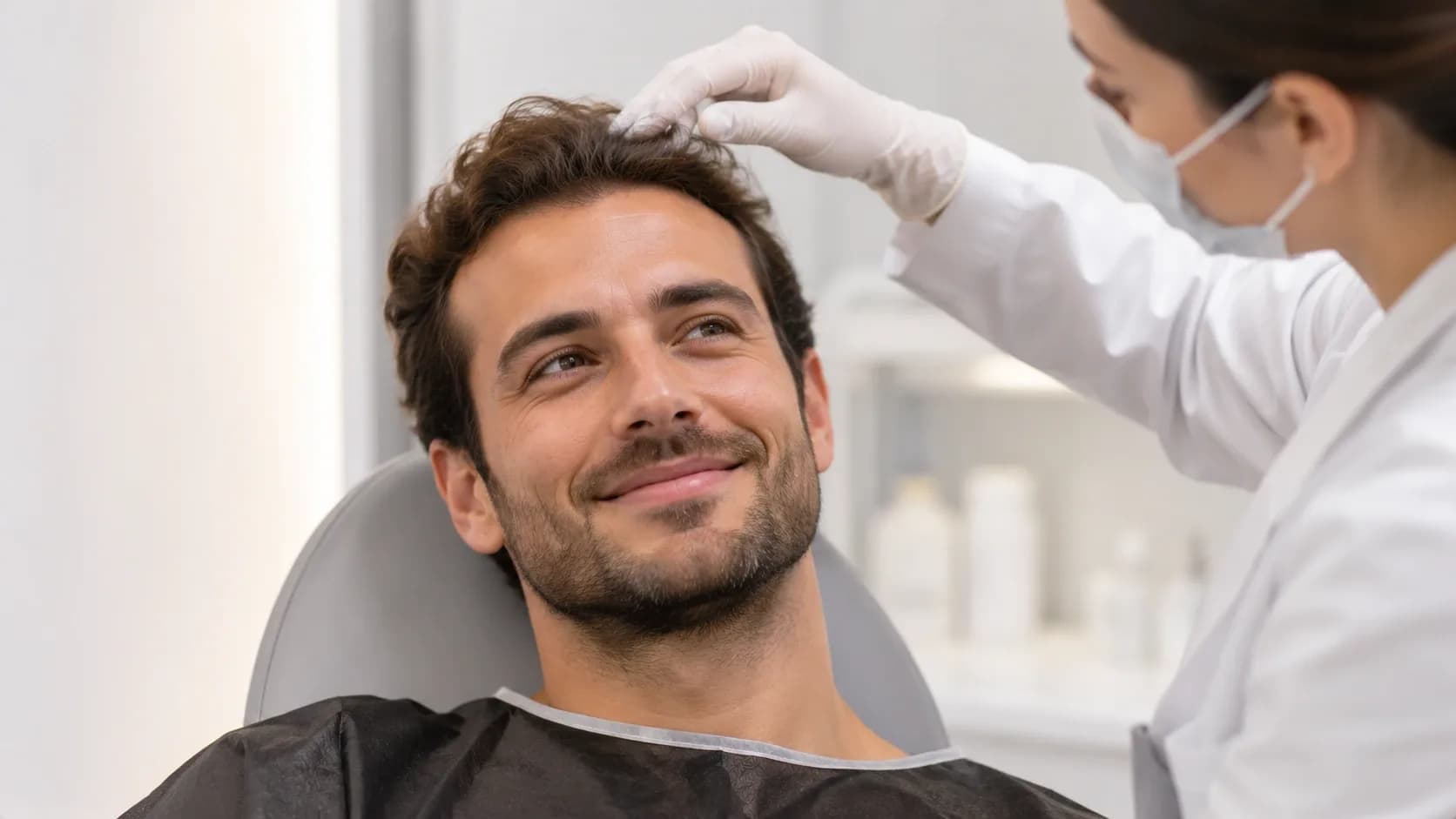
PRF after hair transplant is a supportive regenerative treatment prepared from the patient's own blood. Surgeons may consider it after FUE, DHI, or Sapphire FUE procedures to support scalp recovery and existing hair follicles. PRF complements the transplant. It does not replace the relocated follicles.
Platelet-Rich Fibrin, commonly called PRF, is an autologous platelet concentrate. A clinician draws a small blood sample from the patient and processes it in a centrifuge. The resulting material contains platelets, white blood cells, and growth factors embedded in a fibrin network. This biological structure releases growth factors gradually into the treated tissue (Dohan Ehrenfest et al. 2009).
Many patients ask about PRF after FUE, DHI, or Sapphire FUE hair transplantation. The reason is simple. Surgery relocates healthy follicles, but it also creates tissue trauma in the donor and recipient areas. The scalp needs time and resources to heal. PRF offers a biological method to support that process.
PRF may also support the existing, non-transplanted hair. Androgenetic alopecia often continues to affect native follicles after surgery. A regenerative treatment that targets these follicles can therefore play a role in a broader hair restoration plan.
This article explains the science behind PRF, its timing after surgery, the procedure, and the realistic expectations. Treatment timing and medical assessment matter. Your surgeon must approve every injection plan before you proceed.
What Is PRF and How Does It Work in Hair Restoration?
PRF is a platelet concentrate prepared from the patient's own blood. It contains platelets, white blood cells, cytokines, and growth factors inside a fibrin matrix. The fibrin structure releases these growth factors slowly, which may support scalp tissue regeneration and follicular activity.
PRF stands for Platelet-Rich Fibrin. Clinicians obtain it through a simple centrifugation process without anticoagulants. The blood forms a fibrin clot that traps platelets and immune cells. This preparation distinguishes PRF from older platelet concentrates (Dohan Ehrenfest et al. 2009).
The fibrin matrix is the key structural feature of PRF. It acts as a scaffold. Growth factors such as platelet-derived growth factor (PDGF), transforming growth factor beta (TGF-beta), and vascular endothelial growth factor (VEGF) remain bound within this matrix. The matrix degrades slowly, so the growth factors reach the tissue over days rather than hours (Miron et al. 2017).
These PRF growth factors participate in wound repair and cell signaling. PDGF supports cell proliferation. VEGF promotes the formation of new blood vessels. TGF-beta regulates tissue remodeling. Together, these molecules create a local environment that may support follicular cells and scalp tissue.
Researchers have examined this regenerative potential in androgenetic alopecia. Early clinical work reports improvements in hair density after PRF hair treatment, although study sizes remain small (Mohale et al. 2024). This biological foundation explains why clinicians now consider PRF hair restoration as a complementary option after surgery.
Why Is PRF Used After Hair Transplant Surgery?
Clinicians use PRF after hair transplant surgery to support the scalp's natural healing response. Growth factors may aid tissue repair around recipient and donor areas. PRF may also support existing hair affected by androgenetic alopecia. Evidence for improved graft survival remains limited.
Hair transplantation solves one problem but leaves others open. The surgery relocates follicles from the donor area to the recipient area. It does not stop the hormonal process that thins the remaining native hair. A comprehensive hair restoration plan often needs more than surgery alone.
This is where regenerative treatments enter the picture. PRF injections after hair transplant procedures aim to support the healing environment. The recipient area contains thousands of small incisions. The donor area carries extraction wounds. Growth factors may contribute to tissue repair in both zones (Karimi and Rockwell 2019).
A second rationale concerns the native hair. Androgenetic alopecia is a progressive condition. The transplanted follicles typically resist the hormone dihydrotestosterone (DHT), but the surrounding native follicles do not. PRF may support these susceptible follicles and help maintain overall density.
A clear distinction matters here. Supporting the healing environment is not the same as improving hair graft survival. No high-quality clinical trial has proven that post-operative PRF increases the survival rate of transplanted grafts. The current evidence supports caution and realistic expectations (Mohale et al. 2024).
What Are the Potential Benefits of PRF After Hair Transplant?
PRF may support scalp healing, improve the thickness of existing hair, reduce temporary shedding in theory, and help maintain native hair density. Each benefit depends on individual biology, and none is guaranteed.
Can PRF Support Scalp Healing?
Yes, PRF may support scalp healing. Platelets and growth factors take part in the body's natural wound repair process. However, PRF does not eliminate swelling or guarantee faster recovery for every patient.
Wound healing follows a predictable sequence: inflammation, proliferation, and remodeling. Platelets initiate the first phase. They release signaling molecules that recruit repair cells to the injury site. PRF concentrates this biology and places it directly into the scalp (Karimi and Rockwell 2019).
Follicular unit extraction and implantation both create controlled micro-injuries. The body repairs these sites through the same wound-healing pathways. PRF may supply additional growth factors to this process and support local tissue repair. Clinical outcomes still vary between patients, so a qualified practitioner should assess each case individually.
Can PRF Improve Hair Density and Thickness?
PRF may improve hair density and hair shaft thickness in patients with functioning follicles. Growth factors can stimulate follicular cells. PRF cannot create new follicles, so results depend on the presence and condition of existing ones.
PRF for hair growth works through biological stimulation, not follicle creation. Growth factors such as PDGF and VEGF may activate dermal papilla cells. These cells regulate the hair growth cycle and determine the thickness of the hair shaft (Miron et al. 2017).
A systematic review of injectable PRF found that three alopecia studies reported noticeable improvements in hair density and growth (Mohale et al. 2024). These results concern androgenetic alopecia in general. They do not directly measure outcomes in post-transplant patients. A completely bald area without functional follicles will not respond to PRF alone.
Can PRF Help Reduce Post-Transplant Hair Shedding?
PRF may theoretically reduce post-transplant shedding by supporting follicular activity. Clinical studies have not conclusively proven that PRF prevents shock loss after hair transplant procedures.
Shock loss after hair transplant surgery affects many patients. The trauma of surgery pushes some native hairs into the resting phase, and they shed weeks later. This shedding is usually temporary. Permanent follicular damage is a different problem and requires medical evaluation.
PRF may help by shortening the resting phase and supporting the return to active growth. This mechanism is biologically plausible, but the evidence remains theoretical. Patients should understand this distinction before scheduling treatment.
Can PRF Support the Long-Term Health of Existing Hair?
Yes, PRF may support long-term native hair health as a complementary treatment. Androgenetic alopecia continues after surgery, so long-term management often requires additional medical treatments.
Hair transplantation redistributes hair. It does not cure the underlying condition. The hormone DHT continues to shrink susceptible native follicles year after year. Maintaining native hair density therefore requires an ongoing strategy.
PRF can form one part of that strategy. Regular sessions may support follicular activity in thinning zones. Patients must separate two goals: maintaining native hair and preserving transplanted grafts. PRF addresses the first goal. The second depends mainly on surgical technique and graft handling.
When Can You Have PRF After a Hair Transplant?
Most surgeons recommend waiting until the recipient and donor areas complete their initial healing before PRF injections after hair transplant surgery. There is no universal schedule. Your surgeon must assess graft stability and tissue healing first.
Timing matters because the early post-operative period is delicate. The transplanted grafts anchor into the scalp during the first days. Injections too early could disturb this anchoring process. The scalp also carries scabs and redness during the first two weeks.
A responsible surgeon evaluates several factors before approving treatment. These include graft stability, scab resolution, redness, and overall tissue healing. Many practitioners consider PRF after the initial recovery period, but the exact timing depends on the individual patient.
No universally established post-transplant PRF schedule exists. Protocols differ between clinics and studies. Patients should never book additional injections without direct approval from their hair transplant surgeon. This rule protects the grafts and the final result.
How Is PRF Treatment Performed After a Hair Transplant?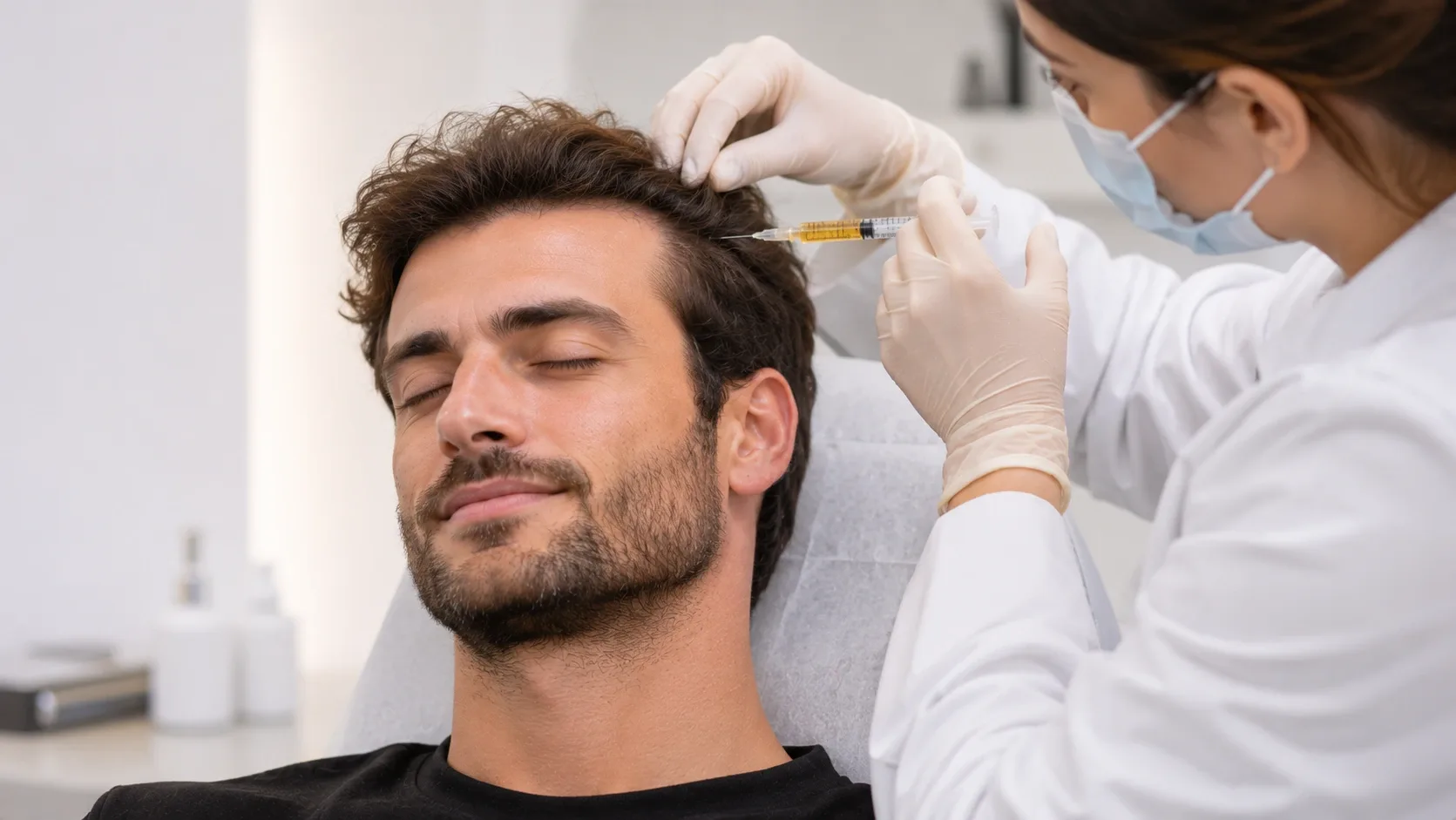
A PRF session involves three steps. The clinician draws blood, processes it in a centrifuge, and injects the PRF fraction into selected scalp regions. The whole appointment usually takes less than an hour.
How Is Blood Collected and Processed?
The clinician draws a small blood sample from the patient's arm. A centrifuge separates the blood components without anticoagulants. The PRF fraction is then prepared for injection using a strict protocol.
The process starts with a standard blood draw, usually 10 to 20 milliliters. The blood goes directly into sterile tubes. The centrifuge spins the tubes at a controlled speed, which separates red blood cells from the platelet and fibrin-rich layer.
PRF protocols use lower centrifugation speeds than older platelet concentrates. This preserves more cells within the fibrin matrix (Miron et al. 2017). Correct handling matters. The clinician must inject the PRF within a short window before the fibrin fully polymerizes.
How Is PRF Applied to the Scalp?
The practitioner cleans the treatment area, applies local anesthesia when needed, and injects PRF into selected scalp regions. Recently transplanted areas stay off-limits until the surgeon confirms they are ready.
The session begins with scalp preparation and disinfection. Many patients receive a topical anesthetic cream or a local injection to reduce discomfort. The practitioner then maps the treatment zones based on the patient's scalp condition and thinning pattern.
The injections follow a grid pattern across the target areas. The practitioner places small amounts of PRF into the dermis at regular intervals. Distribution planning is essential. Thinning zones with active native follicles receive priority because they can still respond to regenerative stimulation.
How Long Does a PRF Session Take?
A typical PRF session takes 45 to 60 minutes. Blood collection and preparation need about 20 minutes. Scalp assessment and injections take the remaining time.
Blood draw and centrifugation form the first stage. Scalp evaluation, anesthesia, and the injection process form the second stage. Larger treatment areas extend the appointment. Each patient's protocol differs.
Do not confuse one appointment with the full program. A single session delivers one dose of PRF. Most treatment plans involve a series of sessions over several months.
How Many PRF Sessions Are Needed After Hair Transplantation?
Most PRF treatment sessions follow a series of three to six applications at monthly intervals. The exact number depends on hair condition, treatment goals, and individual response. Maintenance sessions may follow.
PRF is not a single-session treatment. The biological stimulation of follicles requires repeated exposure to growth factors. One injection cannot sustain the effect over months.
Studies on androgenetic alopecia often use monthly intervals for the initial series (Mohale et al. 2024). Some programs add maintenance sessions every three to six months. These protocols come from non-surgical hair restoration research. They cannot transfer automatically to post-transplant patients.
Individualized planning is essential. The surgeon considers the healing stage, the extent of native hair thinning, and the patient's response before setting the schedule.
What Is the Expected PRF Results Timeline After Hair Transplant?
PRF results develop gradually over three to six months. The first weeks bring only biological changes, not visible growth. Noticeable changes in hair density and thickness require several months and consistent clinical assessment.
What Happens During the First Few Weeks?
The first weeks involve a biological response, not visible growth. Patients may notice temporary tenderness, redness, or swelling at injection sites. These effects resolve within days.
After injection, the fibrin matrix begins releasing growth factors into the tissue. This process activates local cell signaling. The scalp may feel tender, and small injection marks can remain visible for a few days.
Visible hair growth should not be expected at this stage. PRF recovery also differs from transplant healing. The two processes overlap in time but follow different biological courses.
When Can You Notice Changes in Hair Density?
Changes in hair density and thickness usually take three to six months to become visible. Hair grows in cycles, so follicular responses appear gradually.
The hair growth cycle explains the delay. Follicles spend months in the resting and early growth phases before producing a visible shaft. Growth factors can support this process, but they cannot shorten it dramatically (Miron et al. 2017).
Consistent clinical assessment helps track progress. Photographic comparison and trichoscopy measurements show changes that the eye may miss. Patients should also separate PRF-related improvement from the natural growth of transplanted hair, which follows its own timeline.
How Long Can PRF Results Last?
PRF results vary between individuals and often last several months. Maintenance treatments may extend the effect. PRF does not guarantee permanent protection against future hair loss.
The duration of results depends on the patient's biology and the progression of androgenetic alopecia. Some patients maintain improvements for six months or longer. Others need earlier maintenance sessions.
Ongoing hair loss can gradually reduce the visible benefit. A long-term plan often combines PRF with medical treatments that address the hormonal cause of hair loss.
PRF vs PRP After Hair Transplant: What Is the Difference?
PRF and PRP both come from the patient's blood. PRF uses slower centrifugation without anticoagulants and forms a fibrin matrix that releases growth factors slowly. PRP releases growth factors faster. Neither has proven superiority for post-transplant graft survival.
Platelet-Rich Plasma (PRP) is the older of the two concentrates. It requires anticoagulants and higher centrifugation speeds. The final product is a liquid plasma rich in platelets but without a fibrin scaffold.
PRF forms a three-dimensional fibrin network. This network traps platelets and white blood cells and releases growth factors over a longer period (Dohan Ehrenfest et al. 2009). The slower release is the main theoretical advantage of PRF for tissue regeneration.
The table below summarizes the key differences.
Feature | PRF | PRP |
Anticoagulant | Not used | Required |
Centrifugation speed | Lower, slower spin | Higher, faster spin |
Fibrin matrix | Present | Absent |
Growth factor release | Gradual, over days | Rapid, within hours |
White blood cells | Present | Mostly removed |
Consistency | Gel-like clot | Liquid |
Both treatments appear in scalp regeneration research. A meta-analysis of PRP trials found a mean increase of about 27.5 hairs per square centimeter over control, though the authors rated the evidence as low quality (Kieling et al. 2024). No controlled trial has established PRF or PRP as superior for improving post-transplant graft survival. The choice should follow clinical assessment and available evidence.
Who Is a Suitable Candidate for PRF After Hair Transplant?
Suitable candidates have completed the initial healing phase, hold medical clearance from their surgeon, and retain functioning native follicles. Patients with realistic expectations benefit most from this PRF hair treatment.
Good candidates share several characteristics. They have finished the early recovery period. Their surgeon has confirmed graft stability. They show continued thinning in non-transplanted areas, or they carry early to moderate androgenetic alopecia with active native follicles.
PRF suits patients who want a complementary, minimally invasive treatment. It also requires realistic expectations. Regenerative treatments support existing follicles. They do not create new ones.
Extensive baldness without functioning follicles responds poorly to PRF alone. The evaluation should cover donor area condition, recipient area healing, and overall scalp health. A medical professional must make the final decision.
Is PRF After Hair Transplant Safe?
PRF carries a favorable safety profile because it uses the patient's own blood. Allergic reactions are unlikely. Sterile technique and proper medical screening remain essential, since autologous material does not remove every risk.
The autologous nature of PRF is its main safety advantage. The body recognizes its own blood components, so immune rejection and allergic reactions are rare (Karimi and Rockwell 2019).
Safety still depends on process quality. Blood collection, processing, and injection must follow sterile protocols. The clinician must also review the patient's medical history. Blood disorders, active infections, and certain medications can affect suitability.
What Are the Possible Side Effects of PRF?
Common side effects include temporary tenderness, redness, swelling, minor bruising, and irritation at injection sites. Infection is rare but possible. Contact your healthcare provider if symptoms worsen or persist.
Most side effects resolve within a few days. Patients report the following:
Temporary scalp tenderness or discomfort
Localized redness and swelling
Minor bleeding or bruising around injection sites
Temporary irritation or sensitivity
Rare injection-related complications such as infection
Patients should contact their healthcare provider if they notice spreading redness, fever, severe pain, or discharge from injection sites.
What Aftercare Is Necessary Following PRF Treatment?
PRF aftercare involves gentle scalp handling, avoiding pressure on injection sites, and following the practitioner's washing instructions. PRF aftercare may differ from standard hair transplant aftercare, so follow the clinician's specific guidance.
The first 24 to 48 hours require care. Patients should avoid scratching, rubbing, or pressing the injection sites. The practitioner will explain when and how to wash the scalp.
Physical activity that causes heavy sweating or scalp irritation should wait until the clinician approves it. The same applies to styling products, sprays, or chemical treatments. Patients should only change medications or supplements when the treating clinician recommends it.
Follow-up appointments matter. They allow the practitioner to assess scalp condition and treatment response before planning the next session.
Can PRF Be Combined With Other Hair Restoration Treatments?
Yes, PRF can combine with minoxidil, finasteride, or low-level laser therapy under professional supervision. Each treatment works through a different mechanism, so combinations may support a comprehensive hair restoration plan.
PRF and Minoxidil
Minoxidil is a topical medication that supports hair growth by improving blood flow and prolonging the growth phase of follicles. Its mechanism differs completely from PRF. One study found that PRF combined with minoxidil produced greater improvements in hair count and density than either treatment alone (Wu et al. 2023). Patients should still consult their physician before restarting or adjusting minoxidil after surgery.
PRF and Finasteride
Finasteride is an oral medication that reduces DHT activity. It addresses the hormonal cause of androgenetic alopecia and protects susceptible native hair. This hormonal management differs from regenerative scalp treatment. The two approaches target different problems and can work in parallel under medical guidance.
PRF and Low-Level Laser Therapy
Low-level laser therapy uses light energy to support follicular activity. It stimulates cellular metabolism in the follicle, while PRF delivers growth factors. The mechanisms do not overlap. Some practitioners combine them in supervised programs, though controlled evidence for combined protocols remains limited.
Can PRF Replace a Hair Transplant?
No, PRF cannot replace a hair transplant. PRF stimulates existing follicles. A transplant surgically relocates follicles into bald areas. Completely bald zones without functional follicles require surgery.
The fundamental difference lies in the mechanism. PRF works only where living follicles exist. It can thicken miniaturized hairs and support weak follicles. It cannot regenerate a follicle that has disappeared.
Patients with early or moderate thinning may benefit from PRF as a primary treatment. Patients with extensive permanent hair loss need transplantation for visible coverage. The table below compares the two approaches.
Aspect | PRF | Hair Transplant |
Mechanism | Stimulates existing follicles | Relocates healthy follicles |
Invasiveness | Minimally invasive injections | Surgical procedure |
Best suited for | Early to moderate thinning | Extensive bald areas |
Creates new coverage | No | Yes |
Sessions | Multiple, ongoing | Usually one procedure |
Result permanence | Temporary, needs maintenance | Long-lasting for grafts |
Both treatments can share a role in one comprehensive plan. Surgery restores coverage. PRF supports the scalp environment and the remaining native hair.
What Does Scientific Research Say About PRF for Hair Restoration?
A 2024 systematic review found that injectable PRF improved hair density and growth in alopecia studies. The evidence base is small, with limited follow-up and varying protocols. No study has confirmed PRF's effectiveness specifically after hair transplantation.
The most relevant evidence comes from a 2024 systematic review by Mohale et al., titled "Effectiveness of Injectable Platelet-Rich Fibrin Therapy in Alopecia and Facial Rejuvenation." The review included seven studies with 130 patients. Three of these studies focused on alopecia and reported noticeable improvements in hair density and growth (Mohale et al. 2024).
The proposed mechanisms involve PRF growth factors, improved vascularization, and follicular cell proliferation. The fibrin matrix sustains the release of these factors, which may prolong the biological stimulus (Miron et al. 2017).
The review also lists clear limitations. Sample sizes were small. Protocols varied between studies. Follow-up periods were short. Most importantly, evidence for PRF in alopecia does not establish its effectiveness after hair transplantation. Researchers recommend further controlled studies to define the optimal timing, dosage, and post-operative outcomes.
Frequently Asked Questions About PRF After Hair Transplant
Does PRF Improve Hair Transplant Results?
PRF may support scalp regeneration and existing follicle activity after a transplant. No conclusive evidence proves that it improves graft survival.
The supportive role of PRF is biologically plausible. Growth factors aid tissue repair. However, clinical studies have not demonstrated a direct improvement in hair graft survival (Mohale et al. 2024). Patients should view PRF as a complement, not a guarantee.
Can PRF Damage Newly Transplanted Hair Grafts?
PRF performed too early or with poor technique could disturb grafts. Correct timing and surgical clearance prevent this risk.
Injection timing and technique determine safety. The grafts anchor firmly after the initial healing phase. A trained practitioner who respects the surgeon's timeline will not endanger the result.
Does PRF Help With Shock Loss After Hair Transplant?
PRF may theoretically support recovery from shock loss, which is usually temporary. Evidence for prevention remains limited.
Shock loss after hair transplant surgery affects native hairs stressed by the procedure. Most of these hairs regrow within months. PRF may support the follicles during this period, but no controlled study confirms that it prevents shock loss.
Is PRF Better Than PRP After Hair Transplant?
No study proves one is superior. PRF releases growth factors more slowly through its fibrin matrix, but both lack conclusive post-transplant evidence.
The two concentrates differ in preparation and composition. PRF contains a fibrin scaffold and white blood cells. PRP acts faster but shorter. The available data does not establish a clear winner for post-transplant use (Dohan Ehrenfest et al. 2009).
Can PRF Make Transplanted Hair Grow Faster?
PRF may support the biological environment around grafts, but faster transplanted hair growth has not been proven in clinical studies.
Regenerative mechanisms could theoretically influence the growth cycle. Transplanted hair follows its own timeline of shedding and regrowth. No clinical trial has shown that PRF accelerates this process.
How Often Should PRF Be Repeated After Hair Transplant?
Frequency depends on individual needs and the clinical protocol. Initial series often use monthly sessions, followed by maintenance treatments.
There is no fixed rule. The treating clinician adjusts the schedule based on response, scalp condition, and hair goals. Maintenance sessions may sustain the benefit over time.
Is PRF Suitable for Both FUE and DHI Hair Transplants?
Yes, PRF may follow both FUE and DHI techniques. The surgeon determines the correct timing based on individual healing.
The transplantation technique changes the surgical method, not the biology of healing. PRF can support recovery after either approach. The surgeon's clearance remains the deciding factor.
Does PRF Provide Permanent Hair Growth?
No, PRF provides temporary stimulation of existing follicles. Permanent coverage comes only from surgical follicle relocation, and ongoing hair loss management may still be necessary.
PRF supports follicles while the treatment continues. Androgenetic alopecia progresses independently. A long-term strategy often combines regenerative, medical, and surgical options to protect the overall result.
Conclusion: Should You Consider PRF After Hair Transplant?
PRF after hair transplant offers a biologically grounded, minimally invasive option to support scalp healing and native hair. It works best as part of a medically supervised plan with realistic expectations.
PRF after hair transplant sits at the intersection of surgery and regenerative medicine. The treatment uses the patient's own blood to deliver growth factors through a fibrin matrix. This mechanism may support tissue repair, existing follicle activity, and long-term scalp health.
The evidence base is promising but incomplete. Studies confirm benefits in androgenetic alopecia, yet post-transplant data remains limited. Timing, technique, and medical assessment determine safety and value. Patients who combine realistic expectations with professional guidance gain the most from this PRF hair restoration approach. Consult your hair transplant surgeon before scheduling any session, and treat PRF as one component of a complete hair restoration plan.
References
Dohan Ehrenfest, David M., et al. "Classification of Platelet Concentrates: From Pure Platelet-Rich Plasma (P-PRP) to Leucocyte- and Platelet-Rich Fibrin (L-PRF)." Trends in Biotechnology, vol. 27, no. 3, 2009, pp. 158-167.
Karimi, Kian, and Hallie Rockwell. "The Benefits of Platelet-Rich Fibrin." Facial Plastic Surgery Clinics of North America, vol. 27, no. 3, 2019, pp. 331-340.
Kieling, Lucas, et al. "Is Autologous Platelet-Rich Plasma Capable of Increasing Hair Density in Patients with Androgenic Alopecia? A Systematic Review and Meta-Analysis of Randomized Clinical Trials." Anais Brasileiros de Dermatologia, vol. 99, no. 6, 2024, pp. 847-862.
Miron, Richard J., et al. "Injectable Platelet Rich Fibrin (i-PRF): Opportunities in Regenerative Dentistry?" Clinical Oral Investigations, vol. 21, no. 8, 2017, pp. 2619-2627.
Mohale, Sandip A., et al. "Effectiveness of Injectable Platelet-Rich Fibrin Therapy in Alopecia and Facial Rejuvenation: A Systematic Review." Cureus, vol. 16, no. 6, 2024, e62198.
Wu, Pei-I., et al. "The Efficacy of Platelet-Rich Fibrin Combined with Minoxidil in Androgenetic Alopecia." Journal of Cosmetic Dermatology, 2023.