
What Is the PRF Hair Growth Timeline for Visible Results?
Most patients notice early changes within one to three months, while more visible improvements in hair thickness and coverage often appear between three and six months.
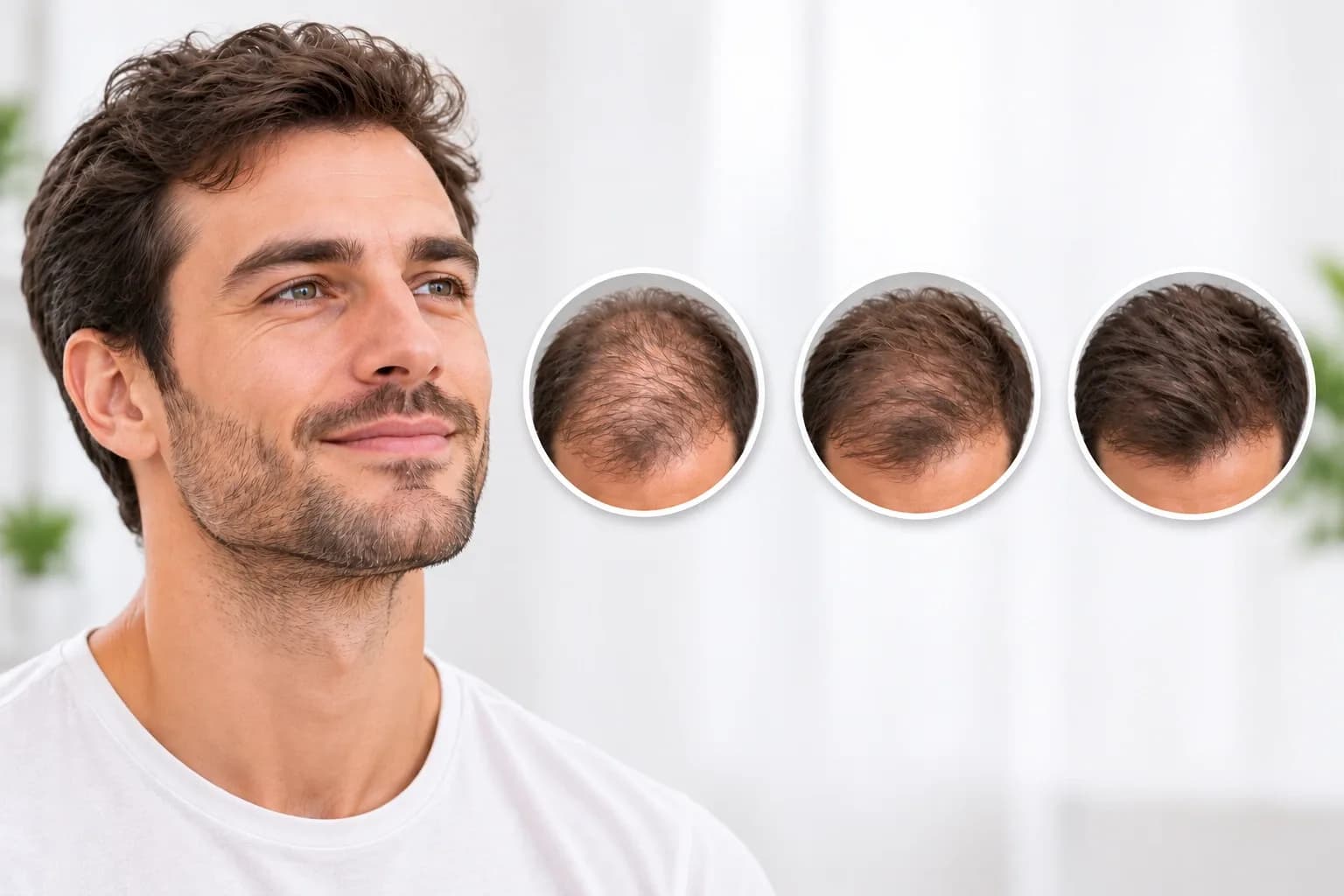
Most patients notice early changes within one to three months, while more visible improvements in hair thickness and coverage often appear between three and six months.
Platelet-rich fibrin, or PRF, offers a nonsurgical approach to hair restoration. A clinician draws a small sample of the patient’s blood, processes it, and injects the platelet-rich portion into areas of thinning hair. Because PRF works with the body’s natural healing response, it does not create instant growth. Hair follicles follow biological cycles, so visible change develops gradually.
The PRF hair growth timeline usually begins with short-term scalp recovery. Early follicular changes may follow. Visible PRF hair treatment results then develop as hair texture, shedding, thickness, and density change. Individual outcomes vary according to the cause of hair loss, follicle health, age, genetics, treatment consistency, and the clinical protocol.
Timeline stage | What may happen | What it usually means |
Days 1 to 7 | Tenderness, redness, mild swelling, or sensitivity | Normal injection-site recovery |
Weeks 2 to 4 | Biological signaling begins without obvious growth | Early follicular activity may have started |
Months 1 to 3 | Changes in shedding, texture, or fine hairs | First possible signs of PRF hair growth results |
Months 3 to 6 | Improved thickness, coverage, or scalp visibility | Common period for visible assessment |
Month 6 onward | Continued change or stable improvement | Suitable point for overall evaluation |
Clinicians treat this table as an approximate guide rather than a guaranteed schedule. A dermatologist may use standardized photographs, dermoscopy, hair density measurements, and patient history to assess progress objectively.
How Does PRF Stimulate Hair Growth?
PRF delivers concentrated platelets, growth factors, and a fibrin matrix to the scalp. These biological components may support weakened follicles and improve the local scalp environment.
PRF belongs to the family of autologous platelet concentrates. The term “autologous” means that the preparation comes from the same person who receives the treatment. This reduces concerns about donor compatibility and foreign biological material.
A clinician collects a small blood sample and places it in a centrifuge. The spinning process separates the blood according to the density of its components. The resulting PRF preparation contains platelets, white blood cells, fibrin, and plasma proteins. Unlike many PRP protocols, traditional PRF preparation usually avoids adding an anticoagulant. This difference matters because the fibrin network can form naturally and create a biological scaffold around the platelets.
Platelets release growth factors such as platelet-derived growth factor, transforming growth factor beta, vascular endothelial growth factor, and insulin-like growth factor. These proteins influence cell communication, blood vessel formation, tissue repair, and extracellular matrix activity. In a thinning scalp, PRF may improve the microenvironment around existing follicles rather than create entirely new ones.
The fibrin matrix gives PRF an important biological characteristic. It can store growth factors and release them gradually. In comparative laboratory research, PRP released higher growth factor levels early, while advanced PRF released more total growth factors over a ten-day period (Kobayashi et al. 2016). This sustained release supports the clinical theory behind PRF hair restoration, but laboratory behavior does not guarantee identical results in every patient.
PRF does not replace follicles that have disappeared completely. It may support miniaturized follicles that still retain biological activity. This distinction explains why early and moderate thinning often respond more predictably than long-standing bald areas.
PRF vs. PRP: What Is the Difference?
PRP and PRF share the same biological source, but their preparation and release characteristics differ. PRP usually requires anticoagulated blood and often uses a double-spin process. PRF usually relies on a lower-speed preparation and a natural fibrin structure. Injectable PRF remains fluid long enough for scalp injections, while the fibrin network forms after placement.
Feature | PRF | PRP |
Primary structure | Fibrin matrix with platelets and white blood cells | Liquid plasma with concentrated platelets |
Anticoagulant | Usually not added | Usually required |
Common preparation | Lower-speed centrifugation | Single-spin or double-spin centrifugation |
Growth factor release | Slower and more sustained | Faster initial release |
Clinical evidence for hair loss | Emerging | Larger but still variable |
Best interpretation | Potentially supportive regenerative treatment | Established autologous treatment with protocol variation |
No current evidence proves that PRF works universally better than PRP. Treatment choice depends on the diagnosis, scalp condition, provider protocol, and patient goals. Dhurat and Sukesh emphasize that platelet concentrate preparation varies widely, so standardized methods and realistic outcome measures remain essential in clinical practice (2014).
How Does the PRF Hair Growth Timeline Progress at Each Stage?
The timeline moves from injection recovery to hidden follicular signaling, then to early texture changes, visible density changes, and finally a broader clinical assessment.
Each stage measures a different type of change. Recovery symptoms reflect the injection process. Shedding and texture reflect follicular activity. Density and coverage reflect the combined effect of several follicles producing stronger hair shafts. For this reason, a patient should not judge the entire treatment by the first week or even the first month.
What Happens During Days 1 to 7 After PRF Injections?
Most patients experience mild and temporary injection effects rather than immediate hair growth.
Common symptoms include scalp tenderness, redness, swelling, sensitivity, pinpoint bleeding, or mild discomfort around injection sites. These effects reflect the physical placement of fluid into the scalp. They do not indicate that new hair has already formed.
Many patients return to normal daily activities soon after treatment, depending on the provider’s instructions. A clinician may advise patients to avoid harsh scalp products, intense exercise, excessive heat, or unnecessary touching of the treatment area during the initial recovery period. Individual aftercare instructions should take priority over general guidance.
The first week matters because proper recovery creates a suitable environment for the next stage. It does not provide meaningful evidence of success or failure.
What Happens During Weeks 2 to 4 After PRF Injections?
Biological activity may begin during this stage, but visible density changes usually remain unlikely.
Growth factors can influence cellular signaling before the patient sees any difference in the mirror. Some patients report reduced shedding. Others notice scalp comfort, hair texture, or styling changes. These early observations remain subjective and may fluctuate with stress, seasonal shedding, nutrition, hormones, or recent illness.
A patient should not expect substantial regrowth during the first month. Hair follicles do not move into a new growth phase instantly, and newly emerging hairs remain short and fine at first. The absence of visible change after four weeks does not mean that PRF has failed.
This stage rewards patience rather than daily mirror checks. Consistent aftercare and adherence to the planned treatment schedule provide more useful information than frequent visual inspection.
What Happens During Months 1 to 3 After PRF Injections?
This period may bring the first meaningful changes in shedding, texture, or fine new hair.
Individual follicles respond at different speeds. Some follicles may enter a stronger growth phase earlier, while others need more time. Patients with thinning but active follicles may notice that individual hairs feel stronger or appear less fragile. Fine new hairs may emerge in areas that still retain viable follicles.
Changes often become easier to observe where hair has thinned rather than disappeared. A part line may look less pronounced under certain lighting. Hair breakage may decrease. The patient may also notice different shedding patterns as older hairs make room for new growth.
Standardized photographs provide better evidence than memory. The patient should use the same lighting, camera distance, hair length, styling method, and part position. Small differences can disappear under harsh bathroom lighting and reappear under natural light, so consistent documentation reduces false conclusions.
What Happens During Months 3 to 6 After PRF Injections?
This interval often offers the first reliable opportunity to assess visible thickness and density.
By this stage, multiple follicles may produce stronger hair shafts. The patient may notice fuller coverage, less scalp visibility, improved volume, or hair that withstands styling with less breakage. Others may see modest change that only dermoscopy or hair density measurements can confirm.
Not every patient experiences dramatic improvement. Some see subtle enhancement. Some see stronger hair quality without major density change. A smaller group may see limited response despite completing the initial course.
Clinicians often evaluate progress after the initial treatment series and several months of growth. In a randomized PRP study, three monthly treatments produced measurable improvement by the end of the treatment cycle, which shows why a full protocol matters more than a single session (Gentile et al. 2017). PRF studies use different protocols, so clinicians should assess the response within the context of the specific treatment plan.
What Happens Six Months After PRF Hair Treatment?
Six months provides a practical point for evaluating overall density, thickness, shedding, and the possible need for maintenance.
Some patients continue to improve beyond six months, particularly when the final sessions occurred later in the treatment course. Others reach a stable plateau. A plateau does not necessarily indicate treatment failure. It may show that the existing follicles have responded as much as they can under current biological conditions.
The clinician may compare baseline and follow-up photographs, examine hair shaft diameter, review shedding history, and assess whether the pattern of hair loss has stabilized. The clinician may then recommend PRF maintenance treatments, additional medical therapy, or another strategy if progress remains limited.
The distinction between maximum improvement and long-term maintenance matters. Maximum improvement describes the best response after the initial course. Maintenance describes the effort required to preserve that response over time.
How Many PRF Hair Treatment Sessions Are Usually Needed?
Most treatment plans involve an initial series of approximately three to four sessions, followed by clinical reassessment.
A single PRF session may trigger biological activity, but clinicians rarely use one session as the full treatment course. Hair restoration requires repeated signaling, follicle recruitment, and time for new hairs to become visible.
Providers often schedule sessions about four to six weeks apart. Published protocols vary. Bhoite et al. studied four injectable PRF sessions at two-week intervals alongside microneedling and background medical therapy in 15 patients with androgenetic alopecia (2022). The study reported clinical improvement in 11 of 15 participants, but its small size and combined treatment design limit broad conclusions.
The treatment interval influences when the patient can evaluate results. A person who completes three sessions over three months reaches the assessment stage earlier than someone who completes three sessions over six months. The provider should tailor the schedule to the diagnosis, scalp condition, treatment response, and medical history.
Maintenance sessions differ from the initial series. The initial course aims to stimulate and support follicles. Maintenance sessions aim to preserve the response and manage ongoing hair loss biology.
What Factors Can Affect Your PRF Hair Regrowth Timeline?
The cause of hair loss, follicle viability, severity, age, genetics, health, and treatment consistency can all change the speed and degree of response.
Androgenetic alopecia develops through follicle miniaturization and shortening of the growth phase. Telogen effluvium follows a shift of hairs into the resting and shedding phase. Alopecia areata involves immune-mediated follicle disruption. Scarring alopecias can permanently damage follicles. Each condition creates a different biological starting point.
Influencing factor | How it may affect the timeline |
Cause of hair loss | Hormonal, immune, nutritional, and stress-related conditions respond differently |
Severity of thinning | Early miniaturization often responds better than advanced loss |
Follicle viability | Active follicles provide the biological target for PRF |
Age and genetics | Hair cycle dynamics and androgen sensitivity vary between patients |
General health | Nutrition, thyroid function, anemia, and illness can influence shedding |
Treatment consistency | Missed sessions can delay or weaken the assessment |
Complementary therapy | Medical treatment may stabilize the underlying cause while PRF supports follicles |
A patient with active but weakened follicles may respond within the standard timeline. A patient with extensive follicle loss may see little visible change because PRF cannot regenerate follicles that no longer exist. This biological reality supports the need for diagnosis before treatment.
How Can You Evaluate PRF Hair Restoration Before and After Treatment?
Standardized photographs, consistent observation conditions, and clinical scalp assessment provide a more reliable view than daily mirror checks.
A useful PRF hair restoration before and after comparison begins before the first injection. The patient should photograph the hairline, crown, part line, and any targeted thinning areas under consistent lighting. The hair should remain unwashed or washed according to the same routine for each set of images.
Clinicians may supplement photographs with dermoscopy. This tool allows close examination of hair shaft diameter, follicular openings, scalp inflammation, and the ratio of thicker to thinner hairs. These details can reveal change before the patient notices obvious visual improvement.
Observation | Possible meaning | Limitation |
Reduced shedding | Fewer hairs may enter the shedding phase | Daily shedding varies naturally |
Stronger texture | Hair shafts may have improved quality | Hair products can alter texture |
Fine new hairs | Early follicular activity may have begun | Fine hair takes months to become visible |
Better coverage | Multiple follicles may contribute stronger hairs | Lighting and hairstyle can distort the result |
Stable shedding pattern | Hair loss may have slowed | Stability does not always equal regrowth |
Reduced shedding alone does not prove success. Stress, seasonal change, medication, illness recovery, and recent hair washing can all alter shedding counts. A clinician interprets each sign within the broader scalp examination.
How Long Do PRF Hair Growth Results Last?
PRF hair growth results may persist for months, but the exact duration varies and often requires maintenance.
PRF does not remove the biological causes of progressive hair loss. Androgen sensitivity, genetic follicle miniaturization, aging, hormonal shifts, and health-related shedding can continue after treatment. For this reason, successful regrowth and permanent stabilization are not the same outcome.
Some patients retain visible improvement for several months after the initial course. Others notice gradual thinning again as the underlying condition progresses. A clinician may recommend PRF maintenance treatments every six to twelve months, depending on the response, diagnosis, and rate of hair loss.
Maintenance planning should remain flexible. A patient with rapidly progressing androgenetic alopecia may need a different schedule from someone with stable, mild thinning. Combining PRF with evidence-based medical treatment may also improve long-term control when the clinician considers it appropriate.
What Happens If PRF Hair Treatment Produces Limited Visible Results?
Limited response can result from advanced follicle loss, an incorrect diagnosis, an untreated trigger, or individual biological variability.
A patient who completes the recommended course without meaningful improvement should not immediately repeat the same plan. Clinical reassessment can identify whether another condition contributes to hair loss. The dermatologist may review medical history, medications, nutritional status, thyroid function, hormonal factors, scalp inflammation, and the pattern of shedding.
Possible reason for limited response | Appropriate next step |
Advanced follicle loss | Assess whether remaining follicles can still respond |
Misdiagnosed hair loss | Confirm the diagnosis through examination and dermoscopy |
Ongoing hormonal or nutritional trigger | Treat the underlying cause |
Incomplete treatment course | Review adherence and the original plan |
Rapid genetic progression | Consider broader medical management |
Stable bald areas without follicles | Discuss surgical or prosthetic options where suitable |
Alternative options may include topical or oral medical treatments, antiandrogen therapy for appropriate candidates, corticosteroid treatment for certain immune-mediated alopecias, or hair transplantation for stable patterned loss. Stevens and Khetarpal emphasize the need for patient selection, standardized protocols, and realistic treatment planning in androgenetic alopecia management (2018).
A qualified healthcare professional should guide these decisions. PRF works best as part of an informed plan rather than a stand-alone solution for every type of hair loss.
What Side Effects and Recovery Should You Expect During the PRF Hair Growth Timeline?
Most side effects remain local, mild, and temporary. Severe, worsening, or persistent symptoms require medical review.
Common effects include injection-site tenderness, redness, swelling, minor bruising, itching, or short-term discomfort. These symptoms relate to the procedure rather than to the follicular changes that drive hair growth. Most patients tolerate the treatment well and resume normal activities quickly.
Sterile technique and careful patient screening reduce avoidable risk. The clinician should review bleeding disorders, active scalp infection, systemic illness, medication use, pregnancy, and other relevant factors before treatment. The patient should follow individualized aftercare advice and avoid unnecessary scalp irritation.
Warning signs include spreading redness, severe pain, pus, fever, increasing swelling, or symptoms that persist beyond the expected recovery period. The patient should contact the treating healthcare provider if any of these signs appear.
Who Is Most Likely to Benefit From PRF Hair Restoration?
Patients with early or moderate thinning and viable follicles may benefit most from clinical assessment for PRF.
The strongest candidates usually retain visible hair in the thinning area. Miniaturized follicles can often respond to regenerative signals, while areas without follicles offer no biological target for stimulation. This principle applies especially to androgenetic alopecia and other non-scarring conditions.
Patchy hair loss, unexplained shedding, scalp inflammation, or rapid progression requires diagnosis before PRF. A clinician should distinguish pattern hair loss from alopecia areata, telogen effluvium, traction alopecia, infection, and scarring disease. Each diagnosis changes the prognosis and treatment plan.
PRF does not guarantee restoration of complete baldness or every form of alopecia. Current research remains promising but limited. A systematic review found that three studies involving 22 patients reported noticeable improvement in hair density and growth, while also noting the need for larger controlled trials and longer follow-up (Mohale et al. 2024).
A dermatologist or hair restoration specialist can determine whether PRF fits the diagnosis, stage of hair loss, medical history, and patient expectations.
What Do Patients Frequently Ask About the PRF Hair Growth Timeline?
The most common questions concern speed, visible change, session count, longevity, and what to do when progress appears limited.
The answers below provide general educational guidance. A clinician should personalize every treatment decision.
How Long Does PRF Take to Work for Hair Loss?
Some patients notice early changes within two to three months, while visible improvement often develops between three and six months.
Early changes may involve shedding, texture, or fine hair. Stronger changes in thickness and coverage usually need more time. The biological hair cycle, rather than the injection date alone, controls much of this pace.
Can PRF Hair Treatment Show Results After One Session?
Some patients may notice early changes after one session, but clinicians commonly recommend a full initial course.
One session can initiate biological signaling. However, visible and measurable change usually requires repeated treatment and several months of growth. Individual response varies.
Is It Normal to See No Hair Growth After One Month of PRF?
Yes, the absence of visible growth after one month remains common.
Hair follicles follow anagen, catagen, telogen, and shedding phases. New hairs need time to emerge and mature. A lack of visible change at four weeks does not by itself indicate failure.
When Should You Expect the Most Noticeable PRF Hair Growth?
The three-to-six-month period often provides the most useful window for visible assessment.
This period remains a guide rather than a guaranteed peak. Treatment spacing, diagnosis, severity, and follicle health can move the timeline earlier or later.
Does PRF Stop Hair Loss Permanently?
No, PRF does not permanently eliminate the underlying causes of hair loss.
The treatment may improve follicle activity and temporarily support density. Genetic, hormonal, age-related, or health-related hair loss can continue. Maintenance and broader management may therefore remain necessary.
Is PRF More Effective Than PRP for Hair Growth?
Current evidence does not prove that PRF works universally better than PRP.
PRF offers a fibrin matrix and slower growth factor release. PRP has a larger body of clinical research but also uses highly variable preparation methods. Treatment choice depends on the evidence, protocol, diagnosis, and individual needs.
Can You Combine PRF With Other Hair Loss Treatments?
A clinician may combine PRF with other evidence-based treatments when the diagnosis supports that approach.
Possible combinations can include medical therapy, nutritional correction, scalp care, microneedling, or hair transplantation support. The clinician should review safety, timing, and treatment goals before combining therapies.
When Should You Consult a Dermatologist If PRF Is Not Working?
Seek professional reassessment when hair loss worsens or when the planned treatment course ends without meaningful improvement.
Earlier consultation may become necessary if shedding accelerates, bald patches expand, scalp inflammation develops, or symptoms suggest another diagnosis. Prompt evaluation can prevent lost time and guide more appropriate treatment.
References
Bhoite, Ketki S., et al. “Injectable Platelet Rich Fibrin Therapy for Androgenetic Alopecia: A Series of 15 Cases.” International Journal of Research in Dermatology, vol. 8, no. 4, 2022, pp. 398-402. https://doi.org/10.18203/issn.2455-4529.IntJResDermatol20221637.
Dhurat, Rachita, and Sukesh M. “Principles and Methods of Preparation of Platelet-Rich Plasma: A Review and Author’s Perspective.” Journal of Cutaneous and Aesthetic Surgery, vol. 7, no. 4, 2014, pp. 189-197. https://doi.org/10.4103/0974-2077.150734.
Dohan Ehrenfest, David M., et al. “Platelet-Rich Fibrin: A Second-Generation Platelet Concentrate. Part I: Technological Concepts and Evolution.” Oral Surgery, Oral Medicine, Oral Pathology, Oral Radiology, and Endodontology, vol. 101, no. 3, 2006, pp. e37-e44.
Gentile, Pietro, et al. “The Effect of Platelet-Rich Plasma in Hair Regrowth: A Randomized Placebo-Controlled Trial.” Stem Cells Translational Medicine, vol. 6, no. 2, 2017, pp. 595-597.
Kobayashi, Eizaburo, et al. “Comparative Release of Growth Factors from PRP, PRF, and Advanced-PRF.” Clinical Oral Investigations, vol. 20, no. 9, 2016, pp. 2353-2360. https://doi.org/10.1007/s00784-016-1719-1.
Mohale, Sandip A., et al. “Effectiveness of Injectable Platelet-Rich Fibrin Therapy in Alopecia and Facial Rejuvenation: A Systematic Review.” Cureus, vol. 16, no. 6, 2024, e62198. https://doi.org/10.7759/cureus.62198.
Stevens, Janna, and Shilpi Khetarpal. “Platelet-Rich Plasma for Androgenetic Alopecia: A Review of the Literature and Proposed Treatment Protocol.” International Journal of Women’s Dermatology, vol. 4, no. 2, 2018, pp. 46-49.