

What Is the PRF Recovery Timeline and What Should You Expect Week by Week?
The PRF recovery timeline has two distinct phases. Injection-related recovery, such as tenderness and redness, usually settles within days to one week.
The PRF recovery timeline has two distinct phases. Injection-related recovery, such as tenderness and redness, usually settles within days to one week. Visible hair changes, however, develop over three to six months because PRF interacts with the hair growth cycle rather than forcing instant regrowth.
Platelet-rich fibrin, or PRF, is an autologous treatment. Autologous means the material comes from your own blood. A clinician draws a small blood sample, spins it in a centrifuge, and prepares a fibrin matrix rich in platelets and growth factors. The clinician then injects this material into targeted areas of the scalp to support hair restoration and scalp health (Bhoite et al. 2022).
Recovery works as a gradual biological process, not a switch. The injection sites heal first. Hair follicle activity changes later. This article explains both phases so you can set realistic expectations and evaluate your progress correctly.
What Happens During a PRF Hair Treatment?
A clinician draws your blood, centrifuges it without anticoagulants to form a fibrin clot, and injects the prepared PRF into thinning areas of the scalp. The entire visit typically takes under an hour.
The procedure follows a clear sequence. First, the clinician collects blood into tubes. Second, the tubes spin in a centrifuge. This step separates the blood into layers. Third, the clinician extracts the fibrin layer that contains concentrated platelets, leukocytes, and a three-dimensional fibrin mesh. Finally, the clinician injects the PRF into the scalp using fine needles.
Platelets release growth factors such as platelet-derived growth factor, vascular endothelial growth factor, insulin-like growth factor 1, and transforming growth factor beta. These proteins signal cells involved in tissue repair and follicle support (El-Sharkawy et al. 2007). The fibrin matrix acts as a scaffold. It holds the growth factors in place and releases them slowly over days rather than hours.
Protocols vary between providers. Centrifugation speed, spin time, injection depth, and session spacing all differ. This variation matters later, because it directly shapes your personal PRF recovery timeline. Since PRF uses your own blood, it contains no foreign material. This property reduces concerns about allergic reactions and makes the treatment biocompatible by design.
What Should You Expect Immediately After PRF Treatment?
Most patients experience mild tenderness, redness, small bumps at injection sites, and a tight scalp sensation for the first few hours. These effects reflect a normal injection response, not a complication.
The scalp contains dense nerve endings. Multiple micro-injections trigger a short-lived inflammatory response. You may notice pinpoint marks where the needle entered the skin. Small raised wheals can appear at each injection point. These wheals usually flatten within hours.
Most patients return to normal daily activities the same day or the next day. The scalp simply feels different during the first evening. It may feel tender when touched or slightly swollen along the hairline. This sensation fades as the initial healing response completes. Expected effects include mild discomfort and transient redness. Concerning signs, which this article covers in a later section, look different in intensity and duration.
What Happens During the First 24 Hours After PRF?
Your scalp enters an acute healing phase during the first day. Tenderness peaks early and then declines. Follow your clinician's instructions on washing, touching, and physical activity.
The body responds to micro-injuries with inflammation. Blood flow increases around each injection site. Immune cells migrate into the tissue and begin cleanup and repair. This phase feels uncomfortable but serves a purpose. It prepares the environment where growth factors will act.
Standard aftercare advice during the first 24 hours includes avoiding touching, scratching, or massaging the scalp. Heat exposure from saunas, hot showers, and intense exercise increases blood flow and swelling. Most clinicians recommend skipping strenuous workouts for at least one day. Hair washing is usually delayed for a defined period, often 24 to 48 hours, to keep the injection sites undisturbed. Each rule exists for one reason: unnecessary irritation during this window can prolong the local recovery phase without improving your final result.
What Is the PRF Recovery Timeline During the First Week?
Injection-related redness, swelling, and tenderness typically fade within the first week. You should not expect visible hair growth during this period because biological activity below the surface has not yet produced surface changes.
The first week marks a transition. Tissue recovery after the injections completes, and the slower biological phase begins. Growth factors released from the fibrin matrix start interacting with the follicle environment. This interaction happens at the cellular level. You cannot see it in the mirror.
Individual recovery varies. Scalp sensitivity, treatment intensity, injection density, age, and general health all influence how quickly local symptoms settle. Most patients can return to their usual scalp-care routine within several days, following their provider's specific guidance. If your clinician used a more intensive protocol, local recovery may take a few days longer.
When Does PRF Start Affecting the Hair Growth Cycle?
PRF begins interacting with follicles within days, but this biological activity differs from visible regrowth. Follicles operate on their own schedule, and visible change must wait for the cycle to respond.
Human hair grows in cycles. The anagen phase is the active growth stage. The catagen phase is a short transition. The telogen phase is resting, after which the hair sheds. Androgenetic alopecia progressively miniaturizes follicles. Miniaturized follicles produce thinner hairs and spend less time in anagen (Stevens and Khetarpal 2018).
PRF does not restart a follicle overnight. Growth factors signal dermal papilla cells, which regulate follicle behavior. Research on injectable PRF shows that these signals can support dermal papilla cell activity in laboratory settings, which helps explain the proposed mechanism behind clinical improvement (Bhoite et al. 2022). Early results remain hard to assess because biological activity and visible density are two separate events separated by months.
What Changes Can You Expect Within the First Few Weeks?
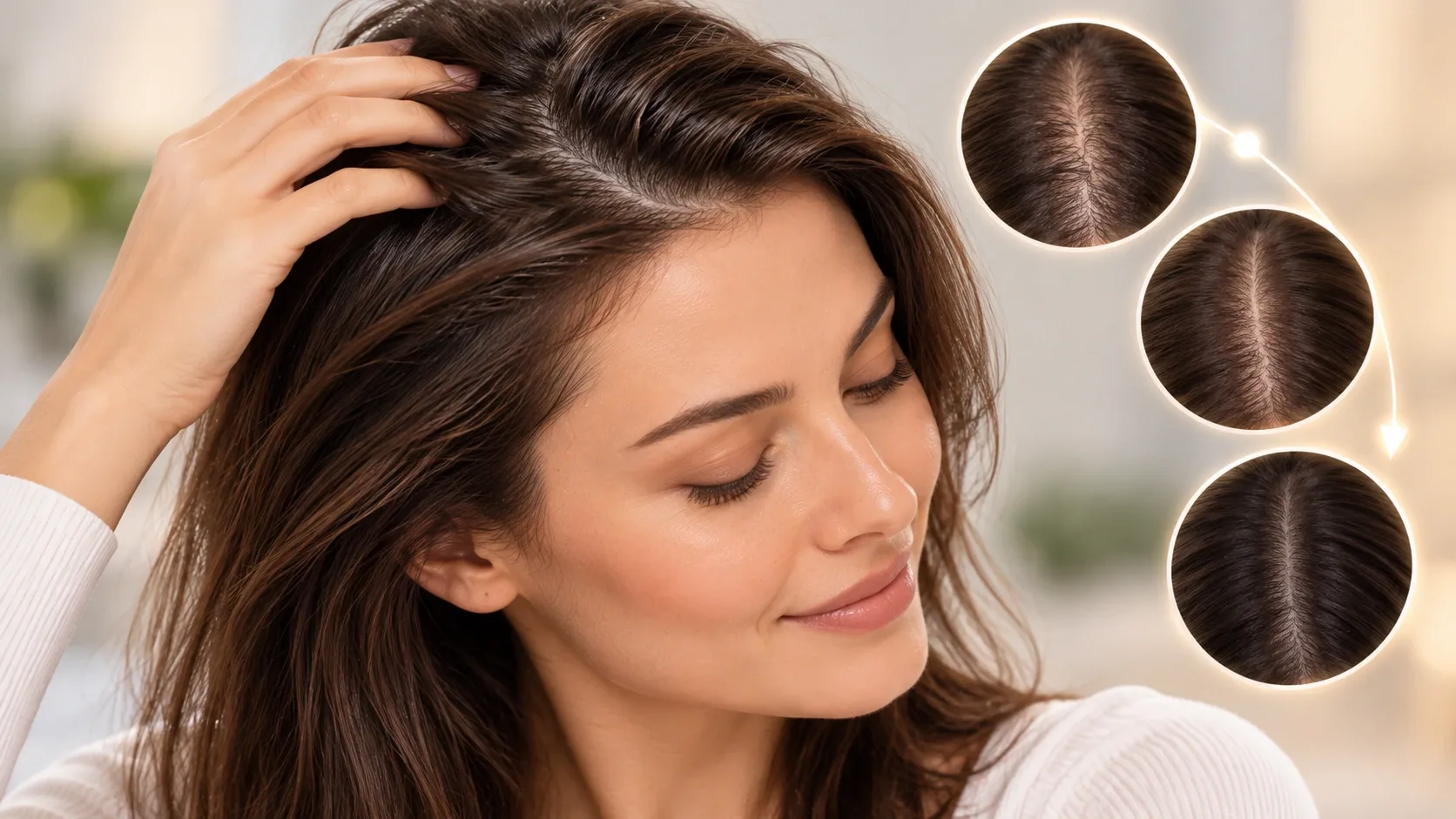
The scalp may look unchanged during the first few weeks even though biological activity continues. Some patients notice reduced shedding or improved scalp condition before any density change appears.
Responses vary considerably between individuals. One patient may report less hair in the shower drain by week four. Another may see no difference for two months. Neither outcome predicts the final result at this stage. This variability explains why clinicians evaluate progress through standardized photographs and measurements rather than daily mirror checks.
Photographs taken under consistent lighting, angles, and distance provide reliable comparison. Day-to-day observation fails because lighting and hair styling distort perception. Treat early changes as signals, not conclusions. A calmer scalp or reduced shedding suggests the follicle environment is responding, but definitive assessment requires more time.
When Do PRF Hair Results Usually Become Noticeable?
Most patients begin noticing visible changes between three and six months after starting treatment. Improvements develop progressively rather than appearing suddenly.
Clinical research supports this window. In controlled studies of autologous platelet preparations for pattern hair loss, measurable increases in hair density and thickness appeared around the four-to-six-month mark (Dubin et al. 2020; Tawfik and Osman 2018). Rodrigues and colleagues documented significant improvement at six months in a double-blind controlled study of male pattern alopecia (Rodrigues et al. 2019).
The response depends on the underlying cause and severity of hair loss. Early-stage thinning with many miniaturized but alive follicles responds better than long-bald areas where follicles have disappeared. This is why treatment should be evaluated over several months, not days. A single session followed by a two-week mirror check tells you almost nothing.
Which Factors Can Change the PRF Recovery Timeline?
Age, health, the cause of hair loss, baseline follicle condition, the PRF protocol, session spacing, and aftercare adherence all shift your personal timeline. No two patients follow an identical schedule.
The following table summarizes the main variables and their typical effects.
Factor | Effect on Recovery | Effect on Results |
Patient age and general health | Slower tissue healing in older patients | Age-related follicle changes may reduce response |
Cause of hair loss | Little effect on local recovery | Androgenetic alopecia responds differently from scarring alopecia |
Follicle miniaturization degree | No effect on injection recovery | Advanced miniaturization lowers potential regrowth |
PRF preparation and protocol | Denser injection patterns may extend local healing | Centrifugation method changes growth factor yield |
Number and spacing of sessions | More sessions extend total recovery days | Protocols of three to four sessions show stronger outcomes (Lee et al. 2015) |
Aftercare adherence | Poor adherence can prolong redness and tenderness | Irritation may compromise early follicle environment |
Concurrent treatments | Adds variables to local recovery | Combined approaches may influence overall density |
What Is the Difference Between PRF Recovery and PRF Results?
Recovery means the injection sites heal and symptoms settle, usually within days to a week. Results mean biological and visible hair changes, which take months. Feeling normal again does not mean the treatment has reached full effect.
This distinction prevents the most common misunderstanding in patient expectations. A patient who feels fine after three days may assume the treatment failed when no new hair appears at week two. In reality, the recovery phase ended on schedule, while the results phase has barely started. Symptom resolution and hair-growth outcomes operate on completely different clocks.
How Does PRF Compare With Other Hair Restoration Treatments?
PRF differs from PRP mainly in preparation. PRP uses anticoagulants and faster centrifugation. PRF avoids anticoagulants and spins at lower speed, which preserves a fibrin matrix and allows slower growth factor release. Transplantation moves follicles physically, while PRF works with existing follicles.
Feature | PRF | PRP | Hair Transplantation |
Source | Patient's own blood | Patient's own blood | Patient's own follicles |
Key component | Fibrin matrix with platelets and leukocytes | Platelet concentrate in plasma | Grafted follicular units |
Mechanism | Slow growth factor release | Faster growth factor release | Relocates viable follicles |
Recovery of treated area | Days to one week | Days | Weeks to months |
Visible results | Three to six months | Three to six months (Rodrigues et al. 2019) | Six to twelve months |
Best suited for | Early thinning, follicle support | Early thinning, follicle support | Permanent bald areas |
Topical and oral treatments such as minoxidil or finasteride follow different timelines and work through different pathways. Treatment choice depends on diagnosis and goals. PRF is not universally superior. It serves as one option within a broader hair-loss management plan, and clinicians often combine approaches.
What Can You Do to Support Recovery After PRF?
Follow your clinician's aftercare instructions, keep the scalp clean as directed, avoid manipulation of the treated area, and protect your general health through nutrition and hydration.
Specific actions make a measurable difference. First, follow the washing schedule your provider gives you. Second, avoid scratching, rubbing, or massaging the scalp during the early days. Third, postpone intense exercise, saunas, and sun exposure according to guidance. Fourth, hold off on chemical treatments such as coloring or perms until the clinician clears you. Fifth, support healing from within with adequate protein, iron, and hydration. Finally, do not add new products or treatments without discussing them with your provider. Each unapproved variable complicates the evaluation of your PRF recovery timeline.
Which Symptoms Are Not Typical During PRF Recovery?
Mild tenderness, transient redness, and small bumps are normal. Persistent or worsening swelling, severe pain, spreading skin changes, warmth with fever, or discharge are not typical and require prompt medical evaluation.
Expected reactions follow a downward trend. They peak early and fade steadily. Concerning symptoms break this pattern. Swelling that increases after day two, pain that intensifies rather than declines, or any sign of infection such as pus or fever needs immediate contact with your healthcare provider. Not every post-treatment reaction belongs to normal recovery. Individualized medical assessment protects both your health and your treatment outcome.
How Should You Track Progress During the PRF Recovery Timeline?
Take standardized baseline photographs before treatment, then repeat them at clinically meaningful intervals of roughly three months. Pair photos with notes on shedding, density, and hair caliber.
Consistency is the entire method. Use the same lighting, camera distance, angles, and hairstyle every time. Compare photographs at intervals rather than daily, because daily comparison magnifies noise and hides real trends. Keep a simple log of treatment dates, any concurrent therapies, and observations about shedding. Review this record with your treating clinician at follow-up visits. Structured tracking turns subjective worry into objective assessment.
What Should You Expect From a Complete PRF Treatment Course?
One session rarely represents a full plan. Most protocols involve three to four sessions spaced two to four weeks apart, with evaluation before any additional course is scheduled.
Treatment intervals exist because each session builds on the biological environment created by the previous one. Clinical studies showing meaningful density improvements used repeated sessions rather than single injections (Dubin et al. 2020; Tawfik and Osman 2018). Your clinician evaluates your response against baseline data before recommending continuation or maintenance. Individualized planning matters more than any fixed schedule, because diagnosis, severity, and response rate differ between patients.
Frequently Asked Questions About the PRF Recovery Timeline
How long does it take to recover from PRF injections?
Local recovery usually completes within two to seven days. Most patients resume normal routines within 24 hours.
Can I return to work after PRF treatment?
Yes. Most patients return to work the same day or the next day, provided the job does not involve heavy sweating or scalp friction.
When can I wash my hair after PRF?
Most clinicians advise waiting 24 to 48 hours. Always follow your provider's specific instruction.
How soon can I exercise after PRF?
Light activity is possible within a day. Strenuous exercise is usually delayed for 24 to 48 hours to limit swelling.
When does PRF start working for hair loss?
Biological activity begins within days. Visible evidence of that activity typically appears between three and six months.
Can PRF cause temporary hair shedding?
Some patients notice increased shedding in the early phase as resting hairs exit the cycle. This pattern relates to cycle transitions and does not by itself signal failure.
How many PRF sessions are usually needed?
Protocols commonly include three to four initial sessions. Maintenance schedules vary by individual response.
When should I contact my doctor after PRF treatment?
Contact your provider for worsening pain, spreading redness, fever, discharge, or any symptom that intensifies after the first two days.
What Is the Key Takeaway From the PRF Recovery Timeline?
Injection recovery takes days. Visible results take months. Separate the two timelines in your mind, follow your aftercare plan, track progress with standardized photographs, and evaluate the treatment over a full course rather than a single session.
Mild local reactions belong to normal recovery. Hair improvements, when they occur, develop gradually and depend on your diagnosis, protocol, and biological response. Consistent follow-up and realistic expectations form the foundation of any sound PRF treatment plan.
References
Bhoite, Ketki, et al. "Platelet-Rich Fibrin as a Treatment for Androgenetic Alopecia: A Clinical Study." Journal of Cosmetic Dermatology, 2022.
Dubin, D. P., et al. "Platelet-Rich Plasma for Female Pattern Hair Loss: A Randomized Controlled Trial." Dermatologic Surgery, 2020.
El-Sharkawy, H., et al. "Platelet-Rich Plasma: Growth Factors and Pro- and Anti-Inflammatory Properties." Journal of Periodontology, vol. 78, no. 4, 2007, pp. 661-669.
Lee, S. H., et al. "Therapeutic Efficacy of Autologous Platelet-Rich Plasma and Polydeoxyribonucleotide on Female Pattern Hair Loss." Wound Repair and Regeneration, vol. 23, no. 1, 2015, pp. 30-36.
Rodrigues, B. L., et al. "Treatment of Male Pattern Alopecia with Platelet-Rich Plasma: A Double-Blind Controlled Study with Analysis of Platelet Number and Growth Factor Levels." Journal of the American Academy of Dermatology, vol. 80, no. 3, 2019, pp. 694-700.
Stevens, J., and S. Khetarpal. "Platelet-Rich Plasma for Androgenetic Alopecia: A Review of the Literature and Proposed Treatment Protocol." International Journal of Women's Dermatology, vol. 5, no. 1, 2018, pp. 46-51.
Tawfik, A. A., and M. A. Osman. "Platelet-Rich Plasma for Female Pattern Hair Loss: A Half-Head Study." Journal of Dermatological Treatment, 2018.