
Laser Hair Therapy vs Exosome: Which Hair Loss Treatment Is More Effective?
Laser hair therapy has stronger clinical evidence for pattern hair loss. Exosome therapy shows early promise, but researchers have not established its long-term effectiveness or a standard treatment protocol.
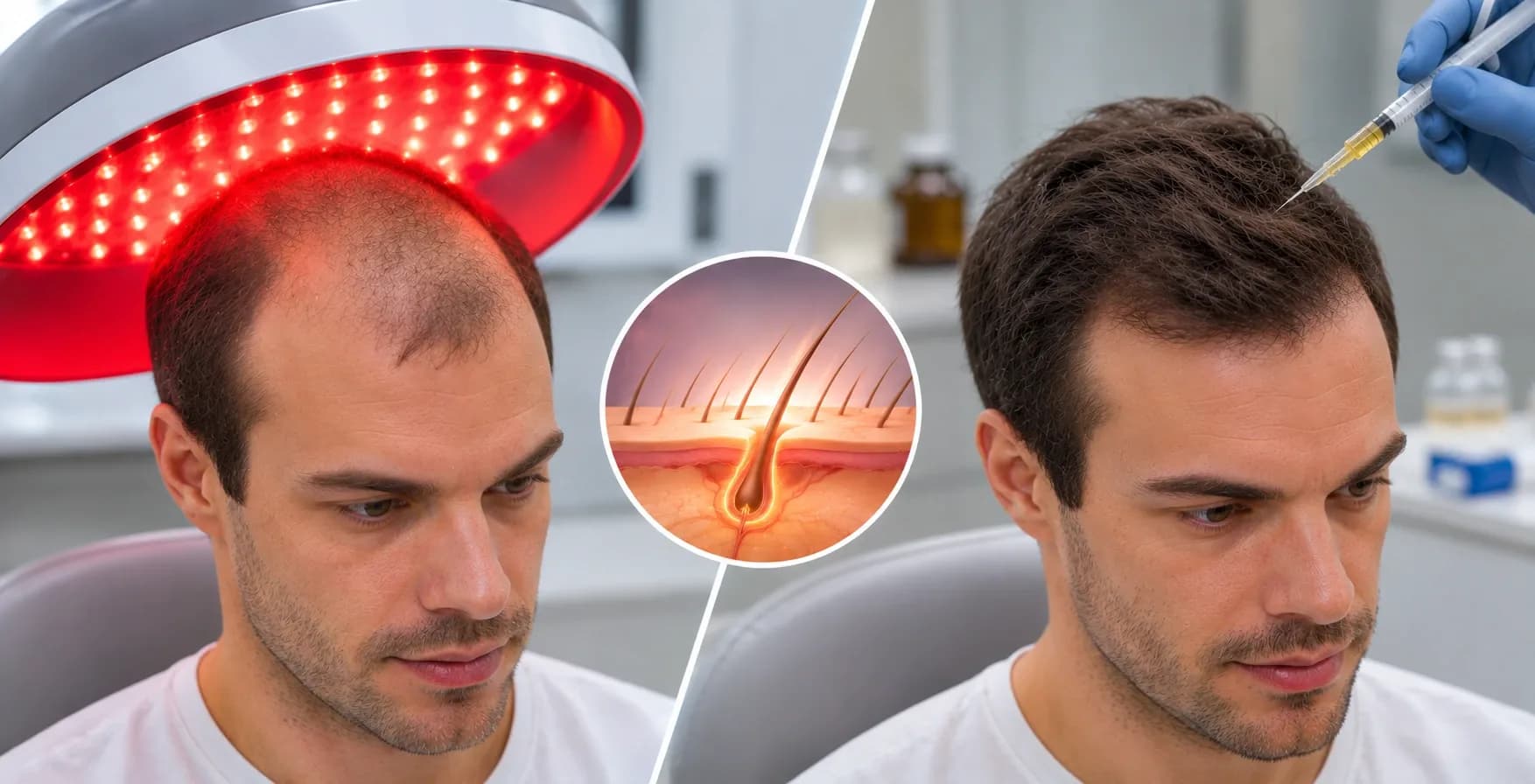
Laser hair therapy has stronger clinical evidence for pattern hair loss. Exosome therapy shows early promise, but researchers have not established its long-term effectiveness or a standard treatment protocol. No reliable head-to-head trial proves that either option works better for every patient.
The comparison between laser hair therapy vs exosome treatment starts with two different technologies. Low-level laser therapy, or LLLT, delivers light energy to the scalp. Researchers also call this process photobiomodulation. Exosome therapy uses extracellular vesicles that carry proteins, lipids, and genetic signals between cells.
Both approaches aim to support existing hair follicles without surgery. Neither approach can guarantee new follicles in areas with advanced follicular loss. Results depend on the cause of hair loss, the remaining follicles, the treatment protocol, and patient adherence. A sound choice therefore requires more than a comparison of marketing claims.
What Is Laser Hair Therapy?
Laser hair therapy uses low-power red or near-infrared light to support follicle activity. Laser caps, helmets, combs, and professional devices deliver this light without intentionally burning or removing skin. This feature separates LLLT from surgical and high-energy laser procedures.
Researchers study LLLT mainly for androgenetic alopecia, also called male or female pattern hair loss. This condition causes gradual hair follicle miniaturization. Affected follicles produce shorter and finer hairs over time. Photobiomodulation aims to support these follicles before miniaturization becomes too advanced.
How Does Laser Hair Therapy Stimulate Hair Growth?
Researchers propose that red light affects mitochondrial activity, cellular energy production, and follicular signaling. These effects may help some follicles enter or remain in the anagen, or active growth, phase. The exact biological response depends on the light dose and the treated tissue.
Wavelength, power density, session length, and scalp coverage shape the total energy dose. More exposure does not automatically produce more growth. Each device needs a suitable dose and a consistent schedule. This dose relationship explains why results from one device cannot validate every red-light product.
What Types of Laser Hair Therapy Are Available?
Consumers can choose handheld combs, wearable caps, helmets, or professionally operated systems. Home devices require repeated use. Professional systems add supervision, but they still need an appropriate treatment schedule.
Device shape does not determine effectiveness. Buyers should check the wavelength, power, coverage, instructions, and supporting clinical data. The FDA has cleared some laser devices for defined pattern hair loss indications. Clearance applies to the named device and its stated use, not to every similar product.
What Is Exosome Therapy for Hair Loss?
Exosome therapy uses small extracellular vesicles to deliver biological signals to scalp cells. These vesicles can carry proteins, lipids, messenger RNA, and microRNA. Researchers study how this cargo may influence dermal papilla cells, follicle stem cells, and the hair growth cycle.
Exosome-based hair restoration belongs to regenerative medicine. However, the word “regenerative” does not prove clinical benefit. Products differ in biological source, purification, particle content, storage, and administration. These differences prevent researchers from treating all exosome preparations as one uniform treatment.
How Are Exosomes Thought to Support Hair Regrowth?
Laboratory studies suggest that some exosomes influence Wnt/β-catenin signaling and other pathways linked to follicle growth. Researchers also study their effects on inflammation, cell survival, and communication between dermal papilla cells and follicle stem cells.
These findings establish biological plausibility, not proven patient benefit. Cell and animal studies allow researchers to test mechanisms under controlled conditions. Human trials must then show whether a specific preparation improves hair density or hair shaft thickness without unacceptable risks (Gupta et al., 2023).
Where Do Hair Restoration Exosomes Come From?
Researchers obtain extracellular vesicles from adipose tissue, bone marrow, placenta, umbilical cord, hair follicle cells, and other sources. Some commercial products use plant-derived vesicles or broader conditioned media. These materials do not share an identical composition.
Source traceability, sterility, purification, potency testing, and batch consistency matter for safety and research quality. MISEV2023 guidelines stress careful reporting of vesicle sources, separation methods, and characterization (Welsh et al., 2024). A product label that only says “exosomes” does not provide enough scientific information.
How Do Laser Hair Therapy and Exosome Treatment Differ at a Glance?
Laser therapy applies a defined physical stimulus through a device. Exosome therapy delivers a variable biological preparation. This distinction shapes their evidence, quality controls, routines, and risks.
Comparison factor | Laser hair therapy | Exosome therapy |
Treatment type | Light-based and non-invasive | Biological and product-dependent |
Proposed action | Photobiomodulation of follicular cells | Transfer of signaling molecules |
Administration | Cap, helmet, comb, or professional device | Topical use, microneedling, or scalp injections |
Main research target | Androgenetic alopecia | Several experimental hair restoration uses |
Clinical evidence | Randomized trials and meta-analyses | Small trials, observational studies, and laboratory research |
Treatment routine | Regular device use over months | Variable session schedules |
Quality variable | Device dose, coverage, and adherence | Source, purity, potency, storage, and delivery |
Regulatory position in the United States | Some devices have FDA clearance | No FDA-approved exosome product |
Main practical demand | Long-term adherence | Product verification and uncertainty |
Which Treatment Has Stronger Clinical Evidence for Hair Growth?
Laser therapy has the stronger evidence base for pattern hair loss. Sham-controlled trials have compared active devices with inactive devices. Exosome research includes fewer controlled studies and much greater variation between preparations.
Study design determines the weight of a result. A randomized controlled trial can reduce selection bias and separate treatment effects from placebo responses. An observational study can describe outcomes, but it cannot control every other influence. Case reports can identify research questions, but they cannot estimate average effectiveness. Laboratory studies explain mechanisms rather than patient outcomes.
Researchers should assess hair density, terminal hair count, shaft diameter, standardized photographs, adverse events, and follow-up duration. Patient satisfaction adds useful context, but subjective improvement cannot replace objective measurement.
What Does Research Say About Laser Hair Therapy Results?
Controlled trials show that some LLLT devices can improve terminal hair density in men and women with pattern hair loss. A multicenter trial randomized 128 men and 141 women to lasercomb or sham treatment. Participants used the devices three times weekly for 26 weeks. The active devices produced a statistically significant density advantage (Jimenez et al., 2014).
A later meta-analysis pooled 15 studies with 795 participants. It found a significant hair-density advantage for photobiomodulation over controls. Device shape did not explain the results, but differences in light sources and protocols still require caution (Gupta and Carviel, 2021).
These findings support a potential benefit, not a universal response. Device specifications, baseline hair loss, adherence, and study duration affect the measured outcome.
What Do Clinical Studies Reveal About Exosome Hair Treatment?
Early human studies report gains in hair density and thickness after some exosome-based protocols. A 2025 systematic review included 11 clinical studies and 298 patients. Only two studies used randomized controlled designs. Sample sizes ranged from 1 to 85 participants, and follow-up lasted from six weeks to 12 months (Al Ameer et al., 2025).
A 2026 review still identified small samples, retrospective designs, missing control groups, and inconsistent outcome measures. It also emphasized manufacturing and long-term safety gaps (Malih et al., 2026). Positive early findings therefore justify further trials, not claims of established superiority.
How Do These Treatments Fit Different Types of Hair Loss?
The diagnosis should guide treatment selection. Androgenetic alopecia differs from telogen effluvium, alopecia areata, nutritional deficiencies, inflammatory scalp disease, and scarring alopecia. Evidence for one condition cannot prove effectiveness for another.
Telogen effluvium often follows illness, childbirth, rapid weight change, medication changes, or physiological stress. Alopecia areata involves immune activity. Scarring conditions can permanently damage follicles. These problems need targeted assessment rather than an automatic choice between laser and exosomes.
Which Treatment May Suit Male and Female Pattern Hair Loss?
LLLT may suit selected adults with pattern hair loss who still have miniaturized but functioning follicles. It can form part of a broader hair preservation plan. Exosome therapy remains a less established option for the same condition.
Pattern hair loss continues through androgen-related and genetic processes. Neither treatment has proven that it can permanently switch off these processes. Long-term planning should therefore address maintenance and disease progression.
Can Laser or Exosome Therapy Regrow Hair in Completely Bald Areas?
Neither treatment can reliably restore hair in a longstanding bald area that no longer contains viable follicles. Light signals and extracellular vesicles need target cells to produce a biological response.
Thinning areas differ from smooth areas with advanced follicular loss. A scalp examination can help distinguish them. Hair transplantation moves follicles from another scalp region, so it addresses a different problem when non-surgical treatment has too little follicular tissue to support.
How Long Does Each Treatment Take to Show Results?
Hair outcomes usually require months of observation. Early changes in shedding or texture do not prove a lasting density increase. Clinicians need consistent photographs and measurements before they judge progress.
The hair growth cycle limits the speed of visible change. Lighting, haircut, styling, and seasonal shedding can also alter appearance. Objective follow-up reduces the risk of confusing these changes with treatment effects.
How Long Does Laser Hair Therapy Take to Show Results?
Many controlled studies evaluate LLLT after 16 to 26 weeks. A 24-week sham-controlled helmet trial found significant density and diameter improvements at the final assessment (Suchonwanit et al., 2019).
Users should follow the instructions for the specific device. Missed sessions reduce exposure and complicate evaluation. Maintenance also matters because stopping treatment removes the ongoing light stimulus.
How Long Does Exosome Therapy Take to Show Results?
Published exosome studies use different treatment and follow-up schedules. Some protocols involve weekly applications, while others use spaced injections. Researchers have not established one optimal session count or duration of benefit.
A patient should define an assessment window before treatment begins. That window should include standardized density or thickness measurements. Without baseline data, a provider cannot reliably separate improvement from normal variation.
Are Laser Hair Therapy and Exosome Treatment Safe?
LLLT has a more defined device-specific safety record. Exosome safety depends heavily on the preparation and administration method. A minimally invasive label does not remove either treatment’s risks.
Sudden shedding, patchy loss, scalp pain, pustules, scaling, or inflammation calls for medical assessment. These features can signal conditions that need diagnosis before elective hair restoration.
What Are the Potential Side Effects of Laser Hair Therapy?
Reported effects include scalp itching, irritation, discomfort, and temporary shedding. The 24-week helmet trial recorded temporary shedding and scalp pruritus without serious adverse events (Suchonwanit et al., 2019).
Users should follow session limits and eye-safety instructions. Photosensitizing medication, scalp disease, and individual medical circumstances may affect suitability. A product’s safety data should match the actual device in use.
What Are the Potential Risks of Exosome Hair Treatment?
Local reactions can include redness, swelling, itching, tenderness, and discomfort. Injection or microneedling adds procedure-related risks. Poor manufacturing can introduce contamination or unwanted biological material.
Small studies that report no serious events cannot establish rare or long-term safety. Providers need documentation for source, sterility, purity, storage, and quality controls. Patients should treat missing documentation as a major concern.
Are Exosome Treatments Approved for Hair Loss?
The FDA has not approved any exosome product for hair loss. The agency states that exosome products intended to treat human diseases or conditions require approval.
Regulatory rules differ between countries. Patients should check the exact product, intended use, and local authorization. A provider’s registration or a laboratory’s general certification does not prove product approval.
How Much Do Laser Hair Therapy and Exosome Treatments Cost?
Total cost depends on the device or product, treatment location, session count, and maintenance plan. A single-session price does not show the full financial commitment.
Patients should compare costs over the same period. They should also include follow-up visits and replacement or maintenance expenses. Higher prices do not demonstrate better evidence or greater effectiveness.
What Affects the Cost of Laser Hair Therapy?
Home devices usually involve an initial purchase, while professional treatment involves repeated session fees. Coverage, power, replacement parts, warranty terms, and expected device life affect value.
A lower-priced device may offer poor scalp coverage or lack relevant clinical data. A practical budget should include the full evaluation and maintenance period.
What Affects the Cost of Exosome Therapy?
Biological source, manufacturing controls, formulation, delivery method, and clinical supervision influence exosome pricing. Multiple sessions and follow-up visits increase the total.
Product verification forms part of value assessment. A costly preparation without credible identity, sterility, and clinical documentation offers a weak basis for treatment.
Can Laser Hair Therapy and Exosome Treatment Be Combined?
Researchers can study these treatments together because their proposed mechanisms differ. However, different mechanisms do not prove complementary benefits. A combination protocol needs its own controlled evidence.
Studies of LLLT alongside established hair-loss medications cannot validate a laser-plus-exosome plan. Clinicians should review product quality, treatment compatibility, total cost, and the added uncertainty before recommending both.
How Do You Choose Between Laser Hair Therapy and Exosome Treatment?
Start with the diagnosis, then compare evidence, safety, convenience, cost, and personal preferences. Newer technology does not automatically offer better care.
A suitable plan should define the treatment goal and the measurement method. It should also explain when to continue, adjust, or stop treatment.
When Might Laser Hair Therapy Be Worth Considering?
LLLT deserves consideration when a person has diagnosed pattern hair loss, viable follicles, and the ability to follow a regular routine. It may appeal to someone who wants a non-invasive option with sham-controlled evidence.
The selected device should have relevant clearance and clinical support. The plan should also address other evidence-supported options when appropriate.
What Should You Check Before Choosing Exosome Therapy?
Ask whether researchers have studied the exact preparation in humans. Request documents that identify its source, composition, quality controls, sterility testing, and regulatory status.
The provider should explain expected benefits and uncertainties in clear terms. The discussion should also cover established alternatives and a plan for objective follow-up.
What Should a Hair Loss Consultation Include?
A clinician should review medical history, family history, medications, recent illness, and the speed of hair loss. The examination should assess the scalp, distribution pattern, and follicular miniaturization.
Blood tests or other investigations may help when the history suggests a nutritional, hormonal, inflammatory, or systemic cause. Follow-up should use consistent photographs and measurable targets.
What Do People Commonly Ask About Laser Hair Therapy vs Exosome?
Most questions concern superiority, speed, treatment frequency, and replacement of established therapies. Current evidence supports careful answers rather than universal promises.
Is Laser Hair Therapy Better Than Exosome Treatment?
LLLT has stronger clinical support for pattern hair loss, but researchers have not established a universal winner through direct comparative trials. Product and device differences prevent a simple ranking.
Do Exosomes Work Faster Than Laser Hair Therapy?
No reliable evidence proves a universal speed advantage. Different study schedules and outcome measures prevent a fair timeline comparison.
Is Laser Hair Therapy More Effective Than Exosomes for Thinning Hair?
The answer depends on the diagnosis and follicle viability. LLLT offers more established evidence for pattern thinning, while exosome findings remain preliminary.
Can Exosome Therapy Replace Minoxidil or Other Hair Loss Treatments?
Exosome therapy should not automatically replace established options. A qualified clinician should compare the evidence, contraindications, and treatment goals before changing a plan.
How Often Should You Have Laser or Exosome Treatment?
Laser use should follow the tested device’s instructions. Exosome schedules vary, and researchers have not validated one universal protocol.
Can You Use Laser Hair Therapy After a Hair Transplant?
Post-transplant timing depends on healing, the device, and the surgeon’s instructions. Evidence for pattern hair loss does not automatically establish a post-surgical protocol.
What Is the Bottom Line on Laser Hair Therapy vs Exosome?
Laser hair therapy uses light-based photobiomodulation and has stronger clinical evidence for pattern hair loss. Exosome therapy uses biological signaling vesicles, but product variation and limited controlled research create greater uncertainty.
The best decision starts with an accurate diagnosis and realistic goals. Patients should examine device-specific or product-specific evidence, transparent safety information, total cost, and long-term requirements. Marketing terms such as “advanced” or “regenerative” should never replace clinical proof.
References
Al Ameer, Mohammed A., et al. “Exosomes and Hair Regeneration: A Systematic Review of Clinical Evidence Across Alopecia Types and Exosome Sources.” Clinical, Cosmetic and Investigational Dermatology, vol. 18, 2025, pp. 2215–2227. https://doi.org/10.2147/CCID.S543451.
Afifi, Ladan, et al. “Low-Level Laser Therapy as a Treatment for Androgenetic Alopecia.” Lasers in Surgery and Medicine, vol. 49, no. 1, 2017, pp. 27–39. https://doi.org/10.1002/lsm.22512.
Gupta, Aditya K., and Jillian L. Carviel. “Meta-Analysis of Photobiomodulation for the Treatment of Androgenetic Alopecia.” Journal of Dermatological Treatment, vol. 32, no. 6, 2021, pp. 643–647. https://doi.org/10.1080/09546634.2019.1688755.
Gupta, Aditya K., Tong Wang, and Jay A. Rapaport. “Systematic Review of Exosome Treatment in Hair Restoration: Preliminary Evidence, Safety, and Future Directions.” Journal of Cosmetic Dermatology, vol. 22, no. 9, 2023, pp. 2424–2433. https://doi.org/10.1111/jocd.15869.
Jimenez, Joaquin J., et al. “Efficacy and Safety of a Low-Level Laser Device in the Treatment of Male and Female Pattern Hair Loss: A Multicenter, Randomized, Sham Device-Controlled, Double-Blind Study.” American Journal of Clinical Dermatology, vol. 15, no. 2, 2014, pp. 115–127. https://doi.org/10.1007/s40257-013-0060-6.
Malih, S., et al. “Exosome-Driven Treatments for Hair Regrowth in Androgenetic Alopecia: A Systematic Review of Preclinical Studies, Clinical Experiments, Safety, and Future Prospects.” Molecular Biology Reports, vol. 53, 2026, article 1046. https://pubmed.ncbi.nlm.nih.gov/42377704/.
Suchonwanit, Poonkiat, Natchanok Chalermroj, and Supaporn Khunkhet. “Low-Level Laser Therapy for the Treatment of Androgenetic Alopecia in Thai Men and Women: A 24-Week, Randomized, Double-Blind, Sham Device-Controlled Trial.” Lasers in Medical Science, vol. 34, no. 6, 2019, pp. 1107–1114. https://doi.org/10.1007/s10103-018-02699-9.
Welsh, Joshua A., et al. “Minimal Information for Studies of Extracellular Vesicles (MISEV2023): From Basic to Advanced Approaches.” Journal of Extracellular Vesicles, vol. 13, no. 2, 2024, article e12404. https://doi.org/10.1002/jev2.12404.