
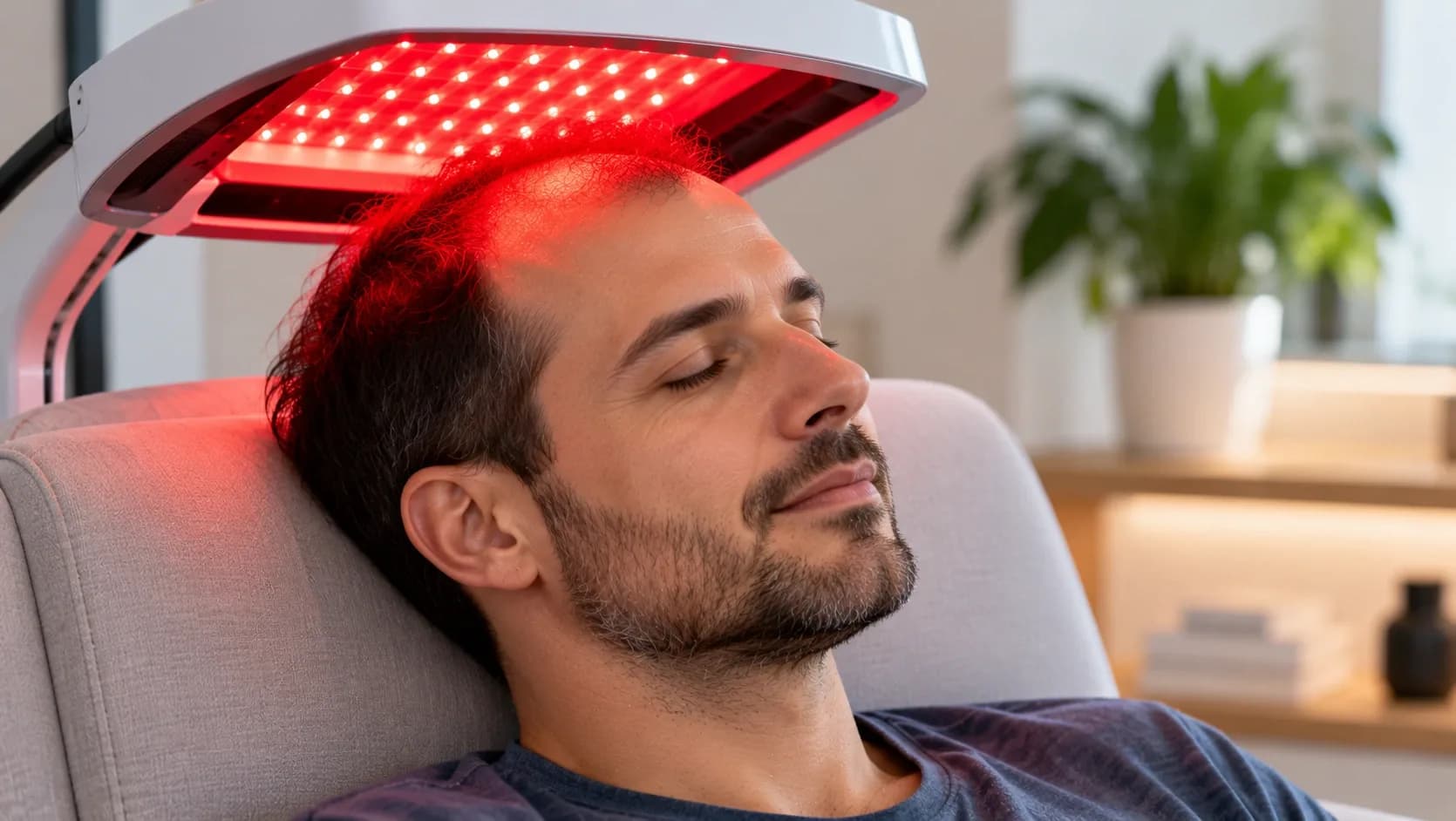
Does Laser Hair Therapy Work?
Laser hair therapy is a non-invasive treatment that uses low-intensity red or near-infrared light to stimulate hair follicles.
Laser hair therapy can work for some people, but it does not work equally well for everyone. Clinical research shows that low-level laser therapy (LLLT) may increase hair density and hair count in men and women with pattern hair loss, particularly when follicles remain alive. The treatment supports weakened follicles rather than creating new ones. People with early-to-moderate thinning see the most benefit, while people with long-standing smooth bald areas see limited change. This article examines the science, the realistic outcomes, the devices, and the safety profile behind laser hair therapy so you can decide whether it fits your situation.
What Is Laser Hair Therapy?
Laser hair therapy is a non-invasive treatment that uses low-intensity red or near-infrared light to stimulate hair follicles. Medical literature defines it as low-level laser therapy (LLLT), also called low-level light therapy. Devices emit light typically in the 630 to 680 nanometer range at power levels that do not heat or destroy tissue.
The biological process behind the treatment is called photobiomodulation. In simple terms, photobiomodulation means the light triggers cellular activity rather than cutting, burning, or ablating tissue. Researchers first observed hair growth as a side effect of low-level laser use in animal studies during the 1960s, which led to targeted investigation in humans (Avci et al., 2014).
How Does Laser Hair Therapy Differ From Laser Hair Removal?
Laser hair therapy and laser hair removal serve opposite purposes and use different energy levels. Laser hair removal relies on high-energy light that destroys follicles to stop hair growth. Laser hair therapy uses low-energy light that supports follicles to encourage growth. The two treatments should never be confused, because one aims to eliminate hair and the other aims to preserve it.
How Does Laser Hair Therapy Affect Hair Follicles?
Laser hair therapy works at the cellular level by delivering photons that mitochondria inside follicle cells absorb. The leading hypothesis involves cytochrome c oxidase, an enzyme in the mitochondrial membrane that responds to red and near-infrared light. When this enzyme absorbs light energy, cells increase production of adenosine triphosphate (ATP), the molecule that fuels cellular processes (Avci et al., 2014). Better cellular energy supports follicle activity and may prolong the anagen phase, the active growth stage of the hair cycle.
Light energy may also improve microcirculation around follicles. Better blood flow delivers more oxygen and nutrients to the scalp environment. These effects together support existing follicles that have miniaturized due to pattern hair loss. The treatment does not create new follicles, so it cannot restore hair where follicles have died.
Does Laser Hair Therapy Work for Hair Loss?
Current clinical evidence suggests that LLLT produces modest but real improvements in hair density and thickness for many patients with androgenetic alopecia. A meta-analysis of randomized controlled trials found that laser-based treatments increased hair counts significantly compared with sham devices (Adil and Godwin, 2017). Controlled studies using the 655 nm wavelength reported hair count increases of roughly 20 percent in treated groups after several months of consistent use (Lanzafame et al., 2013).
Outcomes differ between individuals for several reasons. Genetics, age, stage of hair loss, overall health, and device quality all influence response. A systematic review of LLLT for hair loss concluded that the treatment is safe and effective for pattern hair loss, though the authors noted that study designs and devices varied widely (Darwin et al., 2018). It helps to separate two claims. Slowing hair loss is a realistic goal for many patients. Producing dense visible regrowth is a less common outcome. LLLT works best as a supportive treatment within a broader plan, not as a guaranteed cure.
Which Types of Hair Loss May Respond to Laser Therapy?
Androgenetic alopecia, the genetic form of pattern hair loss, shows the strongest evidence for LLLT response. This condition affects both men and women and gradually miniaturizes follicles, producing thinning at the crown, temples, frontal scalp, or part line. Clinical trials in both male-pattern and female-pattern hair loss reported measurable increases in hair counts with consistent laser use (Leavitt et al., 2008; Lanzafame et al., 2013).
Stress-related shedding (telogen effluvium), hormonal changes, nutritional deficiencies, thyroid disorders, and inflammatory scalp conditions follow different biological pathways. LLLT may support follicle health in these cases, but results remain unpredictable because the underlying driver stays active. Identifying the cause of hair loss should always precede treatment, because correcting a thyroid problem or an iron deficiency solves the problem at its source, while light therapy alone does not.
Who Is Most Likely to Benefit From Laser Hair Therapy?
People with early-to-moderate thinning see the most benefit because their follicles remain viable. A follicle that still produces thin, short hair can respond to stimulation. A follicle that has been inactive for many years cannot. Men and women with pattern thinning at the crown, temples, frontal scalp, or part line are the strongest candidates. People with extensive, smooth, long-standing bald areas should expect limited results, because dormant scarred follicles no longer respond to photobiomodulation.
What Results Can You Expect From Laser Hair Therapy?
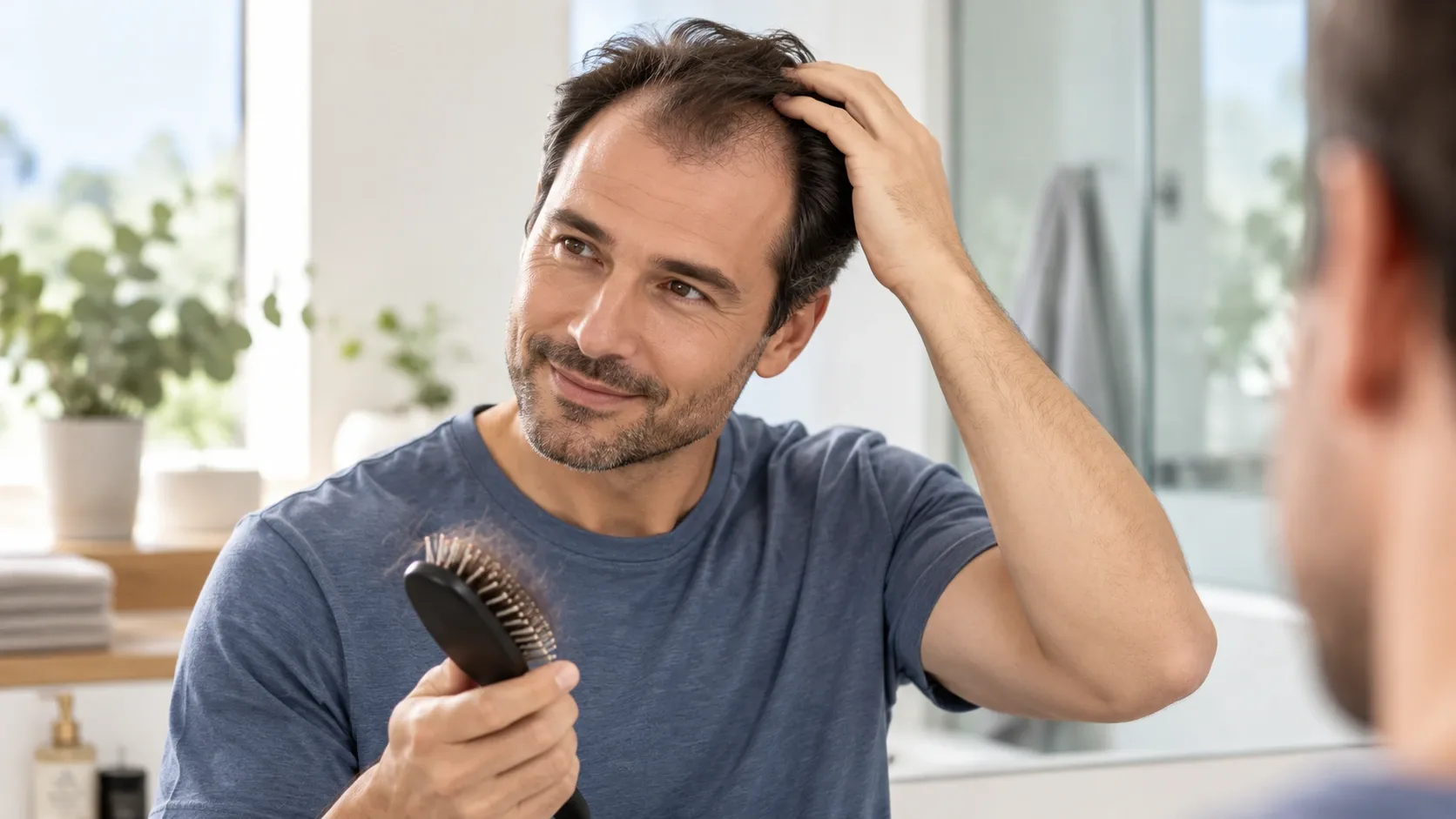
The most commonly reported early result is reduced shedding. As follicles enter a longer anagen phase, fewer hairs fall out during washing and brushing. Over several months, patients may notice improvements in hair thickness, density, and overall scalp coverage. Clinical trials measured these changes with standardized photography and hair counts rather than subjective impressions (Darwin et al., 2018).
It helps to define what laser therapy cannot do. Cosmetic improvement differs from complete restoration of lost hair. No laser device returns a bald scalp to its teenage density. Individual response varies widely, so honest evaluation requires baseline photographs and consistent measurement over months, not weeks.
How Long Does Laser Hair Therapy Take to Work?
Visible results from laser hair therapy typically require three to six months of consistent use. Hair grows in cycles, and each follicle spends years in the anagen phase, weeks in the catagen transition phase, and months in the telogen resting phase. A follicle that shifts from resting to growth today will not produce a visible hair for weeks, because the new strand emerges slowly at roughly one centimeter per month.
Many users notice reduced shedding before they notice increased density, because shedding responds faster than new growth. Realistic evaluation looks at six-month intervals with photos taken under identical lighting. Stopping treatment early prevents you from reaching the point where results become measurable.
How Often Should You Use Laser Hair Therapy?
Treatment frequency depends on the specific device and protocol, and no single schedule fits every product. Most clinical trials used three to four sessions per week, while many modern consumer devices specify daily short sessions. The critical factor is consistency. Occasional sessions deliver little cumulative stimulus to follicles, while regular exposure maintains the biological signal.
Continued treatment also matters for maintenance. Pattern hair loss progresses genetically, so stopping therapy usually means lost gains return over time. Follow the manufacturer or clinician instructions for your specific device rather than adopting a generic schedule.
Which Laser Hair Therapy Devices Are Available?
Three main device categories dominate the market: laser caps and helmets, handheld laser combs, and in-office professional systems. Caps and helmets offer full scalp coverage and hands-free convenience, which supports compliance. Handheld combs require active effort and cover small areas per session, but they cost less. Professional systems deliver higher power densities under supervision but require clinic visits.
The table below compares the main options.
Device Type | Scalp Coverage | Convenience | Typical Use Setting | Compliance Level |
Laser cap or helmet | Full or near-full | Hands-free at home | At home | High |
Handheld laser comb or brush | Partial per session | Manual, time-consuming | At home | Moderate |
In-office system | Full, high density | Requires appointments | Clinic | Depends on schedule |
How Do You Choose an Effective Laser Hair Therapy Device?
An effective device delivers appropriate wavelengths, typically 630 to 680 nm, with sufficient energy density across the scalp. Coverage matters as much as power, because follicles throughout the thinning zone need exposure. Consistent use matters more than any specification, so choose a device you will actually wear on schedule.
FDA clearance indicates that a device demonstrated safety and substantial equivalence to approved products. Clearance does not guarantee effectiveness for every user, so evaluate engineering quality and clinical evidence behind the device rather than marketing claims alone. Consider whether an at-home protocol fits your discipline or whether a supervised professional protocol suits you better.
Is Laser Hair Therapy Safe?
LLLT carries a generally favorable safety profile with no cutting, burning, or surgical incisions. Low-level devices do not operate like high-energy surgical or hair-removal lasers, so they do not damage skin at correct settings. Reviews of clinical trials report minimal adverse effects compared with drug therapies (Avci et al., 2014).
Safety still depends on correct use. Follow device instructions, protect your eyes from direct beam exposure, and seek professional assessment when hair loss has an unclear cause. Using light therapy to mask an untreated thyroid condition or autoimmune process delays the care you actually need.
What Are the Possible Side Effects of Laser Hair Therapy?
Reported side effects remain mild and temporary for most users. Some people notice scalp warmth, tingling, dryness, or mild redness after sessions. These reactions usually fade within hours and do not require intervention. Significant adverse effects are uncommon when treatment follows instructions.
Distinguish expected temporary sensations from warning signs. Persistent pain, blistering, spreading redness, or patchy new bald spots warrant medical advice rather than continued sessions. Such symptoms point to a scalp condition or a separate diagnosis, not a normal treatment response.
Can Laser Hair Therapy Regrow Hair on a Completely Bald Scalp?
LLLT cannot regrow hair on a completely bald scalp because it cannot create new follicles. Weakened follicles still produce thin hairs and can respond to stimulation. Permanently lost follicles leave smooth shiny skin and no longer exist as biological targets. In smooth long-standing bald areas, hair transplantation offers the more predictable path to restored coverage because it relocates living follicles rather than stimulating absent ones.
Can Laser Hair Therapy Be Combined With Other Hair Loss Treatments?
Yes. Dermatology guidelines treat LLLT as one option within combination therapy for androgenetic alopecia (Blumeyer et al., 2011). Minoxidil, a topical agent that extends the anagen phase, pairs naturally with laser therapy because the two approaches target follicles through different mechanisms. Finasteride, an oral prescription for men, reduces the hormonal driver of pattern loss and may enhance overall results where medically appropriate.
Physician-guided options such as platelet-rich plasma (PRP) injections and hair transplantation complete the toolkit. Laser therapy also supports native hair around transplanted areas, helping preserve existing density while grafts establish. Combination plans should reflect the specific diagnosis, because the right pairing for androgenetic alopecia differs from the right response to telogen effluvium or alopecia areata (Suchonwanit et al., 2019).
When Should You See a Doctor Before Starting Laser Hair Therapy?
Sudden, rapid, patchy, or painful hair loss requires medical evaluation before any laser treatment. Possible causes include nutritional deficiency, thyroid disease, hormonal shifts, autoimmune conditions such as alopecia areata, scalp inflammation, and medication effects. Treating the underlying condition often restores hair growth without any device. Professional assessment matters whenever the cause remains uncertain, because light therapy cannot correct a problem it does not address.
What Are the Limitations of Laser Hair Therapy?
LLLT does not work equally well for every patient, and no treatment guarantees permanent prevention of hair loss. Response varies with genetics, age, health status, diagnosis, and stage of thinning. Advanced hair loss typically requires additional intervention, because a device alone cannot compete with years of follicle loss. Maintenance demands long-term commitment, since stopping treatment allows genetic progression to resume. Setting realistic expectations around gradual improvement, not transformation, keeps this tool in proper perspective.
Is Laser Hair Therapy Worth Trying?
Laser hair therapy is worth trying for suitable patients who commit to regular use. The evidence supports LLLT as a safe non-surgical option for pattern hair loss, particularly for preserving existing hair in people with early-to-moderate thinning and viable follicles (Adil and Godwin, 2017; Darwin et al., 2018). The trade-off involves months of consistent sessions rather than a quick fix. Success depends on four factors: an accurate diagnosis, an appropriate device, disciplined use, and realistic expectations. For that profile, laser hair therapy can work. It is not a universal or guaranteed solution, and anyone who promises otherwise overstates the science.
Frequently Asked Questions About Laser Hair Therapy
Can Laser Hair Therapy Stop Hair Loss Completely?
No treatment guarantees permanent cessation of hair loss, including LLLT. Pattern hair loss progresses genetically, and laser therapy slows this process in responders rather than halting it forever. The realistic goal is preserving and supporting existing follicles over the long term.
Can Women Use Laser Hair Therapy?
Yes. Women with female-pattern thinning may benefit, and clinical studies included female participants with measurable hair count increases (Lanzafame et al., 2013). Determining the cause before treatment matters even more for women, because hormonal shifts, thyroid conditions, and iron deficiency drive much female hair loss.
Does Laser Hair Therapy Work for Advanced Baldness?
Results stay limited when follicles are no longer viable. Follicle support requires a living follicle to support, and permanently lost hair cannot return through light exposure. Advanced baldness calls for evaluation of surgical restoration instead.
Do You Have to Continue Laser Hair Therapy?
Ongoing treatment usually proves necessary to maintain benefits. The progressive nature of pattern hair loss means follicles resume miniaturizing when the supportive stimulus stops. Think of LLLT as long-term management rather than a one-time cure.
Is Laser Hair Therapy the Same as Laser Hair Removal?
No. LLLT uses low-energy red light to support follicle activity and encourage growth. Laser hair removal uses high-energy light to destroy follicles and eliminate hair. The two treatments pursue opposite objectives with different technologies.
References
Adil, A., and M. Godwin. "The Effectiveness of Treatments for Androgenetic Alopecia: A Systematic Review and Meta-Analysis." Journal of the American Academy of Dermatology, vol. 77, no. 1, 2017, pp. 136-141.
Avci, P., et al. "Low-Level Laser (Light) Therapy (LLLT) in Skin: Stimulating, Healing, Restoring." Seminars in Cutaneous Medicine and Surgery, vol. 33, no. 1, 2014, pp. 41-52.
Blumeyer, A., et al. "The European Consensus on the Evaluation and Treatment of Androgenetic Alopecia." Journal of the German Society of Dermatology, vol. 9, no. 12, 2011, pp. 1032-1042.
Darwin, E., et al. "Low-Level Laser Therapy for the Treatment of Androgenetic Alopecia: A Review." Lasers in Medical Science, vol. 33, no. 2, 2018, pp. 425-434.
Lanzafame, R., et al. "The Growth of Human Scalp Hair Mediated by Visible Red Light Laser and LED Sources in Males." Lasers in Medical Science, vol. 28, no. 4, 2013, pp. 1105-1114.
Leavitt, M., et al. "Clinical Trial of a Novel Low-Level Light Therapy Device in the Treatment of Genetic Alopecia." Lasers in Surgery and Medicine, vol. 40, no. 2, 2008, pp. 148-151.
Suchonwanit, P., et al. "Androgenetic Alopecia: An Update on Diagnosis and Treatment." Dermatology Reports, vol. 11, no. 3, 2019, pp. 124-130.