
Hair Mesotherapy vs Microneedling: Which Treatment Is Better for Hair Growth?
Hair mesotherapy is a minimally invasive treatment in which a practitioner performs multiple superficial intradermal injections across the scalp.
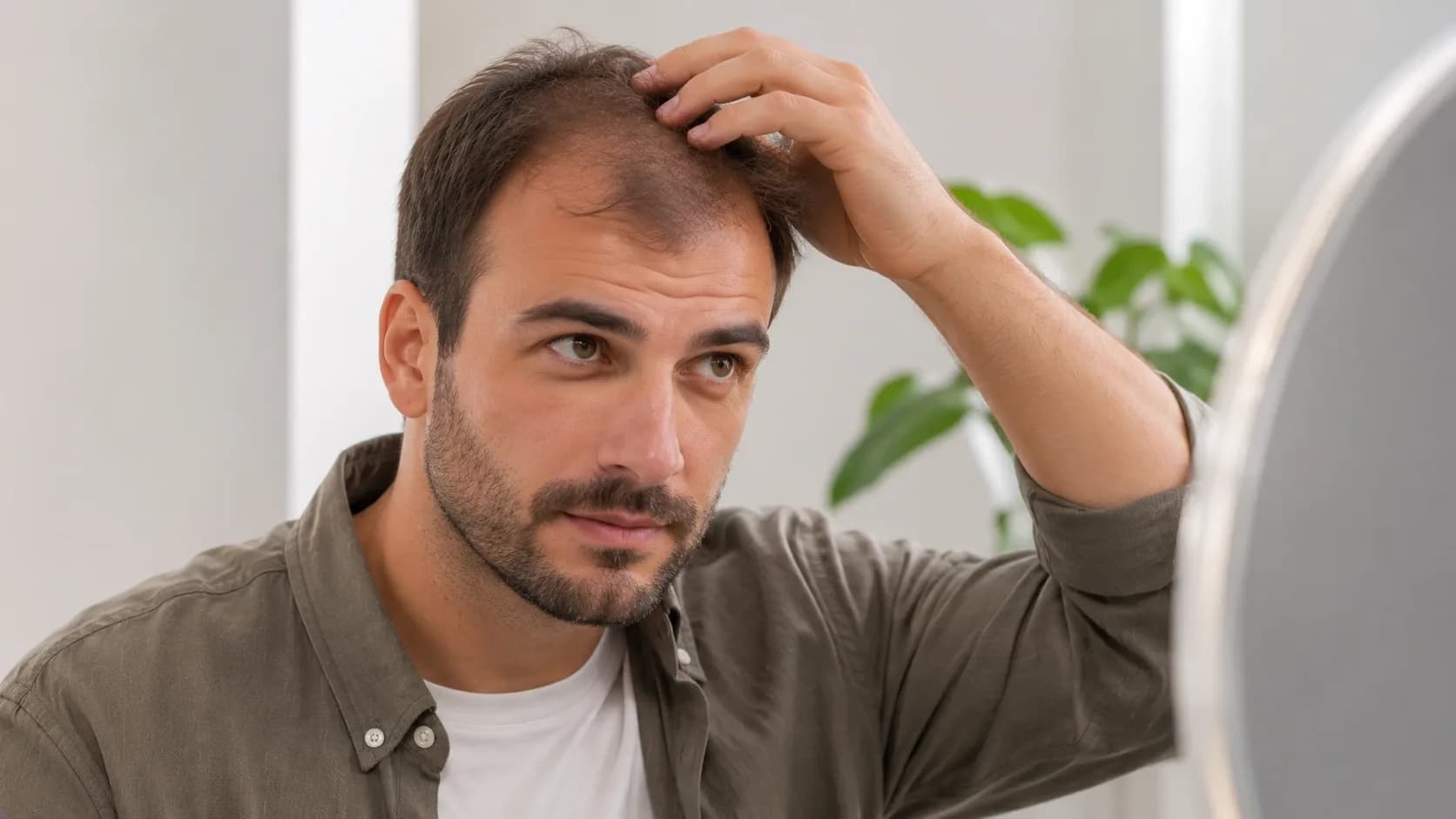
Neither treatment is universally better. Hair mesotherapy delivers selected active ingredients into the scalp through micro-injections, while scalp microneedling creates controlled micro-injuries that activate the body's wound-healing response. The right choice depends on the cause of your hair loss, your scalp condition, and the clinical evidence behind each protocol.
People who notice hair thinning, excessive shedding, or reduced hair density often look for non-surgical options before they consider a hair transplant. Two procedures dominate this search: hair mesotherapy and scalp microneedling. Both are minimally invasive, both target the hair follicle environment, and both appear in clinical practice worldwide. Yet they work through completely different biological mechanisms.
Treatment effectiveness is never guaranteed by popularity. It depends on the underlying diagnosis, the treatment protocol, the practitioner's technique, and the individual patient's response. This article compares both treatments on mechanisms, evidence, suitability, safety, results, and cost, so you can discuss them with a specialist from an informed position.
What Is Hair Mesotherapy and How Does It Work?
Hair mesotherapy is a minimally invasive treatment in which a practitioner performs multiple superficial intradermal injections across the scalp. The goal is to place active ingredients in the skin layer that surrounds the hair follicles.
The technique originated in France in the 1950s and entered dermatology as a drug delivery method. In hair restoration, practitioners use it to improve the scalp environment and support follicular activity. One critical point deserves attention: mesotherapy is not a standardized treatment. The formulations, concentrations, and injection protocols vary significantly between clinics, and dermatology literature has questioned whether unstandardized mesotherapy offers measurable benefit for hair loss at all (Mysore 2010). This variability makes formulation quality a central factor when you evaluate the treatment.
Which Ingredients Are Used in Hair Mesotherapy?
Mesotherapy cocktails typically combine vitamins, minerals, amino acids, hydrating agents, and peptides. Some medical protocols add pharmacological agents. The exact composition differs from one provider to another.
Ingredient group | Examples | Proposed role |
Vitamins | Biotin, B-complex vitamins | Support normal follicular metabolism |
Minerals | Zinc, copper | Cofactors in enzymatic processes of hair growth |
Amino acids | Cysteine, methionine | Building blocks of keratin and hair shaft structure |
Hydrating agents | Hyaluronic acid | Scalp hydration and tissue support |
Peptides | Growth-supporting peptide complexes | Cellular signaling around the follicle |
Pharmacological agents | Protocol-dependent | Targeted action under medical supervision |
The composition of the injection cocktail matters because the treatment has no single mechanism of action. Its effect depends entirely on what enters the skin. A vitamin-rich cocktail and a peptide-based formula are different treatments that share only the delivery method.
How Does Mesotherapy Support Hair Follicle Function?
Mesotherapy supports follicle function through localized delivery. The injected ingredients reach the dermis near the follicular units without passing through the digestive system or the skin barrier.
Selected vitamins and amino acids may support normal follicular metabolism, while hydration and micronutrient supply may improve scalp health and hair shaft quality. These effects are biologically plausible. However, claims that mesotherapy reactivates dormant follicles require appropriate clinical evidence, and that evidence remains limited and inconsistent across formulations (Mysore 2010). Readers should distinguish between a proposed mechanism and a clinically demonstrated improvement in hair growth.
What Is Scalp Microneedling and How Does It Stimulate Hair Growth?
Scalp microneedling is a minimally invasive procedure in which a device fitted with fine needles creates thousands of controlled microchannels in the scalp. These micro-injuries activate the body's natural wound-healing process, which releases growth factors and remodels tissue around the hair follicles.
The technique entered dermatology as a treatment for acne scars and skin rejuvenation (Majid 2009). Researchers then explored its role as a supportive treatment for androgenetic alopecia, the most common form of hair loss. Scalp microneedling differs from cosmetic facial microneedling in needle depth, treatment goal, and target tissue. Scalp protocols aim at the follicular environment, not the skin surface.
How Does Microneedling Influence Hair Follicle Activity?
Microneedling influences follicle activity through the wound-healing cascade. Each controlled micro-injury triggers platelet activation and the release of growth factors such as platelet-derived growth factor and vascular endothelial growth factor.
This cascade has several proposed effects. It may increase scalp microcirculation, stimulate collagen production and tissue remodeling, and activate stem cells in the hair follicle bulge region. In a pilot study on men with androgenetic alopecia, weekly microneedling combined with minoxidil produced a significantly greater increase in hair count than minoxidil alone (Dhurat et al. 2013). A follow-up report described visible improvement in men who had not responded to conventional therapy with finasteride and minoxidil (Dhurat and Mathapati 2015). These studies are small, but they give microneedling a clearer clinical evidence base than most mesotherapy protocols.
Can Microneedling Improve the Absorption of Hair Loss Products?
Yes. The temporary microchannels increase the penetration of certain topical substances through the skin barrier, a principle established in transdermal drug delivery research (Henry et al. 1998).
This property explains why clinicians combine microneedling with topical minoxidil in selected hair loss protocols. A randomized controlled study found that minoxidil plus microneedling outperformed minoxidil alone in men with androgenetic alopecia (Kumar et al. 2018). Timing matters: applying a product too soon after needling can drive it deeper than intended, which raises the risk of irritation and unwanted systemic absorption. Patients should follow medically supervised application instructions and never self-apply products to freshly needled skin without guidance.
What Are the Main Differences Between Hair Mesotherapy and Microneedling?
The core difference is simple: mesotherapy delivers active substances into the scalp, while microneedling stimulates the body's own repair mechanisms. One depends on what you inject; the other depends on how the body heals.
Aspect | Hair mesotherapy | Scalp microneedling |
Primary mechanism | Intradermal delivery of active ingredients | Controlled micro-injury and wound healing |
Equipment | Fine needles or injection gun | Dermaroller or motorized microneedling device |
Dependence on formulation | High | None for the procedure itself |
Evidence base | Limited and variable | Growing, mainly as adjunct to minoxidil |
Typical session length | 20 to 40 minutes | 20 to 30 minutes |
Common after-effects | Redness, bruising, tenderness | Redness, pinpoint bleeding, sensitivity |
Mesotherapy vs Microneedling: Treatment Method and Application
Hair mesotherapy uses multiple injections to introduce selected substances into the scalp, usually at a depth of 1 to 4 millimeters. The practitioner controls depth point by point.
Microneedling uses a needle-equipped device that moves across the scalp and creates uniform microchannels at an adjustable depth. The distribution is mechanical and even. Treatment customization differs as well: mesotherapy is customized through its formula, while microneedling is customized through needle depth, density, and device settings.
Mesotherapy vs Microneedling: Active Ingredients and Biological Mechanisms
Mesotherapy depends on the composition of its injectable formulation. Vitamins, amino acids, peptides, and other selected compounds act directly on the tissue where they are placed.
Microneedling relies primarily on the body's wound-healing mechanisms. Growth factor signaling, collagen production, and tissue regeneration come from the patient, not from a vial. This is the fundamental contrast: direct ingredient delivery versus biological self-stimulation.
Mesotherapy vs Microneedling: Treatment Duration and Recovery
A typical mesotherapy session lasts 20 to 40 minutes, depending on the treatment area. A microneedling session usually takes 20 to 30 minutes after scalp preparation.
Both procedures can cause temporary redness, tenderness, swelling, and scalp sensitivity. Mesotherapy more often produces small bruises at injection sites, while microneedling more often produces pinpoint bleeding and a sunburn-like sensation. Recovery depends on needle depth, injection technique, and individual skin response. Most patients return to normal activity within one or two days, although practitioners often advise delaying hair washing and sun exposure for a short period.
Mesotherapy vs Microneedling: Number of Sessions and Treatment Frequency
Neither treatment has a universal session schedule. Protocols depend on hair loss severity, the underlying diagnosis, and individual treatment response.
Clinics commonly plan an initial course of 6 to 10 sessions at weekly or biweekly intervals, followed by maintenance sessions every few months. Consistent intervals matter because the hair growth cycle responds slowly. A single session of either treatment rarely produces a visible change.
Which Treatment Is More Effective for Different Types of Hair Loss?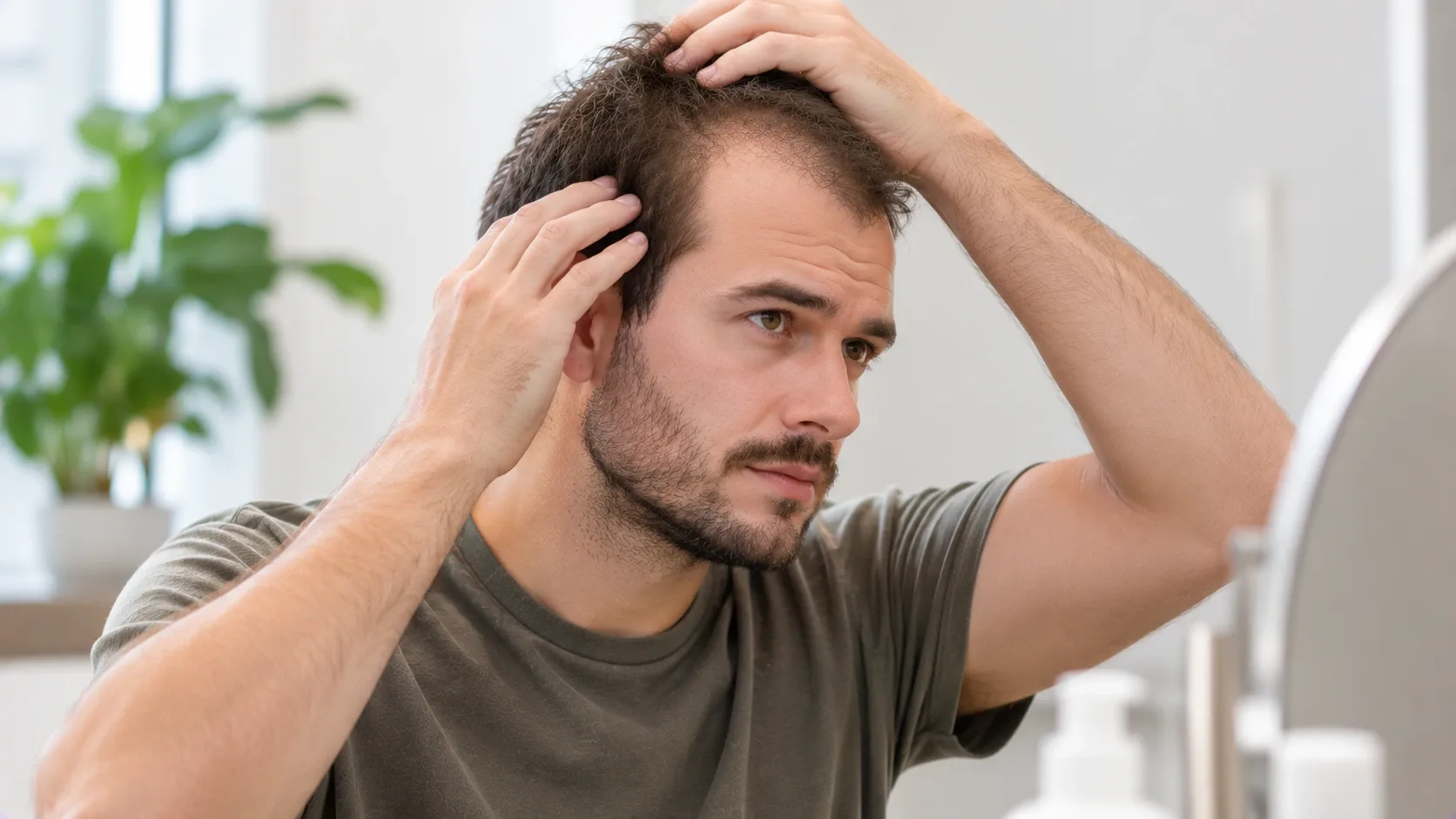
No comparison is valid without a diagnosis. The cause of hair loss determines which treatment, if any, is appropriate. Hereditary pattern loss, temporary shedding, and scalp-related hair loss behave differently and respond differently.
Comparing treatments without considering their indications produces misleading conclusions. A procedure that supports follicles in early androgenetic alopecia may offer nothing to a patient whose shedding comes from an untreated thyroid disorder.
Is Hair Mesotherapy or Microneedling Better for Androgenetic Alopecia?
For androgenetic alopecia, microneedling currently has the stronger supporting evidence, mainly as an adjunct to minoxidil. Mesotherapy evidence remains limited and varies with the formulation.
Androgenetic alopecia is a hereditary condition driven by genetic susceptibility and follicular sensitivity to androgens, particularly dihydrotestosterone (Lolli et al. 2017). Over successive growth cycles, affected follicles undergo miniaturization: they produce thinner, shorter hairs until they stop producing visible hair. Established medical treatments, including topical minoxidil and oral finasteride, target this process and carry the largest body of clinical evidence (Kaufman et al. 1998). Microneedling shows promise as an add-on to these treatments (Dhurat et al. 2013; Kumar et al. 2018), while mesotherapy lacks standardized protocols and comparable trial data (Mysore 2010). Neither procedure should replace established treatments without a medical discussion.
Which Treatment Is More Suitable for Telogen Effluvium?
Neither treatment has a clearly established role in telogen effluvium. The priority is to identify and correct the trigger.
Telogen effluvium is a form of diffuse shedding in which a trigger pushes an abnormal share of follicles into the resting phase of the hair cycle. Common triggers include nutritional deficiencies, significant stress, illness, surgery, and hormonal changes (Malkud 2015). In most cases, the shedding resolves once the trigger is addressed. Supportive scalp treatments cannot replace appropriate diagnosis and management, and needling or injecting a scalp during active unexplained shedding adds cost and discomfort without targeting the cause.
Can Mesotherapy or Microneedling Help with Diffuse Hair Thinning?
Selected patients with diffuse thinning may benefit from supportive treatment, but only after a specialist confirms the diagnosis and the remaining follicular activity.
Diffuse thinning spreads across the whole scalp instead of following the patterned recession of androgenetic alopecia. Assessment should include follicular density measurement, scalp health evaluation, and laboratory testing where indicated. If thinning follicles still produce hair, treatments that improve the scalp environment or stimulate repair may support hair shaft thickness and density. If the follicles are inactive, no non-surgical treatment will restore them.
Can Hair Mesotherapy and Microneedling Be Combined?
Yes, selected clinical protocols combine both treatments because their biological mechanisms differ and may complement each other. However, combination is not automatically appropriate for every patient.
The rationale is straightforward: microneedling stimulates the scalp's repair system, and mesotherapy supplies targeted ingredients. Together, they address mechanical stimulation and biochemical support at the same time. Treatment design, sequencing, and patient selection determine whether this combination helps or harms.
What Are the Potential Benefits of Combining Both Treatments?
Combining the treatments pairs mechanical stimulation with targeted ingredient delivery. Microneedling activates healing and growth factor release, while mesotherapy supplies compounds intended to support follicular metabolism.
In theory, this addresses different aspects of the hair growth environment in one plan. Some clinics report satisfactory outcomes with alternating sessions. However, high-quality clinical evidence for specific combination protocols remains limited, so any claimed superiority over single treatments should be read with caution.
Should Mesotherapy Be Applied Immediately After Microneedling?
This decision belongs to a qualified medical professional. Microneedling temporarily disrupts the scalp's skin barrier, which changes how any applied substance behaves.
Applying a formulation through freshly created microchannels is not the same as injecting it. Penetration depth becomes uncontrolled, and ingredients that are safe in the dermis may cause irritation, inflammation, or unintended systemic absorption when they pass through open channels. Ingredient safety, formulation purity, and timing all require professional judgment. Patients should also understand that a combined protocol and post-needling product application are distinct approaches, not interchangeable ones.
What Are the Potential Side Effects and Risks of Each Treatment?
Both procedures involve controlled intervention in the scalp and can produce temporary reactions. Most side effects are mild and resolve within days, but practitioner qualifications, sterile equipment, and appropriate patient selection determine the real level of risk.
What Are the Possible Side Effects of Hair Mesotherapy?
Common reactions include temporary redness and swelling around injection sites, mild pain, tenderness, and bruising. Some patients report itching and local inflammation.
Less common but more serious risks include allergic or sensitivity reactions to injected ingredients and complications from inappropriate injection technique or unregulated formulations. Because mesotherapy cocktails are not standardized, patients should ask exactly which substances will be injected and whether those substances are approved for intradermal use in their country.
What Are the Possible Side Effects of Scalp Microneedling?
Typical reactions include temporary redness, scalp sensitivity, minor pinpoint bleeding, swelling, and irritation. These usually settle within 24 to 72 hours.
Infection becomes a risk when hygiene standards are inadequate. Excessive needle depth or pressure can damage the skin and, in theory, the follicles themselves. Applying unsuitable topical substances through open microchannels can intensify irritation, which is why product use after treatment requires medical guidance.
Who Should Avoid These Hair Restoration Treatments?
People with active scalp infections or inflammatory conditions such as scalp psoriasis flares should postpone both procedures until the skin heals.
Additional caution applies to people with bleeding disorders or uncontrolled medical conditions, patients with a history of abnormal wound healing or keloid formation, and individuals with known allergies to proposed mesotherapy ingredients. A medical evaluation before treatment is not a formality; it is the step that prevents avoidable complications.
What Results Can You Expect from Hair Mesotherapy and Microneedling?
Realistic outcomes include reduced shedding, improved hair shaft quality, and a gradual increase in hair density. Dramatic regrowth in bald areas is not a realistic expectation for either treatment.
Outcomes vary with the underlying diagnosis, the stage of hair loss, and individual response. Clinics that track progress with standardized photographs and hair density measurements give patients a far more reliable picture than mirror impressions, because hair changes happen slowly and unevenly.
How Long Does It Take to See Hair Growth Results?
Visible change generally requires several months, because every follicle follows the natural hair growth cycle of anagen, catagen, and telogen phases (Paus and Cotsarelis 1999).
A treatment applied today affects hairs that will grow weeks or months from now. Reduced shedding often appears first, sometimes within four to eight weeks. Measurable improvements in density and hair shaft thickness typically need three to six months of consistent treatment. Any clinic that promises visible regrowth in days is describing marketing, not biology.
Are the Results of Hair Mesotherapy and Microneedling Permanent?
No. Neither treatment permanently removes the genetic mechanisms behind androgenetic alopecia.
If the underlying androgen sensitivity continues, hair thinning can resume after treatment stops. Many patients therefore need maintenance sessions, and long-term hair loss management usually combines supportive procedures with established medical therapy. Patients should view these treatments as part of an ongoing plan, not as a one-time cure.
How Much Do Hair Mesotherapy and Microneedling Cost?
Prices vary widely by country, clinic, and protocol. The sensible approach is to compare complete treatment plans rather than individual session prices, because a cheaper session in a longer protocol can cost more overall.
Clinic-based medical treatment also differs from home devices or cosmetic salon services in sterility, depth control, and supervision. Price comparisons only make sense between equivalent levels of care.
What Factors Affect Hair Mesotherapy Prices?
Four factors dominate: the composition and quality of the injectable formulation, the number of sessions required, the treatment area and severity of hair loss, and the qualifications of the medical practitioner and clinic standards. Pharmaceutical-grade formulations and physician-administered protocols cost more than generic cocktails delivered in non-medical settings.
What Determines the Cost of Scalp Microneedling?
Cost depends on the type of microneedling device, the needle cartridge and treatment specifications, and the number and frequency of sessions.
The final price also changes when the plan includes additional treatments. Many clinics pair microneedling with platelet-rich plasma, or PRP, a preparation of concentrated platelets from the patient's own blood that delivers growth factors to the scalp (Dhurat and Sukesh 2014). Combination packages raise the session price but may consolidate the treatment schedule.
How Do You Choose Between Hair Mesotherapy and Microneedling?
Start with a professional hair loss assessment, not with a procedure. Treatment selection should follow the diagnosis, not the other way around.
A proper assessment identifies the cause, pattern, and progression of the thinning, often with trichoscopy and laboratory tests. The specialist should then weigh your medical history, scalp condition, treatment expectations, and budget. A customized plan that may include microneedling, mesotherapy, established medications, or a combination is usually more appropriate than choosing a procedure because it is popular or heavily advertised.
What Should You Ask Your Hair Restoration Specialist Before Treatment?
Bring specific questions to the consultation. The answers reveal both the diagnosis and the quality of the clinic.
What is causing my hair loss?
Which specific ingredients will you use in mesotherapy?
What needle depth and device will you use for microneedling?
What clinical evidence supports the proposed treatment for my diagnosis?
How many sessions will I need, and at what intervals?
What side effects should I expect?
How will you measure my treatment progress?
Are there alternative treatments with stronger clinical evidence for my condition?
Frequently Asked Questions About Hair Mesotherapy vs Microneedling
Is Hair Mesotherapy Better Than Microneedling?
No treatment is universally superior. They work through different mechanisms and suit different clinical situations.
Microneedling currently carries stronger clinical evidence as an adjunct to minoxidil in androgenetic alopecia (Kumar et al. 2018). Mesotherapy offers customizable ingredient delivery but lacks standardized, well-tested protocols. Your diagnosis should drive the choice.
Does Microneedling Work Without Mesotherapy?
Yes. Microneedling stimulates the wound-healing response on its own, and the published clinical studies that support it tested microneedling with minoxidil, not with mesotherapy (Dhurat et al. 2013).
Injectable ingredients are not part of the microneedling mechanism. They are optional additions in some protocols, not requirements.
Can Hair Mesotherapy Regrow Hair in Bald Areas?
No non-surgical treatment reliably regrows hair in areas where follicles are inactive or lost.
There is a fundamental difference between thinning follicles that still produce miniaturized hairs and areas with no remaining follicular activity. Supportive treatments may improve the output of living follicles, but advanced baldness usually requires surgical hair restoration. Expectations should match the biology of the scalp.
Is Hair Mesotherapy More Painful Than Microneedling?
Pain perception is individual, but the discomfort profile differs. Mesotherapy involves a series of small injections, while microneedling feels like rapid, shallow pricking across the scalp.
Many clinics apply a topical anesthetic before either procedure, which reduces discomfort considerably for most patients.
Can You Have Microneedling After a Hair Transplant?
Yes, but only after the transplanted scalp has healed completely and your transplant surgeon gives clearance.
Timing depends on graft stabilization and surgical recovery, which often means waiting several months. Supportive scalp treatments after a transplant serve a different purpose than the transplant itself: they address the ongoing androgenetic process in native hair, and no patient should assume that microneedling or mesotherapy automatically improves graft survival.
Can Hair Mesotherapy Stop Hair Shedding?
It depends on the cause. Temporary shedding from telogen effluvium usually resolves when the trigger is corrected, with or without mesotherapy (Malkud 2015).
Progressive shedding from follicular miniaturization is a different problem. Selected mesotherapy formulations are proposed as supportive care in such cases, but effectiveness depends on the ingredients used and the underlying diagnosis, and the evidence remains limited (Mysore 2010).
Which Treatment Works Better with Minoxidil?
Microneedling has the documented synergy. Clinical studies show that adding weekly microneedling to topical minoxidil improves hair counts compared with minoxidil alone (Dhurat et al. 2013; Kumar et al. 2018).
Minoxidil remains a cornerstone therapy for androgenetic alopecia. Any combined use requires appropriate application intervals and medical supervision, because needled skin absorbs substances faster and deeper than intact skin.
Can Hair Mesotherapy and Microneedling Damage Hair Follicles?
Correctly performed treatment should not damage follicles. Risk rises with excessive injection depth, aggressive needle settings, poor hygiene, or untrained practitioners.
Excessive mechanical trauma can injure the follicular unit, and contaminated equipment can cause infections that scar the scalp. These outcomes are preventable. Choosing a qualified medical practitioner and a regulated clinic is the single most effective safety measure.
References
Dhurat, Rachita, and MS Sukesh. "Principles and Methods of Preparation of Platelet-Rich Plasma: A Review and Author's Perspective." Journal of Cutaneous and Aesthetic Surgery, vol. 7, no. 4, 2014, pp. 189-197.
Dhurat, Rachita, and Sarika Mathapati. "Response to Microneedling Treatment in Men with Androgenetic Alopecia Who Failed to Respond to Conventional Therapy." Indian Journal of Dermatology, vol. 60, no. 3, 2015, pp. 260-263.
Dhurat, Rachita, et al. "A Randomized Evaluator Blinded Study of Effect of Microneedling in Androgenetic Alopecia: A Pilot Study." International Journal of Trichology, vol. 5, no. 1, 2013, pp. 6-11.
Henry, S., et al. "Microfabricated Microneedles: A Novel Approach to Transdermal Drug Delivery." Journal of Pharmaceutical Sciences, vol. 87, no. 8, 1998, pp. 922-925.
Kaufman, Keith D., et al. "Finasteride in the Treatment of Men with Androgenetic Alopecia." Journal of the American Academy of Dermatology, vol. 39, no. 4, 1998, pp. 578-589.
Kumar, M. K., A. C. Inamadar, and Aparna Palit. "A Randomized Controlled, Single-Observer Blinded Study to Determine the Efficacy of Topical Minoxidil Plus Microneedling versus Topical Minoxidil Alone in the Treatment of Androgenetic Alopecia." Journal of Cutaneous and Aesthetic Surgery, vol. 11, no. 4, 2018, pp. 211-216.
Lolli, Francesco, et al. "Androgenetic Alopecia: A Review." Endocrine, vol. 57, no. 1, 2017, pp. 9-17.
Majid, Imran. "Microneedling Therapy in Atrophic Facial Scars: An Objective Assessment." Journal of Cutaneous and Aesthetic Surgery, vol. 2, no. 1, 2009, pp. 26-30.
Malkud, Shashikant. "Telogen Effluvium: A Review." Journal of Clinical and Diagnostic Research, vol. 9, no. 9, 2015, pp. WE01-WE03.
Mysore, Venkataram. "Mesotherapy in Management of Hairloss: Is It of Any Use?" International Journal of Trichology, vol. 2, no. 1, 2010, pp. 45-46.
Paus, Ralf, and George Cotsarelis. "The Biology of Hair Follicles." New England Journal of Medicine, vol. 341, no. 7, 1999, pp. 491-497.