
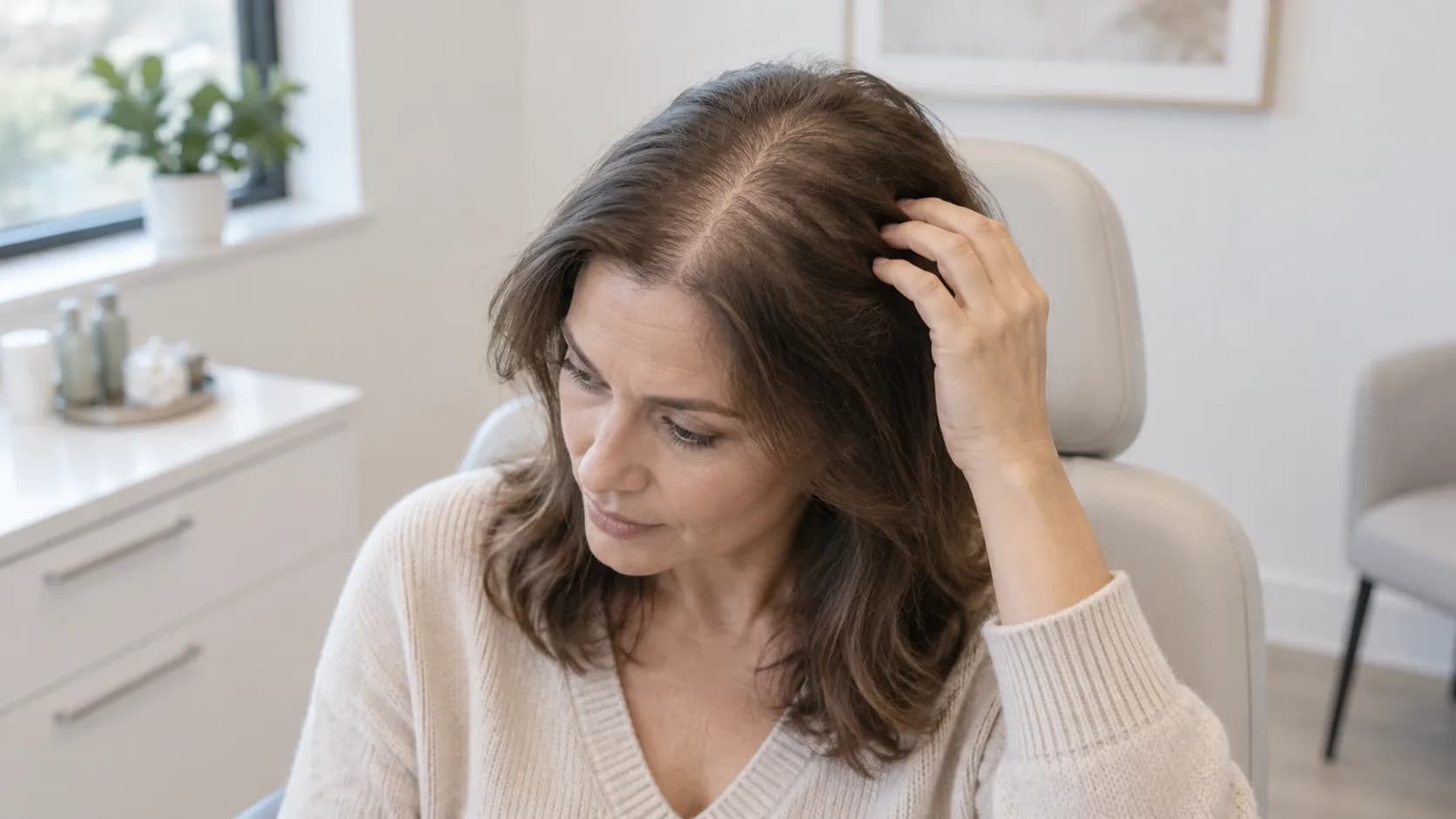
PRP for Diffuse Hair Loss: What Does the Science Actually Say?
Platelet-rich plasma (PRP) is an autologous regenerative treatment that concentrates growth factors from a patient's own blood and injects them into the scalp.
Platelet-rich plasma (PRP) is an autologous regenerative treatment that concentrates growth factors from a patient's own blood and injects them into the scalp. Early research suggests it may improve hair density and thickness in some forms of diffuse hair loss, especially androgenetic alopecia, but it is not a guaranteed regrowth treatment and works best on follicles that are still alive. This article explains how PRP works, what the evidence shows, who qualifies, and what patients should realistically expect.
What Is PRP for Diffuse Hair Loss?
PRP for diffuse hair loss is a procedure in which a clinician draws a small blood sample, isolates the platelet-rich fraction, and injects it into areas of the scalp where hair density has declined.
Platelet-rich plasma is an autologous preparation, which means it comes from the patient's own body. A clinician draws blood, spins it in a centrifuge, and separates the red blood cells from the plasma layer that contains a high concentration of platelets. The resulting concentrate is injected directly into the scalp. Because the material is autologous, the risk of allergic reaction or disease transmission is extremely low (Paichitrojjana 2022).
PRP differs from conventional hair-loss medications in a fundamental way. Minoxidil works as a topical vasodilator, and finasteride blocks the conversion of testosterone to dihydrotestosterone. PRP instead relies on regenerative medicine. It delivers signaling molecules that may support tissue repair and follicular activity. This is why researchers investigate it for hair thinning and reduced hair density: the goal is to support weakened follicles rather than alter hormones or blood flow alone (Yuan et al. 2024).
What Causes Diffuse Hair Loss?
Diffuse hair loss means hair density declines across the whole scalp rather than in one pattern, and it can result from androgenetic alopecia, telogen effluvium, nutritional deficits, hormonal shifts, systemic illness, or medication effects.
How Does Diffuse Hair Thinning Differ From Pattern Hair Loss?
Diffuse thinning reduces hair density across the entire scalp, while pattern hair loss follows a recognizable distribution such as the crown or hairline.
Diffuse hair thinning produces a generalized reduction in hair density. Pattern hair loss follows a characteristic map: the frontal hairline and crown in men, and the central part line in women. The biology also differs. Pattern loss involves hair follicle miniaturization, in which genetically sensitive follicles gradually produce thinner, shorter hairs. Diffuse shedding, in contrast, often reflects increased hair shedding driven by a trigger that pushes follicles out of the anagen growth phase and into the telogen resting phase. A clinician can also distinguish diffuse thinning from localized bald patches, such as those seen in alopecia areata, through scalp examination and trichoscopy.
Which Conditions Can Cause Diffuse Hair Loss?
The most common causes include androgenetic alopecia, telogen effluvium, nutritional or metabolic problems, hormonal changes, systemic disease, and medication-related shedding.
Androgenetic alopecia can present diffusely, especially in women, where the Ludwig pattern produces central thinning. Telogen effluvium is the classic diffuse shedding disorder: a stressor such as illness, surgery, childbirth, or rapid weight change shifts large numbers of follicles into the resting phase. Nutritional factors like iron deficiency, low protein intake, and vitamin D deficiency can contribute. Thyroid disorders and other hormonal changes alter the hair cycle, and systemic conditions, including autoimmune disease and chronic illness, can trigger shedding. Several medications, among them retinoids, anticoagulants, and some antidepressants, also list hair shedding as a known side effect. Accurate diagnosis matters because PRP cannot correct a problem that stems from an untreated thyroid disorder or iron deficiency.
How Might PRP Support Hair Growth?
PRP releases growth factors that may stimulate follicular cells, improve blood supply around follicles, and extend the growth phase of the hair cycle.
What Growth Factors Are Found in PRP?
PRP contains platelet-derived growth factors, vascular endothelial growth factor (VEGF), epidermal growth factor (EGF), fibroblast growth factor (FGF), and several other signaling molecules.
Platelets store more than 30 bioactive molecules inside their granules. The best-studied entities in hair research include platelet-derived growth factor, which supports cell growth and tissue repair; vascular endothelial growth factor, which drives the formation of new blood vessels; epidermal growth factor, which stimulates keratinocyte proliferation; and fibroblast growth factor, which influences cell division and matrix formation (Paichitrojjana 2022).
How Can PRP Affect the Hair Follicle?
PRP may interact with dermal papilla cells, the signaling center of the follicle, and support follicular cell proliferation, perifollicular blood supply, and a longer anagen phase.
The dermal papilla sits at the base of each hair follicle and controls follicle behavior. Laboratory studies show that PRP can stimulate dermal papilla cell activity and proliferation. Clinical histology supports this: after PRP treatment, researchers observed increased Ki67-positive keratinocytes, more small blood vessels around follicles, and greater activity in follicular bulge cells compared with placebo (Gentile et al. 2015). These findings point to vascular effects and follicular cell activity. A longer anagen phase and thicker hair shafts may follow. Still, the precise mechanism in humans remains incompletely established.
Is PRP Effective for Diffuse Hair Loss?
Controlled studies report improved hair density and thickness in androgenetic alopecia, but results vary widely because protocols differ, and evidence for other causes of diffuse shedding remains limited.
What Does Clinical Research Show About PRP and Hair Density?
Randomized trials and meta-analyses show measurable gains in hair density and thickness, with stronger effects on terminal hairs than on vellus hairs.
Gentile and colleagues ran a randomized, evaluator-blinded, half-head trial in 20 men with Norwood stage II to IV pattern loss. After three monthly PRP sessions, treated sides showed significantly higher hair count and total hair density than placebo-treated sides (Gentile et al. 2015). Alves and Grimalt confirmed this in a double-blind, half-head study in 2016. A 2022 meta-analysis of randomized trials found a mean difference of 27.55 hairs per square centimeter versus placebo, an effect larger than that observed with finasteride in the same analysis . Yuan and colleagues pooled 21 randomized trials in women and found significant increases in hair density and thickness, plus fewer hairs shed on the pull test . Objective measurement matters in all of this. Studies that relied on photographs alone produced weaker conclusions than studies that used computerized trichogram analysis, trichoscopy, or histomorphometry.
Why Does PRP Research Produce Different Results?
Studies use different preparation systems, platelet concentrations, injection protocols, and patient populations, so results rarely compare directly.
One randomized, placebo-controlled trial of 30 men found no measurable improvement in hair number or diameter (Li et al. 2018). Other trials reported clear gains. The most likely explanation is methodological. Preparation methods range from single-spin to double-spin centrifugation systems. Platelet concentration varies several-fold between studies. Injection depth, volume, and session count differ. Patient characteristics differ too: age, disease stage, sex, and the underlying cause of hair loss all shape response. No universally standardized protocol exists, which is the central weakness in the current evidence base.
Table: Reported PRP outcomes across major study types
Study design | Population | Main finding | Key limitation |
Randomized half-head trial (Gentile et al. 2015) | 20 men with pattern loss | Higher hair count and density than placebo | Small sample, short follow-up |
Double-blind half-head trial (Alves and Grimalt 2016) | Pattern alopecia patients | Significant density improvement over placebo | Protocol differs from other trials |
Meta-analysis of randomized trials (Li et al. 2018) | Mixed androgenetic alopecia studies | Gains in density, high heterogeneity | Protocol variation across studies |
Meta-analysis in women (Yuan et al. 2024) | 628 women, AGA, TE, and FPHL | Higher density and thickness, mild transient side effects | Publication bias suggested |
Placebo-controlled pilot (cited in Li et al. 2018) | 30 men with AGA | No improvement in hair number or diameter | Small sample, single protocol |
Which Types of Diffuse Hair Loss May Respond to PRP?
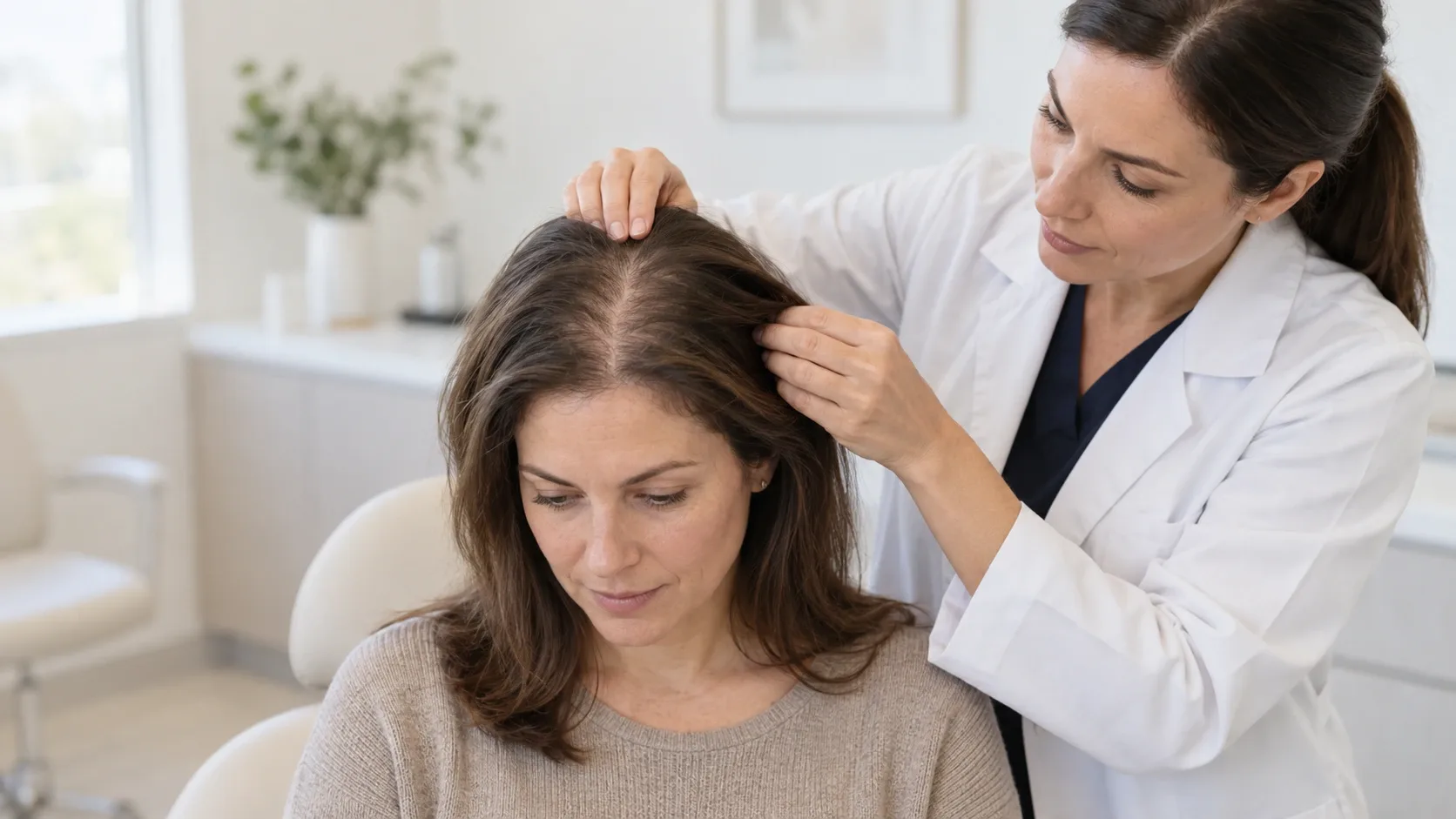
Evidence is strongest for diffuse androgenetic alopecia, weaker for telogen effluvium, and very limited for scarring or autoimmune causes.
Is PRP Effective for Diffuse Androgenetic Alopecia?
Yes, this is the best-supported indication, especially in early-stage disease when follicles are miniaturized but still present.
Diffuse androgenetic alopecia involves progressive follicular miniaturization. PRP appears most useful in this window, where it may thicken existing hairs and slow further miniaturization. The strongest trial evidence, including the half-head studies above, comes from this diagnosis (Alves and Grimalt 2016).
Is PRP Effective for Telogen Effluvium?
Early trials show promise, but the evidence base is small and the underlying trigger must always be identified and treated first.
Telogen effluvium is a reactive shedding disorder. A randomized, double-blind pilot trial in women with chronic telogen effluvium found significant clinical improvement and patient satisfaction after four monthly PRP sessions . Interestingly, that trial found no extra benefit from a higher platelet concentration, which suggests a threshold effect. Even so, one pilot trial cannot establish efficacy, and systematic reviews classify the evidence for telogen effluvium as preliminary (Cruciani et al. 2023).
Can PRP Help Other Causes of Generalized Hair Thinning?
Diagnosis must come first, and PRP has limited or no relevance when follicles are destroyed, as in scarring alopecia.
If shedding stems from hypothyroidism, iron deficiency, or medication, the correct treatment targets that cause. PRP cannot restore follicles in scarring alopecia because scar tissue replaces the follicle itself. Evidence reviews consistently rank the strength of evidence as much higher for androgenetic alopecia than for telogen effluvium, alopecia areata, or scarring hair loss (Paichitrojjana 2022).
Who May Be a Good Candidate for PRP?
Ideal candidates have thinning rather than complete baldness, viable follicles, and relatively recent hair loss, with a confirmed diagnosis.
PRP needs living follicles to work on. Areas of complete baldness or permanent follicular destruction respond poorly. Patients with early-stage miniaturization, a short history of thinning, and no active scalp disease tend to fit best. Before any session, the clinician must confirm the underlying diagnosis, because the cause of hair loss determines whether PRP fits at all.
Who May Not Be Suitable for PRP Hair Treatment?
PRP is generally unsuitable for people with advanced baldness, scarring alopecia, active scalp disease, platelet disorders, or certain systemic conditions.
Low platelet counts, platelet dysfunction, active scalp infection, uncontrolled systemic illness, and the use of anticoagulants can all affect safety or efficacy. Candidate selection therefore weighs both the cause of hair loss and the full medical history, not hair appearance alone.
How Is PRP Treatment for Diffuse Hair Loss Performed?
The clinician draws blood, centrifuges it to concentrate platelets, and injects the PRP into mapped thinning areas of the scalp.
How Is the Blood Sample Prepared?
Preparation involves blood collection, centrifugation, separation of components, and concentration of the platelet-rich fraction.
A clinician draws about 10 to 60 milliliters of blood into tubes with an anticoagulant. A centrifuge then spins the sample. The spin separates red blood cells from plasma, and the platelet-rich layer is collected. Some protocols use a second spin to raise platelet concentration. There is no universally accepted standard for the ideal platelet concentration or spin method, and this lack of standardization explains part of the variation in study results.
How Is PRP Applied to the Scalp?
The clinician maps thinning zones, then injects small amounts of PRP intradermally into areas that contain weakened or miniaturized follicles.
Injection depth typically targets the dermis around follicle roots. Some protocols add microneedling to create microchannels that may enhance delivery, although the benefit of this combination remains under study.
How Many PRP Sessions Are Usually Needed?
PRP generally requires a series of about three initial sessions spaced one month apart, followed by periodic maintenance.
A single session rarely changes outcomes. Hair-cycle biology demands repeated stimulation. A commonly used schedule involves three sessions at four-week intervals, then booster sessions every three to six months. Treatment intervals vary between practitioners because no standardized protocol exists (Cruciani et al. 2023).
When Can You Expect Results From PRP?
Changes are gradual, with early signs such as reduced shedding within weeks and visible density gains taking several months.
What Changes May Appear First?
The first change is often a reduction in hair shedding, followed by gradual thickening of individual hairs.
Patients frequently report fewer hairs on the pillow or in the shower before they see visual coverage. Hair-shaft diameter then improves, and density builds more slowly.
How Long Can PRP Results Take to Develop?
Most patients need three to six months before meaningful changes appear, because hair grows in cycles.
The anagen phase lasts years. A follicle that re-enters anagen must grow a new shaft before improvement is visible. Consistent photographic or trichoscopic monitoring at baseline and at each follow-up provides the most reliable way to track progress.
What Are the Potential Benefits of PRP for Diffuse Hair Loss?
Potential benefits include reduced shedding, improved apparent density, thicker hair shafts, and support for weakened follicles, delivered through a minimally invasive, autologous procedure.
PRP requires no daily medication routine and carries minimal systemic risk. However, response varies between patients, and no honest clinician should present PRP as guaranteed regrowth.
What Are the Possible Side Effects of PRP?
Most side effects are mild, localized, and temporary, including tenderness, swelling, redness, itching, minor bleeding, and headache.
Pooled trial data show no significant difference in pain or discomfort between PRP and control groups, and reported adverse events resolved within about 24 hours . Safety still depends on individual medical circumstances.
Can PRP Be Combined With Other Hair-Loss Treatments?
Yes. Current evidence and expert guidance position PRP as an adjunct to established therapies rather than a replacement.
How Does PRP Work With Minoxidil?
Trial data suggest combination therapy may outperform either treatment alone.
Direct comparison studies indicate that PRP may exceed topical minoxidil monotherapy in density outcomes, and combined use may add further benefit (Adil and Godwin 2018).
How Does PRP Work With Finasteride?
Finasteride addresses the hormonal driver in androgenetic alopecia, while PRP targets follicular support, so the two may act on different pathways.
Meta-analytic data show both treatments improve density, though with high heterogeneity . Combination remains a clinical decision based on the individual patient.
Can PRP Support Hair Transplantation?
Surgeons use PRP around transplanted grafts with the goal of improving graft survival, although evidence here is less rigorous than for medical therapy.
Does PRP Replace Other Regenerative Approaches?
No. Microneedling, low-level laser therapy, and newer approaches remain separate options, and the treatment plan should reflect the underlying diagnosis.
How Should PRP for Diffuse Hair Loss Be Evaluated?
Evaluation should include medical history, scalp examination, trichoscopy, density and miniaturization assessment, and baseline photography.
A thorough workup covers the hair-loss timeline, family history, diet, medications, and systemic symptoms. Trichoscopy reveals miniaturized hairs, follicular openings, and perifollicular changes that guide diagnosis. Blood tests investigate thyroid function, iron stores, and vitamin levels when indicated. Objective follow-up uses standardized photos and trichoscopy rather than memory alone.
What Are the Limitations of PRP for Diffuse Hair Loss?
The main limitations are variable protocols, inconsistent evidence across diagnoses, individual differences in response, the need for repeated sessions, and the absence of guaranteed regrowth.
The lack of standardized PRP preparation and administration remains the single biggest obstacle to interpreting the evidence (Cruciani et al. 2023). Patients must commit to repeated sessions and accept uncertain, individual outcomes.
PRP for Diffuse Hair Loss: What Should Patients Consider?
Confirm the cause of hair loss, verify that viable follicles remain, ask about the preparation protocol and schedule, set realistic expectations, and compare PRP with established alternatives.
An informed patient asks how the clinic prepares PRP, how many sessions the plan includes, how progress will be measured, and what happens if the response is weak. These questions separate evidence-based practice from marketing.
Frequently Asked Questions About PRP for Diffuse Hair Loss
The most common questions below cover efficacy, timeline, safety, and candidacy.
Can PRP help diffuse hair thinning?
Yes, when follicles remain viable. Evidence is strongest for androgenetic thinning and weaker for reactive shedding (Cruciani et al. 2023).
Is PRP effective for telogen effluvium?
Early randomized data are positive but limited. Treat the trigger first.
Can PRP increase hair density?
Controlled trials report density gains of roughly 20 to 30 hairs per square centimeter versus placebo in responsive populations (Li et al. 2018).
How many PRP sessions are needed for diffuse hair loss?
Most protocols use three initial monthly sessions plus maintenance boosters.
How soon does PRP start working?
Reduced shedding may appear within weeks. Visible density changes usually need three to six months.
How long do PRP results last?
Results depend on maintenance sessions and the underlying diagnosis. Without maintenance, gains tend to fade over several months.
Does PRP work on completely bald areas?
No. PRP cannot regenerate follicles that no longer exist.
Can PRP be combined with minoxidil?
Yes. Combination therapy is common and may improve outcomes (Adil and Godwin 2018).
Is PRP painful?
Most patients report mild, brief discomfort. Pooled data show pain levels similar to placebo injections .
What are the side effects of PRP for hair loss?
Tenderness, swelling, redness, itching, minor bleeding, and headache, all typically resolving within a day.
Does PRP work for both men and women?
Yes. Trials include both sexes, with dedicated meta-analytic evidence in women (Yuan et al. 2024).
References
Adil, Afsheen, and Marshall Godwin. "The Effectiveness of Treatments for Androgenetic Alopecia: A Systematic Review and Meta-Analysis." JAMA Facial Plastic Surgery, vol. 20, no. 4, 2018, pp. 269–277.
Alves, Ronaldo, and Ramon Grimalt. "Randomized Placebo-Controlled, Double-Blind, Half-Head Study to Assess the Efficacy of Platelet-Rich Plasma on the Treatment of Androgenetic Alopecia." Dermatologic Surgery, vol. 42, no. 4, 2016, pp. 491–497.
Cruciani, Mariateresa, et al. "Platelet-Rich Plasma for the Treatment of Alopecia: A Systematic Review and Meta-Analysis." Blood Transfusion, vol. 21, no. 1, 2023, pp. 24–36.
Gentile, Pietro, et al. "The Effect of Platelet-Rich Plasma in Hair Regrowth: A Randomized Placebo-Controlled Trial." Stem Cells Translational Medicine, vol. 4, no. 11, 2015, pp. 1317–1323.
Li, Zhejian, et al. "Platelet-Rich Plasma for Androgenetic Alopecia: A Systematic Review and Meta-Analysis." Plastic and Reconstructive Surgery, vol. 141, no. 3, 2018, pp. 591e–600e.
Paichitrojjana, Ananya. "Platelet Rich Plasma and Its Use in Hair Regrowth: A Review." Drug Design, Development and Therapy, vol. 16, 2022, pp. 635–645.
Yuan, Jing, et al. "Effectiveness of Platelet-Rich Plasma in Treating Female Hair Loss: A Systematic Review and Meta-Analysis of Randomized Controlled Trials." Skin Research and Technology, vol. 30, no. 8, 2024, e70004.