

PRF for Male Hair Loss: How Does It Support Hair Growth?
Platelet-rich fibrin, or PRF, is an autologous regenerative treatment that uses a patient's own blood to deliver concentrated platelets, growth factors, and a fibrin matrix directly into the scalp
Platelet-rich fibrin, or PRF, is an autologous regenerative treatment that uses a patient's own blood to deliver concentrated platelets, growth factors, and a fibrin matrix directly into the scalp. For men with androgenetic alopecia, also called male pattern hair loss, PRF aims to support existing, miniaturized hair follicles rather than create new ones. Doctors prepare it from a small blood sample through controlled centrifugation, and it releases signaling molecules such as PDGF and VEGF over an extended period. The key promise is simple: if the follicle is still alive, PRF may help it work better. The key limitation is just as important: PRF cannot restore hair in areas where follicles have disappeared completely, and it does not replace medical therapy or hair transplantation.
What Is PRF for Male Hair Loss?
PRF is a second-generation platelet concentrate made entirely from the patient's own blood, without anticoagulants. It combines concentrated platelets, a natural fibrin scaffold, white blood cells, and a reservoir of growth factors into a single autologous material. Because it comes from the patient, PRF belongs to the field of regenerative medicine, where the body supplies its own repair signals. Unlike medications such as minoxidil or finasteride, which act on blood flow and androgen metabolism, PRF acts through biological signaling at the follicle level (Behrangi et al. 2026).
What Does Platelet-Rich Fibrin Contain?
PRF contains four main biological components, each with a defined role.
Platelets: the central signaling cells, packed with growth factors such as PDGF, TGF-β, and VEGF.
Fibrin matrix: a three-dimensional protein scaffold that traps cells and molecules and slows their release.
White blood cells: immune cells that modulate inflammation and support tissue repair.
Growth factors and signaling molecules: the chemical messengers that interact with dermal papilla cells and the hair follicle niche.
These elements work together because the fibrin keeps them in place after injection. A liquid preparation like PRP disperses quickly, while the fibrin scaffold holds the biological material near the follicle for a longer period (Sclafani 2014).
How Is PRF Different From PRP?
PRF differs from PRP in four practical ways: preparation method, anticoagulant use, fibrin structure, and growth-factor release pattern.
Feature | PRF | PRP |
Anticoagulants | Not used | Usually used |
Centrifugation | Single, lower-speed spin | Often double, higher-speed spin |
Structure | Fibrin matrix, gel-like | Liquid plasma |
Growth-factor release | Slower, sustained | Faster, shorter burst |
White blood cells | Retained in the matrix | Variable, often reduced |
PRP dominated early research because it was easier to produce. PRF emerged later, and researchers describe it as a second-generation concentrate precisely because its fibrin matrix changes how growth factors become available to tissue (Dohan Ehrenfest et al. 2006). The sustained release is a proposed advantage, not a proven superiority.
How Can PRF Affect Male Hair Growth?
PRF may influence hair growth by delivering concentrated regenerative signals to viable follicles. The proposed mechanism rests on three pillars: growth-factor signaling, support of the hair growth cycle, and the slow-release function of the fibrin matrix.
How Do Growth Factors Interact With Hair Follicles?
Platelets release growth factors that act on dermal papilla cells, the biological engine of each follicle. PDGF stimulates cell division, VEGF promotes local blood vessel formation, and TGF-β regulates tissue remodeling. In androgenetic alopecia, follicles shrink progressively, so the goal of PRF is to create a stronger signaling environment around these miniaturized follicles. This repair-oriented signaling explains why researchers frame PRF as a follicle-supporting therapy rather than a cure (Behrangi et al. 2026).
Can PRF Support the Hair Growth Cycle?
The hair growth cycle has three phases: anagen (active growth), catagen (transition), and telogen (resting and shedding). Androgenetic alopecia shortens the anagen phase, so hairs become thinner and fall out sooner. Regenerative signals may encourage follicles that remain viable to spend more time in anagen. Early clinical observations support this idea: in one study, patients noticed reduced shedding within three to four weeks and new growth between six and eight weeks after treatment started (Sharma et al. 2024).
What Role Does the Fibrin Matrix Play?
The fibrin matrix acts as a slow-release depot. Its three-dimensional structure retains platelets, white blood cells, and growth factors at the injection site, and proteases gradually break the matrix down. Compared with liquid platelet preparations, this architecture may extend the signaling window from days to weeks. Researchers present this as a proposed mechanism, because laboratory confirmation of superior biological outcomes remains limited (Sclafani 2014).
Which Types of Male Hair Loss May Respond to PRF?
PRF fits best with androgenetic alopecia and other conditions where viable follicles still exist. The pattern matters more than the label, because the treatment needs living follicles to influence.
Is PRF Suitable for Androgenetic Alopecia?
Yes, androgenetic alopecia is the main evidence-backed indication for PRF in men. Genetic susceptibility and progressive follicular miniaturization drive this condition, and PRF targets the follicles that remain. Response appears strongest in early and moderate stages, where follicles are miniaturized but not gone. In advanced male pattern hair loss, research suggests older patients may still respond, but the biological ceiling is lower because fewer viable follicles remain (Behrangi et al. 2026).
Can PRF Help Men With Diffuse Hair Thinning?
PRF may help with diffuse thinning only after a doctor confirms the cause. Reduced overall density can stem from nutritional deficiency, thyroid disease, medication, or androgenetic alopecia itself. A regenerative injection cannot fix an underlying medical problem, so diagnosis must come first.
Can PRF Treat Other Causes of Hair Loss in Men?
PRF has been explored for stress-related shedding and selected non-scarring alopecias, but the evidence here is thin. Some small case series report improvement in androgenetic alopecia specifically, not in scarring conditions (Bhoite et al. 2022). Inflammatory or scarring alopecias need targeted medical treatment before any regenerative approach.
Is PRF Appropriate for Completely Bald Areas?
No. PRF cannot recreate follicles in completely bald skin. Miniaturized follicles can respond to signaling; absent follicles cannot. This distinction explains why follicular-unit transplantation, which physically relocates follicles, remains the only option for areas with complete follicular loss (Mahapatra et al. 2016).
Who Is a Suitable Candidate for PRF for Male Hair Loss?
A good candidate has early or moderate thinning, functioning follicles, a healthy scalp, and realistic expectations. General health also matters because the procedure involves blood collection and injections.
What Characteristics Make a Patient a Good Candidate?
The strongest candidates show visible thinning with preserved follicles, normal scalp skin, and no active scalp infection. Men who start treatment while follicles remain viable respond better than men who wait until baldness is established (Behrangi et al. 2026).
When Might PRF Not Be Appropriate?
PRF does not suit complete baldness, advanced follicular loss, active scarring alopecias, undiagnosed sudden shedding, or scalp conditions such as active folliculitis that require a different treatment first. These situations waste the biological signal because there are no follicles to receive it.
Why Is a Hair Loss Diagnosis Important Before PRF?
Diagnosis protects the patient from the wrong treatment. A clinician reviews medical history, examines the hair loss pattern, and may use trichoscopy, a magnified scalp examination, to assess follicle health. Selected patients need laboratory testing to rule out thyroid disease, iron deficiency, or hormonal causes. This step separates treatable follicle miniaturization from conditions that need medical therapy instead.
How Is PRF Prepared for Hair Loss Treatment?
PRF preparation involves a small venous blood draw followed by controlled centrifugation. The entire process takes place in the clinic on the day of treatment.
How Is Blood Collected?
A clinician draws a small blood sample from a vein, usually in the arm, using dedicated PRF collection tubes without anticoagulant additives. The tubes then move immediately to the centrifuge.
How Does Centrifugation Create PRF?
The centrifuge spins the blood at a controlled speed, and blood components separate by density. Red cells sink to the bottom, while the platelet-, leukocyte-, and fibrin-rich fraction forms in the middle. The clinician collects this fraction for injection. PRF typically uses a single, lower-speed spin, while PRP often uses a faster, double-spin protocol (Dohan Ehrenfest et al. 2006).
Why Does PRF Usually Avoid Anticoagulants?
PRF relies on the blood's natural clotting process. Without anticoagulants, fibrinogen converts to fibrin during processing, and the fibrin polymerizes into a matrix. This coagulation step is what gives PRF its structure and its proposed slow-release properties. Removing anticoagulants is a deliberate design choice, not an oversight.
What Happens During a PRF Hair Loss Session?
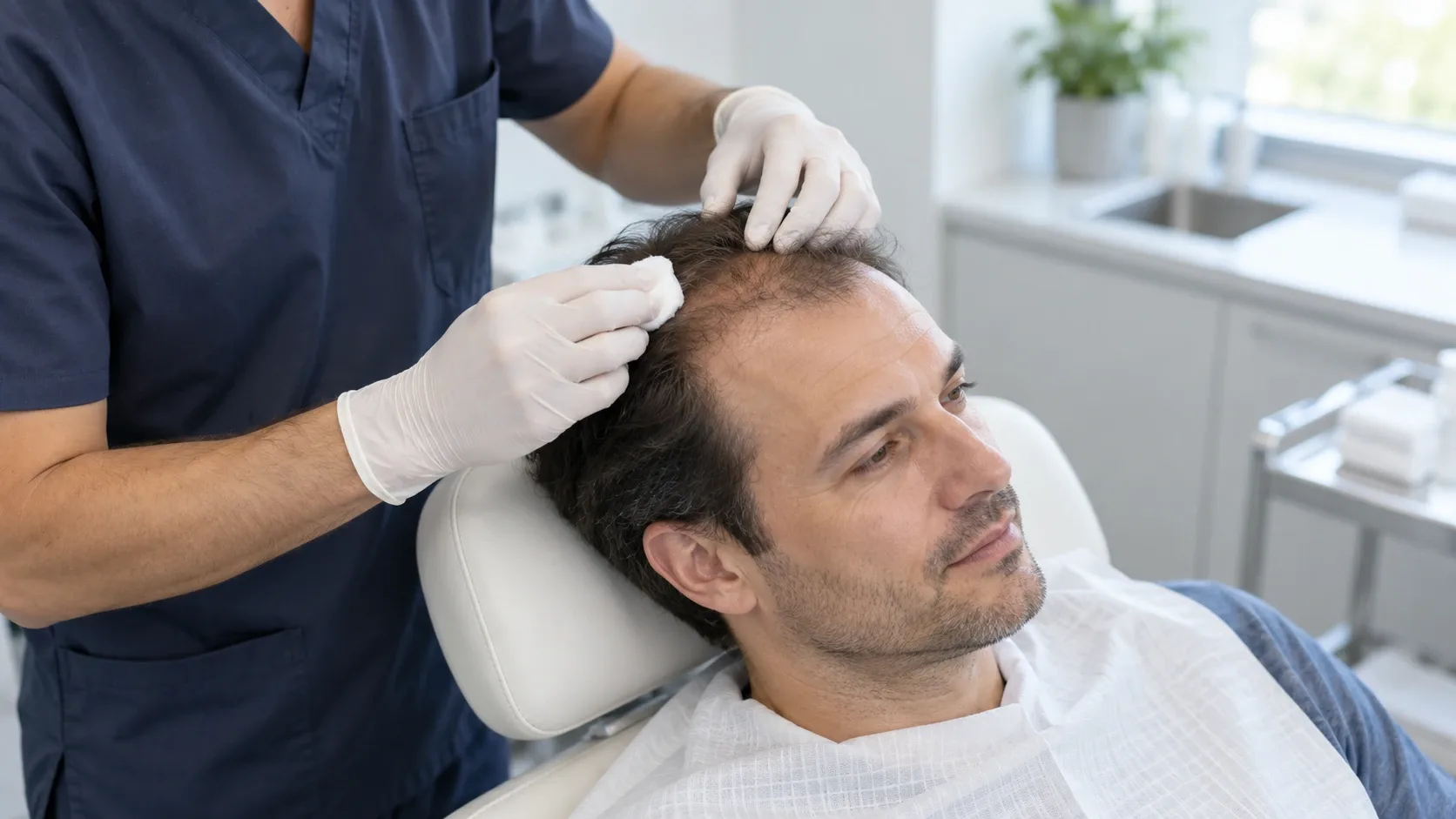
A PRF session involves scalp assessment, treatment mapping, cleansing, and a series of small injections into thinning areas. Sessions typically last under an hour, though duration varies by protocol and treatment area.
How Is the Scalp Prepared?
The clinician maps the treatment zones based on the diagnosis, then cleans the scalp to reduce infection risk. Some providers apply comfort measures, but this varies by practice.
Where Is PRF Injected?
Injections target the hairline, crown, and any region with diffuse thinning where viable follicles remain. The clinician places small aliquots into the dermal layer near the follicles.
How Long Does a PRF Treatment Take?
Treatment duration varies by protocol, treatment area, and provider. Published studies describe sessions completed within a routine clinic visit, but no single universal standard exists (Sharma et al. 2024).
Is PRF Combined With Microneedling or Other Treatments?
Some providers combine PRF with scalp microneedling or light-based treatments. One study found that PRF plus microneedling produced better outcomes than a control approach, with only 2.2% of patients showing no improvement (Schiavone et al. 2018). Combination protocols remain distinct from PRF itself.
How Many PRF Sessions Are Needed for Male Hair Loss?
Most published protocols use an initial series of three monthly sessions, followed by individualized maintenance. The exact schedule should match the diagnosis and the response.
What Does a Typical PRF Treatment Course Look Like?
A common pattern starts with three injections spaced one month apart. Clinical studies report density improvements building across this initial series, with measurable gains at twelve and twenty-four weeks (Sharma et al. 2024). The clinician adjusts intervals based on response, because protocols across studies differ.
Are Maintenance PRF Treatments Necessary?
Maintenance schedules vary because long-term data are limited. Providers typically monitor hair density and shedding patterns and repeat sessions when improvement plateaus. The treating clinician should define the maintenance plan before treatment begins.
When Can Men Expect Results From PRF?
Men should expect gradual change over several months, not immediate regrowth. Early signs often include reduced shedding before visible thickening.
What Happens During the First Few Weeks?
The first weeks bring a local healing response: mild tenderness, redness, and sometimes brief swelling. No one should expect new hair growth during this window.
When Might Hair Density or Thickness Begin to Change?
Clinical reports place the first visible changes between six and eight weeks, with more substantial density gains at twelve to twenty-four weeks (Sharma et al. 2024). Individual variability is large, and some men respond slowly or minimally.
How Should PRF Results Be Evaluated?
Objective evaluation uses standardized photographs, hair-density measurements, hair-shaft caliber assessment, shedding counts, and scheduled clinical follow-up. Subjective impressions alone often mislead, because lighting and hairstyle change perception.
What Does the Research Say About PRF for Male Pattern Hair Loss?
The evidence for PRF is promising but preliminary. Small studies report meaningful density improvements, yet the research base remains far smaller than the PRP literature.
What Evidence Exists for PRF in Androgenetic Alopecia?
Published studies include prospective cohorts, case series, and a few comparative trials. One systematic review found PRF produced hair density improvements of 62% to 97% within three to six months across four prospective studies involving 204 participants (Behrangi et al. 2026). A randomized trial comparing injectable PRF with PRP reported superior density and thickness gains in the PRF group (BCSRJ 2024). These results qualify as encouraging preliminary evidence, not established efficacy.
How Strong Is the Evidence Compared With PRP?
The PRP evidence base is larger and older, but it is also inconsistent. One placebo-controlled pilot study found PRP monotherapy did not improve hair growth in thirty men with androgenetic alopecia (Khatri et al. reported in Acta Dermato-Venereologica). PRF research is smaller but shows consistent direction across studies. Promising findings must not be confused with proven superiority.
What Are the Main Limitations of Current PRF Research?
The limitations are clear: small sample sizes, different preparation protocols, varied injection techniques, inconsistent treatment schedules, and limited long-term follow-up. The 2026 systematic review explicitly calls for larger randomized controlled trials with standardized methodology (Behrangi et al. 2026).
PRF vs PRP for Male Hair Loss: What Is the Difference?
PRF and PRP share a biological origin but differ in preparation and release behavior. The table below summarizes the practical distinctions.
Dimension | PRF | PRP |
Centrifugation | Single low-speed spin | Often double high-speed spin |
Anticoagulants | None | Commonly used |
Fibrin structure | Present, forms a matrix | Absent, remains liquid |
Release profile | Sustained over weeks | Rapid burst over days |
Evidence volume | Small but growing | Larger, more mixed |
How Do PRF and PRP Differ in Preparation?
PRP retains a liquid plasma fraction through anticoagulated processing. PRF skips anticoagulants and allows natural coagulation, which creates the fibrin structure that defines it (Dohan Ehrenfest et al. 2006).
How Do Their Biological Properties Differ?
PRP concentrates platelets in plasma without a scaffold. PRF keeps platelets, white blood cells, and growth factors embedded in fibrin, which changes how long the signals persist near the follicle.
Does Current Evidence Prove That PRF Is Better Than PRP?
No. The biological rationale for sustained release is logical, but comparative clinical trials remain scarce. One recent randomized trial favored PRF for density and thickness, yet a single study cannot settle the question (BCSRJ 2024). Newer technology does not automatically mean better outcomes.
Which Factors Should Influence the Choice Between PRF and PRP?
The choice should rest on diagnosis, severity, treatment history, the clinician's protocol, available evidence, and patient goals. Cost and session schedules also matter in practice.
What Are the Possible Benefits of PRF for Male Hair Loss?
PRF may improve hair density, increase shaft thickness, reduce shedding, and support miniaturized follicles. Each claim requires qualification, because responses vary and evidence is still developing.
Can PRF Improve Hair Density?
Yes, density gains are the most consistently reported outcome. Published improvements range from moderate to substantial across prospective studies (Behrangi et al. 2026).
Can PRF Increase Hair Shaft Thickness?
Some studies report thicker individual hairs alongside density gains, because revived follicles produce stronger terminal hairs instead of fine vellus hairs.
Can PRF Reduce Hair Shedding?
Reduced shedding is often the first change patients notice, sometimes within three to four weeks of the first session (Sharma et al. 2024).
Can PRF Support Miniaturized Hair Follicles?
This is the core proposed benefit. By delivering concentrated growth signals near shrinking follicles, PRF aims to slow or partially reverse miniaturization while follicles remain viable.
Why Might PRF Be Considered Before Surgical Hair Restoration?
Men with early thinning often prefer a non-surgical option first. PRF carries lower downtime and cost than transplantation, and it may delay the need for surgery. It also complements transplantation, because PRF applied around transplanted follicular units improved graft retention in one study (Mahapatra et al. 2016).
What Are the Side Effects and Risks of PRF Hair Treatment?
PRF side effects are generally mild and temporary, but the procedure is still an injection-based treatment with real procedural risks.
What Short-Term Reactions Can Occur?
Common reactions include tenderness, redness, swelling, bruising, minor bleeding, and temporary scalp discomfort. One review reported transient bruising in about 14.5% of patients, with soreness and mild injection pain also noted (Behrangi et al. 2026).
Is There a Risk of Infection?
Yes, any injection carries a small infection risk. Sterile technique and proper scalp preparation reduce this risk substantially.
Can PRF Cause an Allergic Reaction?
Reactions to the injected material itself are rare because PRF is autologous, meaning the body recognizes it as its own. However, antiseptics, needles, and aftercare products can still trigger reactions, so no clinician should promise zero risk.
What Is Recovery Like After PRF for Male Hair Loss?
Recovery is typically quick, and most men resume normal activities within a day or two. Post-treatment scalp care should follow the treating clinician's specific instructions.
How Soon Can You Return to Normal Activities?
Most patients return to routine activity the same day or the next day. Strenuous exercise usually waits a short period to protect the injection sites.
Should You Avoid Washing or Exercising After Treatment?
Providers commonly advise avoiding washing and heavy sweating for a defined window, often 24 to 48 hours. The exact guidance varies by protocol, so patients should follow their own clinician rather than a generic rule.
What Scalp Care May Be Recommended After PRF?
Recommendations typically include gentle cleansing, avoiding harsh products, and protecting the scalp from sun exposure. Individualized instructions from the treating provider take priority over any general list.
How Much Does PRF for Male Hair Loss Cost?
PRF pricing varies widely by provider, location, treatment area, and number of sessions. The total course cost matters more than the price of a single session.
What Determines the Price of PRF Treatment?
Cost factors include the number of sessions, the size of the treatment area, provider expertise, geographic location, the clinical protocol, and any combined treatments such as microneedling.
Is PRF Usually Covered by Insurance?
PRF is typically classified as a cosmetic or regenerative treatment, so insurance rarely covers it. Coverage varies by insurer and indication, but patients should assume they will pay out of pocket unless told otherwise.
Should Cost Be Compared Per Session or Per Treatment Course?
Compare per treatment course. A cheap single session that requires ten visits costs more than a higher-priced protocol that achieves results in three. Total cost, including maintenance, gives the meaningful comparison.
How Does PRF Compare With Other Male Hair Loss Treatments?
PRF occupies a distinct position between medication and surgery. Each option acts through a different mechanism, and they often work best in combination.
PRF vs Minoxidil
Minoxidil is a topical or oral medication that improves blood flow and prolongs the anagen phase. PRF is an injectable regenerative treatment that delivers concentrated biological signals. Minoxidil requires daily, indefinite use; PRF uses periodic sessions. Many clinicians combine both.
PRF vs Finasteride
Finasteride is a prescription oral medication that blocks the conversion of testosterone to dihydrotestosterone, the hormone that drives follicular miniaturization. PRF does not affect androgen levels; it targets the follicle environment. Finasteride addresses the hormonal cause, while PRF addresses the follicle's condition. Both require a prescription-level clinical decision and individualized planning.
PRF vs Hair Transplantation
Hair transplantation relocates healthy follicular units from a donor area to bald zones. PRF stimulates follicles that already exist. Transplantation suits advanced baldness; PRF suits early and moderate thinning. The two can complement each other, since PRF has been shown to support follicular unit retention after transplantation (Mahapatra et al. 2016).
Can PRF Be Combined With Other Hair Restoration Treatments?
Yes. Providers often combine PRF with minoxidil, finasteride, hair transplantation, or other regenerative approaches. Combination strategies should follow an individualized treatment plan built on a confirmed diagnosis.
What Should Men Consider Before Choosing PRF?
Five questions separate a sound decision from an expensive guess. Each one addresses a different dimension of safety and value.
Has the Cause of Hair Loss Been Confirmed?
Never start PRF without a diagnosis. Unexplained hair loss may signal thyroid disease, iron deficiency, or another condition that needs medical treatment.
Are Viable Hair Follicles Still Present?
PRF needs living follicles. Trichoscopic assessment helps the clinician determine whether follicles remain in the thinning zones.
Is the Treatment Protocol Clearly Explained?
A qualified provider states the number of sessions, intervals, expected timeline, and total cost before treatment starts.
Is the Provider Qualified to Perform Injectable Hair Treatments?
PRF involves blood handling and injections. Training in sterile technique, dermatologic assessment, and injectable procedures is essential.
Are Expected Results and Limitations Clearly Discussed?
Honest providers explain that results vary, evidence is preliminary, and complete baldness will not respond. Clear limitation-setting protects the patient from disappointment.
Frequently Asked Questions About PRF for Male Hair Loss
No, PRF does not regrow hair in completely bald areas because it requires viable follicles to influence.
Does PRF Regrow Hair in Completely Bald Areas?
No. Bald skin lacks follicles, and no injection can recreate them. Hair transplantation remains the only option in those zones.
Is PRF Effective for Male Pattern Baldness?
Early evidence suggests yes, especially in early to moderate stages. Published studies report density improvements within three to six months, though larger trials are still needed (Behrangi et al. 2026).
How long does PRF take to show results?
Most patients notice reduced shedding in three to four weeks and visible improvement in six to eight weeks, with stronger gains at twelve to twenty-four weeks (Sharma et al. 2024).
How many PRF sessions are needed for men?
Three monthly sessions form the most common initial course. Maintenance intervals vary by individual response.
Is PRF painful?
Most patients report mild discomfort during injections and temporary tenderness afterward. Comfort measures vary by provider.
How long does PRF hair treatment last?
Results are not permanent. Maintenance sessions help preserve gains, but long-term data remain limited.
Can PRF stop male pattern hair loss?
PRF may slow progression in treated areas, but it does not neutralize the genetic drive behind androgenetic alopecia. Ongoing management is usually necessary.
Is PRF better than PRP for men's hair loss?
Current evidence suggests possible advantages in release behavior and early comparative results, but no definitive proof of superiority exists yet (BCSRJ 2024).
Can PRF be used after a hair transplant?
Yes. Research shows PRF can support follicular unit retention and graft outcomes when applied around transplanted units (Mahapatra et al. 2016).
What happens if PRF does not improve hair growth?
The clinician reassesses the diagnosis, reviews contributing factors, and adjusts the plan. Alternatives include medical therapy, combination protocols, or hair transplantation.
Key Takeaways About PRF for Male Hair Loss
PRF is an autologous platelet concentrate built from a fibrin matrix, concentrated platelets, white blood cells, and growth factors. It aims to support viable follicles through sustained biological signaling, and it fits best with early-to-moderate androgenetic alopecia. The treatment process involves blood collection, centrifugation, and scalp injections, typically in a three-session initial course. Evidence is promising but preliminary, clearly smaller than the PRP literature, and limited by small studies and inconsistent protocols. Diagnosis, follicle viability, and individualized planning determine whether PRF makes sense for a given man. The realistic promise is support for existing follicles, not restoration of bald skin.
References
Behrangi, Elham, et al. "A Systematic Review of Clinical Evidence on the Efficacy and Safety of Conditioned Media, Platelet-Rich Fibrin, Stromal Vascular Fraction, Extracellular Vesicles, and Stem Cells in Androgenetic Alopecia." Stem Cell Research & Therapy, vol. 17, 2026.
Bhoite, K. S., et al. "Injectable Platelet Rich Fibrin Therapy for Androgenetic Alopecia: A Series of 15 Cases." International Journal of Research in Dermatology, vol. 8, 2022, pp. 398-402.
"Comparing the Efficacy of Injectable Platelet-Rich Fibrin (I-PRF) with Platelet-Rich Plasma (PRP) in the Treatment of Androgenic Alopecia." Biological and Clinical Sciences Research Journal, 2024.
Dohan Ehrenfest, David M., et al. "The Impact of the Centrifuge Characteristics and Centrifugation Protocols on the Cells, Growth Factors, and Fibrin Architecture of a Leukocyte- and Platelet-Rich Fibrin (L-PRF) Clot and Membrane." Oral Surgery, Oral Medicine, Oral Pathology, Oral Radiology, and Endodontology, vol. 102, no. 3, 2006, pp. 297-304.
Mahapatra, S., et al. "Study on the Efficacy of Platelet-Rich Fibrin Matrix in Hair Follicular Unit Transplantation in Androgenetic Alopecia Patients." Journal of Clinical and Aesthetic Dermatology, vol. 9, no. 9, 2016, pp. 29-35.
Schiavone, G., et al. "Injectable Platelet-, Leukocyte-, and Fibrin-Rich Plasma (iL-PRF) in the Management of Androgenetic Alopecia." Dermatologic Surgery, vol. 44, no. 9, 2018, pp. 1183-1190.
Sclafani, Anthony P. "Platelet-Rich Fibrin Matrix (PRFM) for Androgenetic Alopecia." Facial Plastic Surgery, vol. 30, no. 2, 2014, pp. 219-224.
Sharma, S., et al. "Injectable Platelet-Rich Fibrin for Treatment of Female Pattern Hair Loss." Journal of Cosmetic and Laser Therapy, vol. 26, no. 1-4, 2024, pp. 17-25.