
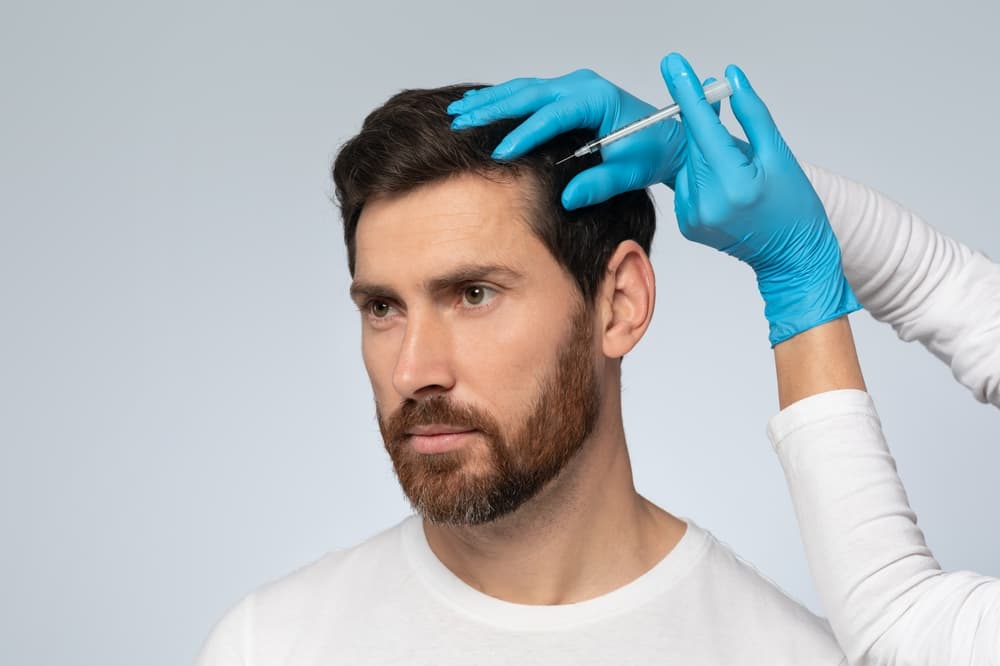
What Is PRP Hair Treatment?
PRP hair treatment uses your own blood to stimulate hair growth. Doctors extract platelet-rich plasma and inject it into your scalp.
PRP hair treatment uses your own blood to stimulate hair growth. Doctors extract platelet-rich plasma and inject it into your scalp. This procedure triggers natural healing and strengthens hair follicles.
What Is the Definition of Platelet-Rich Plasma (PRP)?
PRP stands for platelet-rich plasma. It is a concentrated portion of your own blood that contains high levels of platelets and growth factors.
PRP is a biological product made from your blood. It contains five to ten times more platelets than normal blood.
PRP consists of two main parts. First, it contains plasma. Plasma is the liquid portion of your blood. Second, it contains platelets. Platelets are tiny blood cells that help with clotting and healing. Doctors separate these platelets from your blood using a centrifuge machine.
Normal plasma flows through your veins every day. It carries nutrients, hormones, and proteins. PRP differs from normal plasma because it carries a much higher concentration of platelets. This concentration matters because platelets release powerful growth factors.
Platelets play a critical role in tissue repair. When you cut your skin, platelets rush to the injury site. They release chemical signals that start the healing process. These signals attract stem cells, build new blood vessels, and regenerate damaged tissue. In hair restoration, these same signals wake up dormant hair follicles.
Growth factors contained in PRP include several key proteins. PDGF stimulates cell division. VEGF builds new blood vessels. TGF-β regulates tissue growth. IGF promotes cell survival. EGF speeds up skin healing. FGF supports tissue development. Together, these growth factors create a powerful environment for hair follicle regeneration (Alves and Grimalt, 2018).
How Did PRP Enter Regenerative Medicine?
Doctors first used PRP in orthopedics and sports medicine. Later, plastic surgeons adopted it. Hair restoration specialists began using PRP in the early 2000s.
Orthopedic surgeons used PRP first. They injected it into injured joints and tendons. Athletes like professional football players received PRP for faster recovery from ligament injuries. Sports medicine doctors saw how PRP reduced inflammation and sped up tissue repair.
Plastic surgeons noticed these results. They started using PRP during facial rejuvenation procedures. Surgeons combined PRP with fat grafting to improve tissue survival. They also used it during scar revision treatments.
Hair restoration specialists saw the potential. They began experimenting with PRP injections in the scalp. Early studies showed promising results. Patients with thinning hair reported thicker strands and less shedding. This transition from orthopedics to hair restoration took about two decades. Today, PRP stands as one of the most popular non-surgical hair loss treatments worldwide (Gentile et al., 2020).
How Does PRP Hair Treatment Work?
PRP activates platelets in your scalp. These platelets release growth factors. The growth factors stimulate blood vessel formation and stem cell activity. This process strengthens hair follicles and extends the growth phase.
What Is the Biological Mechanism Behind PRP?
PRP triggers platelet activation, growth factor release, angiogenesis, and stem cell stimulation. These four processes work together to regenerate hair follicles.
Platelet activation starts the process. When doctors inject PRP into your scalp, the platelets encounter collagen and tissue. This contact activates the platelets. Activated platelets change shape and release their stored growth factors.
Growth factor release follows immediately. Each platelet contains granules full of proteins. Once activated, these granules open. They release PDGF, VEGF, TGF-β, and other signaling molecules into the surrounding tissue.
Angiogenesis comes next. VEGF and other factors signal your body to build new capillaries. These tiny blood vessels deliver more oxygen and nutrients to hair follicles. Better blood flow creates a healthier environment for hair growth.
Stem cell stimulation completes the cycle. Growth factors activate stem cells in the bulge region of hair follicles. These stem cells divide and differentiate. They produce new hair cells and extend the anagen phase. Follicle miniaturization slows down. Hair shafts grow thicker and stronger (Li et al., 2012).
Which Growth Factors Play the Biggest Role?
Six growth factors drive PRP results: PDGF, VEGF, TGF-β, IGF, EGF, and FGF.
PDGF stands for platelet-derived growth factor. It recruits fibroblasts and smooth muscle cells. These cells rebuild tissue around hair follicles. PDGF also stimulates other growth factors to activate.
VEGF means vascular endothelial growth factor. It builds new blood vessels. More blood vessels mean better nutrition for follicles. VEGF also protects existing follicles from shrinking.
TGF-β refers to transforming growth factor-beta. It controls cell growth and immune responses. TGF-β prevents excessive inflammation. It keeps the healing process balanced and orderly.
IGF means insulin-like growth factor. It prevents cell death. IGF keeps hair follicle cells alive longer. This factor extends the growth phase of each hair strand.
EGF stands for epidermal growth factor. It speeds up cell turnover. EGF helps scalp skin stay healthy. Healthy skin supports stronger hair growth.
FGF means fibroblast growth factor. It stimulates collagen production. Collagen forms the structural framework around follicles. Stronger framework means more stable hair roots (Cervelli et al., 2014).
How Does PRP Support the Hair Growth Cycle?
PRP extends the anagen phase, shortens the telogen phase, and reverses follicle miniaturization.
The anagen phase is the active growth period. Hair follicles produce new cells during this phase. PRP injections extend this phase. They keep follicles in growth mode longer. This means hair grows longer and thicker before entering the resting phase.
The catagen phase is a short transition period. Hair stops growing during this phase. PRP does not significantly affect this phase. However, it helps follicles move through catagen faster.
The telogen phase is the resting period. Old hairs fall out during this phase. PRP shortens this phase. It pushes follicles back into anagen sooner. This reduces the time between growth cycles.
Follicle miniaturization occurs in androgenetic alopecia. DHT hormone shrinks follicles over time. PRP counteracts this process. Growth factors increase follicle size. They restore normal hair shaft diameter. Small, thin hairs become thicker and stronger (Gkini et al., 2014).
Who Is a Good Candidate for PRP Hair Treatment?
People with early to moderate hair loss benefit most. This includes men and women with pattern baldness, diffuse thinning, and recent hair transplant patients.
Who Are Patients with Androgenetic Alopecia?
Men and women with genetic hair loss respond well to PRP. This condition causes predictable patterns of thinning.
Androgenetic alopecia affects millions of people worldwide. It causes hair follicles to shrink gradually. PRP fights this process. It stimulates dormant follicles and increases hair density. Patients with this diagnosis see the most documented success.
Who Are Men with Early Hair Thinning?
Men in their twenties and thirties with receding hairlines or crown thinning make excellent candidates.
Early intervention matters. When follicles still exist, PRP can revive them. Men who notice their hairline moving back should consider PRP. The treatment works best before complete baldness sets in.
Who Are Women Experiencing Pattern Hair Loss?
Women with diffuse thinning across the crown respond well. PRP helps female pattern hair loss without hormonal side effects.
Women often experience different patterns than men. Their hair becomes thinner across the entire scalp. PRP addresses this diffuse shedding. It strengthens existing follicles and reduces breakage.
Who Are Patients with Diffuse Hair Shedding?
People with telogen effluvium or stress-related shedding benefit from PRP. The treatment stabilizes the hair cycle.
Diffuse shedding means hair falls out evenly. Stress, illness, or nutritional deficiencies cause this condition. PRP helps reset the hair cycle. It pushes more follicles into the growth phase.
Who Benefits from PRP After Hair Transplant Surgery?
Hair transplant patients use PRP to speed healing and improve graft survival. Doctors often recommend PRP one week after surgery.
PRP reduces inflammation after transplantation. It delivers growth factors directly to new grafts. This improves blood supply to transplanted follicles. Studies show higher graft survival rates with PRP supplementation (Uebel et al., 2006).
Who May Not Benefit from PRP?
People with complete baldness, scarred scalps, or advanced follicle loss see limited results.
Complete baldness means no follicles remain. PRP cannot create new follicles. It only strengthens existing ones. Scarred scalp tissue blocks blood flow. Scar tissue prevents growth factors from reaching follicles. Advanced follicle loss leaves nothing to stimulate. These patients need hair transplantation instead.
What Happens During a PRP Hair Treatment Session?
The session includes consultation, blood draw, centrifugation, PRP preparation, and scalp injections. The entire process takes about 60 to 90 minutes.
What Occurs During the Initial Consultation?
The doctor examines your scalp, reviews your medical history, and determines if PRP suits your condition.
The consultation starts with a scalp examination. The doctor uses a dermatoscope to check follicle health. They look at hair density and scalp condition. They ask about your hair loss history. They review medications and allergies. They explain realistic expectations. Not everyone qualifies for PRP. This screening ensures safety and effectiveness.
What Happens During Blood Collection?
A nurse draws 10 to 60 milliliters of blood from your arm. This takes about five minutes.
The blood draw feels like a standard blood test. The technician cleans your arm with antiseptic. They insert a sterile needle into a vein. Blood flows into specialized tubes. These tubes contain anticoagulants to prevent clotting. The amount depends on the treatment area and protocol.
What Is the Centrifugation Process?
A machine spins your blood at high speed. This separates blood components by density.
The technician places tubes in a centrifuge. The machine spins for 10 to 15 minutes. Heavy red blood cells sink to the bottom. White blood cells form a middle layer. Plasma rises to the top. Platelets concentrate in the lower plasma region. This separation creates the platelet-rich layer.
How Does PRP Preparation Work?
The technician extracts the platelet-rich layer. They may activate it with calcium or thrombin before injection.
Preparation requires precision. The technician carefully removes the buffy coat layer. This layer contains the highest platelet concentration. Some protocols add activators. Others use the platelets in their natural state. The final PRP volume ranges from 3 to 10 milliliters.
What Is the Scalp Injection Technique?
The doctor injects PRP into the thinning areas using a fine needle. They space injections about one centimeter apart.
The doctor marks the treatment areas. They apply topical anesthetic first. Some doctors use nerve blocks for comfort. They inject small amounts of PRP at multiple points. The depth reaches the dermis and subcutaneous tissue. This places growth factors near hair follicles. Some doctors also use microneedling to enhance absorption.
How Long Does Treatment Take?
One session lasts 60 to 90 minutes. Most protocols require three to four initial sessions.
Blood draw takes five minutes. Centrifugation takes 15 minutes. Preparation takes 10 minutes. Injections take 20 to 30 minutes. The entire visit fits within a lunch break.
What Pain Management Options Exist?
Doctors use topical anesthetics, cooling devices, and vibration tools to minimize discomfort.
Most patients feel mild pressure during injections. Some describe a pinching sensation. Topical numbing cream reduces this feeling. Cooling devices distract nerves. Vibration tools block pain signals. Oral pain medication is rarely needed.
What Is the Step-by-Step PRP Procedure?
The procedure has five steps: medical assessment, blood draw, platelet separation, PRP injection, and post-treatment care.
What Is Step 1 – Medical Assessment?
The doctor evaluates your scalp, takes photos, and rules out contraindications.
Medical assessment ensures safety. The doctor checks for scalp infections. They review blood disorders. They ask about medications like blood thinners. They take baseline photos. These photos track progress over time.
What Is Step 2 – Blood Draw?
The technician collects blood in specialized tubes. They maintain sterile technique throughout.
The blood draw uses standard phlebotomy procedures. The technician wears gloves. They use single-use needles. They label tubes properly. They handle samples carefully to prevent contamination.
What Is Step 3 – Platelet Separation?
The centrifuge spins blood at 1500 to 3500 RPM for 10 to 15 minutes. This isolates the platelet-rich fraction.
Different protocols use different speeds. Single-spin methods use one centrifugation cycle. Double-spin methods use two cycles for higher concentration. The goal is a platelet concentration three to five times higher than baseline blood levels.
What Is Step 4 – PRP Injection?
The doctor injects PRP into the dermis at multiple points across the thinning areas.
Injection technique varies by doctor. Some use linear threading. Others use serial puncture. The depth targets the mid-dermis. This places PRP near follicle bulbs. Some doctors add microneedling. Microneedling creates channels for PRP absorption.
What Is Step 5 – Post-Treatment Care?
Patients avoid washing hair for 24 hours. They avoid strenuous exercise for 48 hours. They avoid sun exposure and harsh chemicals for one week.
Post-treatment instructions protect the scalp. The injection sites need time to close. Sweat and bacteria can cause irritation. Gentle care optimizes healing. Patients should sleep with their head elevated the first night. This reduces swelling.
What Conditions Can PRP Treat?
PRP treats male pattern baldness, female pattern hair loss, general thinning, transplant recovery, and some cases of alopecia areata.
How Does PRP Treat Male Pattern Baldness?
PRP strengthens follicles in the crown and hairline. It slows progression and increases thickness in men with androgenetic alopecia.
Male pattern baldness follows predictable patterns. Hair recedes at the temples and thins at the crown. PRP targets these areas. Growth factors counteract DHT effects. They extend the life of follicles near the hairline. Results appear gradually over three to six months.
How Does PRP Treat Female Pattern Hair Loss?
PRP improves density across the entire scalp in women. It addresses diffuse thinning without systemic hormones.
Women experience different patterns. Their part widens. Their ponytail becomes thinner. PRP strengthens follicles all over the scalp. It improves hair shaft quality. Women often notice less shedding first. Then they see new growth along the part line.
How Does PRP Address Hair Thinning?
PRP increases hair shaft diameter. It transforms fine, miniaturized hairs into thicker, terminal hairs.
Thinning hair has a smaller diameter than normal hair. PRP changes this. Growth factors enlarge follicles. They extend the anagen phase. Hairs grow longer and thicker. This improves overall density without creating new follicles.
How Does PRP Aid Hair Transplant Recovery?
PRP reduces healing time. It improves graft survival. It stimulates native follicles around transplant sites.
Hair transplant surgery moves follicles from donor areas to bald areas. PRP helps both areas. It speeds healing in the donor zone. It improves blood supply to new grafts. It also strengthens existing follicles near transplant sites. This creates a fuller overall appearance.
Can PRP Treat Alopecia Areata?
Some studies show PRP helps selected cases of alopecia areata. Results vary more than with pattern baldness.
Alopecia areata is an autoimmune condition. The immune system attacks follicles. PRP modulates immune responses. It reduces inflammation around follicles. However, this condition responds less predictably than genetic hair loss. Doctors may combine PRP with corticosteroids for better results (Khatu et al., 2014).
What Are the Benefits of PRP Hair Treatment?
PRP increases density, improves thickness, reduces shedding, speeds transplant healing, uses natural blood components, and requires minimal downtime.
How Does PRP Increase Hair Density?
PRP pushes dormant follicles into the growth phase. More active follicles mean more hairs per square centimeter.
Clinical studies measure density using trichoscopy. Patients see 20 to 30 percent increases in hair count. Some studies report even higher numbers. These new hairs come from reactivated follicles, not new ones. The scalp simply uses its existing potential more fully.
How Does PRP Improve Hair Thickness?
PRP enlarges follicle size. Larger follicles produce thicker hair shafts.
Hair thickness matters as much as density. Fine hairs do not cover the scalp well. PRP transforms vellus hairs into terminal hairs. Terminal hairs are thicker and darker. This creates better scalp coverage. Patients notice their hair feels stronger and looks fuller.
How Does PRP Reduce Hair Shedding?
PRP stabilizes the hair cycle. It keeps follicles in the growth phase longer.
Excessive shedding alarms most patients. They see hair in the shower and on pillows. PRP reduces this shedding. It extends the anagen phase. Hairs stay anchored longer. Patients notice less hair fall within the first month.
How Does PRP Speed Healing After Hair Transplantation?
PRP delivers growth factors to surgical sites. It reduces inflammation and improves graft survival.
Transplant surgery creates tiny wounds. PRP accelerates wound healing. It reduces redness and crusting. It improves blood flow to new grafts. Studies show higher survival rates when doctors use PRP. The healing process completes faster.
Why Is PRP a Natural Treatment?
PRP comes from your own blood. It carries no foreign substances. This eliminates allergic reactions.
Autologous treatment means the body recognizes its own cells. PRP contains no synthetic chemicals. It introduces no drugs into the bloodstream. This natural approach appeals to patients who prefer holistic options.
Why Does PRP Require Minimal Downtime?
Patients return to normal activities immediately. They avoid only strenuous exercise for 48 hours.
PRP is non-surgical. It requires no incisions. It leaves no scars. Most patients go back to work the same day. Some mild redness disappears within hours. This convenience makes PRP attractive for busy professionals.
How Effective Is PRP Hair Treatment According to Scientific Research?
Multiple studies show PRP improves hair density and thickness. However, research varies in quality and protocol.
What Does Clinical Evidence Show?
Randomized controlled trials support PRP efficacy. Meta-analyses confirm positive results for androgenetic alopecia.
Scientists have published dozens of studies on PRP for hair loss. Randomized trials compare PRP to placebo injections. Most show significant improvements in hair count. Meta-analyses pool data from multiple studies. These reviews confirm PRP works better than placebo for pattern hair loss (Gupta et al., 2019).
What Improvements in Hair Density Do Studies Report?
Studies report 15 to 30 percent increases in hair density after three to six months of treatment.
Researchers measure density with standardized photography. They count hairs in fixed scalp areas. PRP groups consistently show more hairs than control groups. Some studies show density gains of 40 hairs per square centimeter. These results sustain with maintenance treatments.
What Improvements in Hair Thickness Do Studies Report?
Hair shaft diameter increases by 10 to 20 percent in most studies.
Thickness improvements lag slightly behind density gains. Follicles need time to enlarge. By month four, most patients see visibly thicker strands. Trichoscopy confirms these improvements objectively.
What Do Patient Satisfaction Studies Show?
Satisfaction rates range from 70 to 90 percent in published studies.
Patients report feeling more confident. They rate their hair quality higher. They report less anxiety about hair loss. Satisfaction correlates with realistic expectations. Patients who understand gradual improvement stay happier with results.
What Are the Limitations of Current Research?
Studies use different preparation methods, platelet concentrations, and treatment schedules. Many include small patient numbers.
Different preparation protocols create confusion. Some doctors use single-spin methods. Others use double-spin. Platelet concentrations vary from two to eight times baseline. Treatment schedules range from monthly to quarterly. Small study populations limit statistical power. Large, multi-center trials remain limited. Standardized protocols would improve research quality (Puig and Cooley, 2020).
How Many PRP Sessions Are Needed?
Most patients start with three to four monthly sessions. They continue with maintenance every three to six months.
What Is the Initial Treatment Protocol?
Doctors typically schedule three sessions four weeks apart. Some protocols use four sessions.
The initial phase builds growth factor levels. Monthly intervals match the hair growth cycle. This timing allows follicles to respond fully. Three sessions provide enough stimulation to see measurable results.
What Are Maintenance Sessions?
Patients return every three to six months for booster injections. This sustains results long-term.
Hair loss is a chronic condition. It continues without treatment. Maintenance sessions counteract ongoing miniaturization. They re-stimulate follicles before they enter dormancy. Most patients need two to four maintenance sessions per year.
When Do Results Become Visible?
Most patients notice reduced shedding within one month. New growth appears at three to four months. Full results show at six months.
The timeline follows biology. Growth factors work immediately. However, hair grows slowly. New hairs must emerge from the scalp. Visible changes require patience. Photos help track subtle improvements.
How Long Do Results Last?
Results last as long as patients maintain treatment. Stopping PRP allows hair loss to resume.
PRP does not cure androgenetic alopecia. It manages the condition. Without maintenance, DHT continues shrinking follicles. Most patients need ongoing care. Some combine PRP with medications for longer-lasting results.
How Should You Prepare Before PRP Treatment?
Avoid blood thinners, stay hydrated, eat well, and stop smoking and alcohol before treatment.
Which Medications Should You Discuss with Your Physician?
Tell your doctor about aspirin, ibuprofen, warfarin, and herbal supplements. These affect bleeding and platelet function.
Blood thinners increase bruising risk. NSAIDs like ibuprofen reduce platelet activity. This weakens PRP effectiveness. Doctors may ask you to stop these medications one week before treatment. Never stop prescription blood thinners without medical approval.
Why Does Hydration Matter?
Well-hydrated blood flows easier. Technicians draw blood more smoothly. Plasma volume increases.
Drink plenty of water the day before treatment. Hydrated veins are easier to access. Blood separation works better. This improves PRP quality.
How Does Nutrition Affect PRP?
Good nutrition supports platelet health. Eat protein-rich foods and avoid fatty meals before treatment.
Platelets need adequate protein for optimal function. A balanced diet supports overall results. Avoid heavy, greasy meals on treatment day. These can affect blood clarity.
Why Should You Avoid Smoking and Alcohol?
Smoking reduces blood flow. Alcohol thins blood. Both reduce PRP effectiveness.
Smokers have poorer circulation. Their follicles receive less oxygen. Alcohol affects platelet function. Stop smoking and drinking at least 48 hours before treatment. Long-term smoking cessation improves results even more.
What Should You Expect After PRP Hair Treatment?
Mild redness and tenderness resolve quickly. Shedding may increase briefly. New growth starts at three months.
What Happens in the First 24 Hours?
The scalp feels tender. Mild swelling may occur. Small bumps appear at injection sites.
These effects are normal. They resolve within hours. Avoid touching the scalp. Do not wash hair. Sleep with your head elevated. Apply cold compresses if needed.
What Happens in the First Week?
Redness fades. Tenderness disappears. Some patients notice increased shedding.
Shedding alarms some patients. It is actually a positive sign. Old hairs fall out to make room for new growth. This phase passes quickly. Continue gentle hair care.
What Happens in the First Month?
Shedding decreases. Scalp health improves. Some patients see early signs of new growth.
The scalp feels healthier. Oil production may normalize. Fine hairs along the hairline may appear. These early signs encourage continued treatment.
What Happens at Three to Six Months?
Visible thickening occurs. Density improves. Hair quality increases significantly.
This is the payoff period. Photos show clear differences. Patients receive compliments. Hair feels stronger. Styling becomes easier. Most patients decide to continue maintenance at this point.
What Does Long-Term Maintenance Involve?
Ongoing sessions every three to six months preserve results. Combination therapy may reduce frequency.
Think of PRP like dental cleanings. Regular maintenance prevents problems. Some patients add minoxidil or finasteride. These medications extend the time between PRP sessions.
Are There Any Side Effects or Risks?
Side effects are mild and temporary. Serious complications are rare. PRP has an excellent safety profile.
What Are Common Side Effects?
Mild pain, swelling, tenderness, temporary redness, and bruising occur most often.
Mild pain feels like soreness. It lasts a few hours. Swelling peaks at 24 hours. It resolves within two days. Tenderness when touching the scalp lasts 48 hours. Redness looks like mild sunburn. Bruising appears at needle entry points. These effects need no treatment.
What Are Rare Complications?
Infection, bleeding, nerve irritation, and poor response occur rarely.
Infection risk is extremely low. Sterile technique prevents it. Bleeding affects patients on blood thinners. Nerve irritation causes temporary numbness. Poor response means the patient sees no improvement. This happens in about 10 to 20 percent of cases.
Why Is Autologous PRP So Safe?
Your body recognizes its own blood components. This eliminates rejection and allergic reactions.
PRP comes from your own body. It carries no donor tissue. It introduces no foreign proteins. This autologous nature makes it one of the safest cosmetic treatments available. Doctors have used PRP for decades without serious safety concerns.
Who Should Avoid PRP Hair Treatment?
People with platelet disorders, active infections, blood cancers, anticoagulant therapy, or severe systemic disease should avoid PRP.
Why Should People with Platelet Disorders Avoid PRP?
Conditions like thrombocytopenia produce poor-quality PRP. The treatment cannot work without adequate platelets.
Low platelet counts yield weak PRP. Disorders affecting platelet function also reduce effectiveness. These patients need medical management first.
Why Should People with Active Infections Avoid PRP?
Scalp infections like folliculitis or cellulitis contraindicate injections. Infection can spread.
Injecting through infected tissue worsens the problem. Doctors must clear infections first. Then they can evaluate PRP candidacy.
Why Should People with Blood Cancers Avoid PRP?
Leukemia and other blood cancers affect blood composition. PRP may not be safe or effective.
These conditions alter blood cell production. PRP preparation may concentrate abnormal cells. Cancer patients need oncologist approval before any elective procedure.
Why Should People on Anticoagulant Therapy Avoid PRP?
Blood thinners increase bruising and bleeding risk. They also reduce platelet function.
Warfarin, apixaban, and similar drugs affect clotting. PRP requires intact platelet function. These medications reduce treatment effectiveness. They increase complication risk.
Why Should People with Severe Systemic Disease Avoid PRP?
Uncontrolled diabetes, liver disease, or autoimmune conditions may affect healing.
Systemic diseases compromise overall health. PRP works best in healthy bodies. Severe illness requires medical stabilization first. Elective cosmetic procedures can wait.
Can PRP Be Combined with Other Hair Loss Treatments?
Yes. PRP works well with minoxidil, finasteride, laser therapy, microneedling, and hair transplantation.
How Do PRP and Minoxidil Work Together?
Minoxidil opens blood vessels. PRP delivers growth factors. Together they improve follicle nutrition.
Minoxidil is a topical medication. It widens blood vessels in the scalp. This improves blood flow. PRP adds growth factors to this improved circulation. The combination works better than either treatment alone. Patients often start both simultaneously.
How Do PRP and Finasteride Work Together?
Finasteride blocks DHT. PRP stimulates growth. Together they address both causes of hair loss.
Finasteride reduces DHT levels. This stops follicle shrinkage. PRP reverses existing miniaturization. Men often use this combination. It provides comprehensive protection against androgenetic alopecia.
How Do PRP and Low-Level Laser Therapy Work Together?
Laser therapy increases blood flow. PRP adds growth factors. The combination enhances cellular activity.
Low-level lasers stimulate follicles with light energy. This increases metabolism. PRP adds biochemical signals. Together they create an optimal growth environment. Some clinics offer both treatments in the same session.
How Do PRP and Microneedling Work Together?
Microneedling creates channels. PRP penetrates deeper. The combination amplifies results.
Microneedling uses tiny needles to puncture the scalp. This triggers wound healing. It also creates pathways for PRP absorption. Doctors often perform microneedling first. Then they apply PRP. The combination shows superior results in studies (Takikawa et al., 2011).
How Does PRP Help After FUE Hair Transplant?
PRP improves graft survival. It speeds donor healing. It stimulates surrounding follicles.
FUE removes individual follicles. PRP helps the donor area heal faster. It reduces scarring. It improves blood supply to transplanted grafts. Most surgeons recommend PRP one week after FUE.
How Does PRP Help After DHI Hair Transplant?
PRP supports the implantation process. It reduces trauma to grafts. It improves density in the recipient area.
DHI uses a choi implanter pen. This technique places grafts directly. PRP supports these delicate grafts. It reduces shock loss. It helps native follicles survive the procedure.
PRP Hair Treatment vs Other Hair Loss Treatments
PRP offers a middle ground between medications and surgery. It is natural, non-surgical, and effective for early to moderate loss.
How Does PRP Compare to Minoxidil?
PRP requires office visits but has no daily compliance issues. Minoxidil needs daily application but costs less.
Feature | PRP | Minoxidil |
Application | Monthly injections | Daily topical |
Side Effects | Mild, temporary | Scalp irritation, initial shedding |
Cost | Higher per session | Lower monthly cost |
Natural | Yes, autologous | No, synthetic |
Downtime | Minimal | None |
Results | 3-6 months | 4-6 months |
PRP suits patients who forget daily applications. Minoxidil suits budget-conscious patients. Many use both.
How Does PRP Compare to Finasteride?
PRP has no sexual side effects. Finasteride requires daily pills but costs less.
Feature | PRP | Finasteride |
Gender | Men and women | Men only |
Side Effects | Mild scalp tenderness | Sexual dysfunction (rare) |
Hormonal Effect | None | Blocks DHT |
Pregnancy | Safe | Women must avoid |
Maintenance | Quarterly injections | Daily pill |
Men concerned about finasteride side effects often choose PRP. Women cannot use finasteride. They use PRP as a primary treatment.
How Does PRP Compare to Hair Transplant Surgery?
PRP is non-surgical and cheaper. Surgery moves permanent follicles but costs more and requires recovery.
Feature | PRP | Hair Transplant |
Invasive | No | Yes, surgical |
Cost | Lower | Higher |
Recovery | Same day | One week |
New Follicles | No | Yes, relocated |
Scarring | None | Tiny dots (FUE) |
Best For | Early thinning | Advanced baldness |
PRP preserves existing hair. Surgery replaces lost hair. Many patients use PRP after surgery to maintain native follicles.
How Does PRP Compare to Exosome Therapy?
PRP uses your own blood. Exosomes use donor cells. PRP has longer safety data.
Exosome therapy is newer. It uses cell-derived vesicles. These carry growth signals. PRP has decades of research. Exosomes show promise but lack long-term studies. PRP remains the gold standard for biological hair stimulation.
How Does PRP Compare to Stem Cell Therapy?
PRP is widely available and affordable. Stem cell therapy is experimental and expensive.
Stem cell therapy extracts cells from fat or scalp tissue. It cultures them in labs. This process is complex and costly. PRP is simpler. It requires only a blood draw. Stem cells may offer future solutions. PRP offers proven results today.
What Factors Affect PRP Treatment Success?
Age, cause of hair loss, stage of loss, platelet concentration, injection technique, treatment frequency, and overall health all influence results.
How Does Age Affect PRP Results?
Younger patients respond better. Their follicles retain more regenerative potential.
Patients under 40 see faster results. Their follicles are healthier. Their blood contains more active growth factors. Older patients still benefit. They may need more sessions.
How Does the Cause of Hair Loss Affect PRP?
Genetic hair loss responds best. Autoimmune or scarring alopecias respond less predictably.
Androgenetic alopecia follows a known mechanism. PRP counters this mechanism effectively. Other causes need different approaches. PRP helps as an adjunct. It rarely cures non-genetic conditions alone.
How Does the Stage of Hair Loss Affect PRP?
Early stages respond best. Advanced stages show limited improvement.
The Norwood and Ludwig scales classify hair loss. Stage 2 and 3 patients see excellent results. Stage 5 and 6 patients see modest improvements. Early intervention preserves more follicles.
How Does Platelet Concentration Affect Results?
Higher concentrations above baseline produce better results. Very high concentrations may not help more.
Optimal concentration ranges from three to six times baseline. Some clinics achieve this with double-spin protocols. Concentration below two times shows weaker results. More is not always better. Extremely high concentrations may trigger negative feedback.
How Does Injection Technique Affect Results?
Deep dermal injections near follicles work best. Superficial injections waste product.
Technique matters. The depth should reach the dermis. The spacing should cover the thinning area evenly. Some doctors use mesotherapy guns. Others use manual injections. Both work when performed correctly.
How Does Treatment Frequency Affect Results?
Monthly sessions for three months build momentum. Infrequent sessions produce weaker results.
Consistency creates cumulative effects. Growth factors need repeated stimulation. Sporadic treatments allow follicles to regress. Stick to the recommended schedule.
How Does Overall Health Affect Results?
Healthy patients see better outcomes. Smoking, poor diet, and stress reduce effectiveness.
General health reflects in hair quality. Nutrient deficiencies limit results. Chronic stress increases cortisol. Cortisol counteracts growth factors. Optimize your lifestyle for best results.
Frequently Asked Questions About PRP Hair Treatment
PRP regrows hair in thinning areas. It is not permanent. It causes mild discomfort. Results appear at three months. Women can use PRP. It slows but does not always stop hair loss. It cannot fully replace hair transplants. It is very safe. Patients can repeat it indefinitely.
Does PRP Regrow Hair?
PRP reactivates dormant follicles. It produces new growth in thinning areas. It does not create follicles in completely bald areas.
The term "regrow" means different things to patients. PRP brings back existing follicles. It does not generate new ones. Patients with visible scalp see limited regrowth. Patients with thinning see significant improvement.
Is PRP Permanent?
No. PRP requires ongoing maintenance. Hair loss continues without treatment.
Androgenetic alopecia is a chronic condition. PRP manages it. It does not cure it. Think of PRP like exercise. You need regular sessions to maintain results.
Does PRP Hurt?
Most patients feel mild pressure. Numbing cream reduces discomfort. Pain levels are low.
The scalp is sensitive. However, needles are very fine. Topical anesthetics work well. Most patients rate pain as 2 out of 10. The procedure is far less uncomfortable than hair transplant surgery.
How Soon Will I See Results?
Reduced shedding appears in one month. Visible thickening appears at three to four months. Full results show at six months.
Patience is essential. Hair grows slowly. Each strand grows about one centimeter per month. Density improvements take time. Photos help track progress.
Can Women Have PRP?
Yes. PRP is safe for women. It works well for female pattern hair loss.
Women benefit greatly from PRP. It avoids hormonal side effects. It suits women who cannot use finasteride. It helps postpartum and menopausal thinning.
Can PRP Stop Hair Loss Completely?
PRP slows hair loss significantly. It does not stop it completely in most cases.
Complete cessation is rare. PRP extends the life of follicles. However, genetics and hormones continue working. Combination therapy produces the best control.
Can PRP Replace a Hair Transplant?
No. PRP preserves existing hair. It does not replace lost follicles. Transplants move permanent follicles to bald areas.
PRP and surgery serve different purposes. PRP maintains what you have. Surgery restores what you lost. Many patients need both. They use PRP to protect native hair after transplantation.
Is PRP Safe?
Yes. PRP uses your own blood. It carries minimal risk. Serious complications are extremely rare.
Autologous treatment eliminates disease transmission. It eliminates allergic reactions. Doctors have used PRP safely for decades. It is one of the safest hair loss treatments available.
Can PRP Be Repeated?
Yes. Patients can repeat PRP indefinitely. There is no maximum number of sessions.
Long-term use shows no negative effects. Many patients use PRP for years. Maintenance sessions sustain results. There is no risk of resistance or tolerance.
Conclusion
PRP hair treatment offers a scientifically supported, natural approach to hair loss. It works best for early to moderate thinning. It requires ongoing maintenance. It combines well with other treatments. Realistic expectations and proper diagnosis ensure success.
PRP harnesses your body's own healing power. It concentrates platelets and growth factors. It delivers them directly to struggling follicles. This process extends the growth phase. It thickens miniaturized hairs. It reduces shedding. It improves overall scalp health.
Scientific evidence supports these benefits. Multiple randomized trials show improved density and thickness. Meta-analyses confirm efficacy for androgenetic alopecia. However, research continues to refine optimal protocols. Standardization will improve consistency across clinics.
Realistic expectations matter. PRP does not cure baldness. It does not create new follicles. It strengthens existing ones. Patients with complete baldness need surgical options. Patients with early thinning see the best results.
Proper diagnosis ensures appropriate treatment. A qualified physician should evaluate your hair loss. They should rule out reversible causes. They should confirm androgenetic alopecia before starting PRP.
Combining PRP with medical therapies often produces superior results. Minoxidil improves blood flow. Finasteride blocks DHT. Low-level laser therapy stimulates metabolism. Together, these approaches address multiple mechanisms of hair loss.
Long-term maintenance keeps results alive. PRP is not a one-time fix. Quarterly or biannual sessions sustain improvements. Consistency wins over intensity. Patients who commit to maintenance enjoy lasting benefits.
Hair loss affects confidence and quality of life. PRP offers a safe, natural, and effective option. It bridges the gap between medications and surgery. It empowers patients to take control of their hair health. With proper care, realistic expectations, and ongoing maintenance, PRP helps you keep the hair you have and improve the hair you grow.
References
Alves, Rubina, and Ramon Grimalt. "A Review of Platelet-Rich Plasma: History, Biology, Mechanism of Action, and Classification." Skin Appendage Disorders, vol. 4, no. 4, 2018, pp. 236-43.
Cervelli, Valerio, et al. "The Effect of Autologous Activated Platelet Rich Plasma (AA-PRP) Injection on Pattern Hair Loss: Clinical and Histomorphometric Evaluation." BioMed Research International, vol. 2014, 2014, pp. 1-7.
Gentile, Pietro, et al. "The Effect of Platelet-Rich Plasma in Hair Regrowth: A Systematic Review and Meta-analysis." Stem Cells Translational Medicine, vol. 9, no. 8, 2020, pp. 795-808.
Gkini, Maria Anesti, et al. "Study of Platelet-Rich Plasma Injections in the Treatment of Androgenetic Alopecia Through an One-Year Period." Journal of Cutaneous and Aesthetic Surgery, vol. 7, no. 4, 2014, pp. 213-19.
Gupta, Aditya K., et al. "Efficacy of Platelet-Rich Plasma in the Treatment of Androgenetic Alopecia." Journal of the American Academy of Dermatology, vol. 81, no. 3, 2019, pp. 775-82.
Khatu, Swapna S., et al. "Platelet-Rich Plasma in Androgenic Alopecia: Myth or an Effective Tool." Journal of Cutaneous and Aesthetic Surgery, vol. 7, no. 2, 2014, pp. 107-10.
Li, Zheng Jian, et al. "Autologous Platelet-Rich Plasma: A Potential Therapeutic Tool for Promoting Hair Growth." Dermatologic Surgery, vol. 38, no. 7, 2012, pp. 1040-46.
Puig, Carlos J., and William R. Cooley. "Platelet-Rich Plasma in Androgenetic Alopecia." Facial Plastic Surgery Clinics, vol. 28, no. 2, 2020, pp. 203-11.
Takikawa, Megumi, et al. "Enhanced Effect of Platelet-Rich Plasma Containing a New Carrier on Hair Growth." Dermatologic Surgery, vol. 37, no. 12, 2011, pp. 1728-32.
Uebel, Carlos Oscar, et al. "The Role of Platelet Plasma Growth Factors in Male Pattern Baldness Surgery." Plastic and Reconstructive Surgery, vol. 118, no. 6, 2006, pp. 1458-66.