
What Is Hair Mesotherapy Recovery and How Can You Navigate It Safely?
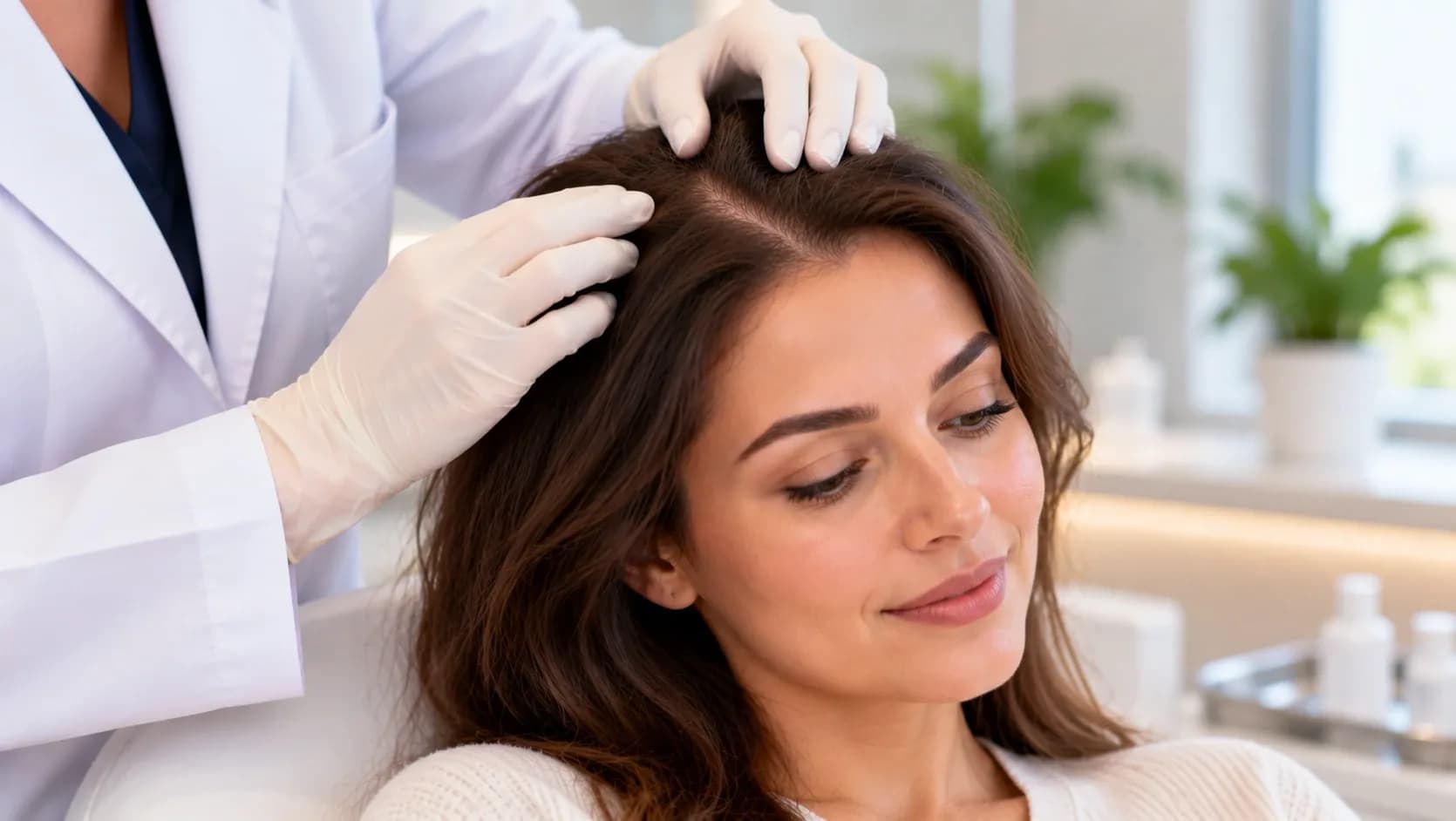
Hair mesotherapy recovery is the short healing window after a clinician injects vitamins, medications, or growth-factor solutions into your scalp with fine needles.
Hair mesotherapy recovery is the short healing window after a clinician injects vitamins, medications, or growth-factor solutions into your scalp with fine needles. Most patients return to normal routines within 24 to 48 hours, while visible hair improvements take weeks to months because hair follicles cycle slowly.
Mesotherapy describes a delivery technique, not one standardized drug. Practitioners inject different formulations through dozens of microinjections into the dermis. This design explains why recovery is brief: the procedure does not remove or implant tissue, so the scalp heals through a mild inflammatory response rather than surgical wound repair (Vedamurthy 2007). Your exact recovery depends on the injected ingredients, injection depth, needle count, and your own skin sensitivity. This article answers every practical question patients ask about scalp mesotherapy recovery, aftercare instructions, side effects, timelines, and warning signs, in the order you are most likely to need them.
What Is Hair Mesotherapy Recovery?
It is the period in which your scalp calms down after microinjections, typically one to two days for daily activities and up to a week for full resolution of injection-site marks.
During this window, the skin processes the micro-trauma of repeated needle punctures. Mild redness, tenderness, and small raised bumps reflect local inflammation, a normal tissue response to intradermal injection. They do not signal treatment failure. Research on scalp mesotherapy confirms that pain stands as the most frequent short-term complaint, reported by 45.5 percent of 541 patients, yet clinicians rated those reactions mild and self-limited (Saceda-Corralo et al. 2022). Keep two clocks in mind from the start: the procedural clock, which runs in hours and days, and the biological clock, which runs in weeks and months.
What Happens to Your Scalp Immediately After Hair Mesotherapy?
Expect mild tenderness, tingling, temporary redness around each injection point, and small bumps or localized swelling during the first few hours.
These reactions follow the logic of the procedure itself. A mesotherapy session places many shallow deposits of fluid into the dermis, so the skin responds with brief fluid retention and capillary dilation at each site. Dermoscopic studies document transient microhemorrhage and black dots after scalp mesotherapy sessions, changes that resolve as the micro-injuries close (Gajjar et al. 2019). The swelling you see is the deposit of solution plus localized edema, and it typically flattens within hours to a couple of days. Because the first hours set the tone for the whole recovery, the next question becomes how long the entire process lasts.
How Long Does Hair Mesotherapy Recovery Take?
Most patients resume ordinary routines within 24 to 48 hours, while redness, tenderness, and tiny marks can take up to a week to disappear completely.
Procedural recovery and hair growth recovery follow different timelines. The scalp closes its micro-channels quickly because intradermal injections create shallow, narrow wounds. In contrast, hair follicles operate on growth cycles that no injection can accelerate beyond biology. Early changes in hair quality or shedding may appear around four weeks, while more noticeable shifts in density usually need twelve weeks or more (Gajjar et al. 2019). A typical mesotherapy treatment timeline looks like this:
Recovery stage | What you observe | What it means |
First few hours | Tenderness, tingling, redness, small bumps | Normal response to microinjections |
First 24 to 48 hours | Injection-site reactions begin settling | Micro-channels close, swelling fades |
First few weeks | Scalp looks normal, hair changes remain subtle | Biological effects still developing |
Around 4 weeks | Possible early shift in shedding or hair quality | Follicles respond at different speeds |
Around 12 weeks and beyond | Some patients notice improved thickness or density | Results vary by formulation and protocol |
No honest clinician promises an identical recovery period for every patient, because formulations and protocols differ (Plachouri and Georgiou 2019). Use this table as an illustration, not a guarantee.
How Should You Care for Your Scalp in the First 24 Hours?
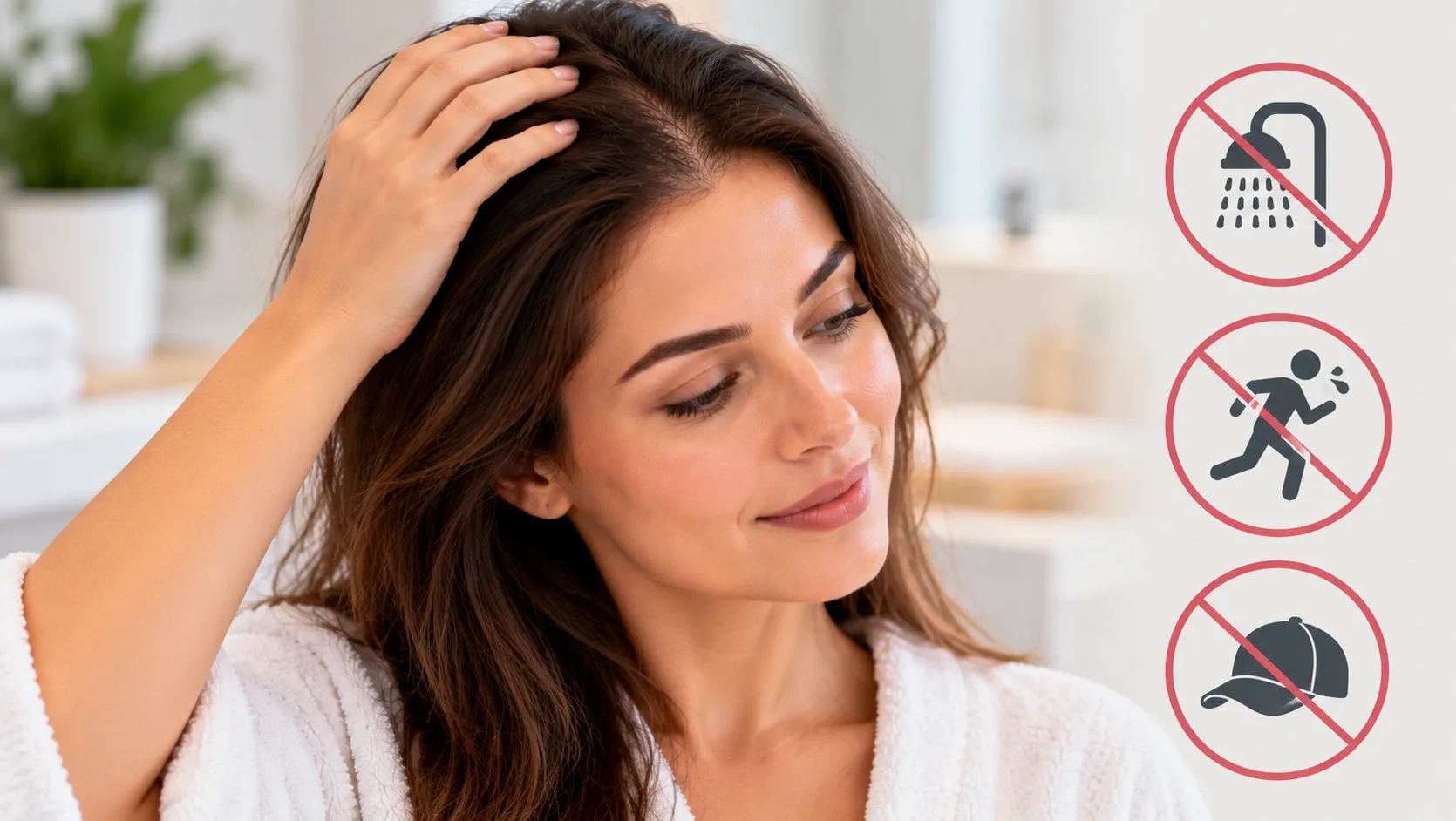
Handle your scalp gently, delay hair washing for about 24 hours if your clinician instructs, and skip anything that raises sweat or friction on the treated area.
The first day matters most because the injection channels remain open. Excessive sweating, vigorous combing, or scratching can push bacteria into those channels and prolong irritation. In a randomized trial, researchers advised participants not to wash, comb, or itch the scalp for three days and to avoid heavy exercise, oils, dyes, and unprotected exposure to pollution (Gajjar et al. 2019). Treat your clinician's written instructions as the authority, because they know your formulation. Once washing is permitted, use lukewarm water and gentle fingertip pressure rather than nails. Ordinary mild shampooing is acceptable, but exfoliating scrubs, hair dye, and chemical treatments can wait. Gentle cleansing protects recovery, and the same logic shapes which activities you should pause.
Which Activities Should You Avoid During Mesotherapy Recovery?
Skip strenuous exercise, heavy sweating, swimming pools, saunas, steam rooms, and direct scalp friction until your clinician clears you, often for several days.
Each restriction targets one mechanism: heat and sweat dilate vessels and moisten open channels, while pool water and shared water environments expose the scalp to microbes. Friction from tight helmets or aggressive towel-drying traumatizes injection sites. The evidence base supports caution because inadequate aseptic conditions and early contamination link to infection outbreaks after injection procedures (Centers for Disease Control and Prevention 2005). Here is a practical restriction guide:
Activity | Why it is restricted | Typical window |
Strenuous exercise | Sweat and heat irritate injection sites | 2 to 3 days, per clinician |
Swimming pools and shared water | Contamination risk at open micro-channels | Until sites fully close |
Saunas and steam rooms | Heat dilates vessels, worsens swelling | 3 to 7 days |
Tight hats, helmets, rough towel-drying | Friction traumatizes treated skin | First 48 hours minimum |
Hair dye, exfoliants, actives like retinoids | Chemical irritation of fresh injections | Until clinician approves |
Restriction duration always depends on your protocol and healing speed. Protective habits extend beyond a simple checklist.
How Should You Protect Your Scalp After Mesotherapy?
Do not touch or scratch the area, shield it from strong sun, keep it clean without over-manipulating it, and introduce no new scalp products without approval.
Your hands carry bacteria, and every unnecessary touch moves them toward open micro-channels. Strong ultraviolet exposure can inflame freshly injected skin, so follow medical advice about head coverings. Sterile technique during the session itself remains the single strongest infection defense, since lapses in hand hygiene, skin antisepsis, or multidose vial handling have driven documented mesotherapy infection clusters (Centers for Disease Control and Prevention 2005). Even with perfect technique, some local reactions need active management.
How Can You Manage Redness, Swelling, and Tenderness?
Mild pain, swelling, itching, and redness count as expected short-term reactions, and your clinician may recommend cool compresses or approved soothing care rather than self-medication.
Published safety data describe edema, itching, erythema, and tender nodules at injection sites as the common nonspecific effects of mesotherapy (Sivagnanam 2010). Resist the urge to self-medicate with leftover painkillers or topical steroids, because some agents affect bleeding or mask infection signs. Itching and small bumps usually trace back to the injection deposit itself and fade as the fluid absorbs. Never scratch or pick at a raised site, because that converts irritation into a portal for bacteria. Knowing what normal feels like prepares you to recognize what is not normal.
What Are the Warning Signs of a Mesotherapy Complication?
Increasing pain, spreading redness, persistent swelling, pus, fever, severe skin reaction, or discoloration demand prompt medical assessment because injection procedures can carry uncommon but serious complications.
Temporary inflammation improves each day. Complications do the opposite. Case reports document patchy alopecia after mesotherapy injections and multifocal scalp abscess with scarring after contaminated scalp sessions (Duque-Estrada et al. 2009; Kadry et al. 2008). A large review concluded that larger systematic studies are still needed to define the full safety profile, which means vigilance remains part of aftercare (Plachouri and Georgiou 2019). Use this comparison to separate the expected from the urgent:
Expected recovery reaction | Warning sign needing assessment |
Mild pain that decreases daily | Pain that increases after 48 hours |
Localized redness at injection points | Redness that spreads or intensifies |
Swelling that fades over days | Swelling that persists or worsens |
Clear or no drainage | Pus, unusual discharge, or bleeding |
No systemic symptoms | Fever or feeling unwell |
Itching that eases with time | Severe itching or allergic-type reaction |
Do not diagnose yourself. Contact the treating medical professional and describe exactly what you see.
When Can You Return to Work and Normal Daily Activities?
Most patients with office-based work return the same day or the next day, while strenuous physical activity waits several days.
Daily activity and athletic activity deserve separate answers. Walking, desk work, and social outings strain the scalp very little. In contrast, jobs involving heat, dust, heavy exertion, or mandatory protective headgear need individualized guidance, and your clinician's instructions override any generic advice (Saceda-Corralo et al. 2022). The same patience applies to the results you are waiting for.
When Will Your Hair Start to Look Better After Mesotherapy?
Expect gradual changes over weeks to months, not days, and plan for multiple sessions because a single treatment rarely delivers durable improvement.
Disappearing redness means your scalp healed, not that follicles transformed. Hair grows roughly one centimeter per month, so density and thickness shift slowly. Shedding fluctuations can occur after treatment and may reflect telogen effluvium dynamics rather than the injection itself (Malkud 2015); significant or prolonged shedding deserves clinical assessment rather than assumptions. Most protocols schedule sessions weekly or biweekly at first, then monthly, with maintenance visits when benefits fade. Evidence remains heterogeneous, so no ethical provider guarantees a fixed result (Gajjar et al. 2019). Repeated sessions also change the recovery experience slightly.
Does Hair Mesotherapy Recovery Change After Multiple Sessions?
Many patients report similar or milder short-term reactions at later sessions, but clinicians should reassess your scalp before each treatment.
Cumulative irritation, tolerance, and formulation changes all influence how your scalp responds. A responsible provider inspects the skin, reviews your reaction history, and adjusts depth, volume, or ingredients instead of repeating an identical plan automatically. Repeated sessions also invite a comparison patients frequently make with similar treatments.
How Does Mesotherapy Recovery Compare With PRP and Post-Transplant Recovery?
Mesotherapy and PRP both rely on scalp injections and produce similar short-term redness and tenderness, while post-transplant recovery involves graft healing and follows a completely different protocol.
The comparison hinges on material, not on marketing claims. Mesotherapy injects a chosen solution; PRP injects concentrated autologous platelets; transplantation relocates living grafts that must revascularize. Randomized evidence supports PRP efficacy in androgenetic alopecia (Alves and Grimalt 2016), yet direct head-to-head trials of recovery between mesotherapy and PRP remain limited, so declaring one universally easier overstates the science. Never apply generic mesotherapy aftercare to a freshly transplanted scalp without medical approval, because grafts carry their own survival timeline. Some clinics do use mesotherapy as supportive care after transplantation, under a combined protocol (Kanti et al. 2018).
Factor | Hair mesotherapy | PRP | After hair transplant |
Injected material | Vitamins, drugs, or growth-factor solutions | Your own platelet concentrate | Living follicular grafts |
Typical injection-site downtime | 24 to 48 hours | 24 to 48 hours | Days to weeks, graft-dependent |
Main recovery concern | Irritation, contamination | Irritation, bruising | Graft survival, crusting, swelling |
Session pattern | Multi-session course with maintenance | Multi-session course | Single surgical event with follow-up care |
What Factors Can Affect Your Hair Mesotherapy Recovery?
Injection depth and technique, number of injections, formulation, skin sensitivity, existing scalp disease, medications, sterile technique, and aftercare compliance all shape your recovery.
The word mesotherapy covers many protocols rather than one standardized product, so two patients can have genuinely different experiences (Plachouri and Georgiou 2019). Hygiene deserves special emphasis, because nontuberculous mycobacterial infections after mesotherapy trace to aseptic failures (Centers for Disease Control and Prevention 2005). Recovery also differs when mesotherapy accompanies another hair restoration procedure, which is why combined plans need combined instructions. Several of these questions come up so often that they deserve direct answers.
Frequently Asked Questions About Hair Mesotherapy Recovery
Most recovery questions reduce to a few themes: timing, washing, exercise, products, and shedding.
Can I wash my hair after mesotherapy?
Yes, once your clinician permits it. Many protocols suggest waiting about 24 hours, and trial aftercare has extended that to three days (Gajjar et al. 2019).
Can I exercise or swim after treatment?
Strenuous exercise and pool water usually wait a few days because sweat and contamination irritate open injection channels.
Can I use hair products right away?
Ask first. Gentle, familiar products usually return before actives, dyes, or exfoliants.
Is increased shedding a good sign?
Not automatically. Temporary shedding has several causes, and worsening loss needs evaluation (Malkud 2015).
Do I need maintenance sessions?
Many protocols include them, because benefits can fade and hair loss conditions often continue (Kanti et al. 2018).
What if my scalp looks worse?
Temporary reactions fade. Anything persistent, worsening, or unusual belongs on the phone to your clinician, not in a search bar.
When Should You Contact Your Doctor After Hair Mesotherapy?
Call your treating clinician for worsening pain, spreading redness or swelling, discharge, pus, bleeding, fever, severe itching, discoloration, or any symptom that breaks the expected recovery pattern.
The treating professional knows your formulation and technique, so they can judge whether you face normal inflammation or a reaction that needs treatment. Prompt evaluation protects both your scalp and your results.
How Can You Support Long-Term Hair Health After Recovery?
Treat mesotherapy as one tool inside a broader diagnosis, because lasting hair health starts with identifying why you are losing hair.
Androgenetic alopecia, telogen effluvium, nutritional deficiency, and inflammatory scalp disorders each demand different management. Consensus guidelines position established medical treatments as the foundation of care, with procedural options like mesotherapy in a supporting role (Kanti et al. 2018). Keep scheduled follow-ups, report shedding changes early, and let your clinician adjust the plan as your scalp responds. Recovery ends quickly, but the strategy around your hair should continue.
What Are the Key Takeaways About Hair Mesotherapy Recovery?
Recovery is short, aftercare is specific, results are slow, and communication with your clinician is the safest path through both.
Hair mesotherapy recovery usually involves limited downtime of one to two days. Mild redness, tenderness, itching, swelling, and small bumps fall within expected reactions. Individualized washing, exercise, swimming, heat, and scalp-care instructions protect the healing skin. Procedural recovery finishes long before visible hair-growth changes, which typically need multiple sessions across weeks to months. Persistent, worsening, or unusual symptoms always justify medical assessment. Finally, the injected formulation matters more than the label, because mesotherapy names a technique, not a single product (Plachouri and Georgiou 2019; Sivagnanam 2010).
References
Alves, Rosana, and Ramon Grimalt. "Randomized Placebo-Controlled, Double-Blind, Half-Head Study to Assess the Efficacy of Platelet-Rich Plasma on the Treatment of Androgenetic Alopecia." Dermatologic Surgery, vol. 42, no. 8, 2016, pp. 978-986.
Centers for Disease Control and Prevention. "Outbreak of Mesotherapy-Associated Skin Infections." MMWR: Morbidity and Mortality Weekly Report, vol. 54, no. 44, 2005, pp. 1127-1130.
Duque-Estrada, Beatriz, et al. "Alopecia Secondary to Mesotherapy." Journal of the American Academy of Dermatology, vol. 61, no. 4, 2009, pp. 707-709.
Gajjar, Pooja C., et al. "Comparative Study between Mesotherapy and Topical 5% Minoxidil by Dermoscopic Evaluation for Androgenic Alopecia in Male: A Randomized Controlled Trial." International Journal of Trichology, vol. 11, no. 2, 2019, pp. 58-67.
Kadry, Rasha, et al. "Multifocal Scalp Abscess with Subcutaneous Fat Necrosis and Scarring Alopecia as a Complication of Scalp Mesotherapy." Journal of Drugs in Dermatology, vol. 7, no. 1, 2008, pp. 72-73.
Kanti, Varvara, et al. "Evidence-Based (S3) Guideline for the Treatment of Androgenetic Alopecia in Women and in Men." Journal of the European Academy of Dermatology and Venereology, vol. 32, no. 1, 2018, pp. 11-22.
Malkud, Shashikant. "Telogen Effluvium: A Review." Journal of Clinical and Diagnostic Research, vol. 9, no. 9, 2015, pp. WE01-WE03.
Plachouri, Kerasia-Maria, and Sotony Georgiou. "Mesotherapy: Safety Profile and Management of Complications." Journal of Cosmetic Dermatology, vol. 18, no. 6, 2019, pp. 1601-1605.
Saceda-Corralo, David, et al. "Mesotherapy with Dutasteride for Androgenetic Alopecia: A Retrospective Study in Real Clinical Practice." Journal of Drugs in Dermatology, vol. 21, no. 7, 2022, pp. 742-747.
Sivagnanam, G. "Mesotherapy: The French Connection." Journal of Pharmacology and Pharmacotherapeutics, vol. 1, no. 1, 2010, pp. 4-8.
Vedamurthy, Mysore. "Mesotherapy." Indian Journal of Dermatology, Venereology and Leprology, vol. 73, no. 1, 2007, pp. 60-62.