
What Is Exosome Therapy for Alopecia and Can It Regrow Hair?
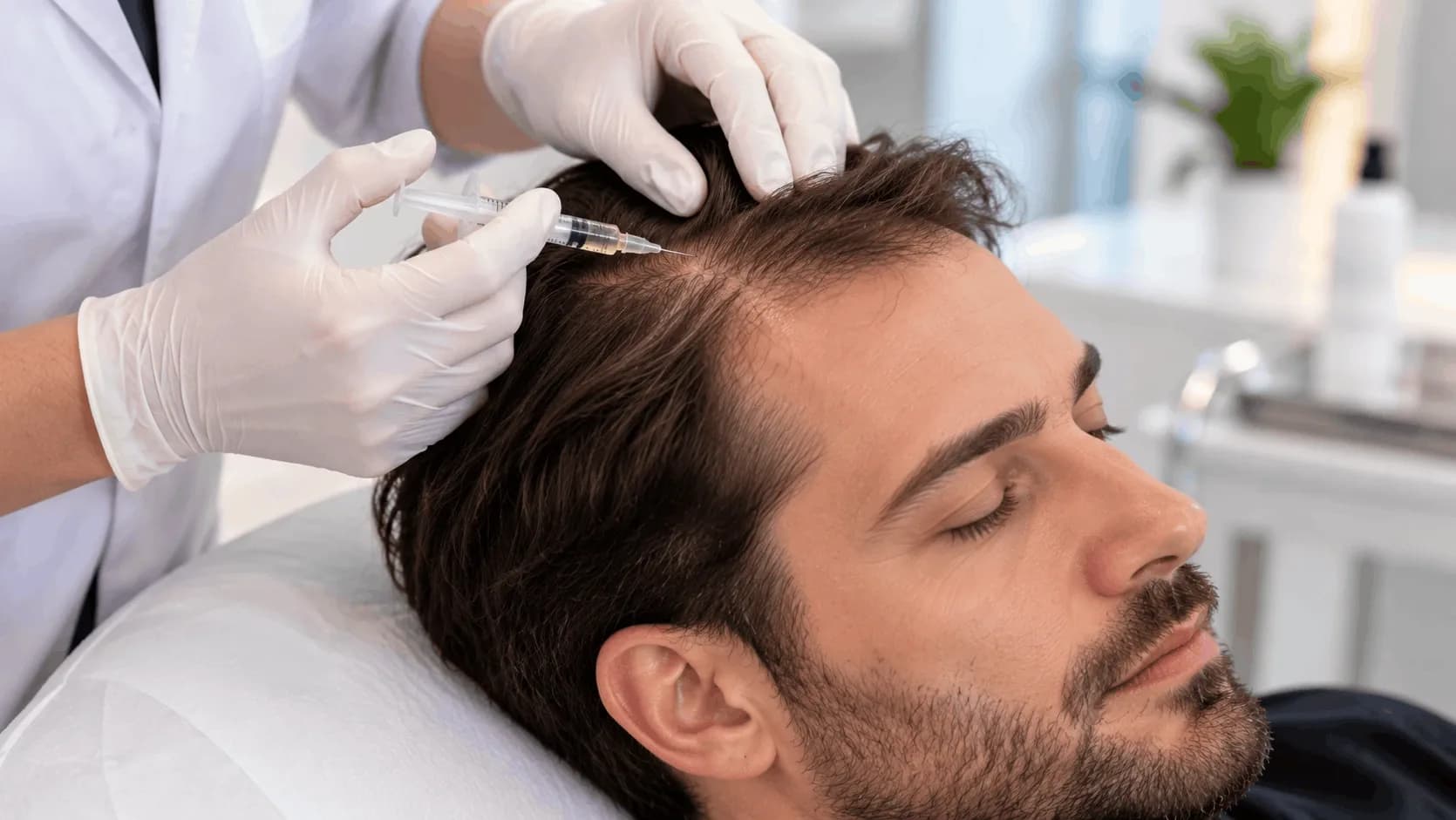
Exosome therapy for alopecia is a cell-free regenerative approach that delivers extracellular vesicles to the scalp to influence hair follicle behavior.
Exosome therapy for alopecia is an emerging regenerative treatment that uses extracellular vesicles to support hair follicle activity. Early clinical studies report increases in hair density and hair thickness, especially in androgenetic alopecia. However, researchers still classify exosome hair treatment as experimental, and no regulatory agency has approved it as a standard therapy for hair loss. This article explains the science, the evidence, the risks, and the practical questions every patient should ask before choosing this treatment.
1. What Is Exosome Therapy for Alopecia?
Exosome therapy for alopecia is a cell-free regenerative approach that delivers extracellular vesicles to the scalp to influence hair follicle behavior. Exosomes are small lipid-bound vesicles, typically 30 to 150 nanometers in diameter, that cells release to exchange proteins, lipids, and genetic material with neighboring cells (Raposo and Stoorvogel 2013). Scientists describe them as one of the main vehicles of intercellular communication in the human body (Kalluri and LeBleu 2020).
The biology behind this communication system explains why researchers became interested in hair restoration. Hair follicles depend on constant signaling between dermal papilla cells, follicular stem cells, and surrounding tissue. When this signaling weakens, follicles miniaturize and produce thinner hairs. Exosome therapy aims to restore this signaling environment without transplanting cells.
The treatment remains an emerging option, not an established replacement for conventional alopecia therapies. Dermatologists still consider minoxidil, finasteride, and hair transplantation the evidence-based standard of care. Exosome therapy should be understood as a promising branch of regenerative medicine that requires more rigorous clinical validation.
How Does Exosome Therapy Differ From Stem Cell Therapy?
Exosome therapy delivers the signaling cargo of stem cells without delivering the cells themselves. Stem cell therapy introduces living cells into tissue, where they engraft, divide, and secrete factors directly. Exosome therapy isolates the vesicles those cells secrete and administers them as a cell-free product.
This distinction matters for two reasons. First, cell-free products avoid risks linked to live-cell transplantation, such as uncontrolled cell growth or immune rejection. Second, the therapeutic effect depends entirely on the quality and composition of the isolated vesicles, which brings us to the central challenge of standardization discussed in Section 5.
Feature | Stem Cell Therapy | Exosome Therapy |
Active component | Living cells | Extracellular vesicles |
Cell-free | No | Yes |
Engraftment required | Yes | No |
Main risk profile | Immune reaction, cell behavior | Product purity, composition |
Regulatory status | Varies by jurisdiction | Experimental in most regions |
2. How Do Exosomes Interact With Hair Follicles?
Exosomes interact with hair follicles by transferring bioactive cargo that can stimulate dermal papilla cells and shift follicles toward active growth. Laboratory studies show that dermal papilla cell-derived exosomes regulate hair follicle development and promote the anagen, or growth, phase of the hair cycle (Zhou et al. 2018).
The cargo inside these vesicles explains the biological effect. Exosomes carry growth factors, lipids, messenger RNA, and microRNA. Research on human dermal papilla exosomes shows that this cargo increases the hair-inductive capacity of follicle cells and supports hair shaft production in cultured follicles (Kwack et al. 2019). Animal studies add a mechanistic layer: mesenchymal stem cell-derived extracellular vesicles activate the Wnt/beta-catenin and Sonic Hedgehog pathways, delay the catagen phase, and convert resting follicles into growing follicles (Rajendran et al. 2017).
Three cellular targets appear most relevant. Dermal papilla cells receive proliferative signals and secrete vascular endothelial growth factor and insulin-like growth factor 1. Follicular stem cells respond to signals that reactivate dormant follicles. Surrounding endothelial cells respond to pro-angiogenic signals that improve blood supply to the follicle.
The mechanism is promising but not fully established in humans. Most mechanistic evidence comes from cell cultures and animal models. Human studies measure outcomes like hair density, but they rarely confirm the exact signaling pathways involved. This gap between laboratory mechanism and clinical proof defines the current state of the field.
3. Which Types of Alopecia Could Exosome Therapy Address?
Exosome therapy currently targets androgenetic alopecia more than any other form of hair loss. Androgenetic alopecia is the main condition examined in clinical exosome research, and it affects both men and women through follicular miniaturization driven by genetic and hormonal factors.
The treatment logic depends on follicle viability. Exosomes can only influence follicles that still exist. In early and moderate androgenetic alopecia, follicles shrink but remain alive. In advanced baldness or scarring alopecia, follicles have been permanently destroyed. No biological signal can regenerate tissue that no longer contains follicular structures.
Alopecia Type | Follicle Status | Exosome Relevance |
Male pattern hair loss | Miniaturized, viable | Primary research focus |
Female pattern hair loss | Miniaturized, viable | Growing clinical interest |
Telogen effluvium | Viable, cycle disrupted | Theoretical relevance |
Alopecia areata | Autoimmune attack | Emerging interest, limited data |
Scarring alopecia | Follicles destroyed | Not appropriate |
Researchers have also explored exosomes in chemotherapy-induced alopecia and acquired hair shaft disorders, but these applications rest on case reports rather than controlled trials. Preliminary findings in these areas should not be read as established efficacy.
4. What Does Current Research Say About Exosomes for Alopecia?
Current human research reports consistent improvements in hair density and thickness, but the evidence base remains small and methodologically limited. A 2025 systematic review identified only eleven clinical studies: two randomized controlled trials, three retrospective studies, three prospective single-arm studies, one case series, and two case reports ("Exosomes and Hair Regeneration" 2025).
Individual studies show measurable gains. In a prospective study of 30 men with androgenetic alopecia, a single session of foreskin-derived mesenchymal stromal cell exosome injections raised mean hair density from 149.7 to 157 hairs per square centimeter within 12 weeks, with no reported side effects (Ersan et al. 2024). In a phase I/II trial, placental mesenchymal stem cell exosome injections increased hair density from 96.5 to 163.5 hairs per square centimeter and hair diameter from 0.049 to 0.059 millimeters over six weeks (Dehghani et al. 2024). A 2025 prospective study combining exosomes with microneedling reported an average increase of 35 hairs per square centimeter at 12 months in men with mild to moderate androgenetic alopecia (Wan et al. 2025).
Study | Source of Exosomes | Design | Sample | Key Outcome |
Ersan et al. 2024 | Foreskin MSCs | Prospective single-arm | 30 men | Density increase at 4 and 12 weeks |
Dehghani et al. 2024 | Placental MSCs | Phase I/II single-arm | 12 patients | Density 96.5 to 163.5 hairs/cm² |
Wan et al. 2025 | Commercial MSC product plus microneedling | Prospective open-label | 16 men | +35 hairs/cm² at 12 months |
Gentile et al. 2025 | Hair follicle MSCs in autologous micrografts | Retrospective evaluator-blinded | 60 patients | +28 to +30 hairs/cm² at 12 months |
Park et al. 2022 | Adipose-derived stem cells | Retrospective | 39 patients | Improved density and thickness |
Study quality limits confidence. Small samples, single-arm designs, short follow-up periods, and inconsistent outcome measurements make cross-study comparison difficult. The 2025 systematic review concludes that randomized controlled trials with standardized protocols are the essential next step ("Exosomes and Hair Regeneration" 2025).
5. Why Is Standardization Important in Exosome Hair Treatment?
Standardization matters because the term exosome therapy does not describe one product or one protocol. Two treatments labeled identically can differ in every variable that determines clinical effect.
The differences start at the source. Exosomes in hair studies come from foreskin, placenta, adipose tissue, bone marrow, umbilical cord, and hair follicle cells. Each source produces vesicles with different cargo. The isolation method adds another layer of variation: ultracentrifugation, size-exclusion chromatography, polymer-based precipitation, and tangential flow filtration all yield products with different purity profiles.
Variable | Why It Matters |
Cell origin | Determines exosomal cargo and biological activity |
Isolation method | Affects purity and vesicle integrity |
Concentration | Directly influences dose delivered to follicles |
Characterization | Confirms identity, size, and particle count |
Administration | Injection depth and technique affect distribution |
Dosage schedule | No consensus on sessions or intervals |
The scientific community has already recognized this problem. The International Society for Extracellular Vesicles publishes minimal information guidelines that require researchers to report isolation methods, characterization data, and functional assays before claiming a preparation contains exosomes (Théry et al. 2018). Regulatory analyses confirm that inconsistent manufacturing and characterization block reliable evaluation of these products (Verma et al. 2025).
Methodological heterogeneity explains why clinical results vary between studies. Until manufacturers and researchers adopt common standards, each exosome product must be evaluated on its own evidence rather than assumed to match published findings.
6. How Is Exosome Therapy for Alopecia Performed?
A typical exosome treatment session moves through four stages: consultation, diagnosis, scalp preparation, and administration. The workflow matters because the biological rationale only works when the correct diagnosis supports it.
The process begins with medical evaluation. A dermatologist or trichologist examines the scalp, reviews the pattern and duration of hair loss, and often performs trichoscopy to measure follicle status. This step determines candidacy and rules out conditions that require different treatment, such as scarring alopecia or active autoimmune disease.
Scalp preparation follows diagnosis. The provider cleans the treatment area and may apply a topical anesthetic. Administration then occurs through one of two main routes. Intradermal injection delivers exosomes directly into the dermis through multiple micro-injections across the thinning area. Microneedling creates micro-channels in the scalp and applies exosomes topically so the vesicles penetrate through the channels. The 2025 microneedling study suggests that mechanical delivery may enhance follicular penetration, though direct comparison data remain limited (Wan et al. 2025).
Protocols differ by product and provider. Injection volume, particle concentration, session count, and intervals between sessions all vary across studies. No universal treatment schedule exists, and any provider who presents one fixed protocol as the established standard overstates the current evidence.
7. What Can Patients Expect After Exosome Treatment?
Visible changes require several months because hair follicles follow biological growth cycles. A follicle must shift from the resting phase into the growth phase, produce a new hair shaft, and grow that shaft long enough to become visible. This process cannot complete in days or weeks.
Short-term reactions are usually mild. Patients may notice redness, tenderness, or swelling at the injection sites. These effects typically resolve within hours to days. The microneedling study reported tenderness and slight irritation that resolved within 48 hours (Wan et al. 2025).
Early changes differ from measurable regrowth. Some patients first notice reduced shedding or improved hair texture. Objective measures like hair density and hair thickness require photographic or trichoscopic assessment at baseline and at follow-up visits, usually at 3, 6, and 12 months. Individual outcomes vary widely according to the cause of alopecia, follicle viability, age, and adherence to any combined treatment plan.
8. Who May Be a Suitable Candidate for Exosome Therapy?
The strongest candidates have early or moderate non-scarring hair loss with miniaturized but viable follicles. Diagnosis must come first. A specialist should confirm the type of alopecia before any regenerative treatment begins.
Several factors shape candidacy:
Factor | Favorable Profile | Unfavorable Profile |
Type of alopecia | Androgenetic, non-scarring | Scarring, advanced autoimmune |
Follicle status | Miniaturized but present | Destroyed or absent |
Duration of loss | Recent to moderate | Many years of complete baldness |
Scalp condition | Healthy skin | Active inflammation or infection |
Overall health | Stable, no contraindications | Uncontrolled systemic disease |
Previous treatment | Incomplete response to standard care | No prior diagnosis |
Advanced longstanding baldness requires different strategies. If the scalp has remained completely bald for many years, follicles have likely disappeared. In that situation, hair transplantation remains the only option that restores hair to the area. Exosomes cannot create new follicles where follicles have been permanently destroyed.
9. When May Exosome Therapy Be Less Appropriate?
Exosome therapy fits poorly when follicles no longer exist. Scarring alopecias such as lichen planopilaris and frontal fibrosing alopecia destroy follicles and replace them with scar tissue. Regenerative signaling cannot act on structures that have been lost.
Unidentified causes of hair loss also block appropriate use. Hair shedding can signal thyroid disease, iron deficiency, hormonal disorders, or medication effects. Treating the scalp with exosomes while an untreated disease continues to damage follicles wastes time and money. Proper diagnosis always precedes regenerative treatment.
Expectations should rest on follicular viability, not marketing claims. Any provider who promises guaranteed regrowth, permanent results, or complete cures makes claims that the current evidence cannot support. Patients benefit most when a specialist anchors the treatment plan in diagnosis, follicle status, and realistic goals.
10. What Are the Potential Benefits of Exosomes for Alopecia?
The potential benefits center on follicle support rather than follicle creation. Clinical studies report improvements in hair follicle activity, hair shaft thickness, hair density, and scalp tissue quality (Ersan et al. 2024; Dehghani et al. 2024). Mechanistic research supports cellular signaling that promotes proliferation, angiogenesis, and anti-inflammatory effects (Rajendran et al. 2017).
The appeal of the approach lies in its profile. Exosome administration is minimally invasive, requires little downtime, and shows a low rate of short-term adverse events across published studies ("Exosomes and Hair Regeneration" 2025).
The distinction between potential and proof matters here. Biological benefits observed in early trials are not the same as clinically validated outcomes. No study has demonstrated permanent or guaranteed regrowth. Patients should evaluate these potential benefits against the current limits of the evidence.
11. What Are the Risks and Limitations of Exosome Therapy?
The known risks are local and short-term, while the long-term safety profile remains unestablished. Reported adverse effects include injection-site pain, redness, swelling, itching, and transient headache (Gentile et al. 2025; Wan et al. 2025). No serious systemic reaction has appeared in published hair studies, but sample sizes remain too small to rule out rare events.
Product uncertainty forms the deeper limitation. Because manufacturing and characterization standards vary, the safety profile of one exosome product cannot be generalized to another (Verma et al. 2025). Patients cannot assume that a commercial product matches the purified research preparations described in clinical trials.
Three safeguards reduce risk. First, the product should carry documented quality control data, including particle characterization and sterility testing. Second, a qualified medical professional should perform the administration. Third, the provider should monitor outcomes with objective measurements rather than photographs alone. Promising early evidence does not establish long-term effectiveness or safety, and honest providers say so.
12. How Does Exosome Therapy Compare With PRP for Alopecia?
The core difference lies in the biological source. Platelet-rich plasma, or PRP, uses concentrated components from the patient's own blood. Providers draw blood, centrifuge it, isolate the platelet layer, and inject it into the scalp (Dhurat and Sukesh 2014). Exosome products contain extracellular vesicles produced by cultured cells, often from donor tissue.
This difference shapes every downstream variable:
Variable | PRP | Exosome Therapy |
Source | Patient's own blood | Cultured cell-derived vesicles |
Preparation | Centrifugation at point of care | Laboratory isolation and purification |
Growth factors | Platelet alpha granules | Vesicular cargo including microRNA |
Standardization | Moderate, donor variability | Low, product dependent |
Evidence base | Larger, more mature | Early, limited |
Sessions | Typically multiple | Varies by protocol |
No evidence declares one treatment universally superior. PRP benefits from a longer research history and more standardized preparation guidelines. Exosome therapy offers a cell-free cargo that can be manufactured and potentially engineered at scale. The choice depends on diagnosis, follicle status, product quality, and individual suitability rather than a blanket ranking.
13. Can Exosome Therapy Be Combined With Other Hair Loss Treatments?
Yes, combination approaches are common in research, but each combination needs its own evidence. Regenerative treatments often work best inside a broader hair-loss management plan rather than as isolated interventions.
The most discussed combinations pair exosomes with established therapies. Microneedling plus exosomes produced positive results in a 2025 prospective study (Wan et al. 2025). Clinicians also combine regenerative sessions with minoxidil or finasteride for androgenetic alopecia, and some use exosomes after hair transplantation to support graft survival. Each element should have independent support for the diagnosed condition.
Two cautions apply. First, exosome therapy should not automatically replace evidence-based treatments. A patient who responds to minoxidil gains nothing by abandoning a proven therapy for an experimental one. Second, unsupported combinations carry unknown risk. Stacking multiple unproven injectables in one session multiplies variables without adding knowledge. A specialist should design the combination, monitor outcomes, and adjust based on response.
14. How Much Does Exosome Therapy for Alopecia Cost?
Treatment costs vary widely between providers and countries, and price rarely correlates with product quality. No fixed global pricing exists because no standardized product or protocol exists.
Several factors drive the cost:
Cost Factor | Effect on Price |
Exosome source | Rare cell sources cost more to isolate |
Product concentration | Higher particle counts raise manufacturing cost |
Treatment area | Larger bald areas require more product |
Number of sessions | Multi-session programs multiply total cost |
Administration method | Injection time and expertise add cost |
Follow-up requirements | Objective monitoring adds visits |
Regulatory documentation | Tested products cost more than untested ones |
Patients should evaluate product quality and medical oversight before price. A cheaper product without characterization data, sterility testing, or published clinical support carries more risk than a documented product at a higher price. Asking the questions in the next section protects both the budget and the outcome.
15. What Should You Ask Before Choosing an Exosome Alopecia Treatment?
Informed patients ask verifiable questions before committing to treatment. A credible provider answers each one with documentation.
Ask about the source and origin of the exosomes, including the cell type and tissue of origin. Ask how the manufacturer isolates, purifies, characterizes, and stores the product. Ask whether the product carries quality control reports showing particle size, concentration, sterility, and endotoxin testing. Ask which clinical studies support the specific product and protocol being offered, not exosome therapy in general.
Ask how the provider determines candidacy, which diagnostic tools confirm follicle viability, and how outcomes are measured over time. Ask what alternatives exist for the diagnosed type of alopecia, including standard therapies. Finally, treat guaranteed results or loose stem cell claims as warning signs. The evidence supports cautious optimism, not promises.
16. What Is the Future of Exosome Therapy for Alopecia?
The future of exosome therapy depends on larger controlled human studies with longer follow-up. Current trials show potential, but the field needs randomized designs, standardized dosing, and consistent outcome measurements before clinicians can recommend the treatment routinely ("Exosomes and Hair Regeneration" 2025).
Three research directions look promising. Targeted exosome formulations could load vesicles with specific microRNA or growth factors designed for follicle stimulation. Improved delivery systems, such as thermoresponsive hydrogels and microneedle patches, could increase follicular penetration. Combination protocols that pair exosomes with established treatments could produce stronger results than either approach alone. Regulatory frameworks will also mature, and guidance on characterization and manufacturing is already taking shape (Verma et al. 2025). Promising science must pass through rigorous clinical validation before routine adoption. Patients who understand this timeline make better decisions today.
17. Frequently Asked Questions About Exosomes for Alopecia
Is Exosome Therapy Effective for Alopecia?
Early clinical evidence is encouraging but limited. Studies report measurable increases in hair density and thickness, particularly for androgenetic alopecia (Ersan et al. 2024; Dehghani et al. 2024). These preliminary findings differ from established treatment efficacy, and larger controlled trials must confirm them.
Can Exosomes Regrow Hair on Completely Bald Areas?
No evidence supports regrowth on completely bald areas where follicles no longer exist. Exosomes influence viable follicles. They do not create new follicles in scarred or long-bald skin.
How Long Does Exosome Therapy Take to Show Results?
Meaningful assessment requires months, not days or weeks. Hair cycles move slowly, and studies typically measure outcomes at 3, 6, and 12 months after treatment.
Is Exosome Therapy Better Than PRP?
Current evidence cannot declare either treatment universally superior. PRP offers a longer research history. Exosome therapy offers a cell-free regenerative cargo. The right choice depends on mechanism, preparation quality, evidence, and individual diagnosis.
Are Exosomes Safe for Hair Loss?
Short-term reactions have been mild in published studies. Long-term safety data remain limited, and the safety profile of one product cannot be generalized to all products. Clinically validated products and trained medical professionals reduce uncertainty.
How Many Exosome Sessions Are Needed for Alopecia?
No universally established schedule exists. Research protocols range from a single session to four sessions over two months. Commercial programs vary widely, which reflects the lack of standardization rather than a settled answer.
Can Exosome Therapy Permanently Cure Alopecia?
The evidence does not support a permanent cure. Exosomes may support follicular activity, but they do not eliminate the genetic and hormonal causes of androgenetic alopecia. Maintenance expectations should guide any treatment plan.
18. Are Exosomes a Promising Option for Alopecia? Conclusion
Exosome therapy for alopecia rests on a credible biological rationale. Extracellular vesicles can deliver growth factors and regulatory RNA to dermal papilla cells, activate growth-phase signaling, and support follicles that remain viable. Early human studies, particularly for androgenetic alopecia, report improvements in hair density and thickness with few short-term side effects.
The promise carries limits. The clinical evidence remains small, heterogeneous, and short-term. Product standardization, regulatory clarity, and long-term safety data are still missing. Patients achieve the best outcomes through medical evaluation, follicle assessment, and evidence-based treatment selection rather than marketing claims. Realistic expectations protect patients, and rigorous research will determine how far this promising science can go.
References
Dehghani, Leila, et al. "Efficacy of Placental-Derived Mesenchymal Stem Cell Exosome Therapy in Treating Androgenetic Alopecia: A Clinical Trial Study." Journal of Cosmetic Dermatology, 2024.
Dhurat, Rachita, and Sukesh, Manoj. "Principles and Methods of Preparation of Platelet-Rich Plasma: A Review and Author's Perspective." Journal of Cutaneous and Aesthetic Surgery, vol. 7, no. 4, 2014, pp. 189-197.
"Exosomes and Hair Regeneration: A Systematic Review of Clinical Evidence Across Alopecia Types and Exosome Sources." PubMed Central, 2025.
Ersan, Merve, et al. "Effectiveness of Exosome Treatment in Androgenetic Alopecia: Outcomes of a Prospective Study." Aesthetic Plastic Surgery, vol. 48, 2024, pp. 4262-4271.
Gentile, Pietro, et al. "Autologous Micrografts Containing Nanovesicles, Exosomes, and Follicle Stem Cells in Androgenetic Alopecia: In Vitro and In Vivo Analysis Through a Multicentric, Observational, Evaluator-Blinded Study." Aesthetic Plastic Surgery, vol. 49, 2025, pp. 43-58.
Kalluri, Raghu, and LeBleu, Valerie S. "The Biology, Function, and Biomedical Applications of Exosomes." Science, vol. 367, no. 6478, 2020.
Kwack, Mi Hee, et al. "Exosomes Derived from Human Dermal Papilla Cells Promote Hair Growth in Cultured Human Hair Follicles and Augment the Hair-Inductive Capacity of Cultured Dermal Papilla Spheres." Experimental Dermatology, vol. 28, no. 7, 2019, pp. 854-856.
Park, B. S., et al. "Effects of Exosome from Adipose-Derived Stem Cell on Hair Loss: A Retrospective Analysis of 39 Patients." Journal of Cosmetic Dermatology, vol. 21, no. 5, 2022, pp. 2282-2284.
Rajendran, R. L., et al. "Extracellular Vesicles Derived from MSCs Activate Dermal Papilla Cell In Vitro and Promote Hair Follicle Conversion from Telogen to Anagen in Mice." Scientific Reports, vol. 7, 2017, 15560.
Raposo, Graça, and Stoorvogel, Willem. "Extracellular Vesicles: Exosomes, Microvesicles, and Friends." Journal of Cell Biology, vol. 200, no. 4, 2013, pp. 373-383.
Théry, Clotilde, et al. "Minimal Information for Studies of Extracellular Vesicles 2018 (MISEV2018): A Position Statement of the International Society for Extracellular Vesicles and Update of the MISEV2014 Guidelines." Journal of Extracellular Vesicles, vol. 7, no. 1, 2018, 1535750.
Verma, Neha, et al. "Navigating the Global Regulatory Landscape for Exosome-Based Therapeutics: Challenges, Strategies, and Future Directions." PubMed Central, 2025.
Wan, J., et al. "A Prospective Study of Exosome Therapy for Androgenetic Alopecia." Aesthetic Plastic Surgery, vol. 49, 2025, pp. 3151-3156.
Zhou, Lingna, et al. "Regulation of Hair Follicle Development by Exosomes Derived from Dermal Papilla Cells." Biochemical and Biophysical Research Communications, vol. 495, no. 2, 2018, pp. 2097-2103.