
PRP for Female Hair Loss: How Does Platelet-Rich Plasma Work?
PRP for female hair loss is an autologous biological therapy. Clinicians use the patient's own blood to create a concentrated platelet solution.
More women now seek platelet-rich plasma for female hair loss as a minimally invasive option in regenerative medicine. Female hair loss differs from male pattern baldness. Women often experience diffuse thinning across the crown rather than a receding hairline. This difference demands a distinct clinical approach. Platelet-rich plasma offers an autologous treatment derived from the patient's own blood. Clinicians draw blood, concentrate the platelets, and inject the solution into areas of scalp thinning. Current evidence suggests PRP may improve hair density in women with female pattern hair loss, but researchers still call for larger standardized trials (Yuan 2024). This article explains the science, the evidence, and what women should know before starting PRP hair treatment.
What Is PRP for Female Hair Loss?
PRP for female hair loss is an autologous biological therapy. Clinicians use the patient's own blood to create a concentrated platelet solution. They then inject this solution into the scalp to stimulate hair follicle activity.
What Does Platelet-Rich Plasma Contain?
Platelet-rich plasma contains platelets, growth factors, cytokines, and signaling proteins. These components drive tissue repair and regeneration. Platelets release platelet-derived growth factor, vascular endothelial growth factor, transforming growth factor beta, epidermal growth factor, and insulin-like growth factor-1 (Alves and Grimalt 2016). These growth factors promote cell proliferation, differentiation, and angiogenesis around the hair follicle. Cytokines help modulate inflammation in the scalp microenvironment. The American Hair Loss Association describes PRP as a concentration of platelets derived from the patient's own blood that clinicians inject into areas of scalp thinning.
How Is PRP Prepared From the Patient's Blood?
Clinicians prepare PRP through a straightforward process. First, they draw blood from the patient's arm. Next, they place the blood in a centrifuge. The centrifuge spins the blood at high speed. This spin separates red blood cells from plasma. The plasma layer contains platelets. Clinicians then extract the platelet-rich portion. Some protocols use a double-spin method to achieve higher concentration. Finally, they prepare the injectable PRP for intradermal or subcutaneous scalp injections. The entire process takes about 30 to 60 minutes in the clinic.
How Can PRP Help Female Hair Loss?
PRP helps female hair loss by delivering growth factors directly to the scalp. These growth factors may awaken dormant follicles and support the hair growth cycle.
How Does PRP Affect Hair Follicles?
PRP affects hair follicles through multiple biological pathways. Activated platelets release growth factors that stimulate dermal papilla cells. These cells sit at the base of the hair follicle and control hair growth. PRP also promotes angiogenesis, which means it builds new blood vessels around the follicle. Better blood flow brings more oxygen and nutrients. Additionally, PRP may prolong the anagen phase of the hair growth cycle. The anagen phase is the active growth period. Some research suggests PRP reduces inflammatory signaling in the scalp. This creates a healthier microenvironment for terminal hair to thrive (Cervelli et al. 2014; Gentile et al. 2015).
Can PRP Increase Hair Density in Women?
Yes, PRP can increase hair density in women. Multiple randomized controlled trials show positive results. Yuan et al. (2024) analyzed 21 randomized controlled trials with 628 female participants. The meta-analysis found that PRP treatment significantly enhanced hair density. The 2024 Brazilian meta-analysis of 14 studies reported a mean difference of 27.55 hairs per square centimeter in favor of PRP over placebo. Zhou et al. (2021) reviewed 42 studies with 1,569 cases and found PRP improved hair density compared to control groups. However, improvement does not mean complete restoration. PRP typically increases density in thinning areas rather than creating new hair on completely bald scalp.
Can PRP Make Thinning Hair Thicker?
Evidence for PRP making hair thicker exists but remains less consistent than density data. Yuan et al. (2024) found that PRP significantly increased hair thickness in their meta-analysis. The Brazilian meta-analysis reported a mean difference of 2.02 micrometers in hair diameter. However, the confidence interval crossed zero, indicating uncertainty. Clinicians should assess density and thickness separately. A woman might gain more hairs per square centimeter without each hair becoming noticeably thicker. Some studies show thickness improvement while others do not. This inconsistency stems from different PRP preparation methods and measurement techniques.
Which Types of Female Hair Loss Can PRP Treat?
PRP treats certain types of female hair loss better than others. Correct diagnosis must come first.
Is PRP Effective for Female Pattern Hair Loss?
Yes, PRP shows effectiveness for female pattern hair loss. FPHL is the most common form of hair loss in women. It causes diffuse thinning over the crown and widening of the central part. Follicular miniaturization drives this condition. Hair follicles shrink over time and produce thinner, shorter hairs. Dubin et al. (2020) conducted a randomized controlled trial in the Journal of the American Academy of Dermatology and found PRP improved outcomes in female androgenetic alopecia. Tawfik and Osman performed a randomized placebo-controlled study on 30 women with FPHL. They found a statistical difference between PRP and placebo areas for both hair density and hair thickness.
Can PRP Help Female Androgenetic Alopecia?
Yes, PRP can help female androgenetic alopecia. Doctors often use the terms FPHL and female androgenetic alopecia interchangeably. Both describe hereditary hair thinning in women. Zhou et al. (2021) conducted a comprehensive systematic review and meta-analysis specifically on PRP in female androgenetic alopecia. They evaluated 42 studies and found PRP showed positive efficacy through hair density evaluation. The odds ratio compared to control groups was 1.61. The evidence supports PRP as a potential adjunctive treatment, but researchers still need larger randomized trials to confirm long-term benefits.
Can PRP Help Chronic Telogen Effluvium?
Early research suggests PRP may help chronic telogen effluvium. Chronic telogen effluvium differs from FPHL. TE causes diffuse shedding rather than patterned thinning. Stress, hormonal changes, or medical conditions often trigger it. El-Dawla et al. (2023) conducted a randomized controlled double-blind pilot trial on 30 women with chronic telogen effluvium. They found that PRP significantly improved hair pull test results and patient satisfaction compared to placebo. Trichoscopy showed increased hair density and thickness in the PRP groups. However, clinicians must identify and treat the underlying trigger before starting PRP. PRP cannot fix thyroid disease or iron deficiency.
Is PRP Appropriate for Every Cause of Female Hair Loss?
No, PRP is not appropriate for every cause of female hair loss. PRP does not treat alopecia areata effectively in most cases. Scarring alopecias destroy follicles permanently, so PRP cannot reverse this damage. Nutritional deficiencies require dietary correction or supplements. Thyroid-related hair loss needs endocrine management. Hormonal causes may need specific medications. Medication-related shedding improves when the patient stops the offending drug. Acute telogen effluvium usually resolves on its own once the trigger disappears. Doctors must diagnose the cause before recommending PRP.
What Does the Scientific Evidence Say About PRP for Female Hair Loss?
The scientific evidence for PRP in female hair loss grows stronger each year. Multiple systematic reviews and meta-analyses now support its use.
What Did the 2024 Systematic Review and Meta-Analysis Find?
Yuan et al. (2024) published a major systematic review and meta-analysis in Skin Research and Technology. They searched PubMed, EMBASE, Scopus, Cochrane Library, Web of Science, and ClinicalTrials.gov from January 2000 to May 2024. They included 21 randomized controlled trials comprising 628 participants. Nineteen studies went into quantitative analysis. The majority were randomized controlled trials. The review found that PRP significantly enhanced hair density and thickness. The number of hairs pulled during hair pull testing decreased significantly in the PRP group. Adverse effects were mild and transient. No notable difference in pain or discomfort emerged between PRP and control groups. The risk ratio was 1.01 with a 95% confidence interval of 0.87 to 1.18.
What Did Earlier Meta-Analyses Find?
Earlier meta-analyses also found promising results. Zhou et al. (2021) analyzed 42 studies with 1,569 cases including 776 female participants. They found PRP improved hair density compared to baseline and control groups. The 2024 Brazilian meta-analysis by researchers at Universidade Federal de Ciências da Saúde de Porto Alegre included 14 studies with 431 patients. They found a mean difference of 27.55 hairs per square centimeter favoring PRP. However, they rated the evidence quality as low due to heterogeneity. de Oliveira et al. (2023) published a systematic review and meta-analysis on PRP in women with androgenetic alopecia. They confirmed density improvements but noted methodological limitations in existing studies.
What Are the Main Limitations of Current PRP Research?
Current PRP research faces several limitations. Small sample sizes plague many studies. Different PRP preparation systems create inconsistency. Some labs use single-spin centrifugation while others use double-spin. Platelet concentrations vary widely between studies. Injection volumes range from 2 to 12 milliliters per session. Treatment intervals differ from two weeks to three months. The number of sessions ranges from one to six or more. Follow-up periods often last six months or less. Different measurement methods make comparison difficult. Some studies use trichoscopy while others rely on photography alone. No universally accepted treatment protocol exists yet. Yuan et al. (2024) found that most studies used approximately monthly schedules and that most follow-up periods lasted six months or less.
How Is PRP Treatment for Female Hair Loss Performed?
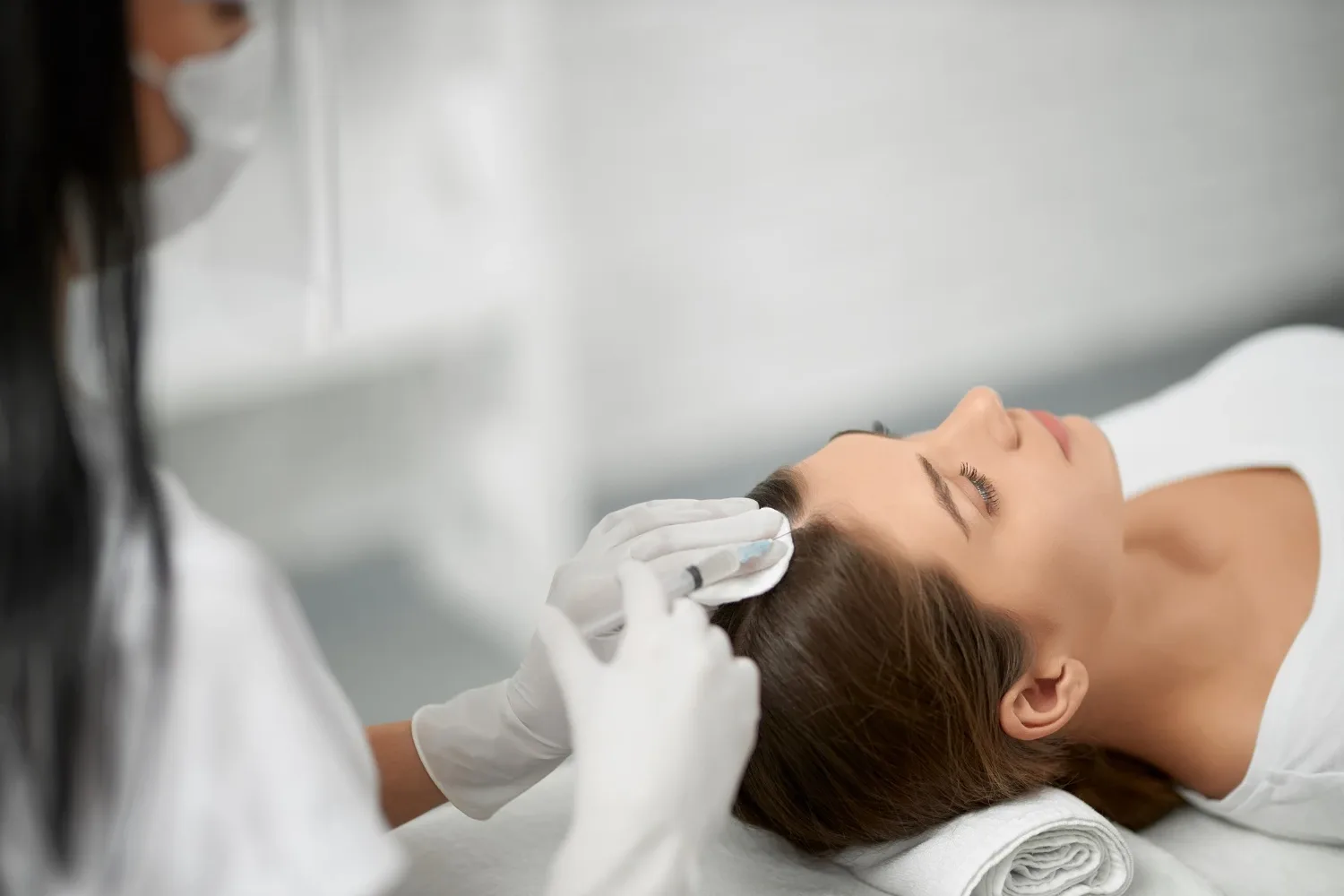
PRP treatment follows a structured clinical protocol. Each step matters for safety and results.
What Happens Before a PRP Hair Treatment?
Before PRP treatment, the clinician takes a detailed medical history. They ask about medications, allergies, and previous hair treatments. They examine the scalp for signs of infection or scarring. They assess hair density and pattern of loss. Trichoscopy helps evaluate follicle health when appropriate. The clinician must confirm the diagnosis. They may order blood tests to rule out thyroid disease, iron deficiency, or other causes. They review contraindications such as bleeding disorders or anticoagulant use.
How Is PRP Injected Into the Scalp?
The clinician draws blood from the patient's arm, usually 15 to 60 milliliters depending on the protocol. They process the blood in a centrifuge to isolate PRP. They map the scalp to identify thinning areas. They may apply topical anesthetic cream to reduce discomfort. Using a fine needle, they inject PRP intradermally or subdermally across the affected areas. Injections typically cover the crown, part line, and frontal areas. The procedure takes 30 to 60 minutes. Patients can usually leave the clinic immediately after.
How Many PRP Sessions Are Needed for Female Hair Loss?
Most clinical studies use three to six initial sessions. Gkini et al. (2014) treated patients with three sessions at three-week intervals plus one booster at six months. Alves and Grimalt (2016) used three treatments spaced one month apart. Verma et al. (2019) administered four monthly PRP sessions. The 2024 systematic review found that most included studies used multiple sessions. No single protocol has emerged as universally standard. Clinicians should individualize treatment based on response.
How Often Should PRP Be Performed?
Monthly sessions dominate the research literature. Many protocols schedule treatments every four weeks for the first three months. Maintenance sessions typically follow every three to six months. Some clinicians recommend booster treatments at six months to sustain results. Research protocols differ from individualized clinical practice. A dermatologist may adjust frequency based on patient response and goals.
When Can Women Expect Results From PRP Hair Treatment?
Results from PRP do not appear overnight. The hair growth cycle takes time.
When Do Early Changes in Hair Growth Appear?
Early changes may appear after three months. The hair growth cycle requires patience. Hair follicles enter the anagen phase gradually. Women should not expect immediate regrowth after the first session. Some patients notice reduced shedding first. Others see new fine hairs emerging around the three-month mark.
When Are PRP Results Usually Evaluated?
Clinicians typically evaluate results at three to six months. They measure hair density with trichoscopy. They assess hair thickness and hair shaft diameter. They check hair shedding with the hair pull test. Trichoscopic findings reveal changes in follicular units. Standardized photographs provide visual documentation. Patient-reported improvement matters too. Yuan et al. (2024) noted that most studies evaluated outcomes at or before six months.
How Long Can PRP Results Last?
The durability of PRP results remains uncertain. Gkini et al. (2014) found that hair density peaked at three months, then gradually declined at six and twelve months. However, density remained above baseline even at one year. Most studies lack follow-up beyond six months. Maintenance treatments may help prolong results. Women should discuss long-term planning with their clinician.
Is PRP Safe for Women With Hair Loss?
Safety concerns matter when choosing any medical treatment. PRP generally shows a favorable safety profile.
What Are the Common Side Effects of PRP?
Common side effects include temporary scalp pain or tenderness. Redness and swelling at injection sites occur frequently. Some women feel scalp tightness or a mild headache. Tingling sensations may follow treatment. Minor bleeding or bruising can appear at needle sites. Yuan et al. (2024) reported that these adverse effects were mild and resolved spontaneously within 24 hours. The meta-analysis found no significant difference in pain or discomfort between PRP and control groups.
Does PRP Cause Serious Complications?
Serious complications from PRP are rare. Infection remains possible but uncommon when clinicians follow sterile technique. No major side effects such as scarring, panniculitis, or allergic reactions have been documented in systematic reviews. Because PRP uses autologous blood, allergic reactions are extremely unlikely. Clinicians must maintain proper sterilization and use appropriate needle depth to minimize risk.
Who Should Avoid or Postpone PRP?
Certain women should avoid or postpone PRP. Women with blood disorders or platelet dysfunction should not receive PRP. Active scalp infection requires treatment first. Women on anticoagulant therapy face higher bleeding risk. Pregnant women should postpone elective procedures. Significant anemia or thrombocytopenia contraindicates PRP. A thorough medical assessment determines suitability.
How Does PRP Compare With Other Treatments for Female Hair Loss?
Women should understand how PRP stacks up against established therapies.
PRP vs Minoxidil for Female Hair Loss
Minoxidil is the most established topical treatment for female pattern hair loss. It works as a vasodilator that prolongs the anagen phase. Verma et al. (2019) compared PRP directly to minoxidil in a prospective study. They randomized 40 patients into two groups. After six months, the PRP group showed better outcomes on global photography, hair pull test, and patient satisfaction scores. Bruce et al. (2020) at Mayo Clinic compared PRP to topical minoxidil foam in a randomized pilot trial. They found both treatments worked to regrow hair. Patient satisfaction was higher with PRP. However, PRP should not automatically replace minoxidil. Many dermatologists recommend combining both for synergistic effects. Ruthvik et al. (2024) found that PRP plus minoxidil produced better hair shaft diameter and follicle density than PRP alone.
PRP vs Low-Level Light Therapy
Low-level light therapy uses laser or LED devices to stimulate follicles. Esmat et al. (2017) compared LLLT to topical minoxidil and combination therapy in 45 women with FPHL. They found LLLT produced statistically significant increases in hair count. Combination therapy improved Ludwig classification scores most effectively. LLLT requires multiple home sessions per week. PRP needs clinic visits but less frequent applications. Both treatments show promise, and combination may offer the best path forward.
PRP vs Oral Hair-Loss Treatments
Oral treatments for female hair loss include spironolactone and other systemic therapies. These medications require careful medical evaluation. They may affect hormones or blood pressure. PRP offers a localized approach without systemic drug exposure. However, oral treatments may address hormonal causes that PRP cannot touch. Treatment selection depends entirely on the underlying diagnosis.
Can PRP Be Combined With Other Female Hair-Loss Treatments?
Yes, clinicians often combine PRP with other treatments. Agarwal and Mendiratta (2023) conducted a pilot randomized trial comparing topical minoxidil alone to minoxidil plus PRP in women with FPHL. The combination group showed better outcomes. Ruthvik et al. (2024) confirmed that PRP plus minoxidil improved both hair quality and quantity more than PRP monotherapy. PRP can complement standard therapy rather than replace it.
What Factors Can Affect PRP Results in Women?
Multiple variables influence how well PRP works for each woman.
Does the Cause of Hair Loss Affect PRP Outcomes?
Yes, the cause matters significantly. FPHL responds better than scarring alopecias. Telogen effluvium may improve if the trigger resolves. Autoimmune conditions like alopecia areata show less consistent response.
Does the Stage of Hair Loss Affect Treatment Response?
Yes, early to moderate thinning responds better than advanced loss. Once follicles miniaturize beyond a certain point, PRP cannot revive them. Women with Ludwig stage I or II typically see better results than those with advanced thinning.
Does Age Affect PRP Results?
Younger patients with earlier-stage loss often see better outcomes. Older patients with long-standing hair loss may have more miniaturized follicles. However, age alone does not exclude anyone from treatment.
Does PRP Preparation Influence Effectiveness?
Yes, preparation method matters. Double-spin centrifugation often achieves higher platelet concentrations than single-spin. Some protocols activate PRP with calcium chloride before injection. Gentile et al. (2015) found that activated PRP induced greater increases in hair density than non-activated PRP.
Does Platelet Concentration Matter?
Yes, platelet concentration correlates with results. One study on Vietnamese patients found a moderate positive correlation between platelet concentration and hair density improvement. Concentrations around one million platelets per microliter appear therapeutically effective. Extremely high concentrations may actually inhibit growth through a bell-shaped dose response.
Does Injection Volume Affect Hair Density?
Injection volume varies across protocols. Some studies use 0.05 to 0.1 milliliters per square centimeter. Others inject 3 to 5 milliliters total per session. The optimal volume remains under investigation.
Does Treatment Frequency Influence Results?
Yes, frequency influences outcomes. Andriolo et al. (2022) demonstrated a positive correlation between monthly injection frequency and hair growth rate. Higher frequency produced significantly greater density increases. Most positive protocols use at least three to four sessions.
What Should Women Expect During PRP Recovery?
Recovery from PRP is typically quick and uncomplicated.
Is There Downtime After PRP for Hair Loss?
Most women resume normal activities the same day. PRP is a minimally invasive office procedure. No general anesthesia is required. Women can return to work immediately in most cases.
How Long Does Scalp Tenderness Last?
Scalp tenderness usually resolves within 24 to 72 hours. Mild soreness at injection sites is normal. Over-the-counter pain relievers help if needed.
Can You Wash Your Hair After PRP?
Most clinicians recommend waiting 24 hours before washing hair. This allows the PRP to settle into the scalp tissues. After 24 hours, gentle washing is fine.
What Activities Should Be Avoided After PRP?
Women should avoid strenuous exercise for 24 to 48 hours. Swimming pools, saunas, and steam rooms should be avoided during this window. These precautions reduce infection risk and allow proper healing.
When Can Normal Hair-Care Products Be Used Again?
Most women return to normal hair-care products after 48 hours. Harsh chemicals or scalp irritants should be avoided for several days. The clinician provides specific post-procedure instructions.
How Should PRP Results for Female Hair Loss Be Evaluated?
Objective measurement ensures accurate assessment of PRP outcomes.
Why Are Standardized Hair Photographs Important?
Standardized photographs provide objective visual records. They eliminate memory bias. Clinicians take photos from consistent angles and lighting at each visit. Global photography allows both patient and doctor to track changes over time.
How Can Trichoscopy Measure Treatment Response?
Trichoscopy is a non-invasive diagnostic tool. It uses a dermatoscope to magnify the scalp. Clinicians count hairs per square centimeter. They measure hair shaft diameter. They evaluate the anagen-to-telogen ratio. Trichoscopy provides numerical data that photography cannot capture.
Why Should Hair Density and Hair Thickness Be Measured Separately?
Hair density counts the number of hairs in a given area. Hair thickness measures the diameter of individual shafts. A treatment might increase density without changing thickness, or vice versa. Measuring both gives a complete picture of treatment response.
How Should Patient Satisfaction Be Considered Alongside Clinical Measurements?
Patient satisfaction adds meaning to numerical data. A woman might value reduced shedding more than density gains. Quality of life improvements matter. Standardized questionnaires capture these subjective outcomes. Verma et al. (2019) found that patient satisfaction scores favored PRP over minoxidil.
What Are the Limitations of PRP for Female Hair Loss?
PRP has important limitations. PRP does not guarantee hair regrowth. Results vary between patients. It does not address every cause of hair loss. Treatment protocols are not standardized. Long-term evidence remains limited. Many clinical studies have small sample sizes. Differences in PRP preparation make direct comparison difficult. PRP should be presented as a potential treatment rather than a guaranteed cure. Women need realistic expectations.
Is PRP for Female Hair Loss Supported by Current Research?
Current research supports PRP as a promising adjunctive treatment. The evidence table below summarizes key findings:
Evidence Question | Current Evidence |
Can PRP improve hair density? | Promising evidence from multiple RCTs |
Can PRP increase hair thickness? | Possible, but less consistent |
Is PRP useful for FPHL? | Evidence supports potential benefit |
Is PRP effective for every type of hair loss? | No |
Is PRP generally well tolerated? | Yes, based on available studies |
Is there a standardized protocol? | Not yet |
Are long-term outcomes fully established? | No |
Can PRP replace all conventional treatments? | No |
Who May Be a Good Candidate for PRP for Female Hair Loss?
Good candidates include women with diagnosed FPHL. Women with early-to-moderate diffuse thinning often respond best. Patients seeking a minimally invasive treatment make ideal candidates. Those who may benefit from combination therapy should consider PRP. Patients need realistic expectations. They must have no contraindications to PRP.
Who May Not Be an Ideal Candidate?
Women with undiagnosed hair loss need diagnosis first. Active scalp disease requires treatment before PRP. Advanced irreversible follicular loss limits potential benefit. Certain systemic or hematological conditions contraindicate PRP. Patients expecting immediate or complete restoration will be disappointed.
What Questions Should You Ask Before Starting PRP for Female Hair Loss?
Women should ask their clinician several key questions. What is causing my hair loss? Is my diagnosis female pattern hair loss? What PRP preparation method will you use? How many sessions do you recommend? What evidence supports your proposed protocol? How will you measure treatment response? Are other treatments appropriate for me? What side effects should I expect? Will I need maintenance sessions?
Frequently Asked Questions About PRP for Female Hair Loss
Does PRP Really Work for Female Hair Loss?
Yes, randomized controlled trials show PRP improves hair density in many women. Yuan et al. (2024) found significant enhancement in hair density and thickness across 21 RCTs.
How Many PRP Sessions Are Needed for Female Hair Loss?
Three to six initial sessions are common. Most protocols space these four weeks apart. Maintenance sessions follow every three to six months.
How Long Does PRP Take to Work on Female Hair?
Most women see changes after three to six months. Some notice reduced shedding earlier. Full evaluation typically occurs at the six-month mark.
Can PRP Stop Female Pattern Hair Loss?
PRP may slow progression but does not stop the underlying process. FPHL is a chronic condition. Maintenance treatments help sustain results.
Can PRP Regrow Hair on a Thinning Scalp?
PRP can increase density in thinning areas. It rarely restores completely bald areas where follicles have disappeared.
Is PRP Better Than Minoxidil for Female Hair Loss?
PRP and minoxidil both help. Some studies show PRP produces higher patient satisfaction. Combination therapy often works better than either treatment alone.
Can PRP Make Female Hair Thicker?
Some studies show thickness improvement. Evidence is less consistent than for density. Individual results vary.
Does PRP Cause Hair Shedding?
Temporary shedding may occur after PRP. This usually resolves within weeks. Shedding often precedes new growth.
How Long Do PRP Hair Results Last?
Results typically last six to twelve months without maintenance. Booster sessions help prolong benefits.
Is PRP Painful for Women?
Most women report mild discomfort during injection. Topical anesthetic reduces pain. Post-procedure soreness resolves quickly.
Are PRP Hair Treatments Safe?
Yes, PRP has a favorable safety profile. Side effects are mild and transient. Serious complications are rare.
Can PRP Be Combined With Minoxidil?
Yes, studies show combination therapy improves outcomes. Ruthvik et al. (2024) found PRP plus minoxidil superior to PRP alone.
Conclusion: Is PRP a Promising Treatment for Female Hair Loss?
PRP for female hair loss represents a promising option in regenerative medicine. The biological rationale is strong. Growth factors in platelet-rich plasma stimulate follicular cells, promote angiogenesis, and support the anagen phase. The strongest evidence supports potential improvement in hair density. Multiple randomized controlled trials and meta-analyses confirm this benefit. Evidence for hair thickness and long-term durability remains less certain. Correct diagnosis must come first. Female pattern hair loss, chronic telogen effluvium, and other causes require different approaches. PRP works best as an adjunctive treatment rather than a standalone cure. Women with early to moderate thinning and realistic expectations make the best candidates. The field still needs larger, well-designed randomized controlled trials. Standardized protocols would help clinicians compare results and optimize care. For now, PRP offers women a safe, minimally invasive option that may help restore confidence alongside medical therapy.
References
Agarwal, Ashish, and Vibhu Mendiratta. "Comparative Efficacy of Topical Minoxidil Alone Against Combination of Topical Minoxidil and Platelet Rich Plasma in Women with Female Pattern Hair Loss - A Pilot, Open Randomised Trial." Indian Journal of Dermatology, vol. 68, no. 1, 2023, p. 121.
Alves, Rita, and Ramon Grimalt. "A Randomized, Blinded, Half-Head Study of PRP in AGA." Journal of Cosmetic Dermatology, 2016.
Bruce, Alison J., et al. "A Randomized, Controlled Pilot Trial Comparing Platelet-Rich Plasma to Topical Minoxidil Foam for Treatment of Androgenic Alopecia in Women." Dermatologic Surgery, vol. 46, no. 6, 2020, pp. 826-832.
Cervelli, Valerio, et al. "The Effect of Autologous Activated Platelet Rich Plasma (AA-PRP) Injection on Pattern Hair Loss: Clinical and Histomorphometric Evaluation." BioMed Research International, 2014.
de Oliveira, Ana Flávia Q., et al. "Use of Autologous Platelet-Rich Plasma in Androgenetic Alopecia in Women: A Systematic Review and Meta-Analysis." Journal of Dermatological Treatment, vol. 34, no. 1, 2023, p. 2138692.
Dubin, Daniel P., et al. "The Effect of Platelet-Rich Plasma on Female Androgenetic Alopecia: A Randomized Controlled Trial." Journal of the American Academy of Dermatology, vol. 83, no. 5, 2020, pp. 1294-1297.
El-Dawla, Reham Ezz, et al. "Evaluation of the Safety and Efficacy of Platelet-Rich Plasma in the Treatment of Female Patients with Chronic Telogen Effluvium: A Randomised, Controlled, Double-Blind, Pilot Clinical Trial." Indian Journal of Dermatology, Venereology and Leprology, vol. 89, no. 2, 2023, pp. 195-203.
Esmat, Samia M., et al. "Low Level Light-Minoxidil 5% Combination Versus Either Therapeutic Modality Alone in Management of Female Patterned Hair Loss: A Randomized Controlled Study." Lasers in Surgery and Medicine, vol. 49, no. 9, 2017, pp. 835-843.
Gentile, Pietro, et al. "The Effect of Autologous Activated Platelet Rich Plasma (AA-PRP) Injection on Pattern Hair Loss: Clinical and Histomorphometric Evaluation." BioMed Research International, 2015.
Gkini, Maria-Anna, et al. "Study of Platelet-Rich Plasma Injections in the Treatment of Androgenetic Alopecia Through an One-Year Period." Journal of Cutaneous and Aesthetic Surgery, vol. 7, no. 4, 2014, pp. 213-219.
Puig, Carlos J., et al. "A Double-Blind, Multicenter, Placebo-Controlled Study of PRP in Female AGA." Dermatologic Surgery, 2016.
Ruthvik, S., et al. "Comparison of Efficacy of Platelet-Rich Plasma With and Without Topical Minoxidil for Hair Growth in Patients With Androgenetic Alopecia: A Prospective Study." Cureus, vol. 16, no. 2, 2024.
Tawfik, Abeer Attia, and Mai Abdel Raouf Osman. "The Effect of Autologous Activated Platelet-Rich Plasma Injection on Female Pattern Hair Loss: A Randomized Placebo-Controlled Study." Journal of Cosmetic Dermatology, 2020.
Verma, Kanchan, et al. "A Study to Compare the Efficacy of Platelet-Rich Plasma and Minoxidil Therapy for the Treatment of Androgenetic Alopecia." Journal of Cutaneous and Aesthetic Surgery, vol. 12, no. 3, 2019, pp. 152-156.
Yuan, Jing, et al. "Effectiveness of Platelet-Rich Plasma in Treating Female Hair Loss: A Systematic Review and Meta-Analysis of Randomized Controlled Trials." Skin Research and Technology, vol. 30, no. 8, 2024, e70004.
Zhou, Shuyu, et al. "Platelet-Rich Plasma in Female Androgenic Alopecia: A Comprehensive Systematic Review and Meta-Analysis." Frontiers in Pharmacology, vol. 12, 2021, p. 642980.