
Laser Hair Therapy vs PRP: Which Hair Loss Treatment Is More Effective?
Neither laser hair therapy nor PRP wins for every patient. Low-level laser therapy (LLLT) uses red light to stimulate follicle activity through a noninvasive device, while PRP uses a concentrated preparation of the patient's own platelets injected into the scalp.
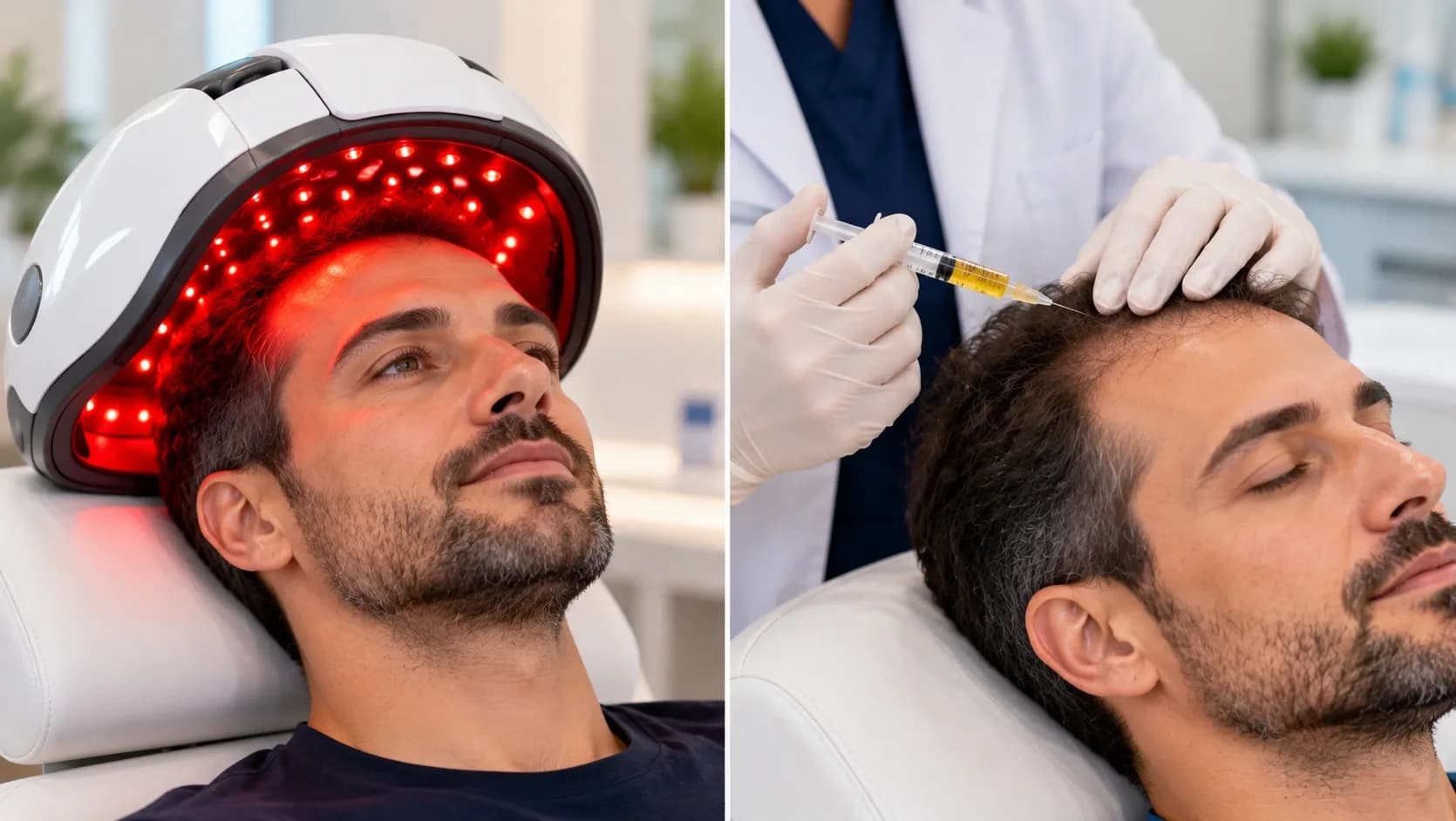
Neither laser hair therapy nor PRP wins for every patient. Low-level laser therapy (LLLT) uses red light to stimulate follicle activity through a noninvasive device, while PRP uses a concentrated preparation of the patient's own platelets injected into the scalp. Research shows both can improve hair density in some people with androgenetic alopecia, but results depend on diagnosis, follicle health, consistency, and provider technique (Avci et al. 2014; Gentile and Garcovich 2020).
Two nonsurgical approaches now dominate the conversation around early hair loss management. Laser hair therapy applies specific wavelengths of red light to the scalp. PRP hair treatment isolates platelet-rich plasma from a blood sample and injects it into thinning areas. The two methods share a goal: wake up weakened hair follicles. They differ in mechanism, invasiveness, cost structure, and clinical workflow. This comparison examines effectiveness, procedure, recovery, cost, and suitability so you can evaluate each option with realistic expectations. Because both treatments act on follicles that still exist, they work best before advanced baldness sets in.
What Is Laser Hair Therapy and How Does It Stimulate Hair Growth?
Laser hair therapy is the medical use of low-level lasers or LEDs to deliver red and near-infrared light to the scalp. The goal is photobiomodulation: light energy absorbed by follicle cells that may improve cellular activity and extend the growth phase of the hair cycle.
Low-level laser therapy, also called LLLT or photobiomodulation, uses light at specific wavelengths, typically in the 630 to 680 nanometer range, at power outputs too low to cut or heat tissue. The light passes through the skin and reaches follicle cells. Research proposes that this absorbed energy supports mitochondrial function in follicle cells, encourages blood flow, and may prolong the anagen phase of the hair growth cycle, which leads to fuller density over time (Avci et al. 2014).
Medical laser caps and helmets differ from generic red-light devices in three ways. First, they emit calibrated wavelengths at defined energy densities. Second, they follow treatment protocols tested in clinical trials. Third, the strongest devices carry regulatory clearance as medical devices. Laser hair removal systems are a separate category entirely; those destroy follicles, while LLLT aims to support them.
Device specifications matter more than branding. Wavelength, power density, treatment duration, and session frequency all influence outcomes, which explains why results differ across studies and products (Leavitt et al. 2009).
How Does PRP Therapy Work for Hair Loss?
PRP therapy uses a small sample of the patient's own blood. A clinician spins the blood in a centrifuge, concentrates the platelets, and injects the plasma into thinning areas of the scalp to expose follicles to growth factors.
The procedure starts with a standard blood draw, usually 10 to 20 milliliters. A centrifuge separates the sample into layers, and the clinician extracts the layer richest in platelets. Platelets contain growth factors such as platelet-derived growth factor, vascular endothelial growth factor, and transforming growth factor beta. These molecules participate in tissue repair, and researchers propose they may stimulate dermal papilla cells and extend the anagen phase (Dhurat and Sukesh 2014).
One important caveat: PRP preparation is not standardized. Centrifuge speed, spin time, activation methods, and final platelet concentration all vary between providers, and this variation explains part of the mixed evidence (Khatu et al. 2014).
PRP also differs from platelet-rich fibrin (PRF), a related preparation that forms a fibrin matrix and releases growth factors over a longer period. PRF uses a different spin protocol and no anticoagulant in most methods, so the two products are not interchangeable.
What Are the Main Differences Between Laser Hair Therapy and PRP?
Laser therapy is noninvasive and device-based, while PRP involves a blood draw and scalp injections. Laser therapy demands regular at-home sessions, while PRP follows an initial clinic-based series with possible maintenance visits.
The core distinction is delivery. LLLT delivers energy through light that crosses the skin surface. PRP delivers biological signals directly into the scalp tissue. This creates practical differences in discomfort, convenience, and the clinical setting.
Factor | Laser Hair Therapy | PRP Therapy |
Mechanism | Photobiomodulation of follicle cells | Growth factor delivery via injection |
Delivery | Light applied to scalp surface | Blood draw plus scalp injections |
Invasiveness | Noninvasive | Minimally invasive |
Setting | At-home device or clinic sessions | Clinical procedure only |
Routine | Several sessions per week, ongoing | Initial series of 3 to 6 sessions, then maintenance |
Discomfort | Minimal | Temporary injection discomfort |
Upfront cost | Device purchase or session fees | Per-session fees |
Neither treatment guarantees complete regrowth, and neither works equally well for every patient. Suitability depends on the diagnosis and the health of existing follicles (Kanti et al. 2018).
Which Treatment Has Stronger Clinical Evidence for Hair Regrowth?
Both treatments have supportive evidence, but study quality varies. LLLT has multiple randomized controlled trials in androgenetic alopecia. PRP has promising trials but suffers from inconsistent preparation methods that limit firm conclusions.
LLLT research includes a randomized, double-blind, sham-controlled multicenter trial in which men using a laser phototherapy device showed greater hair density improvement than the control group over 26 weeks (Leavitt et al. 2009). A later systematic review and meta-analysis concluded that LLLT produced statistically significant increases in hair density compared with sham treatment, while noting that device types and protocols differed across studies (Liu et al. 2019).
PRP research shows measurable gains in hair density and follicular activity in several trials. A systematic review found PRP associated with increased hair density in androgenetic alopecia, though it rated the overall evidence as moderate and called for standardized protocols (Gentile and Garcovich 2020). A separate review placed PRP among promising therapies but emphasized that preparation heterogeneity weakens direct comparisons (Gupta et al. 2019).
Direct head-to-head trials remain scarce. When comparing evidence, weigh study design, sample size, follow-up duration, and outcome measures instead of marketing claims. The honest summary: LLLT holds a larger controlled-trial base; PRP holds promising but less standardized evidence. Neither offers guaranteed outcomes.
How Much Hair Growth Can You Expect From Each Treatment?
Expect improvement in density and thickness in responsive areas, not restoration of bald skin. People with early or moderate thinning respond better than people with long-standing bald patches.
Four distinct outcomes often get mixed together. Reducing shedding means fewer hairs fall out daily. Increasing hair density means more hairs per square centimeter. Improving thickness means existing hairs grow thicker in diameter. Restoring a bald area requires follicles that still function, which extensive loss usually eliminates.
Outcomes depend on the underlying diagnosis, baseline follicle health, treatment adherence, and concurrent therapies such as minoxidil. Areas with miniaturized but alive hairs respond better because the follicle remains biologically active. Areas with shiny, bare scalp for many years rarely respond to nonsurgical treatment.
Before-and-after photos deserve scrutiny. Consistent lighting, identical hair length, matched camera angles, and defined follow-up intervals separate credible documentation from promotional imagery. Gradual improvement over three to six months is realistic. Complete restoration is not a realistic target for either therapy.
How Long Does Each Treatment Take to Show Results?
Both treatments need several months. Hair grows in cycles, so visible density changes follow the biology of the hair growth cycle rather than the calendar of the clinic.
Hair follicles cycle through anagen (growth), catagen (transition), and telogen (resting). Visible density change requires new anagen hairs to grow long enough to count. This biology explains why neither therapy shows meaningful results in the first weeks.
Timeline checkpoint | Laser hair therapy | PRP therapy |
1 to 2 months | Possible change in shedding | Possible change in shedding |
3 to 4 months | Early density and texture change | Early density change after initial series |
6 months | Standard assessment point | Common reassessment point |
Ongoing | Continuous use needed | Maintenance sessions every 4 to 12 months |
Document your baseline with standardized photos and, where available, phototrichogram measurements. Review progress with a qualified clinician at defined intervals rather than judging results day to day.
What Are the Side Effects and Risks of Laser Hair Therapy and PRP?
Both treatments carry low risk when performed correctly. Laser therapy may cause temporary scalp irritation or headache. PRP may cause injection-site pain, swelling, and bruising. Infection is the main serious risk with injections, and it stays rare under sterile technique.
LLLT side effects remain mild in clinical reports. Some users report scalp tenderness, itching, headaches, or warmth after sessions. Following the device instructions on session length and frequency reduces these effects. No long-term harm from properly regulated devices appears in the current literature (Avci et al. 2014).
PRP side effects cluster around the injection sites: temporary pain, redness, swelling, bruising, and pinpoint bleeding. Because PRP is autologous, allergic reaction risk is minimal. Infection and tissue injury remain possible, particularly when providers skip sterile protocols or lack medical training.
Pause and seek medical assessment before any treatment if you have an unexplained scalp condition, active scalp disease, or relevant medical conditions and medications that affect bleeding or healing. Safety rests on patient selection, device quality, sterile technique, and professional oversight.
How Much Do Laser Hair Therapy and PRP Cost?
Laser therapy shifts cost toward a device purchase or repeated session fees. PRP charges per session, and the total grows with the number of sessions and maintenance plan. Compare total long-term cost, never the price of a single session.
Cost element | Laser hair therapy | PRP therapy |
Initial outlay | Medical-grade cap or helmet, or clinic session package | 3 to 6 sessions |
Recurring cost | Device replacement every few years, or continued sessions | Maintenance injections |
Follow-up | Periodic clinician review | Periodic clinician review |
Cost drivers | Device quality, regulatory status, protocol | Geographic location, clinic fees, protocol |
Geographic location, clinic fees, device type, and treatment frequency drive total expenditure. A medical-grade cleared laser cap represents a large upfront payment but lower per-session cost for long-term users. PRP demands smaller individual payments that accumulate quickly across an initial series plus maintenance.
Any honest price comparison must state the country, currency, treatment format, and pricing date, because figures vary widely. Judge value by total annual cost relative to measurable outcomes, not by the cheapest single session.
Can You Combine Laser Hair Therapy With PRP?
Combination treatment is biologically plausible and sometimes clinically considered, but evidence that the combination outperforms either therapy alone remains limited. Any combined plan should use measurable outcomes to prove its value.
The rationale pairs two different mechanisms: light-based cellular stimulation and direct growth factor delivery. Some clinicians combine both alongside established treatments such as minoxidil when the diagnosis supports it.
Combination does not automatically mean better. Research has not established a clear superiority of combined regimens over single therapies, and adding treatments adds cost and scalp burden. Clinicians should weigh treatment timing, scalp tolerance, medical history, and the existing regimen before layering therapies. Track results with objective measures such as standardized photos or density counts rather than assuming more treatments produce better results.
Who Is a Suitable Candidate for Laser Hair Therapy or PRP?
The best candidates have an accurate diagnosis, early to moderate thinning, and follicles that remain viable. Advanced baldness responds poorly to both therapies.
Diagnosis comes first. Androgenetic alopecia, telogen effluvium, and alopecia areata demand different management, and treating the wrong diagnosis wastes time and money. A dermatologist evaluates pattern, progression, and scalp health before recommending any procedure.
Early or moderate pattern thinning offers the strongest response window because miniaturized follicles retain activity. Advanced baldness leaves too few functional follicles for stimulation to matter. Age, scalp condition, and progression rate shape the plan. Hormonal changes, postpartum shedding, nutritional deficiencies, and thyroid disorders all influence treatment planning for women and men alike (Suchonwanit et al. 2019). A specialist may order blood tests, a pull test, trichoscopy, or a scalp biopsy before proceeding.
Is Laser Hair Therapy or PRP Better for Men and Women?
Sex alone does not determine which therapy works. The cause and pattern of hair loss, plus hormonal and medical context, drive the decision.
Male-pattern hair loss typically shows temple recession and crown thinning driven by androgen sensitivity. Female-pattern hair loss usually presents as central part widening and diffuse thinning while the frontal hairline stays intact. Both patterns respond to follicle stimulation when follicles remain alive.
Hormonal factors shape female treatment planning. Postpartum shedding, polycystic ovary syndrome, and menopause-related thinning may require medical management alongside or instead of procedural treatment. Men may discuss finasteride as part of a broader plan. Individualized assessment beats any gender-based shortcut.
Should You Choose Laser Hair Therapy or PRP After a Hair Transplant?
These therapies may support non-transplanted native hair after surgery, but neither replaces postoperative care and neither guarantees better graft survival.
A hair transplant redistributes follicles to bald areas. It does not stop the progression of androgenetic alopecia in the surrounding native hair. Some clinicians consider LLLT or PRP as adjuncts to support that remaining native hair.
Surgical healing sets the schedule. Clinicians must respect scalp healing, postoperative instructions, and the timing of any additional procedure. Distinguish adjunctive hair loss management from the surgical implantation process itself. Patients should follow the transplant surgeon's protocol first and treat any additional therapy as a later, separate decision.
How Do Laser Hair Therapy and PRP Compare With Minoxidil and Finasteride?
Minoxidil and finasteride have the strongest long-term evidence for androgenetic alopecia. Laser therapy and PRP can complement these medications but do not automatically replace them.
Topical minoxidil is a vasodilator applied daily that prolongs anagen and enlarges miniaturized follicles. It demands consistent daily use and works only while you use it (Suchonwanit et al. 2019). Finasteride is an oral prescription that reduces dihydrotestosterone, the hormone that drives follicle miniaturization. Patients must discuss its benefits and risks, including potential sexual side effects, with a clinician.
Factor | Minoxidil / finasteride | Laser therapy / PRP |
Evidence base | Extensive, guideline-supported | Growing but variable |
Daily routine | Daily medication adherence | Scheduled sessions |
Reversibility | Benefits fade after stopping | Benefits diminish after stopping |
Medical supervision | Prescription review required | Device quality or injection technique critical |
Clinical guidelines position minoxidil and finasteride as first-line therapy for androgenetic alopecia, with procedural options as potential additions (Kanti et al. 2018). Clinicians combine approaches when the diagnosis and medical history support the plan, but PRP and laser therapy should not replace prescribed medication by default.
Can Laser Hair Therapy or PRP Permanently Stop Hair Loss?
No. Both treatments can improve growth but do not remove the underlying cause of progressive hair loss. Ongoing maintenance is the norm.
Androgenetic alopecia is a chronic, progressive condition. Even when a treatment produces visible improvement, the biological process driving follicle miniaturization continues. This explains why results fade when treatment stops.
Ongoing laser sessions, repeat PRP injections, or maintenance medication preserve the gains. Expect a long-term management plan rather than a permanent cure, and set expectations accordingly with your clinician.
What Should You Ask a Hair Loss Specialist Before Treatment?
Ask about diagnosis, evidence for the specific method, measurement of results, total cost, and the plan for deciding whether treatment works.
Bring these questions to your consultation:
Which diagnosis best explains my hair loss, and do I need further tests?
What evidence supports the recommended laser device or PRP preparation method?
How will you measure hair density, thickness, and shedding before and after treatment?
What are the expected total costs, number of sessions, maintenance requirements, and potential risks?
How will we determine whether treatment is working, and when should the plan change?
Frequently Asked Questions About Laser Hair Therapy vs PRP
Is PRP more effective than laser therapy for hair loss?
No universal winner exists. Individual circumstances, diagnosis, and the quality of the chosen method matter more than the category. Trials support both options in androgenetic alopecia, but standardized comparisons remain limited.
Is laser hair therapy painless compared with PRP?
Yes, in most cases. LLLT involves no needles and causes at most mild warmth or irritation. PRP involves scalp injections that cause temporary discomfort, redness, and tenderness.
Can laser hair therapy regrow hair in completely bald areas?
No. Once follicles lose the capacity to produce hair, light therapy cannot recreate them. Both treatments work on follicles that remain alive, even if miniaturized.
How many PRP sessions are usually needed for hair loss?
Protocols vary. Many clinicians start with three to six sessions spaced four to six weeks apart, then reassess. Maintenance schedules depend on response and the provider's protocol.
How often should you use a laser cap for hair growth?
Frequency depends on the specific device and its cleared instructions. Most medical-grade protocols call for several sessions per week, and consistent long-term use drives results.
Can you use a laser cap and receive PRP injections in the same treatment plan?
Yes, some clinicians combine both after assessment. The schedule should be individualized, and the combination should earn its place through measurable results.
What happens if you stop PRP or laser hair therapy?
Treatment-related benefits may diminish over time as the underlying condition continues. A maintenance plan, with or without medication, preserves gains better than stopping entirely.
Which treatment offers better value for money?
Value depends on total treatment cost, maintenance needs, clinical outcomes, and your individual suitability. Compare the full long-term cost of each path against documented results, not session prices alone.
References
Avci, Parviz, et al. "Low-Level Laser (Light) Therapy (LLLT) in Skin: Stimulating, Healing, Restoring." Seminars in Cutaneous Medicine and Surgery, vol. 33, 2014, pp. 41-52.
Dhurat, Rachita, and Sukesh Madhukar. "Principles and Methods of Preparation of Platelet-Rich Plasma: A Review and Author's Perspective." Journal of Cutaneous and Aesthetic Surgery, vol. 7, no. 4, 2014, pp. 189-197.
Gentile, Pietro, and Simone Garcovich. "Systematic Review of Platelet-Rich Plasma Use in Androgenetic Alopecia Compared with Minoxidil, Finasteride, and Adult Stem Cell-Based Therapy." International Journal of Molecular Sciences, vol. 21, no. 8, 2020, p. 2702.
Gupta, Aditya K., et al. "Platelet-Rich Plasma as a Treatment for Androgenetic Alopecia." Dermatologic Surgery, vol. 45, no. 10, 2019, pp. 1262-1273.
Kanti, Varvara, et al. "Evidence-Based (S3) Guideline for the Treatment of Androgenetic Alopecia." European Dermatology Forum, 2018.
Khatu, Swapna S., et al. "Platelet-Rich Plasma in Androgenic Alopecia: Myth or an Effective Tool." Journal of Cutaneous and Aesthetic Surgery, vol. 7, no. 2, 2014, pp. 107-110.
Leavitt, Matt, et al. "HairMax LaserComb Laser Phototherapy Device in the Treatment of Male Androgenetic Alopecia: A Randomized, Double-Blind, Sham Device-Controlled, Multicentre Trial." Lasers in Surgery and Medicine, vol. 41, no. 4, 2009, pp. 261-266.
Liu, Karen H., et al. "The Effectiveness of Low-Level Laser Therapy for Androgenetic Alopecia: A Systematic Review and Meta-Analysis." Lasers in Medical Science, vol. 34, 2019, pp. 1063-1078.
Suchonwanit, Poonkiat, et al. "Minoxidil and Its Use in Hair Disorders: A Review." Drug Design, Development and Therapy, vol. 13, 2019, pp. 2777-2786.