
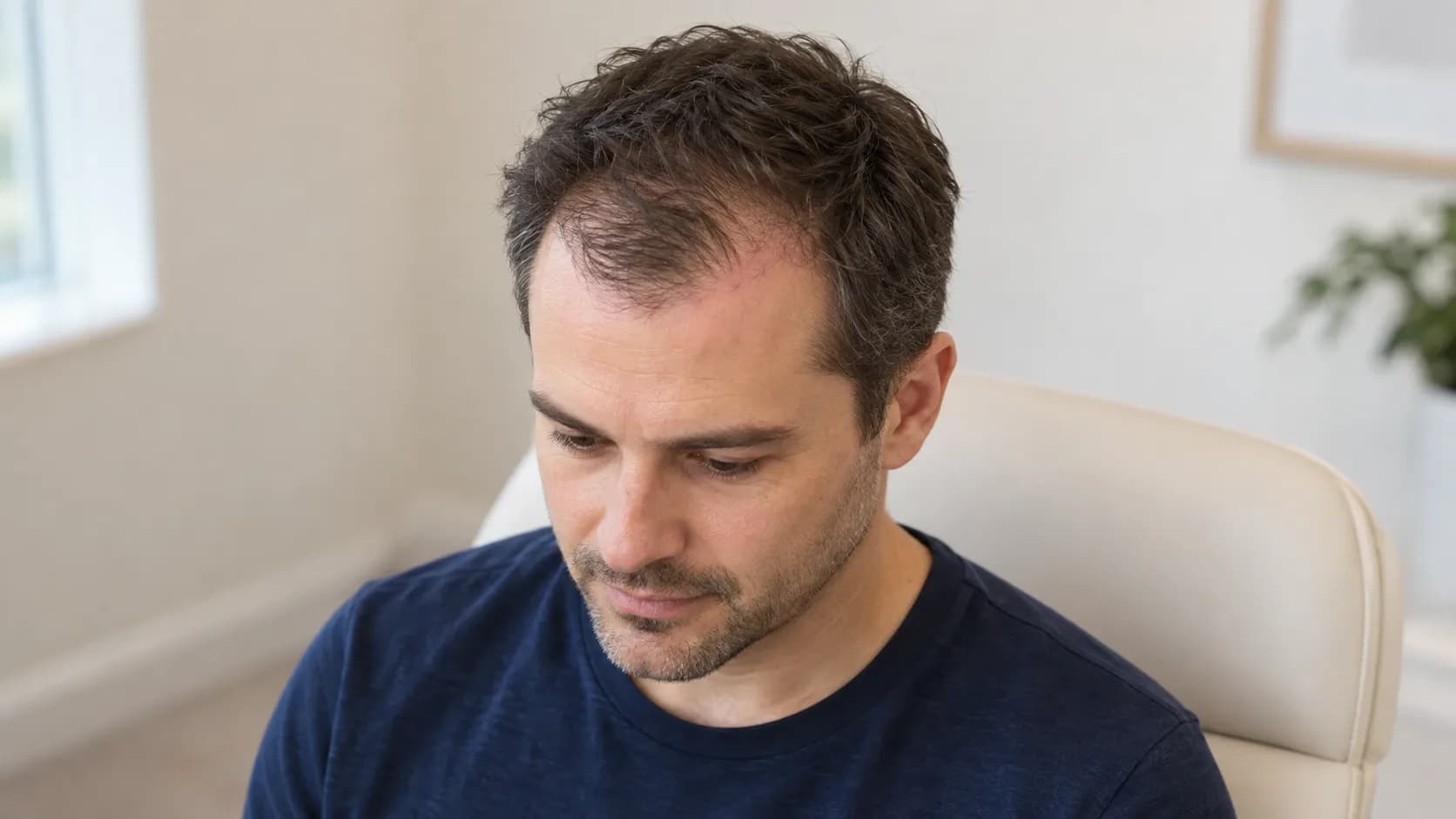
Laser Hair Therapy Side Effects
Laser hair therapy delivers red or near-infrared light to the scalp through devices such as caps, combs, or clinical units.
Laser hair therapy uses low-level light to stimulate hair follicles without heat or surgery. When clinicians and patients apply it correctly, research reports mostly mild and temporary side effects such as scalp redness, itching, and short-lived sensitivity (Avci et al. 2014). However, the technology behind each device matters. Low-level laser therapy (LLLT) works through photobiomodulation, while fractional laser treatments remove or damage small columns of skin. These approaches do not carry identical risk profiles. This article examines how laser hair therapy works, what side effects it can produce, why some shedding occurs, and how to reduce risk.
What Is Laser Hair Therapy and How Does It Work?
Laser hair therapy delivers red or near-infrared light to the scalp through devices such as caps, combs, or clinical units. Researchers call this process photobiomodulation because the light triggers biological changes without generating damaging heat.
The proposed mechanism involves absorption of light by cellular structures called chromophores. This absorption may increase cellular energy production, extend the growth phase of the hair cycle, and delay follicular regression (Avci et al. 2014). Most LLLT devices emit light in the 630 to 680 nanometer range, though clinical systems sometimes use near-infrared wavelengths up to 905 nanometers.
Treatment parameters matter. Wavelength, energy density, session duration, and treatment frequency all influence how follicles respond. Two devices can both be called "laser therapy" while delivering entirely different energy levels, which explains why safety discussions must separate non-thermal LLLT from ablative or fractional lasers.
Is Laser Hair Therapy Safe for Hair Loss?
LLLT appears well tolerated in studies of androgenetic alopecia, the most common form of patterned hair loss. A systematic review published in 2017 concluded that laser devices showed a favorable safety profile with no serious adverse events reported across the included trials (Liu et al. 2017).
"Generally safe" does not mean risk-free. It means that adverse reactions in research were mostly mild, temporary, and manageable. Professional treatments and home-use laser caps or combs also differ in supervision, device design, and exposure control. A device used according to its instructions carries a different risk profile than one used without guidance.
Factor | Professional LLLT | Home-Use Devices |
Supervision | Clinician present | Self-administered |
Device power | Often higher | Usually lower |
Exposure control | Measured and adjusted | Depends on user adherence |
Common reactions | Mild erythema | Mild warmth or sensitivity |
What Are the Common Laser Hair Therapy Side Effects?
The most common side effects involve the scalp surface and remain short-lived. They include redness, temporary sensitivity, itching, mild warmth, and changes in scalp sensation.
Recent research on fractional laser therapy identified erythema, pain, and pruritus as the predominant reactions, and most cases were mild to moderate and resolved without intervention (Li et al. 2026). Non-thermal LLLT produces even fewer local skin reactions because it does not heat or remove tissue.
Scalp redness or erythema after exposure
Temporary sensitivity or mild discomfort
Itching or pruritus during early sessions
Mild warmth with some device types
Temporary dryness or altered scalp sensation
Each reaction tends to fade within hours to days, depending on the technology and individual skin sensitivity.
Can Laser Hair Therapy Cause Increased Hair Shedding?
Some people notice increased shedding during the first weeks of treatment. This phenomenon usually reflects normal cycling rather than damage.
Hair follicles move through growth (anagen), transition, and resting (telogen) phases. Light stimulation can push resting hairs into the shedding stage so that new, stronger hairs can begin growing. The result is a temporary increase in fallen hairs that does not indicate follicle destruction.
Distinguish this shedding from progressive loss. Temporary shedding follows a normal cycle and stabilizes. Progressive hair loss continues and often thins visibly over months. Androgenetic alopecia, telogen effluvium, medications, nutritional deficiencies, and thyroid conditions can all drive ongoing shedding, and laser treatment does not stop them from progressing.
Can Laser Hair Therapy Actually Cause Hair Loss?
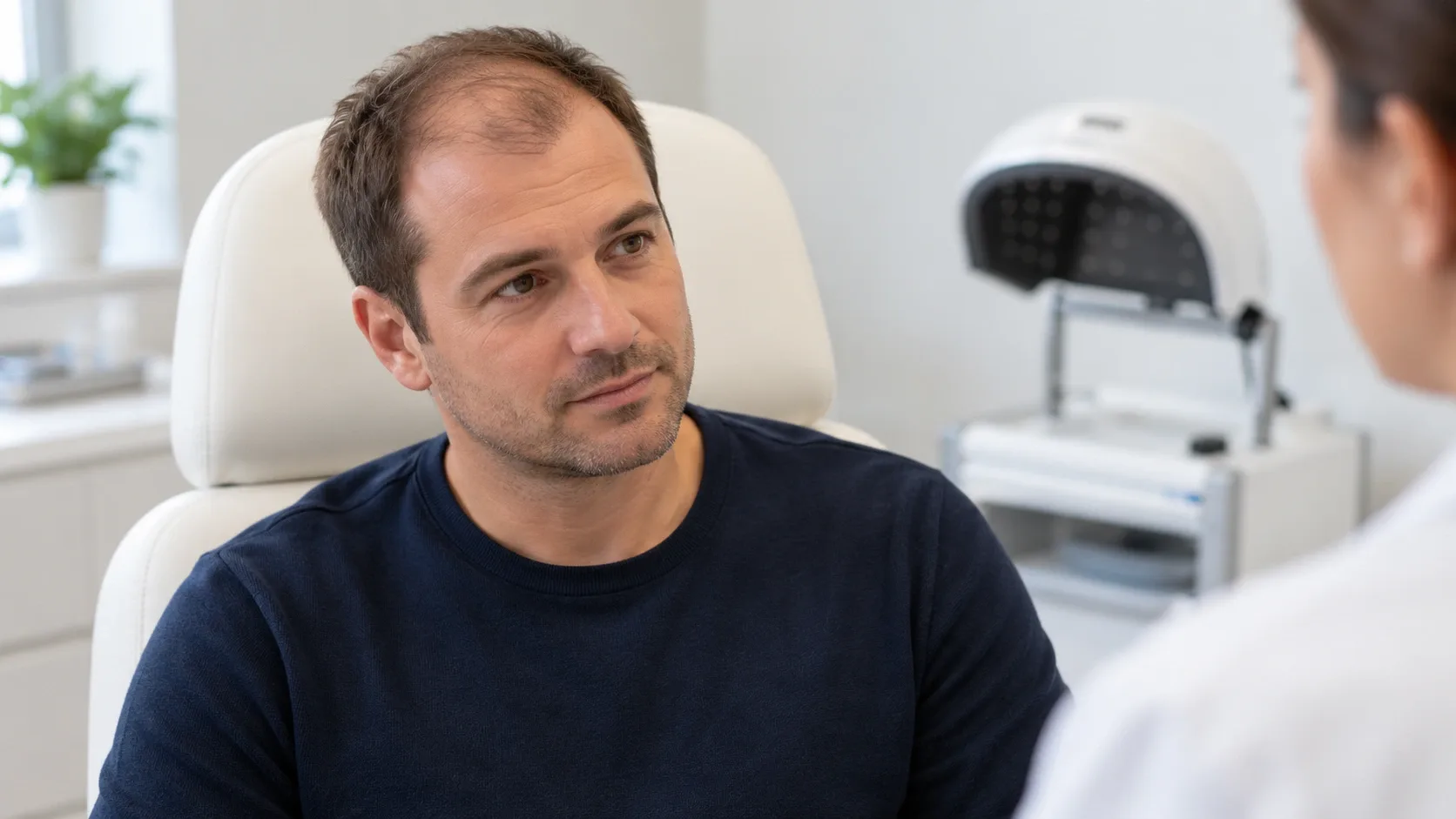
Properly administered LLLT has not been established as a direct cause of hair loss. Clinical evidence links it to potential gains in hair density rather than follicle destruction (Liu et al. 2017).
Problems arise when users exceed recommended exposure. Excessive intensity or frequency can inflame the scalp, and inflammation can stress follicles. Underlying hair-loss disorders can also keep advancing during treatment, creating the false impression that the laser caused the decline. Independent research, not manufacturer marketing, provides the most reliable safety picture.
What Happens If You Overuse a Laser Hair Device?
More exposure does not accelerate results. Follicular cells respond to specific energy windows, and exceeding those windows adds irritation without adding benefit.
Overuse can cause scalp inflammation, prolonged redness, and discomfort. Users should follow the device schedule exactly and resist the urge to add sessions. Increasing frequency independently raises the risk of adverse reactions and offers no proven advantage.
Which Factors Can Increase the Risk of Adverse Reactions?
Risk rises when individual factors collide with improper use. Key contributors include scalp sensitivity, incorrect device positioning, excessive duration, inappropriate intensity, pre-existing scalp disorders, and concurrent use of irritating topical products.
Medications and medical conditions that cause hair loss also complicate interpretation. A correct diagnosis must come first, because attributing every symptom to the laser device can mask a treatable underlying cause.
Are Laser Caps and Laser Combs Associated With Side Effects?
Laser caps cover the scalp with embedded diodes for hands-free treatment, while laser combs require manual movement across the scalp. Both deliver low-level light, but consistency and coverage differ.
Feature | Laser Cap | Laser Comb |
Application | Wearable, automated | Manual, combed through hair |
Coverage | Full scalp area | Depends on user technique |
Convenience | Higher effort to miss doses | Requires discipline |
Typical reactions | Mild warmth, brief redness | Similar, technique-dependent |
Safety depends on device design and correct use. One product's safety record does not represent every laser device, since specifications vary widely between manufacturers.
Do Professional Fractional Lasers Have Different Side Effects?
Fractional lasers differ fundamentally from LLLT caps. Ablative fractional lasers vaporize microcolumns of skin, while non-ablative versions heat tissue without removing it. Both intentionally create controlled injury to trigger repair, and both produce stronger local reactions than photobiomodulation.
Expected effects include erythema, pain, itching, swelling, and temporary skin irritation. A 2026 systematic review of fractional laser therapy for hair loss found predominantly mild-to-moderate adverse events across the analyzed studies, with no serious adverse events reported (Li et al. 2026). Fractional treatment therefore belongs in a separate risk category from non-thermal home devices.
How Long Do Laser Hair Therapy Side Effects Usually Last?
Duration depends on technology and individual response. LLLT reactions such as redness or itching typically resolve within hours to a few days. Fractional laser reactions can persist for one to two weeks because the skin needs time to heal from controlled injury.
Symptoms should steadily improve after stopping or modifying treatment. Persistent reactions signal a need for professional assessment rather than continued use.
What Should You Do If Your Scalp Becomes Irritated?
Stop treatment temporarily if significant irritation appears, unless a treating clinician directs otherwise. Review device instructions to confirm correct use, and pause other scalp products that might add irritation, such as strong styling agents or exfoliating treatments.
Monitor symptoms over several days. Seek medical evaluation if irritation is severe, lasts beyond a short period, or appears alongside pain, swelling, or blistering.
Who Should Be Cautious About Laser Hair Therapy?
Certain groups benefit from professional evaluation before starting any light-based treatment. These include people with unexplained or rapidly progressing hair loss, active scalp inflammation, significant scalp sensitivity, photosensitizing medications, or hair loss driven by a medical condition.
Diagnosis precedes treatment selection. A dermatologist can identify whether the pattern matches androgenetic alopecia, telogen effluvium, alopecia areata, or another cause, because each condition responds to different therapy.
Can Laser Hair Therapy Interact With Other Hair Loss Treatments?
LLLT is often studied alongside topical minoxidil, and combination protocols have produced greater improvements in hair density than minoxidil alone in meta-analytic research (Liu et al. 2017). Efficacy evidence, however, does not automatically equal combined-safety evidence.
Combining treatments can compound scalp irritation because both therapies can cause dryness and sensitivity. Patients should introduce combinations gradually under professional guidance so that reactions can be attributed correctly.
When Should You Stop Laser Hair Therapy and See a Doctor?
Stop and seek evaluation when scalp irritation persists or worsens, shedding becomes heavy or prolonged, or the scalp shows pain, swelling, blistering, or pronounced skin changes. Rapid hair-loss progression or new unexplained symptoms also warrants assessment.
A dermatologist or hair-loss specialist investigates the underlying cause, reviews medications and nutrition, and adjusts the treatment plan. Early evaluation prevents a delayed diagnosis of conditions that laser therapy cannot treat.
How Can You Reduce the Risk of Laser Hair Therapy Side Effects?
Risk reduction follows straightforward rules. Choose a device suited to the diagnosed hair-loss type, follow the manufacturer schedule exactly, and avoid raising exposure without professional advice. Keep the scalp clean, introduce other treatments carefully, and maintain realistic expectations.
Consistent, correct use produces better outcomes than aggressive use. Schedule professional assessment whenever symptoms persist, because adjusting the plan early protects both scalp health and treatment results.
What Does the Research Say About the Safety of Laser Hair Therapy?
Systematic reviews and meta-analyses support LLLT as a low-risk option for androgenetic alopecia, with reported improvements in hair density and a favorable adverse-event profile (Avci et al. 2014; Liu et al. 2017). Evidence remains strongest for androgenetic alopecia and thinner for other hair-loss types.
Limitations matter. Studies differ in device type, wavelength, energy density, protocol duration, and methodological quality. Evidence for fractional lasers forms a separate body of research with its own risk spectrum. Longer-term, higher-quality trials will refine optimal parameters, but current data position correctly administered LLLT as a mild-reaction therapy rather than a follicle-damaging one.
Frequently Asked Questions About Laser Hair Therapy Side Effects
Can laser hair therapy make hair loss worse?
No study has proven correctly administered LLLT worsens hair loss. Apparent worsening usually reflects natural progression or temporary shedding.
Is shedding normal after starting laser hair therapy?
Yes, temporary shedding can occur as hairs exit the resting phase. It should stabilize within weeks.
Can laser caps damage hair follicles?
Properly designed caps used as directed have not been shown to damage follicles in clinical research.
Can LLLT cause scalp irritation?
Yes, mild redness, itching, or warmth can occur and usually resolves quickly.
How long do laser therapy side effects last?
LLLT reactions typically fade within days. Fractional laser reactions may last one to two weeks.
Can laser hair therapy cause permanent hair loss?
Current evidence does not link appropriate LLLT use to permanent loss.
Is laser hair therapy safe for long-term use?
Available studies report favorable profiles, though longer-term data remains limited.
Can I use minoxidil with laser hair therapy?
Yes, research supports combination use, but introduce it gradually to limit irritation.
When should I stop using a laser hair device?
Stop if irritation persists, worsens, or appears with concerning symptoms.
Should I see a dermatologist before starting laser hair therapy?
Yes, a diagnosis ensures the treatment matches the cause of hair loss.
Key Takeaways About Laser Hair Therapy Side Effects
LLLT and fractional lasers serve different purposes and carry different risk profiles. LLLT, delivered through photobiomodulation, produces mostly mild and temporary reactions in research, while fractional lasers cause stronger but still predominantly moderate local responses (Li et al. 2026).
Temporary shedding differs from genuine worsening, and correct device use protects both safety and results. Identifying the cause of hair loss remains the foundation of any treatment plan. Persistent, severe, or unusual symptoms deserve medical evaluation rather than continued experimentation.
References
Avci, Parviz, et al. "Low-Level Laser (Light) Therapy (LLLT) in Skin: Stimulating, Healing, Restoring." Seminars in Cutaneous Medicine and Surgery, vol. 33, no. 2, 2014, pp. 41-52.
Liu, K. H., et al. "Low-Level Laser Therapy for Hair Loss." Lasers in Medical Science, vol. 34, no. 6, 2017, pp. 1063-1071.
Li, X., et al. "Fractional Laser Therapy for Hair Loss: A Systematic Review of Efficacy and Safety." Journal of Cosmetic and Laser Therapy, vol. 28, no. 4, 2026, pp. 212-224.