

Laser Hair Therapy Recovery
Laser hair therapy recovery describes the period surrounding low-level laser therapy (LLLT) for hair loss.
Laser hair therapy recovery describes the period surrounding low-level laser therapy (LLLT) for hair loss. This treatment is non-invasive, so most patients return to daily life right after each session. Hair-growth changes, however, need months of consistent treatment.
Many people compare LLLT with surgical hair restoration. The two procedures sit at opposite ends of the intervention spectrum. LLLT uses low-power red or near-infrared light. It does not cut, burn, or remove tissue. For this reason, recovery after laser hair therapy differs sharply from recovery after hair transplantation. Expectations still vary between individuals. The device, the treatment protocol, the scalp condition, and the biological response all shape the experience. This article explains what recovery actually looks like, what science says about it, and how to care for the scalp between sessions.
What Is Laser Hair Therapy?
Laser hair therapy, also called low-level laser therapy (LLLT) or photobiomodulation, uses low-power red light to stimulate biological activity in the scalp. It mainly treats pattern hair loss, also known as androgenetic alopecia.
Clinicians use several names for the same treatment. Low-level laser therapy, low-level light therapy, and photobiomodulation all describe the delivery of red or near-infrared light at power levels far below those of surgical lasers. The light passes through the scalp and reaches the hair follicles. Researchers believe this light triggers cellular processes that support follicle activity. Clinical studies have reported measurable gains in hair density after repeated LLLT sessions. Jimenez et al. (2014) found that participants using an LLLT device three times per week for 26 weeks achieved a significantly greater increase in terminal hair density than participants using a sham device.
How Does Low-Level Laser Therapy Affect Hair Follicles?
Researchers propose that LLLT increases mitochondrial energy production in follicle cells, which may shift hair follicles into the active growth phase. Science has not fully confirmed these mechanisms, so experts describe them as proposed rather than proven.
The leading hypothesis centers on mitochondria. These organelles produce adenosine triphosphate (ATP), the cell's energy currency. Red and near-infrared light may interact with cytochrome c oxidase, a mitochondrial enzyme. This interaction may raise ATP production and modulate reactive oxygen species (Liu et al. 2019). Some researchers also report increased nitric oxide release, which may improve scalp microcirculation (Shin et al. 2026). These changes may encourage follicles to enter anagen, the growth phase of the hair cycle. Each follicle moves through anagen, catagen (transition), and telogen (rest) in a repeating cycle. A follicle in prolonged telogen cannot produce a visible hair shaft. Because the cycle takes months, any treatment that shifts follicles toward anagen needs time to show visible results.
Is There a Recovery Period After Laser Hair Therapy?
Most patients need no conventional downtime after LLLT. They can resume work, exercise, and social activities immediately.
LLLT delivers light energy without creating wounds. No incisions, no sutures, and no dressings exist. This stands in direct contrast to hair transplantation, where surgeons extract and implant follicular grafts. Some individuals report temporary warmth or mild scalp sensitivity after a session. These sensations usually fade quickly. The absence of physical recovery time is one of the main reasons patients choose LLLT over surgical options (Avci et al. 2014).
What Can You Expect Immediately After a Laser Hair Therapy Session?
The scalp may feel warm or slightly sensitive after a session. Visible hair growth changes do not appear at this stage.
A typical post-session scalp looks normal. Redness, if it appears, stays mild and short-lived. The light energy does not damage the skin surface. Patients sometimes expect instant thickening because the scalp feels different. That expectation misreads the biology. LLLT influences follicle behavior at the cellular level. Cells need weeks to respond and produce a thicker hair shaft. Any unusual reaction, such as persistent burning, swelling, or marked redness, deserves attention from a healthcare professional.
What Are the Possible Side Effects During Recovery?
Reported side effects stay mild. Temporary dryness, itching, mild tenderness, irritation, and a warm sensation appear most often. Clinical studies describe a favorable safety profile.
Perez et al. (2024) reviewed 38 studies covering more than 3,000 patients and found no major safety concerns across LLLT trials. The table below summarizes the reported minor effects.
Side Effect | Typical Duration | Severity | Action |
Warm sensation | Minutes to hours | Mild | No action needed |
Mild tenderness | 1 to 2 days | Mild | Gentle scalp care |
Dryness | Several days | Mild | Mild moisturizing products |
Itching | Several days | Mild | Avoid scratching |
Irritation | Up to a few days | Mild to moderate | Monitor; seek advice if persistent |
Severity and duration guide the response. A brief itch needs no intervention. Persistent or worsening irritation signals a reason to pause and reassess.
How Should You Care for Your Scalp After Laser Hair Therapy?
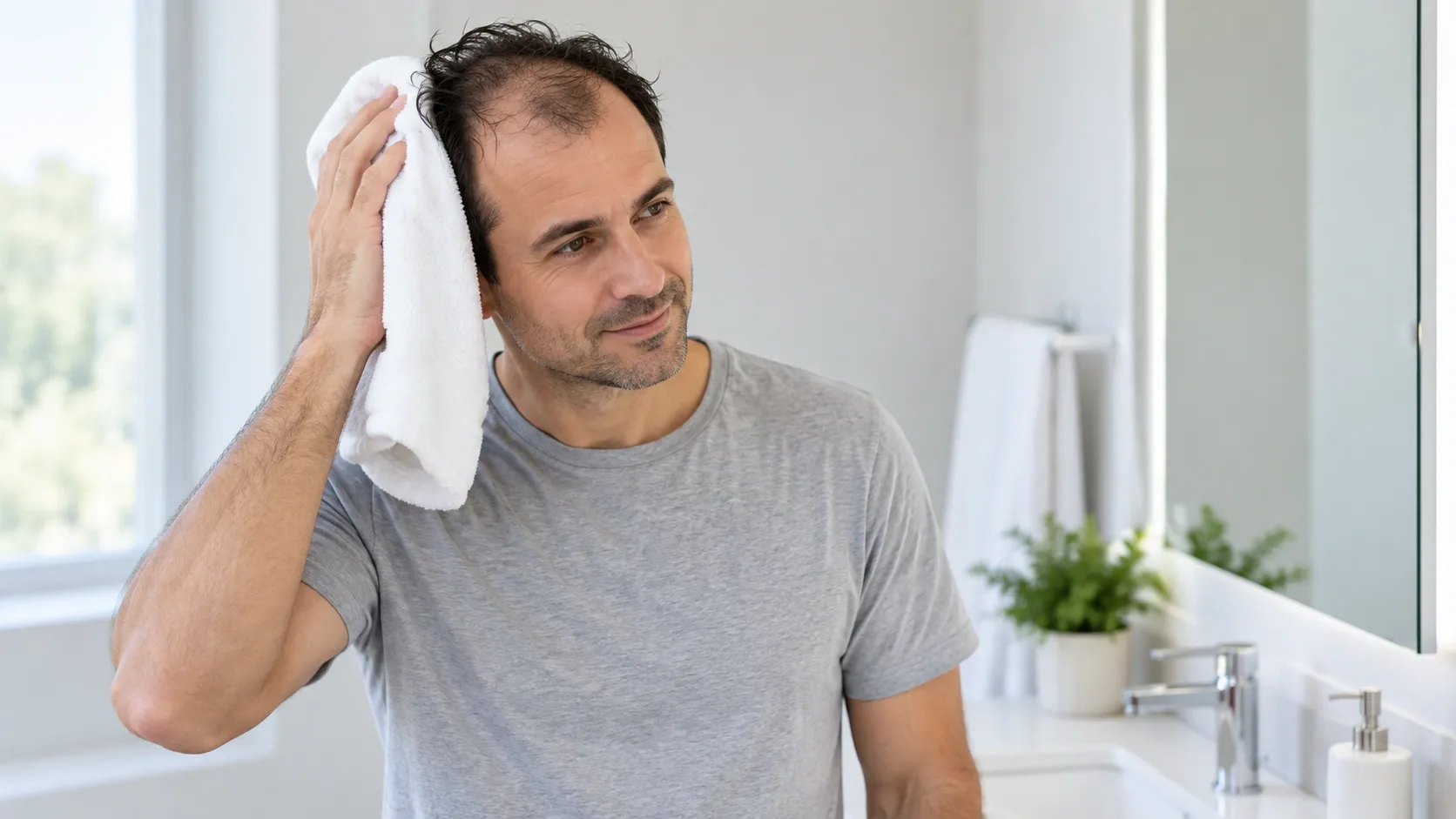
Basic scalp care after LLLT stays simple. Follow the device instructions, avoid excessive manipulation of an irritated scalp, and maintain normal hygiene.
LLLT does not wound the scalp, so aftercare remains light. The specific instructions supplied with the device or protocol always take priority. Professional clinic devices and home-use caps or helmets may carry different guidance. Scratching or aggressively massaging an irritated scalp can worsen sensitivity. Gentle handling protects the skin barrier while follicles respond to treatment. No scientific evidence requires extreme restrictions on hair products after LLLT. Reasonable, gentle care serves most patients well.
Can You Wash Your Hair After Laser Hair Therapy?
Yes, hair washing is generally compatible with LLLT because the treatment creates no wounds. Device-specific instructions still take priority.
Surgical procedures require careful washing protocols because grafts need protection. LLLT involves no grafts and no incisions. Water and shampoo do not interfere with a light-based, non-ablative session. If temporary irritation occurs, a gentle routine with mild products keeps the scalp comfortable. Some manufacturers recommend waiting a short interval before washing. That guidance reflects device design, not a biological requirement. Patients should check the manual for their specific device.
When Can You Resume Normal Activities?
Patients can generally return to work, exercise, social activities, and routine hair care immediately after LLLT.
The minimal downtime reflects the non-invasive nature of the treatment. Athletes can train the same day. Office workers lose no work time. These freedoms differ sharply from hair transplant recovery, where strenuous activity stays restricted for weeks. One exception applies. If a clinician combines LLLT with another procedure, such as microneedling or a hair transplant, the restrictions of that additional procedure govern recovery. Individual instructions may vary in those combined cases.
How Often Should Laser Hair Therapy Be Performed?
Most published protocols use sessions three times per week, but no single universal schedule exists. Frequency depends on the device and the prescribed plan.
Recovery from one session and the overall treatment schedule are separate concepts. A patient feels normal within hours of a session. Hair-growth change, by contrast, requires months of repeated exposure. Published trials have used frequencies ranging from every other day to several times per week, with session lengths between 8 and 30 minutes (Liu et al. 2019). Devices differ in wavelength, diode count, and power output. These differences prevent the endorsement of one universal protocol.
When Do Laser Hair Therapy Results Become Noticeable?
Visible results generally require at least 4 months of consistent treatment. Meaningful change often appears between 16 and 26 weeks.
Published studies support this timeline. Jimenez et al. (2014) measured significant density gains at 26 weeks. Leavitt et al. (2009) reported improvement at the same point. More recent work shows continued growth beyond six months. Shin et al. (2026) found that hair density rose from 99.2 to 124.2 hairs per square centimeter over 48 weeks, with the steepest gains appearing between weeks 16 and 24. Patients should track shedding, density, thickness, and fullness rather than expect immediate transformation.
Why Does Hair Growth Take Time After Laser Therapy?
Hair follicles must complete phases of the growth cycle before new, thicker hairs become visible. Biology sets the pace, not the treatment schedule.
The hair-growth cycle explains the delay. A follicle pushed toward anagen still needs months to produce a mature terminal hair. Early post-treatment appearance therefore says little about the final response. A patient who sees no change at week 6 may show clear improvement at week 24. Consistency matters more than early impressions.
What Factors Can Affect Laser Hair Therapy Recovery?
Baseline density, the cause of hair loss, treatment consistency, device characteristics, scalp condition, and concurrent treatments all influence individual outcomes.
Baseline hair density determines how much improvement remains possible. Someone with advanced miniaturization has fewer follicles to rescue. The type of hair loss matters equally. Evidence supports LLLT strongly for androgenetic alopecia and weakly for other forms such as alopecia areata or scarring alopecia (Perez et al. 2024). Skipping sessions reduces cumulative light exposure. Device wavelength, power, and coverage shape biological impact. Scalp inflammation or dermatitis may affect tolerability. Concurrent treatments, such as minoxidil, may add benefit, though some trials found no significant difference between combination and monotherapy groups (Leavitt et al. 2009; Vendetti 2023). No clinician can promise identical results for every patient.
Who May Benefit From Laser Hair Therapy?
Men and women with androgenetic alopecia form the main candidate group. A correct diagnosis must come before treatment.
Pattern hair loss follows a recognizable pattern of follicle miniaturization. LLLT evidence concentrates on this condition. Both sexes respond. Liu et al. (2019) found comparable density gains in male and female subgroups. Evidence for other alopecia types remains thin. Scarring alopecias destroy follicles permanently, and no light therapy can restore destroyed structures. Telogen effluvium often resolves spontaneously. A clinician should identify the cause of hair loss first. Treatment without diagnosis wastes time and money.
What Happens If Laser Hair Therapy Is Combined With Other Hair-Loss Treatments?
Clinicians may combine LLLT with minoxidil or finasteride as part of a broader plan. Combination therapy should be individualized and guided by professional advice.
Evidence offers mixed signals. Some studies report additive benefits from combination approaches. Others find no significant advantage over single treatments. Vendetti (2023) found no significant difference in density improvement between LLLT plus minoxidil and minoxidil alone over 16 weeks. Patients should distinguish peer-reviewed evidence from promotional claims. A dermatologist can weigh drug interactions, side effect profiles, and realistic goals.
When Should You Contact a Healthcare Professional After Laser Hair Therapy?
Seek advice for persistent or worsening irritation, unusual pain, significant inflammation, or unexpected skin changes. Uncertainty about the cause of hair loss also warrants evaluation.
Most post-session sensations resolve quickly. A symptom that intensifies or lasts beyond a few days suggests the treatment may need adjustment. Pausing treatment protects the scalp while the cause is identified. Hair loss itself sometimes signals an underlying condition, such as thyroid dysfunction or iron deficiency. Medical evaluation protects both safety and treatment value.
How Is Laser Hair Therapy Recovery Different From Hair Transplant Recovery?
LLLT involves no downtime, no wounds, and no activity restrictions. Hair transplant recovery involves weeks of healing, scabbing, swelling, and limited activity.
The comparison below summarizes the differences.
Factor | LLLT Recovery | Hair Transplant Recovery |
Downtime | None; immediate return to activity | Several days to weeks |
Scalp healing | No wounds to heal | Donor and recipient sites heal over 7 to 14 days |
Activity restrictions | None | Strenuous exercise restricted for weeks |
Visible post-treatment changes | Usually none | Crusting, redness, swelling, shedding of transplanted hairs |
Time to assess results | 4 to 6 months | 12 to 18 months |
Graft handling | Not applicable | Extraction and implantation of follicular units |
LLLT never involves graft extraction or implantation. The two treatments answer different clinical questions, and the recovery experience reflects that gap.
Does Laser Hair Therapy Require Long-Term Maintenance?
Hair-growth benefits appear to depend on continued treatment. Stopping therapy may allow gains to fade, though long-term data remains limited.
Shin et al. (2026) showed that density continued to improve through 12 months of consistent use. What happens after discontinuation needs more study. Some clinicians describe a maintenance phase with reduced frequency. No single maintenance schedule carries universal support. Patients should treat the initial treatment period and the maintenance phase as distinct stages and discuss both with their provider.
What Does the Research Say About Laser Hair Therapy Safety and Recovery?
Systematic reviews and randomized controlled trials report increased hair density with LLLT compared with sham treatment, along with a strong safety record. Device and protocol differences limit generalization.
Adil and Godwin (2017) calculated an average increase of about 17.66 hairs per square centimeter over six months in their systematic review. Perez et al. (2024) confirmed significant density gains across 38 studies. Statistical improvement, however, never guarantees an individual result. Heterogeneity between devices, wavelengths, and study durations clouds direct comparison. Patients should read trial findings as probabilities, not promises.
Frequently Asked Questions About Laser Hair Therapy Recovery
Does laser hair therapy require downtime?
No. LLLT generally involves minimal to no downtime, and patients resume normal activity immediately.
Can I return to work after laser hair therapy?
Yes. Routine activities, including work, can resume right after a session.
Can I wash my hair after laser hair therapy?
Yes, normal washing is generally fine. Follow the instructions specific to your device.
Is laser hair therapy painful?
Most users describe LLLT as painless and well tolerated. Some feel warmth or mild scalp sensitivity during or after a session.
How long does laser hair therapy recovery take?
Physical recovery takes little to no time. Evaluating hair-growth results takes several months.
When will I see results after laser hair therapy?
Visible changes generally require consistent treatment over 16 to 26 weeks or longer.
Can laser hair therapy cause hair shedding?
Changes in shedding should be evaluated in the context of your underlying condition and treatment plan. Report unusual shedding to your provider.
Is laser hair therapy safe for everyone?
Suitability depends on your diagnosis, medical history, scalp condition, and the specific device. A professional assessment comes first.
Key Takeaways About Laser Hair Therapy Recovery
LLLT offers minimal downtime, mild short-term sensations, and gradual hair-growth results that demand consistency over months.
Recovery after laser hair therapy stays short because the treatment spares the skin surface. Basic aftercare and device instructions cover nearly every situation. Consistent sessions matter far more than anything that happens in the hours after a single visit. Results build slowly across the hair-growth cycle. A proper diagnosis of the underlying cause of hair loss remains the foundation of any successful treatment plan.
References
Adil, Areej, and Marshall Godwin. "The Effectiveness of Treatments for Androgenetic Alopecia: A Systematic Review and Meta-Analysis." Journal of the American Academy of Dermatology, vol. 77, no. 1, 2017, pp. 136-141.
Avci, Parviz, et al. "Low-Level Laser (Light) Therapy (LLLT) for Treatment of Hair Loss." Lasers in Surgery and Medicine, vol. 46, no. 2, 2014, pp. 144-151.
Jimenez, Joaquin J., et al. "Efficacy and Safety of a Low-Level Laser Device in the Treatment of Male and Female Pattern Hair Loss: A Multicenter, Randomized, Sham Device-Controlled, Double-Blind Study." American Journal of Clinical Dermatology, vol. 15, no. 2, 2014, pp. 115-127.
Leavitt, Matt, et al. "HairMax LaserComb Laser Phototherapy Device in the Treatment of Male Androgenetic Alopecia: A Randomized, Double-Blind, Sham Device-Controlled Multicentre Trial." Lasers in Surgery and Medicine, vol. 41, no. 4, 2009, pp. 241-246.
Liu, K. H., et al. "A Systematic Review and Meta-Analysis of Randomized Controlled Trials of United States Food and Drug Administration-Approved, Home-Use, Low-Level Light/Laser Therapy Devices for Pattern Hair Loss." Journal of Cutaneous and Aesthetic Surgery, vol. 12, no. 4, 2019, pp. 224-232.
Perez, Sofia M., et al. "Low-Level Laser and LED Therapy in Alopecia: A Systematic Review and Meta-Analysis." Dermatologic Surgery, 2024. doi:10.1097/DSS.0000000000004442.
Shin, Jung-Won, et al. "Long-Term Efficacy and Safety of Low-Level Laser Therapy for Androgenetic Alopecia: A 12-Month Prospective Trial." Dermatologic Therapy, 2026.
Vendetti, Ana Patrícia. "Efficacy of Low-Level Laser Therapy in Androgenetic Alopecia: A Randomized Controlled Trial." International Journal of Trichology, vol. 15, 2023, pp. 89-94