
Laser Hair Therapy for Women: A Complete Evidence-Based Guide to Non-Invasive Hair Restoration
Laser Hair Therapy for Women uses low-level light to stimulate hair follicles and improve hair growth. This treatment goes by several names.
What Is Laser Hair Therapy for Women and How Can It Help?
Laser Hair Therapy for Women uses low-level light to stimulate hair follicles and improve hair growth. This treatment goes by several names. Doctors call it Low-Level Laser Therapy (LLLT). Some researchers use the term Low-Level Light Therapy. Others call it Red Light Therapy or Photobiomodulation (PBM). All these terms describe the same basic approach. They use specific wavelengths of light to interact with scalp tissue and hair follicles.
Women experience hair loss differently than men. Female hair loss often shows as diffuse thinning across the scalp rather than a receding hairline. This difference matters because women need a cause-specific evaluation before starting any treatment. A doctor must determine whether the hair loss stems from genetics, hormones, nutrition, or another condition.
Clinical studies support the use of LLLT for hair growth in both men and women. Controlled trials have reported positive effects on hair density and thickness. However, researchers agree that optimal treatment parameters remain incompletely established. This means doctors continue to study the best wavelengths, doses, and treatment schedules.
Laser therapy offers a non-invasive option. It does not require surgery. It does not involve incisions. Women can use it as a standalone treatment or combine it with other therapies. The treatment appeals to women who want to avoid medications or who seek additional support alongside other hair-loss interventions.
Why Do Women Experience Hair Loss?
What Causes Female Pattern Hair Loss?
Female pattern hair loss affects millions of women worldwide. Genetics play the primary role. Women inherit genes that make hair follicles sensitive to hormones. This sensitivity triggers progressive follicular miniaturization. Each cycle produces thinner, shorter hairs until follicles stop producing visible hair.
Aging accelerates this process. Menopause brings sharp hormonal shifts. Estrogen levels drop. The balance between estrogen and androgens changes. This shift affects the hair growth cycle. Women notice widening parts and reduced ponytail volume.
Female pattern hair loss differs from male pattern baldness. Men typically lose hair at the temples and crown. Women experience diffuse thinning across the top of the scalp. The frontal hairline usually stays intact. This pattern difference means women need different evaluation approaches than men.
Can Hormonal Changes Cause Hair Thinning in Women?
Hormonal changes significantly impact hair health in women. Pregnancy increases estrogen levels. This shift keeps more hairs in the growth phase. After delivery, estrogen drops dramatically. Many women experience postpartum shedding three to four months after giving birth. This condition usually resolves within six to twelve months.
Menopause reduces estrogen and progesterone. These hormones help hair grow faster and stay on the head longer. Their decline allows androgens to have a stronger effect on follicles. Many women notice thinning during perimenopause and menopause.
Thyroid disorders disrupt hair growth. Both hyperthyroidism and hypothyroidism can cause diffuse hair loss. Doctors typically check thyroid function when women report unexplained thinning.
Polycystic ovary syndrome (PCOS) increases androgen levels. Women with PCOS may experience hair thinning along with other symptoms. Hormonal medications, including some birth control pills, can also trigger hair loss in susceptible women.
What Other Conditions Can Cause Hair Loss in Women?
Several conditions beyond hormones cause hair loss in women. Telogen effluvium occurs when stress, illness, or trauma pushes large numbers of follicles into the resting phase. Women notice increased shedding two to three months after the triggering event.
Alopecia areata causes patchy hair loss. This autoimmune condition attacks hair follicles. It can range from small bald patches to complete scalp hair loss.
Nutritional deficiencies weaken hair growth. Iron deficiency ranks among the most common causes in women. Low ferritin levels impair follicle function. Other important nutrients include zinc, vitamin D, and protein.
Autoimmune disorders like lupus can cause scarring alopecias. These conditions destroy follicles permanently. Early diagnosis and treatment prevent irreversible damage.
Medication-related hair loss affects women taking certain drugs. Chemotherapy agents, blood thinners, and some antidepressants list hair loss as a side effect. Stress and systemic illness also contribute to temporary shedding.
Sudden or unexplained hair loss requires medical evaluation before starting cosmetic treatments. Underlying conditions need proper diagnosis and management.
How Does Laser Hair Therapy Work?
What Is Photobiomodulation?
Photobiomodulation describes how specific wavelengths of light interact with living tissue. This process differs fundamentally from high-energy laser procedures. Surgical lasers cut or destroy tissue. Low-level lasers do not produce heat damage. They stimulate biological processes instead.
Scientists also call LLLT "red light therapy" or "cold laser therapy." The International Society of Hair Restoration Surgery (ISHRS) uses these terms interchangeably. They describe the same therapeutic approach. Light energy penetrates the scalp and reaches hair follicles. Cells absorb this energy and respond with increased metabolic activity.
The key difference lies in energy levels. High-energy lasers operate at watts of power. Low-level devices use milliwatts. This low energy cannot damage tissue. Instead, it triggers beneficial cellular responses.
How Does Red Light Affect Hair Follicles?
Hair follicle cells contain photoacceptors. These molecules absorb specific light wavelengths. Mitochondria serve as primary photoacceptors. These cellular powerhouses contain cytochrome c oxidase. This enzyme absorbs red and near-infrared light.
When light reaches mitochondria, several things happen. Cellular respiration increases. Adenosine triphosphate (ATP) production rises. ATP fuels cellular activities. More ATP means more energy for follicle cells. This boost enhances cellular metabolism.
The increased metabolic activity may influence follicular behavior. Cells divide faster. Protein synthesis improves. These changes support the hair growth process. Some researchers believe light therapy also affects signaling pathways that regulate follicle cycling.
Can Laser Therapy Extend the Anagen Phase?
Hair grows in cycles. The anagen phase marks the active growth period. This phase lasts two to seven years for scalp hair. The catagen phase follows. This transitional period lasts a few weeks. The telogen phase represents the resting period. Hairs shed during this phase.
Photobiomodulation may encourage follicles to enter or maintain the anagen phase. This effect matters because female pattern hair loss shortens the anagen phase. Follicles spend less time growing and more time resting. Light therapy may reverse this trend.
Follicular miniaturization shrinks hair follicles over time. Miniaturized follicles produce thinner hairs. Light stimulation may improve the function of these weakened follicles. However, therapy cannot restore permanently destroyed follicles. It works best when follicles remain alive but underactive.
Can Laser Therapy Improve Scalp Blood Flow?
Researchers propose that LLLT improves microcirculation in the scalp. Better blood flow delivers more oxygen and nutrients to follicular tissue. Hair follicles need these resources to function properly.
This mechanism remains one proposed explanation among several. Improved circulation supports follicle health. However, it does not fully explain all observed benefits. The cellular effects on mitochondria likely play an equally important role.
Laser therapy uses low-level light to stimulate mitochondria in hair follicles. This increases cellular energy production and may extend the growth phase while improving scalp circulation.
Which Laser Wavelengths Are Used for Hair Growth?
What Wavelengths Are Studied in Hair Restoration?
Research has investigated several wavelength ranges for hair restoration. Red-light wavelengths between 630 and 700 nanometers have received the most attention. The wavelength of approximately 650 nanometers has been historically important in hair growth studies.
Evidence also supports additional ranges. Studies have examined wavelengths between 668 and 684 nanometers. Near-infrared wavelengths between 813 and 846 nanometers show promise as well. Different wavelengths penetrate tissue to different depths. The optimal wavelength may depend on individual scalp characteristics.
Wavelength Range | Light Type | Penetration Depth | Research Status |
630–660 nm | Red light | Moderate | Extensively studied |
668–684 nm | Red light | Moderate | Supported by evidence |
813–846 nm | Near-infrared | Deeper | Emerging evidence |
Does Laser Light Have to Be Coherent?
Coherence distinguishes laser light from other light sources. Laser light travels in synchronized waves. LED light spreads in multiple directions. Both sources can produce photobiomodulatory effects.
The key factors include wavelength, power density, and energy dose. Both laser and LED devices can deliver appropriate parameters. Some researchers argue that coherence matters less than previously thought for biological effects. What matters most is whether the light reaches target cells at the right wavelength and dose.
Why Do Wavelength, Energy Dose, and Treatment Time Matter?
Several parameters determine treatment effectiveness:
Wavelength: Determines how deeply light penetrates tissue
Fluence: The total energy delivered per unit area, measured in joules per square centimeter
Irradiance: The power delivered per unit area, measured in milliwatts per square centimeter
Treatment duration: How long each session lasts
Treatment frequency: How often sessions occur
Scalp coverage: Whether the device treats the entire affected area
Scientists have not established the optimal combination of these factors. Different devices use different parameters. This variability makes direct comparison between studies challenging.
Red light around 650 nanometers and near-infrared wavelengths are most studied. Both laser and LED devices can work if they deliver the right wavelength and energy dose.
Does Laser Hair Therapy Work for Women?
What Does the Scientific Evidence Show?
Randomized controlled trials support LLLT for hair growth. Avci and colleagues reviewed the evidence in 2014. Their analysis of controlled trials demonstrated stimulation of hair growth in both men and women. They described LLLT as appearing safe and effective. However, they noted that optimal treatment parameters remained uncertain (Avci et al.).
Later studies confirmed these findings. Lanzafame and colleagues conducted a double-blind, sham-controlled trial. They found statistically significant increases in hair density among participants using LLLT devices (Lanzafame et al.). Kim and colleagues also reported positive results in a randomized study of androgenetic alopecia patients (Kim et al.).
A 2020 systematic review by Egger and colleagues analyzed multiple randomized trials. They concluded that LLLT significantly improved hair density and thickness compared to sham treatments. The evidence base continues to grow with each passing year.
Study | Year | Design | Key Finding |
Avci et al. | 2014 | Review of controlled trials | LLLT stimulates hair growth in men and women |
Lanzafame et al. | 2013 | Double-blind RCT | Significant increase in hair density |
Kim et al. | 2011 | Randomized controlled trial | Improved hair regrowth in androgenetic alopecia |
Zarei et al. | 2016 | Review | LLLT is safe and effective for hair loss |
Egger et al. | 2020 | Systematic review | Significant improvement in hair density |
How Much Hair Growth Can Women Expect?
Individual responses vary significantly. Some women see measurable increases in hair density. Others notice improved hair quality and reduced shedding. Most women do not experience complete restoration of lost hair.
Improvement generally means thicker, denser existing hair. Miniaturized follicles may produce stronger hairs. This creates the appearance of fuller coverage. Women should set realistic expectations. LLLT improves existing follicle function rather than creating new follicles.
How Long Does Laser Hair Therapy Take to Work?
Hair growth follows biological timelines. Results do not appear overnight. Early changes may include reduced shedding or improved hair texture. These subtle improvements often appear first.
Visible changes typically require three to four months of consistent use. More meaningful assessment becomes possible after four to six months. Hair grows approximately one centimeter per month. Measurable changes need time to accumulate.
Long-term maintenance supports continued benefits. Clinical sources describe visible improvement as gradual. They emphasize consistent treatment over several months.
Yes, controlled clinical studies show that LLLT increases hair density in women. Most women see visible changes after three to six months of consistent use.
Who Is a Good Candidate for Laser Hair Therapy?
Is LLLT Suitable for Women With Female Pattern Hair Loss?
LLLT suits many women with female pattern hair loss. Good candidates include:
Women with early or moderate androgenetic alopecia
Women with diffuse thinning across the scalp
Women seeking a non-invasive treatment option
Women who prefer to avoid medications like minoxidil
Women who cannot tolerate certain medications due to side effects
Women seeking an adjunct to complement other hair-loss treatments
Does Laser Therapy Work Better When Hair Follicles Are Still Active?
Active follicles respond better to stimulation. Viable follicles still produce some hair. They maintain the biological machinery needed for growth. Light therapy can energize these weakened structures.
Miniaturized follicles remain alive but function poorly. They produce thin, short hairs. LLLT may improve their output. Permanently destroyed follicles cannot respond. Scarred or atrophied follicles lack the cellular components needed for regeneration.
Evidence and clinical guidance indicate that LLLT works best when follicles remain active and miniaturized rather than completely lost. Early intervention produces better outcomes.
When May Laser Hair Therapy Be Less Effective?
Certain situations reduce the likelihood of success:
Advanced baldness with extensive follicle loss
Scarring alopecia that destroys follicles permanently
Untreated inflammatory scalp disease
Hair loss caused by an underlying systemic disorder
Incorrect diagnosis leading to inappropriate treatment
Poor treatment adherence with inconsistent use
LLLT works best for women with early to moderate hair thinning who still have active follicles. It helps less when follicles are permanently destroyed or when underlying conditions remain untreated.
What Are the Different Types of Laser Hair Therapy Devices?
What Are Laser Hair Growth Caps?
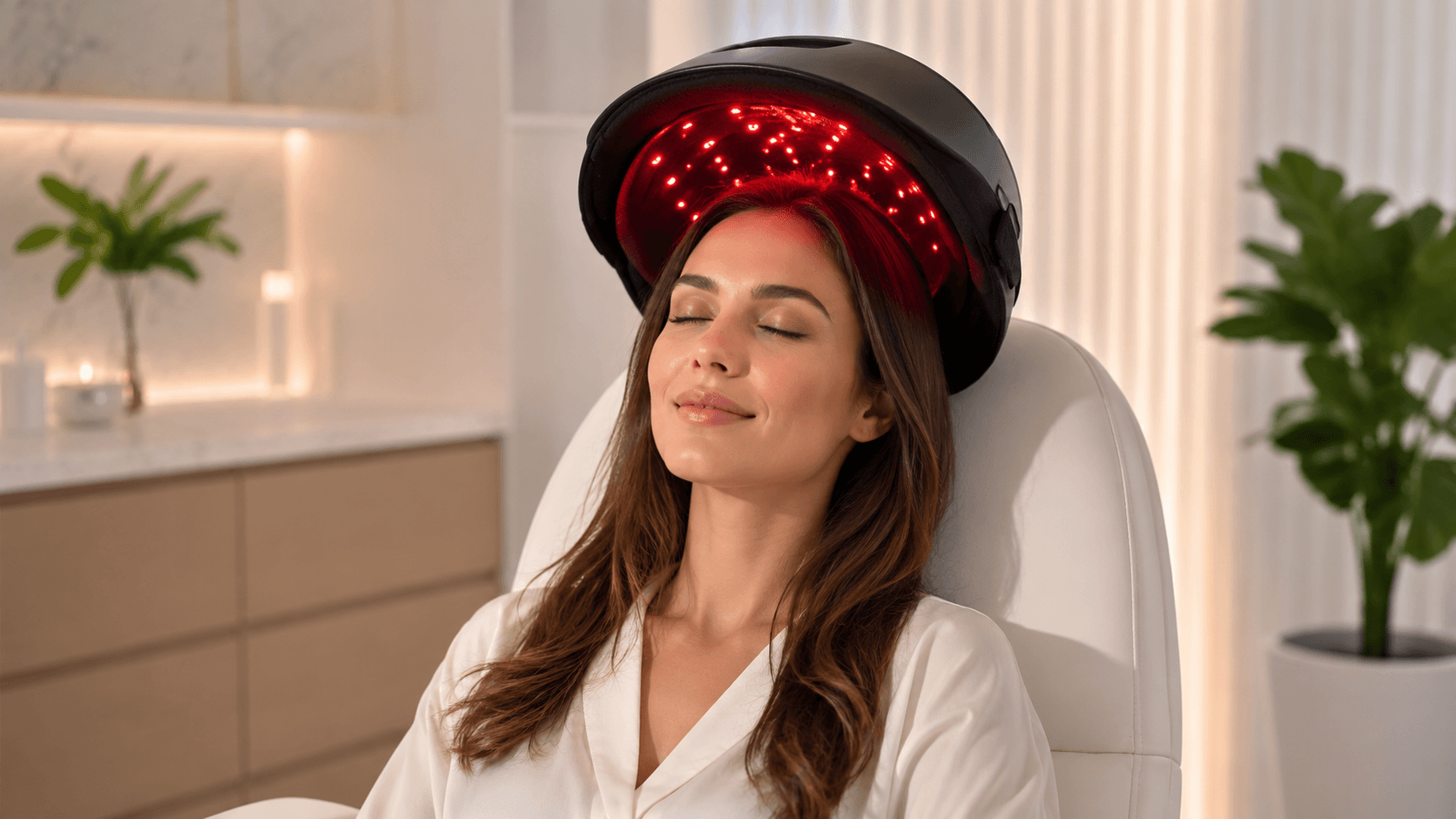
Laser caps fit on the head like regular baseball caps. They contain multiple laser diodes arranged across the inner surface. These diodes direct light toward the scalp. Caps offer full scalp coverage for many women. They work as home-based treatment systems. Women wear them for specified periods, usually several times per week. The convenience supports better adherence.
How Do Laser Helmets and Hoods Work?
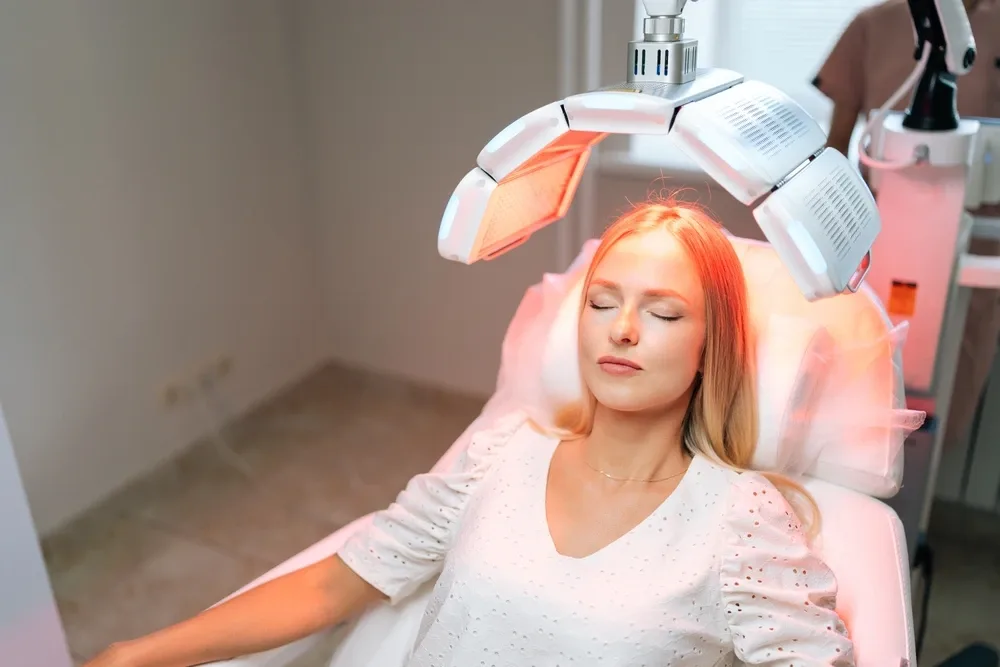
Laser helmets and hoods cover larger treatment areas than caps. Some systems operate in clinical settings. Others function as home devices. Helmets typically contain more diodes than caps. They may offer more uniform light distribution. Hood systems sometimes combine with other technologies. Device design varies significantly between manufacturers.
What Are Laser Hair Growth Combs?
Laser combs require manual movement across the scalp. Users slowly comb through their hair. The device directs light at specific areas. This targeted application suits women with localized thinning. However, manual movement creates treatment inconsistencies. Users may miss spots or apply uneven exposure. Combs demand more time and attention than wearable devices.
Are LED Devices Different From Laser Devices?
LED devices use light-emitting diodes rather than laser diodes. LEDs produce non-coherent light. Lasers produce coherent light. Both can deliver therapeutic wavelengths. Both can achieve photobiomodulatory effects when parameters are correct.
Device quality matters more than marketing terminology. Some high-quality LED devices outperform poorly designed laser devices. Women should evaluate wavelength, power output, and coverage area rather than focusing solely on whether a device uses laser or LED technology.
Device Type | Coverage | Convenience | Consistency | Best For |
Laser cap | Good | High | High | Home use, diffuse thinning |
Laser helmet | Excellent | Moderate | High | Extensive coverage |
Laser comb | Limited | Low | Variable | Targeted areas |
LED panel | Variable | Moderate | Moderate | Flexible application |
Laser caps offer the best balance of coverage and convenience for home use. Helmets provide more extensive coverage. Combs work for targeted areas but require more effort.
How Often Should Women Use Laser Hair Therapy?
How Frequently Should LLLT Be Performed?
Treatment schedules vary by device and protocol. Most home devices recommend use several times per week. Some suggest daily sessions. Others recommend three to four sessions weekly. Clinical protocols may differ from home device instructions.
Women should follow manufacturer or clinician instructions exactly. More treatment does not necessarily produce better results. Photobiomodulation follows dose-response relationships. Excessive exposure may actually reduce benefits. The biphasic dose response means low doses stimulate while high doses may inhibit.
How Long Should Each Session Last?
Session duration depends on device output and design. Some caps require twenty to thirty minutes. Others need only ten to fifteen minutes. Higher-power devices may achieve effects in shorter times. Lower-power devices need longer exposure.
No universal duration applies to every device. Women must follow the specific recommendations for their chosen device.
Does Consistency Affect Results?
Consistency critically affects outcomes. Photobiomodulation works through cumulative exposure. Each session builds on previous sessions. Cells maintain elevated metabolic states between treatments. Regular exposure sustains these beneficial changes.
Inconsistent use reduces the likelihood of measurable improvement. Missing sessions interrupts the cumulative effect. Sporadic treatment produces sporadic results. Women who commit to regular schedules see better outcomes.
Most devices require use several times per week for twenty to thirty minutes per session. Consistent, regular use produces the best results.
Is Laser Hair Therapy Safe for Women?
What Are the Common Side Effects?
LLLT produces minimal side effects. Most women tolerate treatment well. Some report mild scalp warmth during sessions. Others feel temporary tingling sensations. Rarely, scalp irritation occurs. These effects usually resolve quickly.
Device-specific issues may include discomfort from tight-fitting caps or helmets. Proper sizing eliminates this problem. LLLT is generally described as well tolerated and non-invasive. Few serious adverse effects appear in the medical literature.
Can Laser Therapy Damage Hair Follicles?
Low-level photobiomodulation differs fundamentally from high-energy ablative laser treatment. Ablative lasers destroy tissue. They cut skin and remove layers. LLLT uses energy levels thousands of times lower. This energy cannot damage follicles when used properly.
Appropriate dosing and device use ensure safety. Women should use cleared devices according to instructions. Improvised light sources or modified devices may create risks.
Are There Contraindications or Precautions?
Certain situations require caution:
Photosensitizing medications: Some drugs increase light sensitivity. Healthline specifically notes the need for caution with these medications.
Certain medical conditions: Women with specific health issues should consult doctors first.
Pregnancy: Evidence and device labeling remain limited for pregnant women.
Active scalp disorders: Inflammation or infection needs treatment before LLLT.
Unexplained or rapidly progressive hair loss: Requires medical evaluation first.
LLLT is very safe with minimal side effects. Women taking photosensitizing medications or with active scalp conditions should consult a doctor first.
Can Women Combine Laser Hair Therapy With Other Treatments?
Can LLLT Be Combined With Minoxidil?
Yes. LLLT and minoxidil work through different mechanisms. Minoxidil dilates blood vessels and extends the anagen phase. LLLT stimulates cellular metabolism through photobiomodulation. These complementary actions may produce better results than either treatment alone.
Combination therapy appeals to many women. LLLT does not replace diagnosis or established medical treatment. It adds another tool to the treatment toolbox. The ISHRS notes that photobiomodulation may support the effects of other hair-loss treatments such as minoxidil.
Can Laser Therapy Be Combined With PRP?
Platelet-rich plasma (PRP) therapy uses growth factors from the patient's own blood. PRP injections deliver concentrated healing signals to the scalp. LLLT provides cellular energy stimulation. These different biological mechanisms may complement each other.
Some clinicians offer combination protocols. PRP provides growth signals. LLLT enhances cellular energy. Together they may create a more favorable environment for hair growth. Individualized treatment planning ensures appropriate combinations.
Can Women Use Laser Therapy After a Hair Transplant?
Laser therapy may support recovery after hair transplantation. It may help transplanted follicles establish blood supply. It may also benefit existing native follicles. However, timing matters significantly.
Surgeons must direct postoperative LLLT use. Early application on surgical sites may interfere with healing. Proper timing ensures safety and potential benefit. Women should never start post-transplant LLLT without surgeon approval.
Is Laser Therapy Better as a Standalone Treatment or Combination Therapy?
The answer depends on individual circumstances. Some women with mild thinning see adequate results from LLLT alone. Others with more advanced loss need combination approaches. Treatment should match the underlying cause of hair loss.
Monotherapy simplifies routines. Combination therapy may produce faster or more pronounced results. Women should discuss options with hair restoration specialists.
Combination | Mechanism | Potential Benefit |
LLLT + Minoxidil | Cellular energy + vasodilation | Enhanced growth stimulation |
LLLT + PRP | Photobiomodulation + growth factors | Multiple pathways activated |
LLLT + Hair transplant | Energy support + surgical restoration | Improved graft survival |
Yes, LLLT combines well with minoxidil, PRP, and post-transplant care. Combination approaches often produce better results than monotherapy.
Laser Hair Therapy vs. Other Hair Loss Treatments for Women
Laser Hair Therapy vs. Minoxidil
Factor | LLLT | Minoxidil |
Mechanism | Photobiomodulation of follicle cells | Vasodilation and growth factor stimulation |
Evidence | Strong controlled trials | Extensive long-term data |
Administration | Device-based, several times weekly | Topical application, usually daily |
Side effects | Minimal (mild warmth, rare irritation) | Scalp irritation, initial shedding, unwanted facial hair |
Treatment commitment | Long-term maintenance | Continuous use required |
Maintenance | Ongoing sessions needed | Stopping leads to loss of benefits |
Laser Hair Therapy vs. PRP
Factor | LLLT | PRP |
Invasiveness | Non-invasive | Minimally invasive (injections) |
Biological mechanism | Cellular energy stimulation | Growth factor delivery |
Treatment frequency | Several times weekly at home | Monthly clinic visits |
Cost considerations | Device purchase or rental | Per-session fees |
Evidence base | Growing body of trials | Emerging evidence, fewer large trials |
Laser Hair Therapy vs. Hair Transplantation
Factor | LLLT | Hair Transplantation |
Purpose | Stimulate existing follicles | Replace lost follicles |
Follicle approach | Preserve and energize | Harvest and relocate |
Candidate selection | Best for early to moderate thinning | Best for stable, significant loss |
Recovery | None | Several days to weeks |
Expected outcomes | Thicker existing hair | New hair growth in bald areas |
Can Laser Therapy Replace Medication or Hair Transplantation?
No. LLLT has important limitations. It cannot replace medications for women who need pharmaceutical intervention. It cannot restore hair in areas with permanently lost follicles. Only transplantation achieves that goal.
LLLT works best as one component within a broader hair-restoration strategy. It stimulates existing follicles. It preserves and improves what remains. It does not create new follicles or cure the underlying genetic tendency toward hair loss.
LLLT offers a non-invasive option with minimal side effects. It complements rather than replaces medications and transplantation. Each treatment suits different stages and types of hair loss.
What Are the Advantages of Laser Hair Therapy for Women?
LLLT offers several distinct advantages for women experiencing hair loss:
Non-invasive: No surgery required. No needles. No incisions.
No systemic side effects: Light therapy does not circulate through the body like oral medications.
Generally painless: Most women feel only mild warmth or nothing at all.
Minimal downtime: Women can resume normal activities immediately after sessions.
Home-based option: Many devices allow treatment at home on personal schedules.
May improve hair density and thickness: Clinical studies support measurable improvements.
Can be combined with other treatments: LLLT integrates easily into combination protocols.
Suits women who prefer non-pharmacological approaches: Some women avoid medications due to side effects or personal preference.
These advantages align with clinical descriptions of LLLT. Patient-oriented sources consistently describe it as non-invasive, generally painless, and relatively well tolerated.
LLLT is non-invasive, painless, has no downtime, can be done at home, and combines easily with other treatments.
What Are the Limitations of Laser Hair Therapy?
Does Laser Therapy Work for Everyone?
No. Individual variability affects results. Different causes of hair loss respond differently. Different stages of follicular miniaturization produce different outcomes. Some women see excellent results. Others notice minimal change.
Genetic factors, age, hormonal status, and overall health influence response. Device quality and treatment adherence also matter. No treatment works universally for all women.
Does LLLT Permanently Cure Female Pattern Hair Loss?
No. Androgenetic alopecia remains a chronic condition. It progresses over time without ongoing management. LLLT stimulates follicles but does not eliminate the genetic tendency toward miniaturization.
The difference between stimulation and cure matters greatly. Stimulation improves function temporarily. Cure would eliminate the disease process entirely. LLLT provides the former, not the latter.
Maintenance treatment sustains benefits. Stopping therapy allows the underlying process to continue. Long-term maintenance requirements remain an important consideration for women evaluating this option.
What Happens If Laser Therapy Is Stopped?
Benefits typically diminish over time after stopping treatment. Follicles return to their baseline activity level. The progressive nature of androgenetic alopecia resumes. Hair density may gradually decrease to pre-treatment levels.
This pattern mirrors other hair-loss treatments. Minoxidil also requires continuous use. Understanding this maintenance requirement helps women make informed decisions.
Is Laser Hair Therapy Expensive?
Costs vary significantly. Home device prices range from a few hundred to several thousand dollars. Professional in-clinic treatments charge per session. Long-term maintenance adds to the total expense.
Comparing costs requires looking at the full treatment timeline. Medications like minoxidil have ongoing costs. PRP requires repeated clinic visits. Hair transplantation involves significant upfront expense. LLLT may offer cost advantages for some women, particularly those who purchase home devices.
LLLT does not work for everyone, does not cure hair loss permanently, and requires ongoing maintenance. Costs vary but represent a long-term investment.
How Should Women Choose a Laser Hair Therapy Device?
What Should You Look for in an LLLT Device?
Women should evaluate several key factors:
Appropriate wavelength: Devices should use wavelengths within the therapeutic range (typically 630–850 nm).
Evidence-based parameters: Look for devices studied in clinical trials.
Adequate scalp coverage: The device should treat the entire thinning area.
Appropriate irradiance and fluence: Power output should fall within therapeutic ranges.
Treatment schedule: The recommended schedule should be realistic for your lifestyle.
Device safety features: Look for automatic shutoffs and eye protection.
Regulatory clearance: FDA-cleared devices have met certain safety standards.
Manufacturer transparency: Companies should provide clear specifications and evidence.
Are FDA-Cleared Devices Preferable?
FDA clearance indicates that a device meets safety standards for its intended use. It does not guarantee effectiveness for every user. Clearance means the FDA reviewed the device and found it substantially equivalent to legally marketed devices.
Women should understand this distinction. Regulatory status provides confidence in safety. It does not constitute proof that the device will work equally well for every patient. Still, choosing cleared devices offers additional assurance.
Should Women Choose a Laser Cap, Helmet, or Comb?
Factor | Cap | Helmet | Comb |
Coverage | Good | Excellent | Limited |
Ease of use | Very easy | Easy | Requires effort |
Treatment consistency | High | High | Variable |
Portability | Excellent | Moderate | Good |
User adherence | High | High | Moderate |
Best suited for | General thinning | Extensive loss | Targeted spots |
Caps offer the best balance for most women. They provide good coverage with minimal effort. Helmets suit women with more extensive thinning. Combs work for targeted areas but require more discipline.
Choose an FDA-cleared device with appropriate wavelength, good coverage, and a realistic treatment schedule. Laser caps work best for most women.
How Is Laser Hair Therapy Evaluated in a Clinical Setting?
Why Is Diagnosing the Cause of Hair Loss Important?
Proper diagnosis guides treatment selection. Doctors evaluate several factors:
Medical history: Current and past health conditions
Family history: Pattern of hair loss in relatives
Menstrual and hormonal history: Relevant for women of reproductive age
Medication review: Current prescriptions and supplements
Scalp examination: Visual and tactile assessment of the scalp and hair
Without proper diagnosis, women may treat the wrong condition. LLLT helps androgenetic alopecia. It does not address thyroid disease, nutritional deficiency, or scarring alopecia. Treating symptoms without addressing causes wastes time and money.
What Tests May Be Used Before Treatment?
Doctors may use several diagnostic tools:
Trichoscopy: Magnified examination of scalp and hair shafts
Hair density measurements: Quantitative assessment of hair count
Hair shaft assessment: Evaluation of hair thickness and structure
Laboratory testing: Blood work when clinically indicated
Hormonal evaluation: Selected patients with signs of hormonal imbalance
These tests establish baseline measurements. They also rule out conditions that require different treatments.
How Can Treatment Response Be Measured?
Objective measurement ensures accurate assessment:
Standardized photographs: Consistent lighting, angles, and magnification
Hair density counts: Hairs per square centimeter
Hair shaft diameter: Caliber of individual hairs
Trichoscopic findings: Magnified scalp changes
Patient-reported outcomes: Subjective assessments of improvement
Hair shedding assessment: Daily hair fall counts
Doctors diagnose hair loss through history, examination, and tests like trichoscopy. They measure treatment response using photos, hair counts, and patient reports.
What Results Can Women Realistically Expect?
Can Laser Therapy Make Thinning Hair Look Thicker?
Yes. This represents the primary realistic expectation. LLLT can increase hair shaft caliber. It can improve hair density in treated areas. These changes create the appearance of fuller, thicker hair.
Cosmetic improvement differs from follicular regeneration. Women see better coverage and volume. They do not see brand new follicles appearing where none existed.
Can LLLT Regrow Hair in Bald Areas?
Generally no. Treatment primarily targets viable follicles. Areas with completely bald, smooth skin usually lack functional follicles. LLLT cannot create new follicles from nothing.
Clarifying this limitation matters. Marketing sometimes overstates capabilities. Women should understand that LLLT improves existing follicles. It does not perform miracles in areas of complete follicle loss.
What Factors Influence Individual Results?
Multiple factors determine outcomes:
Factor | Influence on Results |
Diagnosis | LLLT works best for androgenetic alopecia |
Disease severity | Early intervention produces better outcomes |
Follicular viability | Active follicles respond; destroyed follicles do not |
Age | Younger patients often respond better |
Hormonal status | Stable hormones support consistent results |
Device characteristics | Wavelength, power, and coverage affect outcomes |
Treatment adherence | Consistent use produces better results |
Combination therapies | Combined approaches may enhance results |
Duration of treatment | Longer use allows more cumulative benefit |
Women can expect thicker, denser existing hair. LLLT does not regrow hair in completely bald areas. Results depend on diagnosis, follicle health, age, adherence, and device quality.
Frequently Asked Questions About Laser Hair Therapy for Women
Does Laser Hair Therapy Really Work for Women?
Yes. Controlled clinical studies demonstrate that LLLT increases hair density and thickness in women with androgenetic alopecia. Results vary between individuals.
Is Red Light Therapy the Same as Low-Level Laser Therapy?
Essentially yes. Red light therapy, low-level laser therapy, and photobiomodulation describe the same therapeutic approach using low-energy light to stimulate biological processes.
Is Laser Hair Therapy Safe for Women?
Yes. LLLT is well tolerated with minimal side effects. Mild scalp warmth or tingling may occur. Women should consult doctors if they take photosensitizing medications.
How Long Does Laser Hair Therapy Take to Show Results?
Most women notice early changes after three to four months. Meaningful visible improvement typically appears after four to six months of consistent use.
How Often Should Women Use Laser Hair Therapy?
Most devices recommend use several times per week. Typical schedules range from three to seven sessions weekly. Each session lasts ten to thirty minutes depending on the device.
Can Laser Therapy Stop Female Pattern Hair Loss?
No. LLLT does not stop the underlying disease process. It stimulates existing follicles. Continuous maintenance treatment sustains benefits. Stopping allows progression to resume.
Can Women Combine Laser Therapy With Minoxidil?
Yes. This combination is common and supported by clinical reasoning. The two treatments work through different mechanisms and may produce complementary benefits.
Can Laser Hair Therapy Help Postpartum Hair Loss?
Postpartum shedding usually resolves naturally within six to twelve months. LLLT may help during the recovery period. However, women should consult doctors to confirm the diagnosis before starting treatment.
Can Laser Therapy Treat Hair Loss Caused by Menopause?
LLLT may help menopausal women with androgenetic alopecia. However, menopausal hair loss often has multiple causes. Hormonal evaluation ensures appropriate treatment selection.
Can Laser Therapy Regrow Completely Lost Hair?
No. LLLT cannot restore permanently destroyed follicles. It improves the function of existing, viable follicles. Completely bald areas require other interventions.
Are Laser Hair Growth Caps Effective?
Yes, when used correctly by appropriate candidates. Clinical studies support their effectiveness for women with androgenetic alopecia. Success depends on consistent use and realistic expectations.
Is Laser Hair Therapy Better Than Minoxidil?
Neither is universally better. They work differently. Some women prefer LLLT because it avoids topical application and systemic side effects. Others use both. The best choice depends on individual circumstances.
What Happens If I Stop Laser Hair Therapy?
Benefits typically diminish over several months. Hair density may return to baseline levels. The progressive nature of androgenetic alopecia resumes without ongoing stimulation.
Is Laser Hair Therapy a Good Option for Women?
Laser Hair Therapy for Women offers a non-invasive approach based on photobiomodulation. It uses specific wavelengths of low-level light to stimulate cellular energy production in hair follicles. This process may extend the anagen phase, improve scalp microcirculation, and enhance the overall function of miniaturized follicles.
Clinical studies support potential improvements in hair growth. Controlled trials have demonstrated increased hair density and thickness in appropriate patients. Avci and colleagues established that LLLT appears safe and effective based on available evidence, while acknowledging that researchers continue refining optimal parameters (Avci et al.). Later studies by Lanzafame and colleagues, Kim and colleagues, and Egger and colleagues confirmed and extended these findings through randomized controlled trials and systematic reviews (Lanzafame et al.; Kim et al.; Egger et al.).
However, outcomes depend on multiple factors. Proper diagnosis comes first. LLLT works best for women with androgenetic alopecia who still have viable follicles. Follicular viability, disease severity, device characteristics, and treatment adherence all influence results. Women with scarring alopecia, advanced baldness, or untreated systemic conditions should not expect benefits from LLLT alone.
Laser therapy should not be presented as a universal cure for female hair loss. It manages symptoms. It improves appearance. It does not eliminate the genetic tendency toward follicular miniaturization. Maintenance treatment remains necessary to sustain benefits.
Women should seek professional assessment when hair loss is sudden, progressive, severe, or unexplained. A dermatologist or hair restoration specialist can diagnose the cause. They can recommend appropriate treatments. They can determine whether LLLT fits into an individualized management plan.
For the right candidate, LLLT represents a valuable tool. It combines safety, convenience, and scientific support. It integrates well with other treatments. It offers hope to women who want to address thinning hair without surgery or systemic medications. The key lies in realistic expectations, proper diagnosis, consistent use, and ongoing maintenance.
References
Avci, Pinar, et al. "Low-Level Laser (Light) Therapy (LLLT) for Treatment of Hair Loss." Lasers in Surgery and Medicine, vol. 46, no. 2, 2014, pp. 144–151.
Egger, Annette, et al. "Examining the Safety and Efficacy of Low-Level Laser Therapy for Male and Female Pattern Hair Loss: A Review of the Literature." Journal of Cosmetic and Laser Therapy, vol. 22, no. 3, 2020, pp. 141–146.
Gupta, Aditya K., et al. "Efficacy of Non-Surgical Treatments for Androgenetic Alopecia: A Systematic Review and Network Meta-Analysis." Journal of the European Academy of Dermatology and Venereology, vol. 35, no. 6, 2021, pp. 1259–1271.
Kim, Hyung-Sik, et al. "Low-Level Light Therapy for Androgenetic Alopecia: A 24-Week, Randomized, Double-Blind, Sham Device-Controlled Trial." Dermatologic Surgery, vol. 38, no. 1, 2011, pp. 148–155.
Lanzafame, Raymond J., et al. "The Growth of Human Scalp Hair Mediated by Visible Red Light Laser and LED Sources in Males." Lasers in Surgery and Medicine, vol. 45, no. 8, 2013, pp. 487–495.
Lanzafame, Raymond J., et al. "The Growth of Human Scalp Hair in Females Using Visible Red Light Laser and LED Sources." Lasers in Surgery and Medicine, vol. 46, no. 8, 2014, pp. 601–607.
Leavitt, Matt, et al. "HairMax LaserComb Laser Phototherapy Device in the Treatment of Male Androgenetic Alopecia: A Randomized, Double-Blind, Sham Device-Controlled, Multicentre Trial." Clinical Drug Investigation, vol. 29, no. 5, 2009, pp. 283–292.
Munck, Andreas, et al. "Towards a Multimodal Approach of the Treatment of Androgenetic Alopecia in Men and Women." Journal of Cosmetic Dermatology, vol. 13, no. 4, 2014, pp. 249–257.
Zarei, Mina, et al. "Low Level Laser Therapy for Hair Loss." Laser Therapy, vol. 25, no. 3, 2016, pp. 173–180.