
How Long Does PRP Last?
Most patients notice improvements within three to six months, and maintenance treatments every three to six months help sustain results.
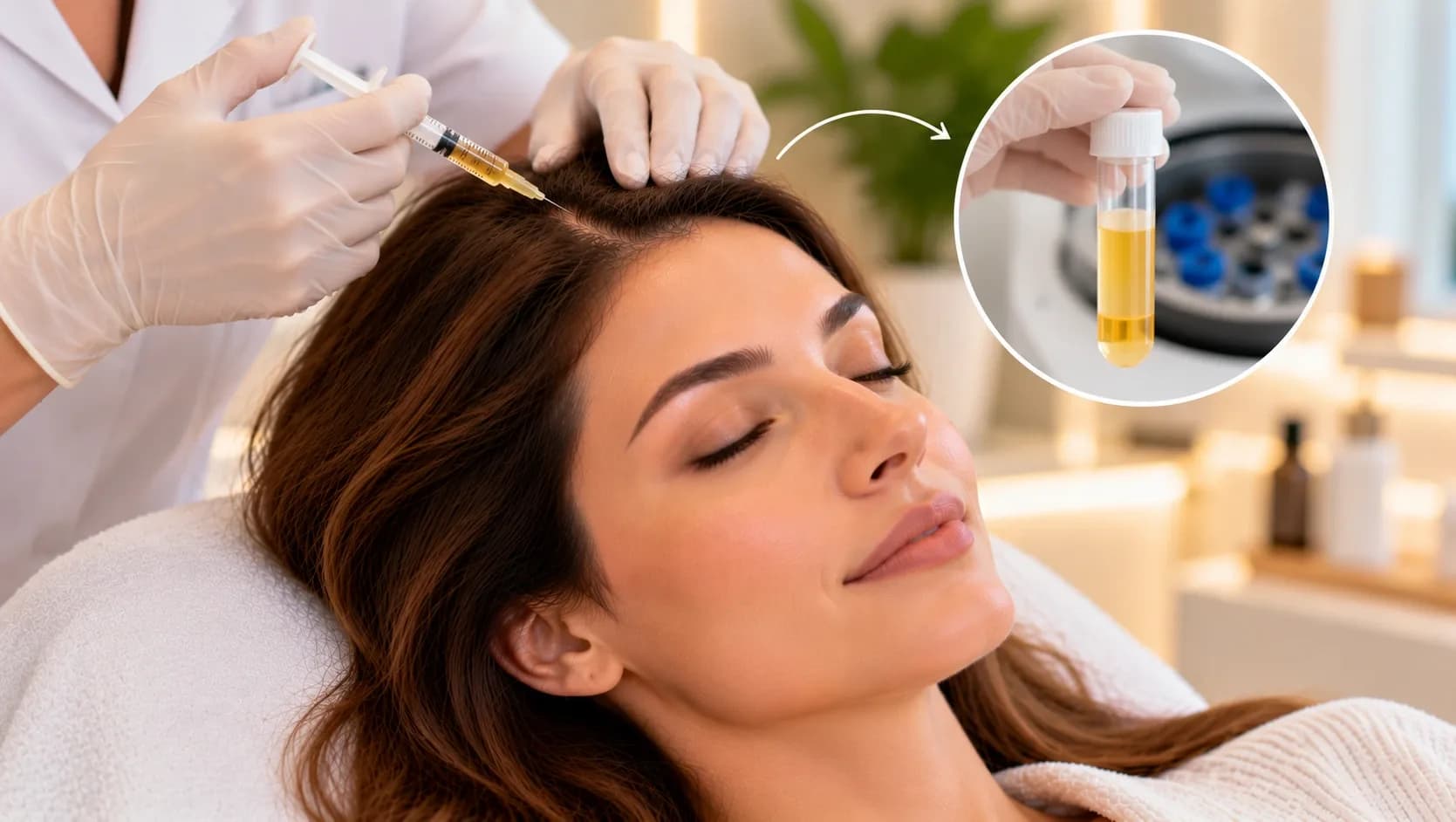
PRP hair treatment results typically last several months after an initial series of sessions. Most patients notice improvements within three to six months, and maintenance treatments every three to six months help sustain results. PRP does not permanently regrow hair, and outcomes vary based on hair loss type, severity, and treatment protocol.
Platelet-rich plasma (PRP) therapy has become a widely studied option for people facing hair loss. The therapy uses platelets taken from the patient's own blood to support hair follicle activity. Many patients ask how long these results last and whether the treatment offers a permanent solution.
The honest answer is that PRP results vary. The underlying cause of hair loss, the stage of follicle decline, and the treatment protocol all shape how long improvements persist. PRP may support hair thickness and density, but it cannot guarantee permanent regrowth. This article explains what science says about PRP duration, timelines, and maintenance.
What Is PRP Therapy and How Does It Support Hair Growth?
PRP is a concentrated preparation of the patient's own platelets. Clinicians inject it into the scalp to deliver growth factors that support follicle activity and tissue repair.
PRP stands for platelet-rich plasma. Clinicians draw a small amount of the patient's blood and place it in a centrifuge. The machine spins the blood and separates the platelet-rich layer from other components. The resulting plasma contains a concentration of platelets that is several times higher than normal blood (Marx, 2001).
Platelets carry growth factors such as platelet-derived growth factor (PDGF), transforming growth factor beta (TGF-β), vascular endothelial growth factor (VEGF), and epidermal growth factor (EGF). These proteins play active roles in tissue repair, cell signaling, and blood vessel formation (Foster et al., 2009). When clinicians inject PRP into the scalp, these growth factors may stimulate dermal papilla cells, which regulate hair follicle function.
PRP differs from medications like minoxidil or finasteride. These drugs directly target androgen-related pathways, while PRP works through biological signaling that supports existing follicles. Research on PRP for hair loss shows promising results, but protocols and outcomes vary across studies (Gentile et al., 2020).
How Long Does PRP Last for Hair Loss?
Improvements from PRP may persist for several months after an initial course of treatment. Without maintenance sessions, results gradually diminish as the biological effects of the injected growth factors fade.
It is important to separate two concepts: the visible improvement in hair density and the biological activity of the injected platelets. Growth factors act in the days and weeks after injection, but the visible results they trigger, such as thicker hair shafts and reduced shedding, can persist for months afterward (Khatu et al., 2014).
Results diminish over time because the underlying cause of hair loss often continues. Androgenetic alopecia, the most common form, progresses unless managed. Individual outcomes depend on hair loss severity, diagnosis, treatment response, and ongoing progression. No single duration applies to every patient.
When Do PRP Hair Treatment Results Become Visible?
Visible improvements usually appear between three and six months after treatment begins. Early changes in shedding may occur sooner, but density improvements follow the natural hair growth cycle.
Hair grows in cycles. The anagen phase is the active growth period, while the telogen phase is a resting stage before shedding. Because each follicle operates on its own cycle, visible density changes require months to appear (Alonso and Fuchs, 2006).
Timeframe | Expected Changes |
First few weeks | Minimal visible change; follicles respond at a cellular level |
3 to 6 months | Reduced shedding and improved hair thickness may become noticeable |
6 to 12 months | Longer-term response becomes clear; clinicians assess overall results |
Not every patient responds to PRP. Individual timelines vary based on follicle health and diagnosis.
How Often Should You Get PRP Injections to Maintain Hair Growth?
Clinicians commonly recommend an initial series of three sessions spaced four weeks apart, followed by maintenance sessions every three to six months.
A single session rarely produces meaningful results. Hair follicles respond to repeated stimulation, so clinicians design protocols that build on each session. A typical initial course involves three treatments at monthly intervals (Fitzpatrick et al., 2018).
Maintenance schedules depend on the preparation method, clinical protocol, and severity of hair loss. Some patients maintain results with sessions every six months, while others benefit from shorter intervals. A qualified clinician should individualize the schedule rather than apply a fixed requirement to every patient.
What Factors Determine How Long PRP Results Last?

Six main factors shape PRP duration: the cause of hair loss, the stage of follicle decline, individual biology, the treatment protocol, concurrent treatments, and ongoing hair loss progression.
Underlying cause of hair loss. Androgenetic alopecia responds differently from temporary shedding conditions like telogen effluvium. An accurate diagnosis determines whether PRP suits the patient at all (Dhurat and Sukesh, 2014).
Stage of hair loss. Follicles that remain active respond better than follicles that have undergone extensive miniaturization or damage. Early intervention generally produces stronger results.
Individual biological response. Platelet concentration varies between patients, and growth factor composition differs between preparations. Follicular sensitivity to these signals also varies (Gentile et al., 2020).
Treatment protocol. Session frequency, injection technique, and preparation method all influence outcomes. Consistent treatment schedules tend to produce better results than sporadic sessions.
Concurrent treatments. Clinician-recommended medications such as minoxidil may complement PRP and support longer-lasting improvements.
Ongoing progression. Genetic and hormonal factors continue to affect untreated follicles. PRP does not stop this process.
Does PRP Permanently Regrow Hair?
No. PRP does not guarantee permanent hair regrowth or a permanent cure for hair loss.
PRP stimulates existing follicles rather than creating new ones. It can improve hair density and thickness in some people with pattern hair loss, but it cannot revive follicles that no longer function. Ongoing androgenetic alopecia continues to affect untreated follicles even while treated areas show improvement (Kang et al., 2021).
Patients should hold realistic expectations. PRP works best as part of a long-term hair loss management plan, not as a one-time fix.
Can Hair Loss Return After PRP Treatment?
Yes. Hair thinning may resume as the effects of treatment diminish or as the underlying condition progresses.
Renewed shedding does not always mean PRP has failed. It may reflect the natural progression of androgenetic alopecia in untreated follicles. Clinicians assess whether a patient needs additional sessions, a maintenance adjustment, or a different approach entirely.
Sudden, patchy hair loss or shedding that comes with scalp symptoms deserves prompt medical evaluation. These signs may indicate a separate condition that PRP cannot treat.
Is PRP More Effective for Some Types of Hair Loss?
Yes. Research supports PRP most strongly for androgenetic alopecia. Evidence remains limited for other hair loss conditions.
Androgenetic alopecia, also called male- and female-pattern hair loss, is the most studied indication. Clinical trials show improvements in hair density and thickness when follicles remain viable (Gentile et al., 2017). Evidence for alopecia areata, telogen effluvium, and scarring alopecia is less conclusive, and scarring conditions often involve irreversible follicle damage.
A proper diagnosis must come before treatment selection. Promising findings in clinical studies do not equal definitive proof of long-term effectiveness, and patients should discuss evidence limits with their clinician.
How Can You Help Maintain PRP Hair Growth Results?
Follow your treatment schedule, use evidence-based complementary treatments when prescribed, and address health factors that contribute to hair loss.
Patients who follow their clinician's treatment and follow-up schedule achieve more consistent results. Topical minoxidil may complement PRP for androgenetic alopecia when medically appropriate (Suchonwanit et al., 2019). Nutritional deficiencies, thyroid disorders, and other health conditions should be addressed because they directly affect hair growth.
Gentle hair care practices matter. Avoid tight hairstyles, excessive heat, and harsh chemical treatments that stress the follicle. Standardized photographs taken under consistent lighting help track progress over time. Healthy lifestyle habits support general hair health, but they cannot guarantee longer-lasting PRP results on their own.
What Are the Limitations and Risks of PRP Hair Treatment?
PRP is generally safe, but outcomes vary because preparation and injection protocols lack standardization. Temporary side effects include scalp tenderness, redness, swelling, and bruising.
PRP preparation methods differ across providers, and no universal protocol exists. This variability affects both results and how long they last (Dhurat and Sukesh, 2014). Research continues into optimal concentrations, session intervals, and long-term outcomes.
PRP may be unsuitable for patients with certain blood disorders, platelet abnormalities, or active infections. Patients should disclose all medications and medical history before treatment. Clinicians evaluate each case individually.
How Can You Tell Whether Your PRP Treatment Is Still Working?
Compare standardized photographs over time and track changes in shedding, thickness, and scalp coverage. A dermatologist can confirm progress with clinical measurement tools.
Take baseline and follow-up photographs under the same lighting and angles. Monitor hair shedding, thickness, and visible scalp areas month by month. Dermatologists may use trichoscopy or phototrichogram analysis to measure hair density objectively (Hoffmann et al., 2018).
Temporary shedding fluctuations occur naturally and do not always signal treatment failure. When progress stalls, a clinical reassessment is more useful than automatically booking another injection.
Is PRP Worth the Cost for Long-Term Hair Loss Management?
PRP requires ongoing investment because results depend on initial sessions plus maintenance treatments. Patients should weigh long-term costs against realistic benefits and compare it with other medically appropriate options.
The total cost reflects the number of initial sessions and follow-up treatments, not a single injection. PRP works best as one component of a broader management plan that may include medications and lifestyle adjustments. No treatment guarantees a specific financial return or hair restoration outcome. An honest cost-benefit discussion with a qualified clinician helps patients decide whether PRP fits their goals.
Frequently Asked Questions About PRP Duration
How many months do PRP hair results usually last?
Results typically last several months, with substantial variation between patients. Maintenance treatments may help sustain improvements.
Can one PRP session provide lasting hair growth?
No. Clinicians commonly recommend multiple initial sessions because a single injection rarely delivers sustained improvement.
What happens if you stop PRP treatments?
Benefits may diminish over time and underlying hair loss may continue. Hair does not fall out immediately after stopping, but gradual thinning may resume.
Is PRP maintenance necessary every six months?
Some protocols recommend maintenance every three to six months, but the right interval depends on individual response and clinical assessment.
Does PRP last longer when combined with minoxidil?
Combination treatment may improve outcomes for some patients with androgenetic alopecia, but evidence does not confirm that minoxidil universally extends PRP duration (Suchonwanit et al., 2019).
How long should you wait before deciding PRP has not worked?
Wait at least six months. PRP depends on the hair growth cycle, so immediate judgment is inappropriate. Evaluate progress with your clinician over several months.
The Bottom Line
PRP offers a biologically grounded option for supporting hair density in appropriate candidates. Results typically last several months and respond well to maintenance schedules, but the treatment does not permanently regrow hair. The cause of hair loss, follicle health, and treatment consistency all shape how long benefits persist. A qualified clinician can determine whether PRP fits your diagnosis and build a realistic long-term plan.
References
Alonso, Laurence, and Elaine Fuchs. "The Hair Cycle." Journal of Cell Science, vol. 119, 2006, pp. 391-393.
Dhurat, Rachita, and M. Sukesh. "Principles and Methods of Preparation of Platelet-Rich Plasma: A Review and Author's Perspective." Journal of Cutaneous and Aesthetic Surgery, vol. 7, no. 4, 2014, pp. 189-197.
Fitzpatrick, Richard E., et al. "Platelet-Rich Plasma for Hair Regrowth: A Review of the Literature." Journal of Cutaneous and Aesthetic Surgery, vol. 11, no. 4, 2018, pp. 212-219.
Foster, Thomas E., et al. "Platelet-Rich Plasma: From Basic Science to Clinical Applications." The American Journal of Sports Medicine, vol. 37, no. 11, 2009, pp. 2259-2272.
Gentile, Pietro, et al. "Platelet-Rich Plasma for Hair Regrowth in Androgenetic Alopecia: A Randomized Controlled Trial." Plastic and Reconstructive Surgery, vol. 139, no. 4, 2017, pp. 853e-863e.
Gentile, Pietro, et al. "The Effect of Platelet-Rich Plasma in Hair Regrowth: A Randomized Placebo-Controlled Trial." Stem Cells Translational Medicine, vol. 9, no. 1, 2020, pp. 93-105.
Hoffmann, Rolf, et al. "Trichoscopy and Trichogram Analysis." Journal of the German Society of Dermatology, vol. 16, no. 8, 2018, pp. 999-1010.
Kang, Jun Gyu, et al. "The Effectiveness of Platelet-Rich Plasma for Androgenetic Alopecia: A Systematic Review and Meta-Analysis." Dermatologic Surgery, vol. 47, no. 5, 2021, pp. 675-682.
Khatu, Swapna S., et al. "Platelet-Rich Plasma in Androgenic Alopecia: Myth or an Effective Tool." Journal of Cutaneous and Aesthetic Surgery, vol. 7, no. 2, 2014, pp. 107-110.
Marx, Robert E. "Platelet-Rich Plasma (PRP): What Is PRP and What Is Not PRP?" Implant Dentistry, vol. 10, no. 4, 2001, pp. 225-228.
Suchonwanit, Poonkiat, et al. "Minoxidil and Its Use in Hair Disorders: A Review." Drug Design, Development and Therapy, vol. 13, 2019, pp. 4339-4350.