
Hair Mesotherapy vs PRF: Which Hair Loss Treatment Is More Effective?
Hair mesotherapy delivers externally prepared nutrients and medications into the scalp, while platelet-rich fibrin (PRF) uses the patient's own blood components to support tissue repair.
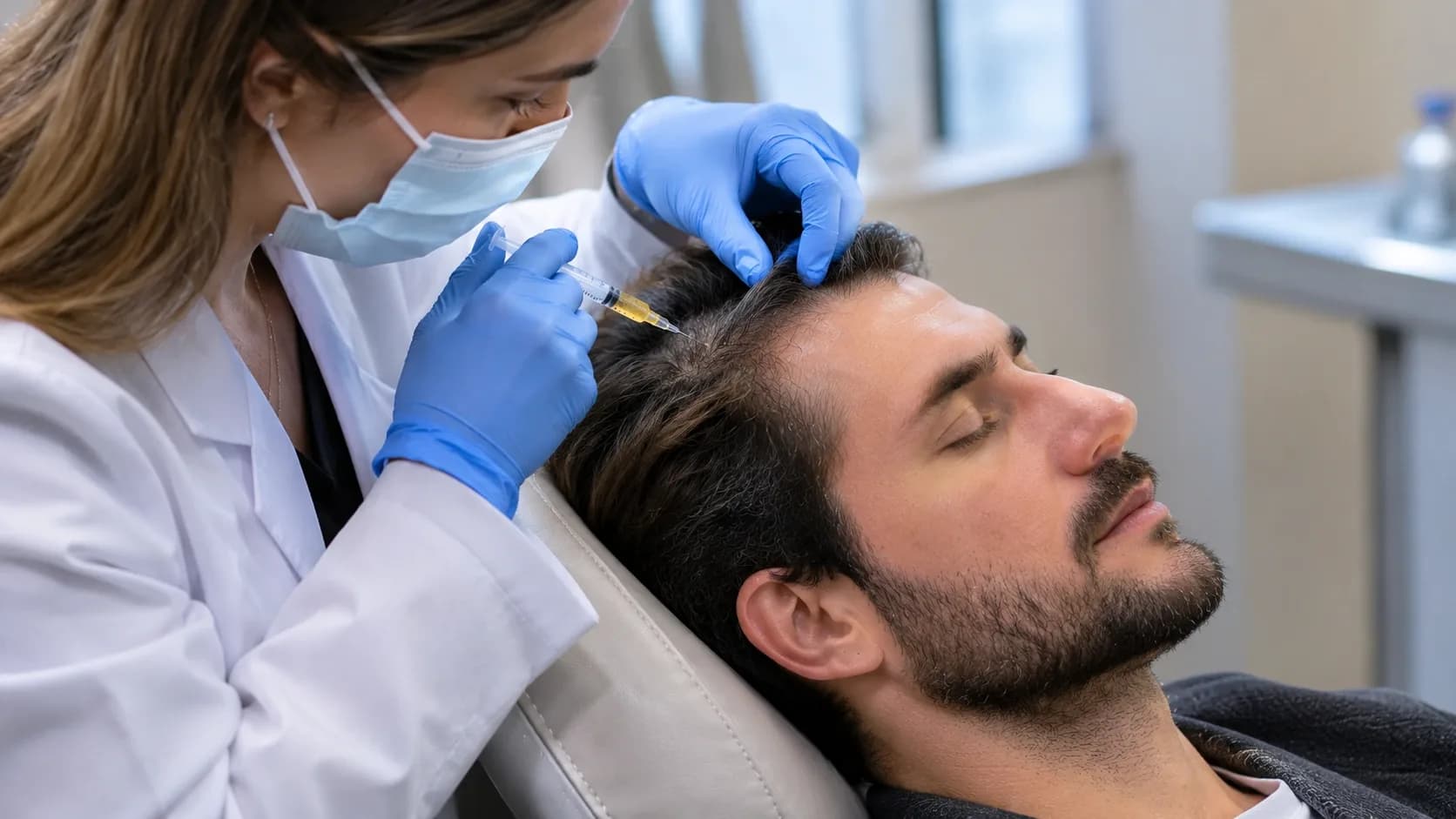
Neither treatment is universally more effective. Hair mesotherapy delivers externally prepared nutrients and medications into the scalp, while platelet-rich fibrin (PRF) uses the patient's own blood components to support tissue repair. The better choice depends on the diagnosis, the condition of the hair follicles, and the treatment goal.
Hair loss affects both men and women across all age groups. Many patients look for options that do not require surgery. Injectable treatments answer this demand. Two of the most discussed options are hair mesotherapy and PRF hair treatment. Both involve scalp injections. Both aim to reduce shedding and support hair density. Yet they work through different biological mechanisms.
Patients consider injectable treatments when they notice thinning hair, excessive shedding, or reduced hair density. Topical products often fail to reach the follicle in sufficient concentration. Oral treatments may cause systemic side effects. Injections place active substances directly where the follicle lives. This targeted delivery explains their growing popularity.
The fundamental difference between the two treatments lies in their source. Mesotherapy uses externally prepared formulations. A physician selects vitamins, minerals, amino acids, or medications and injects them into the scalp. PRF, in contrast, comes from the patient's own blood. A centrifuge concentrates platelets and fibrin, and the physician injects this autologous material back into the scalp.
Several factors determine which treatment fits a patient. These include the hair loss diagnosis, the level of remaining follicle activity, the treatment goal, and the strength of the clinical evidence. The following sections examine each treatment in detail and then compare them directly.
What Is Hair Mesotherapy and How Does It Work?
Hair mesotherapy is a non-surgical treatment that injects small amounts of vitamins, minerals, amino acids, and other compounds into the middle layer of the scalp skin. The goal is to deliver nutrients directly to the hair follicles.
Physicians developed mesotherapy in France in the 1950s. The technique originally targeted pain and vascular conditions. Practitioners later adapted it for cosmetic uses, including hair restoration. Today, hair mesotherapy serves as a supportive, non-surgical option for patients with thinning hair.
The technique uses intradermal injections. The physician places tiny drops of the formulation into the dermis, the skin layer that houses the hair follicles. This approach bypasses the skin barrier. Topical products often stop at the outer layer of the skin, but injections reach the target tissue directly.
Researchers believe mesotherapy formulations may support scalp health in two ways. First, the ingredients may supply nutrients that follicles need for normal function. Second, the micro-injuries from the needles may trigger a local healing response. Some researchers suggest this response increases blood flow around the follicle (Ghalaut 2017).
This concept is called targeted nutrient delivery. The idea is simple. A follicle that lacks certain micronutrients may produce weaker hair. Delivering those nutrients directly to the follicle environment may correct the local deficiency. However, the scientific support for this concept varies by ingredient, and not all claims have strong evidence behind them.
Which Ingredients Are Commonly Used in Hair Mesotherapy?
Common ingredients include B-complex vitamins, biotin, zinc, amino acids, peptides, hyaluronic acid, and, in physician-directed protocols, certain medications. No single standardized formulation exists.
Formulations vary widely between clinics and practitioners. Most mixtures combine several ingredient groups:
Ingredient Group | Examples | Proposed Role |
Vitamins | B-complex vitamins, biotin | Support cellular metabolism in the follicle |
Minerals | Zinc, copper | Support enzyme function and keratin production |
Amino acids and peptides | Cysteine, copper peptides | Provide building blocks for hair protein |
Supportive compounds | Hyaluronic acid | Support scalp hydration and tissue environment |
Medications | Minoxidil, dutasteride (off-label) | Target hormonal or vascular pathways in physician-directed protocols |
Biotin and B-complex vitamins appear in most formulations. These nutrients play a role in cell division, and follicle cells divide rapidly. Zinc supports the enzymes that build keratin, the main protein in hair. Amino acids such as cysteine supply sulfur, which gives hair its strength.
Some physicians add medications to the mixture. These protocols remain off-label in most countries. Patients should ask exactly which ingredients a formulation contains before starting treatment.
How Are Hair Mesotherapy Injections Administered?
A physician cleans the scalp, marks the thinning areas, and places multiple superficial injections across the treatment zone, often with a specialized mesotherapy device. A session usually takes 20 to 40 minutes.
The process starts with scalp preparation. The practitioner cleans the skin and identifies the treatment area. Many clinics use trichoscopy, a magnified scalp examination, to map the zones where follicles remain active but weakened.
The physician then performs superficial intradermal injections. Some use manual syringes with fine needles. Others use mesotherapy guns, devices that control injection depth and dose automatically. These devices improve consistency across the treatment area.
The injections spread across the thinning zones in a grid pattern. The physician places small deposits at regular intervals. This distribution aims to cover the active follicle population evenly.
Injection depth and formulation depend on the protocol. Most protocols target a depth of 1 to 4 millimeters. Deeper placement risks discomfort and bruising without clear added benefit. The choice of formulation depends on the diagnosis, the patient's history, and the physician's judgment.
What Is PRF Hair Treatment and How Does It Stimulate Hair Growth?
PRF, or platelet-rich fibrin, is a preparation made from the patient's own blood. It concentrates platelets, fibrin, and growth factors. Physicians inject it into the scalp to support the tissue environment around hair follicles.
PRF belongs to a family of autologous blood preparations. The word autologous means the material comes from the patient's own body. This origin removes the risk of allergic reaction to foreign substances. It also means the preparation contains the patient's own biological signaling molecules.
The preparation concentrates three components. Platelets carry growth factors in small storage granules. Fibrin forms a soft three-dimensional matrix. White blood cells add immune and signaling functions. Together, these components create a biologically active material.
Researchers propose that PRF supports the scalp's regenerative environment. The fibrin matrix holds the platelets in place. The platelets then release growth factors slowly over several days. This slow release distinguishes PRF from a simple injection of isolated growth factors (Dohan Ehrenfest 2009).
Patients may hear about injectable PRF, often called i-PRF. This form stays liquid long enough for injection. Other PRF preparations form clots or membranes that surgeons place in wounds. For hair treatment, clinics use the injectable form.
How Is PRF Prepared From the Patient's Blood?
A practitioner draws a small blood sample, spins it in a centrifuge at a specific speed, and collects the fibrin-rich layer. The whole process takes about 15 to 30 minutes and must happen immediately before injection.
Preparation starts with blood collection. The practitioner draws blood from the patient's arm into a specialized tube. Unlike PRP tubes, PRF tubes contain no anticoagulant. The absence of anticoagulant allows natural clotting and fibrin formation.
The tube then goes into a centrifuge. The machine spins the blood at low speed. This spin separates the blood into layers. Red blood cells sink to the bottom. The upper layer contains platelets, white blood cells, and fibrin.
Preparation protocols influence the final composition. Spin speed and spin time change the platelet concentration and the number of trapped cells. Researchers continue to debate which protocol produces the most effective preparation (Miron 2017).
Timing matters. Without anticoagulant, the preparation begins to clot within minutes. The practitioner must inject the material quickly after centrifugation. Delays can turn an injectable liquid into a solid clot that needles cannot deliver.
Which Growth Factors Are Found in PRF?
PRF contains platelet-derived growth factor (PDGF), transforming growth factor-beta (TGF-β), vascular endothelial growth factor (VEGF), epidermal growth factor (EGF), and insulin-like growth factor (IGF). These molecules regulate cell growth, blood vessel formation, and tissue repair.
Each growth factor plays a distinct role in tissue biology:
Growth Factor | Main Function | Relevance to Hair |
PDGF | Stimulates cell division and tissue repair | May support follicle cell activity |
TGF-β | Regulates cell growth and matrix production | Influences the follicle growth cycle |
VEGF | Promotes blood vessel formation | May improve blood supply around follicles |
EGF | Stimulates skin and epithelial cells | Supports scalp tissue health |
IGF | Supports cell survival and growth | May prolong the hair growth phase |
The fibrin matrix releases these growth factors gradually. Studies show this release continues for more than a week after application (Dohan Ehrenfest 2009). A slow release matches the natural pace of tissue repair better than a single burst.
These growth factors act as cellular signals. They bind to receptors on follicle cells and surrounding tissue. This binding triggers internal processes related to repair, division, and blood vessel growth. Researchers believe this signaling explains most of PRF's proposed effects on hair.
What Makes PRF Different From PRP?
PRP, platelet-rich plasma, uses anticoagulants and fast centrifugation to produce a liquid platelet concentrate. PRF uses no anticoagulant and a slower spin, which creates a fibrin matrix that releases growth factors more slowly.
The two preparations differ in three main ways:
Feature | PRP | PRF |
Anticoagulant | Yes | No |
Centrifugation | High speed | Low speed |
Fibrin matrix | No | Yes |
Growth factor release | Rapid, hours | Gradual, over a week |
White blood cells | Few | More |
PRP preparation separates platelets from other blood cells quickly. The result is a plasma fluid rich in platelets. Clinics have used PRP for hair loss for over a decade, and it carries a larger body of research than PRF.
PRF forms a fibrin scaffold. This scaffold traps platelets and white blood cells. It then releases growth factors slowly. Some researchers argue this slow release offers a biological advantage (Miron 2017).
Patients should understand one key point. Neither PRF nor PRP has a universally standardized preparation method. Different clinics produce different compositions under the same name. This variation complicates research comparisons and treatment predictions.
What Are the Main Differences Between Hair Mesotherapy and PRF?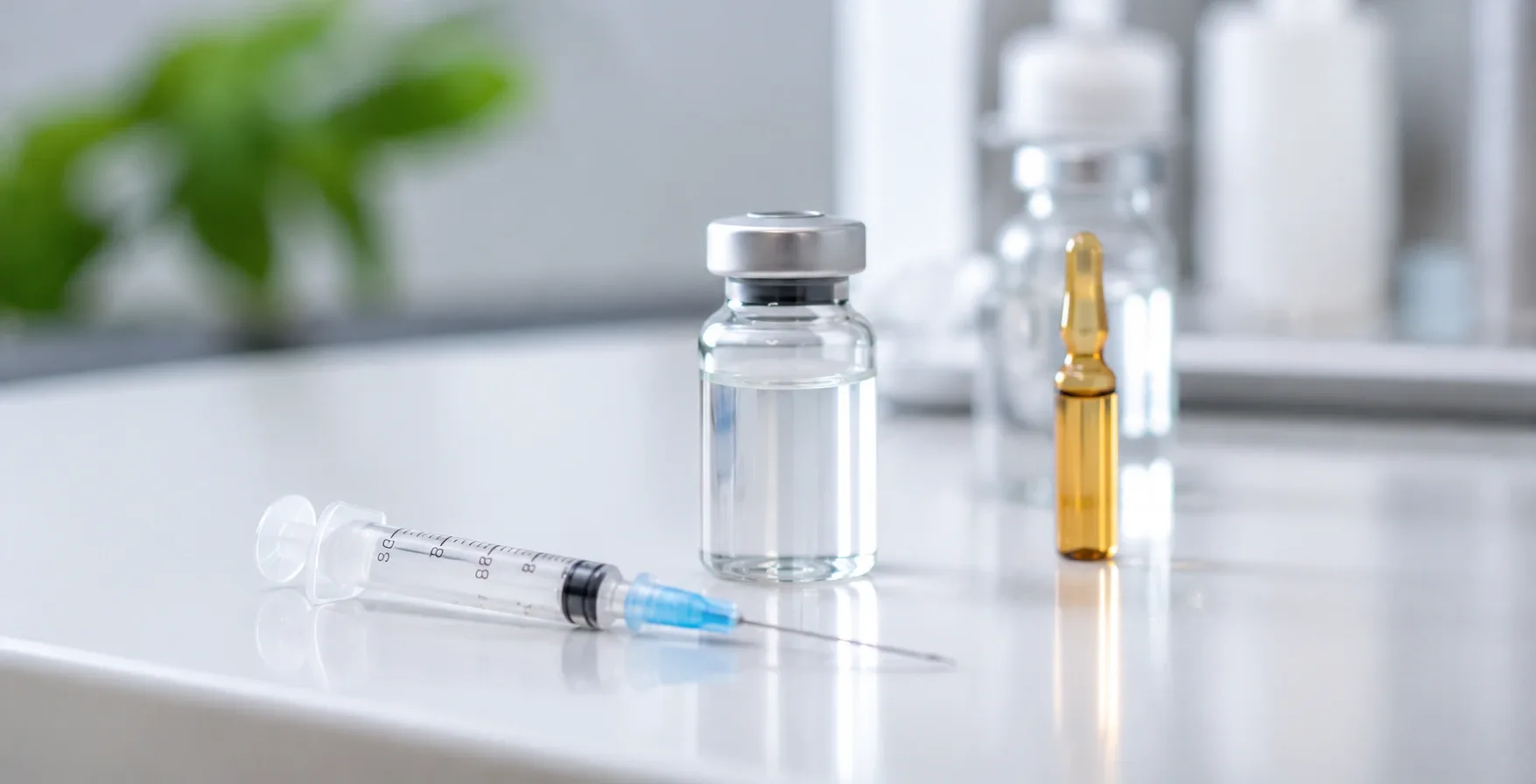
Mesotherapy injects externally prepared ingredients, while PRF injects the patient's own concentrated blood components. Mesotherapy aims at nutritional and pharmacological support. PRF aims at biological signaling and tissue repair.
The two treatments differ at their foundation. Mesotherapy brings outside substances into the scalp. PRF recycles the patient's own biology. This difference shapes everything else: preparation, mechanism, cost, and evidence.
The table below summarizes the main differences:
Aspect | Hair Mesotherapy | PRF |
Source of active material | External formulations | Patient's own blood |
Preparation | Pre-mixed or custom mixtures | Blood draw and centrifugation |
Main mechanism | Nutrient and drug delivery | Growth factor signaling |
Injection type | Superficial intradermal | Intradermal or subdermal |
Standardization | No standard formula | No standard protocol |
Allergy risk | Possible, ingredient-dependent | Minimal |
These differences mean the treatments are not interchangeable. A patient who responds poorly to one may still respond to the other. A physician must match the treatment to the diagnosis rather than treat them as substitutes.
How Do Their Biological Mechanisms Differ?
Mesotherapy supplies nutrients and active compounds from outside the body. PRF triggers the body's own repair signaling through platelets and fibrin. One feeds the follicle; the other signals it.
Hair mesotherapy works through delivery. The injected ingredients enter the tissue around the follicle. Vitamins and minerals may correct local deficits. Medications, when included, may act on hormonal or vascular pathways. The effect depends entirely on what the syringe contains.
PRF works through signaling. The platelets release growth factors. These molecules tell local cells to repair tissue, build blood vessels, and adjust the hair growth cycle. The fibrin matrix extends this signal over several days.
Nutritional support and regenerative signaling are different strategies. A follicle weakened by a nutrient gap may benefit more from mesotherapy logic. A follicle in a damaged or inflamed environment may respond better to PRF logic. In practice, the clinical evidence does not yet allow such precise matching.
Both mechanisms act on the scalp microenvironment. Neither creates new follicles. Both depend on the presence of follicles that still function, even if weakly.
How Do Their Treatment Protocols Compare?
Mesotherapy sessions involve direct injection of a ready formulation, often weekly at first. PRF sessions add a blood draw and centrifugation step and usually run at intervals of three to four weeks.
Mesotherapy requires no preparation from the patient on the treatment day. The physician opens or mixes the formulation and begins the injections. Sessions tend to be shorter.
PRF requires a blood draw at every session. The practitioner then centrifuges the sample and injects it within minutes. This process adds time and requires blood processing equipment.
Session frequency differs between the treatments. Mesotherapy protocols often start with weekly sessions for one to two months, then shift to less frequent maintenance. PRF protocols typically use three to four sessions spaced three to four weeks apart, followed by maintenance sessions every few months.
Individual planning matters more than any template. The diagnosis, the patient's schedule, the response to early sessions, and the budget all shape the final protocol. Patients should treat published protocols as references, not rules.
Which Treatment Has More Clinical Evidence Supporting Hair Regrowth?
PRF has a small but growing body of clinical studies, mostly building on the stronger PRP literature. Mesotherapy has fewer controlled trials, and its evidence quality is weaker. Neither treatment has large, definitive comparative trials.
PRF research in hair restoration remains young. Several small clinical studies report increases in hair density and thickness after PRF injections. Most of these studies follow patients for three to six months. Sample sizes often stay below fifty participants. The related PRP literature is larger, and systematic reviews of PRP report positive but modest effects on hair density (Ghalaut 2017).
Mesotherapy research faces a different problem. Formulations differ between every study. One trial tests a vitamin mixture, another tests a medication cocktail. This variation makes it impossible to draw a single conclusion about "mesotherapy" as a category. Reviews of injectable hair treatments repeatedly note this limitation and call for standardized protocols (Miron 2017).
Direct comparisons between the two treatments barely exist. Differences in formulations, preparation methods, injection depth, and patient populations make head-to-head conclusions unreliable.
Patients should distinguish preliminary findings from established conclusions. A positive small study shows a treatment can work under specific conditions. It does not prove the treatment will work for every patient. Physicians should present this evidence honestly during consultation.
Which Hair Loss Conditions Can Hair Mesotherapy and PRF Address?
Both treatments may support hair in androgenetic alopecia, diffuse thinning, and recovery after illness-related shedding. Neither works in areas where follicles are permanently lost. The underlying diagnosis always comes first.
Hair loss has many causes. Genetics, hormones, nutrition, stress, illness, and autoimmune conditions all produce shedding. An injectable treatment cannot fix a problem it does not address. A patient with iron deficiency needs iron, not scalp injections.
Treatment effectiveness also depends on remaining follicle activity. Both mesotherapy and PRF act on follicles that still exist. A shiny bald scalp contains no viable follicles for either treatment to stimulate. Early treatment preserves more options.
Are These Treatments Suitable for Androgenetic Alopecia?
Yes, as supportive treatments. Androgenetic alopecia, the most common form of hair loss in both sexes, responds best to early intervention. Neither treatment stops the underlying genetic process.
Androgenetic alopecia appears as male pattern baldness or female pattern hair loss. Hormones gradually shrink susceptible follicles. This process is called follicular miniaturization. Each growth cycle produces a thinner, shorter hair.
Miniaturization sets the limits of treatment. A miniaturized follicle still lives and can respond to stimulation. A follicle lost entirely cannot return. This biology explains why injectable treatments show the best results in early and moderate stages (Ghalaut 2017).
PRF and mesotherapy may both support existing hair in androgenetic alopecia. Some physicians combine them with established medical treatments such as topical minoxidil or oral therapy. Injectable treatments work best as part of a broader plan, not as standalone cures.
Patients with advanced baldness should adjust their expectations. No injectable treatment reliably reverses advanced follicular loss. These patients may need to consider surgical options instead.
Can They Help With Telogen Effluvium?
Possibly, but only after the underlying trigger is corrected. Telogen effluvium is excessive shedding caused by a bodily stress event. Treating the cause matters more than any injection.
Telogen effluvium pushes large numbers of hairs into the resting phase at once. Weeks to months later, these hairs fall out together. Patients notice heavy shedding during washing or brushing.
Common triggers include nutritional deficiencies, severe stress, hormonal changes after pregnancy, thyroid problems, and serious illness. Blood tests often reveal the cause. A careful medical history usually identifies the trigger.
Correcting the cause takes priority. A patient shedding hair due to low iron needs iron replacement. Injections into the scalp cannot substitute for the missing nutrient in the body. Once the cause is addressed, some physicians add mesotherapy or PRF to support regrowth. The evidence for this add-on role remains limited.
Are They Effective for Diffuse Hair Thinning?
Both treatments may help when diffuse thinning involves weakened but living follicles. The physician must first separate diffuse thinning from temporary shedding, because the treatments and timelines differ.
Diffuse thinning means reduced density spread across the scalp rather than a distinct bald patch. Patients see more scalp through the hair. The part line widens. Volume drops.
Diffuse thinning has several possible causes. Female pattern hair loss often presents this way. Chronic telogen effluvium can look similar. Thyroid disease and nutritional problems also thin the hair diffusely. Diagnosis separates these conditions, and each one demands a different plan.
When follicular health permits, both treatments offer potential applications. Mesotherapy may address nutritional support. PRF may support the tissue environment. The choice follows the diagnosis and the physician's assessment of follicle condition under trichoscopy.
Can PRF or Mesotherapy Improve Hair Growth After Hair Transplantation?
Some surgeons use these treatments as supportive therapy after a transplant. The evidence suggests possible benefits for healing and existing hair, but claims about dramatically higher graft survival remain unproven.
Hair transplantation moves follicles from one scalp zone to another. The grafts need a healthy environment to survive and grow. Some clinics inject PRF during or after surgery, reasoning that growth factors may support healing.
Postoperative recovery matters here. The scalp needs time to heal after surgery. Injections too early can disturb grafts. Most surgeons set a waiting period before any injectable treatment.
Patients should separate two claims. Supporting existing native hair differs from increasing the survival of transplanted grafts. The first claim has reasonable logic and some evidence. The second claim lacks strong controlled data.
Treatment timing must follow the surgeon's recommendations. The surgical team knows the graft placement and the healing stage. Patients should never add injectable treatments without their surgeon's approval.
What Results Can Patients Expect From Hair Mesotherapy vs PRF?
Realistic results include reduced shedding and modest improvements in thickness and density over several months. Neither treatment produces dramatic regrowth, and individual responses vary widely.
Patients should understand three distinct outcome types. Reduced shedding means fewer hairs fall out. Improved thickness means existing hairs grow thicker. Increased density means more hairs occupy a given area. A treatment may improve one outcome without touching the others.
Results vary because the starting conditions vary. Diagnosis, protocol, formulation, age, and baseline hair condition all shape the response. Two patients in the same clinic can walk away with very different outcomes.
Objective hair analysis keeps expectations honest. Clinics that measure hair density and thickness with standardized photographs or trichoscopy can show real change. Clinics that rely on memory and mirrors cannot.
How Long Does It Take to See Results From Hair Mesotherapy?
Most patients report reduced shedding within one to two months. Visible changes in thickness usually take three to six months. Completing the full course matters.
Hair grows slowly. A follicle responds to treatment over weeks, and a new hair needs months to reach visible length. Patients who expect change in days will feel disappointed.
The response also depends on the formulation. A mixture targeting a nutrient gap works only if that gap exists. A medication-based protocol follows the timeline of that medication. This is one more reason the diagnosis must come first.
Completing the recommended course matters. Many patients stop after two or three sessions because they see no dramatic change. Hair biology does not reward early exit. Physicians design multi-session courses because follicles respond cumulatively.
When Do PRF Hair Treatment Results Become Visible?
PRF results typically appear gradually over three to six months. Most clinical studies measure outcomes at three and six months after the treatment course.
The biological response to PRF unfolds in stages. Growth factor release lasts days. The cellular response lasts weeks. A visible change in the hair takes months. This timeline reflects the hair growth cycle, not a failure of the treatment.
Clinical studies on platelet concentrates usually assess hair density and thickness at follow-up visits three to six months after treatment. Reported improvements in density are generally moderate, and results differ between studies and protocols (Miron 2017).
Longer-term research remains scarce. Few studies track patients beyond one year. Patients should view PRF as a treatment with promising early evidence rather than a proven permanent solution.
Can Either Treatment Restore Hair Density in Completely Bald Areas?
No. Both treatments stimulate existing follicles. Neither can recreate follicles that have disappeared. Completely bald areas require surgical restoration.
This distinction is the most important expectation-setting fact in this article. Follicles are organs. Once the body loses them, topical and injectable treatments cannot rebuild them.
Advanced baldness involves exactly this loss. The scalp becomes smooth because follicles have vanished, not because they sleep. Injecting nutrients or growth factors into follicle-free skin cannot produce hair.
For suitable candidates, hair transplantation remains the standard option for restoring density in bald zones. Injectable treatments may still play a supporting role for the remaining native hair around the transplant.
How Many Sessions Are Needed for Hair Mesotherapy and PRF?
Mesotherapy courses usually involve six to ten sessions. PRF courses usually involve three to four sessions. Individual plans vary with the diagnosis, the formulation, and the response.
No universal session count exists. Published protocols differ. Clinics differ. Patients differ. The figures below reflect common practice, not fixed rules.
Individual treatment planning should drive every decision about frequency and duration. A responsible physician adjusts the plan after seeing how the scalp responds.
How Many Hair Mesotherapy Sessions Are Usually Recommended?
Common protocols start with weekly sessions for six to ten weeks, then shift to biweekly or monthly maintenance. The exact schedule depends on the formulation and the response.
Multi-session approaches dominate mesotherapy practice. A single session rarely produces lasting change. Physicians build courses that let the scalp accumulate the benefit over time.
Intervals between appointments typically run from one to four weeks. Intensive phases use shorter intervals. Maintenance phases stretch them.
Maintenance needs depend on the formulation and the clinical response. A patient whose shedding stabilizes may move to monthly or quarterly sessions. A patient with active progressive loss may need a denser schedule.
How Many PRF Sessions Are Needed for Hair Regrowth?
Most PRF protocols use three to four initial sessions spaced three to four weeks apart. Follow-up assessments then decide whether more sessions make sense.
Multiple injections appear in nearly all PRF protocols. One session delivers one wave of growth factor release. Repeated sessions sustain the signal across several hair cycle phases.
Intervals between sessions usually run three to four weeks. This spacing lets the tissue complete one response cycle before the next stimulus.
Follow-up assessments guide further treatment. A physician compares standardized photographs or trichoscopy measurements against baseline. Continued improvement may justify more sessions. A flat response argues for a change in strategy.
Is Maintenance Treatment Necessary After Completing the Initial Course?
For androgenetic alopecia, usually yes. The genetic process continues after treatment ends, so many patients need maintenance sessions to hold their gains.
Androgenetic alopecia is progressive. Treatment can slow the process and support existing hair, but the hormonal drive remains. Stopping all treatment often means a slow return toward the untreated course.
Many physicians schedule maintenance sessions every three to six months after the initial course. The frequency depends on the patient's stability and response history.
Patients should distinguish two goals. Maintaining treatment benefits differs from preventing future genetic hair loss. Injections may support the first goal. Long-term control of genetic loss usually also requires evidence-based medical therapy.
What Are the Possible Side Effects and Risks of Hair Mesotherapy vs PRF?
Both treatments cause temporary, mild reactions such as redness, swelling, tenderness, and bruising. Serious complications are rare when qualified practitioners use sterile technique.
Every injection carries risk. Both treatments place many needles into the scalp. Most side effects come from the injections themselves rather than from the injected material.
Sterile conditions and qualified practitioners control most of the risk. Patients should verify who performs the treatment and under what medical supervision.
What Are the Potential Side Effects of Hair Mesotherapy?
Common side effects include temporary redness, swelling, tenderness, bruising, and itching. Ingredient-related allergic reactions are possible. Poor formulations or technique raise the risk of complications.
Most patients experience mild, short-lived reactions:
Temporary redness and swelling at injection sites
Discomfort and tenderness for one to two days
Bruising and itching
Rare allergic reactions to specific ingredients
Ingredient-related risk separates mesotherapy from PRF. External formulations can contain substances the body rejects. Patients with known allergies must review the ingredient list before treatment.
Inappropriate formulations or poor injection technique create the most serious risks. Reports in the literature describe scalp infections and tissue damage after unsterile or improperly performed mesotherapy (Ghalaut 2017). Medical supervision and sterile technique are not optional.
What Are the Potential Side Effects of PRF Hair Treatment?
Common side effects include temporary scalp tenderness, minor bleeding, bruising, swelling, and redness. Infection is possible but uncommon with sterile technique.
PRF shares the general injection risks and adds few of its own:
Temporary scalp tenderness
Minor bleeding and bruising at injection sites
Localized swelling and redness
Temporary discomfort after the session
Rare infection or other injection-related complications
Because PRF uses the patient's own blood, allergic reactions to the material itself are extremely unlikely. This autologous profile is one of PRF's clearest safety advantages (Dohan Ehrenfest 2009).
The main procedural risks involve the blood draw and the injections. Lightheadedness after blood collection occurs occasionally. Infection remains possible whenever needles break the skin, which is why sterile handling matters at every step.
Who Should Avoid These Injectable Hair Treatments?
Patients with active scalp infections, blood or platelet disorders, certain medications such as anticoagulants, or uncontrolled medical conditions should avoid or postpone treatment until a physician clears them.
A medical history review comes before any treatment plan. The physician must know about current medications, past reactions, and existing conditions. Anticoagulant drugs raise bleeding and bruising risk. Some conditions change how blood components behave, which matters directly for PRF.
Active scalp infections rule out immediate treatment. Injecting through infected skin can spread the infection. Blood disorders and platelet dysfunction undermine both safety and, for PRF, effectiveness.
Contraindications are individual. Two patients with the same hair loss pattern may face different risk profiles. A pre-treatment medical evaluation protects both safety and results.
How Much Do Hair Mesotherapy and PRF Treatments Cost?
Prices vary widely by country, clinic, and protocol. Mesotherapy sessions generally cost less per session than PRF because PRF requires blood processing. Total course costs depend on the number of sessions.
Several factors drive pricing in both treatments. These include the formulation or preparation method, the number of sessions, the clinic's location, and the practitioner's expertise. Large price differences between clinics often reflect these variables rather than quality alone.
Patients should compare complete course costs, not single-session prices. A cheap session multiplied by ten sessions can cost more than a premium protocol of four.
The cheapest session rarely represents the most cost-effective plan. Poor formulations, rushed technique, and weak follow-up waste money even at low prices. Value comes from correct diagnosis, quality materials, and measurable follow-up.
What Factors Influence Hair Mesotherapy Prices?
The formulation type, session count, treatment area, injection technique, clinic facilities, and practitioner expertise all shape the final price.
The formulation is the biggest variable. Simple vitamin mixtures cost less than custom pharmaceutical blends. Quality and source of the ingredients also move the price.
The number of sessions multiplies the session price. A ten-session course at a modest price can exceed a short premium course.
Treatment area and technique add smaller differences. Larger thinning zones require more material and more time. Device-assisted injection may carry a surcharge over manual technique.
Clinic facilities and practitioner expertise complete the picture. Physician-administered treatment under medical oversight costs more than technician-led sessions, and this difference often reflects genuine value.
What Determines the Cost of PRF Hair Treatment?
PRF pricing reflects blood processing equipment, the preparation type, the number of sessions, and the clinic's medical standards. Per-session prices usually exceed mesotherapy.
Blood processing requires a centrifuge and certified collection tubes. Clinics recover these equipment and consumable costs through session pricing.
The type of PRF preparation also matters. Standard i-PRF differs in cost from more complex preparations. Protocols with more processing steps cost more.
Session count and medical expertise round out the price. Three to four sessions at a higher per-session price often produce a total comparable to a longer mesotherapy course. Patients should compare full treatment plans side by side.
Can Hair Mesotherapy and PRF Be Combined in One Treatment Plan?
Yes, some physicians combine them, reasoning that nutritional support and regenerative signaling may complement each other. However, no solid evidence proves that combined treatment beats either one alone.
The rationale for combination is logical. Mesotherapy supplies nutrients and pharmacological support. PRF supplies biological signaling. The mechanisms do not overlap, so combining them could, in theory, cover more ground.
Theory is not evidence. No controlled trial has established that combination protocols consistently outperform single treatments. Combination plans double the sessions, the cost, and the injection burden.
Combination protocols require individualized medical assessment. A physician should justify each component against the diagnosis. Patients should be cautious of packages that bundle treatments without a clear clinical reason.
How Should Patients Choose Between Hair Mesotherapy and PRF?
Start with the diagnosis, not the treatment. A scalp examination and hair analysis should define the problem. Then match the treatment to the goal, the evidence, and the budget.
Treatment selection works backward from the cause. A physician who recommends a syringe before a diagnosis has the order wrong. Trichoscopy, blood tests, and a medical history form the foundation.
The comparison then runs on four axes: treatment goals, available evidence, expected outcomes, and budget. Each patient's answers produce a different balance.
Patients should ignore promotional claims. Marketing language such as "guaranteed regrowth" has no scientific basis for any injectable hair treatment. A clinic that promises certainty is advertising, not practicing medicine.
Which Treatment May Be More Suitable for Patients With Early Hair Thinning?
Both can play a role in early thinning, when follicles are weakened but alive. The underlying cause decides which mechanism fits better.
Early thinning offers the best window for either treatment. Follicles remain active. Interventions aim to preserve and strengthen them before miniaturization advances.
The cause guides the choice. A patient with diffuse shedding linked to nutritional issues may fit mesotherapy logic. A patient seeking autologous, signaling-based support may fit PRF logic. Many physicians start with the better-evidenced option for the specific diagnosis.
Which Option Is More Appropriate for Patients With Progressive Hair Loss?
Progressive genetic hair loss needs a long-term medical strategy first. Injectable treatments can support that strategy but should not replace evidence-based medical therapy.
Androgenetic alopecia does not pause between sessions. A durable plan addresses the hormonal process itself, usually with established medical treatments prescribed by a physician.
Injectable procedures fit as one layer of that plan. Relying exclusively on injections leaves the main driver of the disease untreated. Patients with progressive loss should ask their physician about a combined medical and procedural strategy.
What Should Patients Ask Before Starting Treatment?
Patients should ask about the diagnosis, follicle activity, the exact formulation or preparation, the session plan, realistic outcomes, and how progress will be measured.
A prepared patient gets better care. Bring these questions to the consultation:
What is causing my hair loss?
Are my hair follicles still active?
Which formulation or PRF preparation will be used?
How many sessions will I need, and at what intervals?
What results can I realistically expect, and when?
How will treatment progress be measured?
A clinic that answers these questions clearly demonstrates the transparency patients deserve. A clinic that avoids them tells you something too.
Frequently Asked Questions About Hair Mesotherapy vs PRF
Is PRF Better Than Hair Mesotherapy?
Neither is universally better. PRF has a more coherent biological mechanism and a growing evidence base. Mesotherapy offers flexible, lower-cost sessions. The diagnosis and treatment goal decide which fits.
Evidence for both treatments remains limited by small studies and non-standardized protocols. A physician should match the treatment to the patient's condition rather than rank them in the abstract.
Does PRF Stimulate New Hair Growth?
PRF may increase the thickness and activity of existing follicles. It cannot reliably create new follicles in completely bald skin.
Clinical studies report moderate gains in density, which mostly reflect existing hairs growing thicker and weak follicles reactivating. True regeneration of lost follicles remains beyond any current injectable treatment.
Is Hair Mesotherapy Better for Hair Shedding?
It can help when the formulation matches the cause of the shedding. Identifying why the hair is shedding matters more than choosing the injection.
Shedding has many triggers. A nutrient-targeted formulation may help one patient and do nothing for another. Blood tests and a medical history should precede any injectable plan for shedding.
Is PRF More Natural Than Hair Mesotherapy?
In one specific sense, yes. PRF contains only the patient's own blood components, while mesotherapy injects externally manufactured ingredients.
The word natural has no regulatory meaning, and autologous does not mean risk-free. PRF's autologous nature removes ingredient allergy risk, but the injection risks remain the same as any needle procedure.
Can Hair Mesotherapy Damage Hair Follicles?
Correctly performed mesotherapy does not damage follicles. Poor injection depth, contaminated materials, or inappropriate formulations can cause harm.
Injection-related complications come from technique and materials, not from the concept itself. Appropriate depth, sterile conditions, and medical supervision keep the risk low.
Can PRF Permanently Stop Hair Loss?
No. PRF does not remove the genetic and hormonal drivers of androgenetic alopecia. It can support hair as part of a long-term management plan.
Genetic hair loss continues for life. Sustainable control requires ongoing management, which may combine medical therapy, injectable treatments, and periodic reassessment.
Can Patients Undergo PRF and Mesotherapy at the Same Time?
Combination protocols exist, usually with the treatments spaced apart. A physician should design the schedule based on the diagnosis and the skin's response.
Same-day combination is possible in some protocols, but many physicians alternate sessions by weeks. Medical assessment should drive the plan, and patients should understand that combined treatment carries combined costs without proven combined superiority.
Which Treatment Is More Effective for Male and Female Pattern Hair Loss?
Neither treatment shows proven superiority for either sex. Male and female pattern hair loss share the same miniaturization process but differ in pattern and hormonal context, so recommendations must follow the individual diagnosis.
Female patients often present diffuse thinning and need hormonal and nutritional evaluation first. Male patients more often present defined pattern loss. In both groups, injectable treatments work best as one component of a diagnosis-driven plan.
Conclusion
Hair mesotherapy and PRF represent two different answers to the same problem. Mesotherapy delivers external nutrients and compounds to the scalp. PRF concentrates the patient's own platelets and fibrin to stimulate repair signaling. Both require living follicles, multiple sessions, and realistic expectations. Neither reverses advanced baldness. The right choice starts with a correct diagnosis, continues with an individualized protocol, and succeeds through measured follow-up. Patients who ask precise questions and demand objective measurement place themselves in the strongest position, whichever treatment they choose.
References
Dohan Ehrenfest, David M., et al. "Classification of Platelet Concentrates: From Pure Platelet-Rich Plasma to Leucocyte- and Platelet-Rich Fibrin." Trends in Biotechnology, vol. 27, no. 3, 2009, pp. 158-167.
Ghalaut, Nishant, et al. "Efficacy of Microneedling and Mesotherapy in Androgenetic Alopecia: A Comparative Study." Journal of Cutaneous and Aesthetic Surgery, vol. 10, no. 3, 2017, pp. 152-156.
Miron, Richard J., et al. "Platelet-Rich Fibrin and Platelet-Rich Plasma: A Systematic Review of Preparation Protocols and Clinical Applications." International Journal of Growth Factors and Stem Cells in Dentistry, vol. 1, 2017, pp. 1-15.