
Hair Mesotherapy Side Effects: Risks, Complications, and Safety
Hair mesotherapy is an injectable treatment for hair thinning and hair loss. It delivers vitamins, minerals, peptides, or prescription drugs directly into the scalp through microinjections.
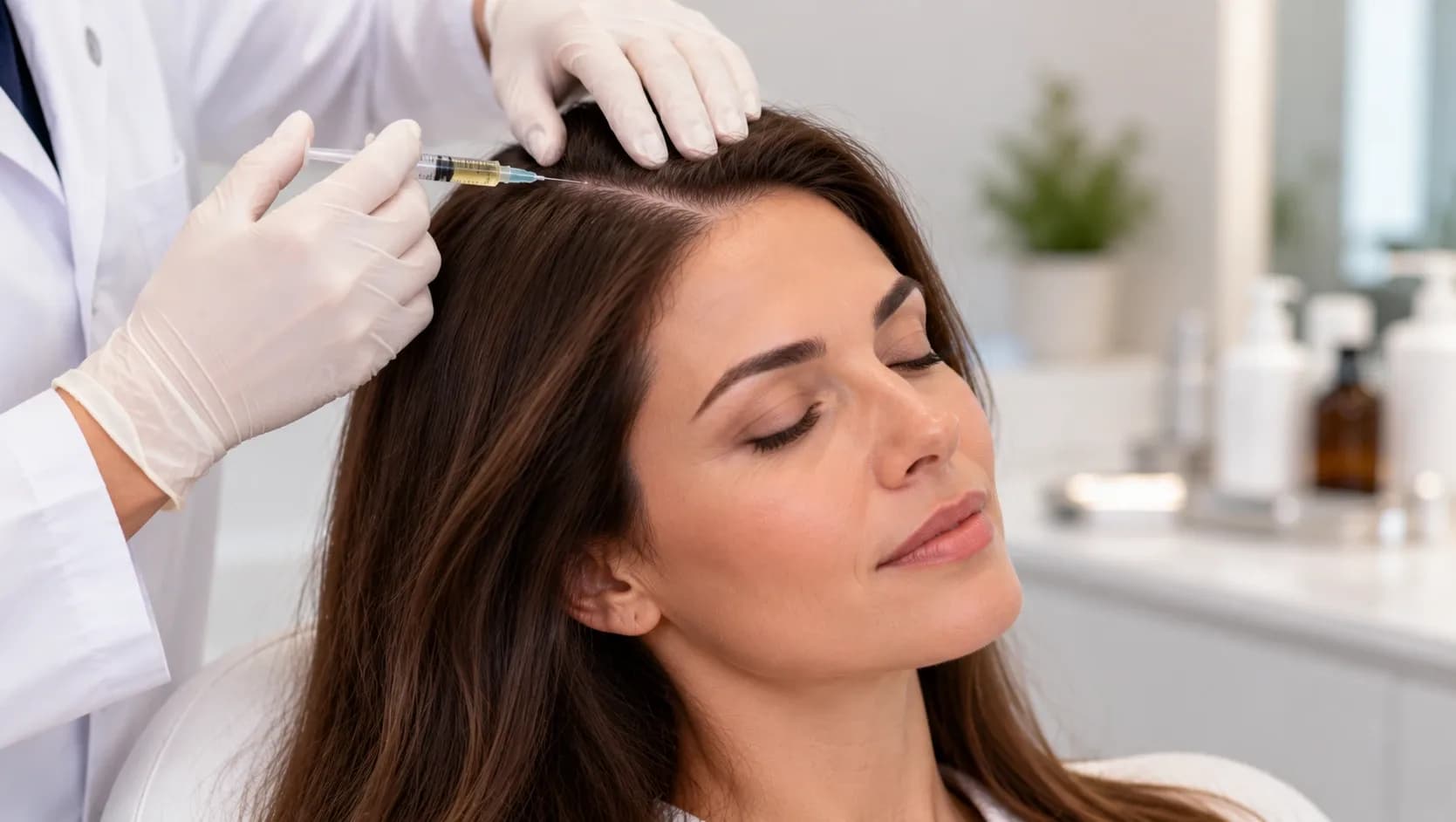
Hair mesotherapy is an injectable treatment for hair thinning and hair loss. It delivers vitamins, minerals, peptides, or prescription drugs directly into the scalp through microinjections. The side effects of hair mesotherapy depend on the injected ingredients, the injection technique, hygiene standards, and individual health factors. Mild local reactions such as pain, redness, and swelling are far more common than serious complications. However, published medical literature also documents severe events, including infection, scarring, and paradoxical hair loss (Plachouri and Georgiou 2019; Vedamurthy 2007).
This article examines the full risk profile of scalp mesotherapy. It separates expected short-term reactions from warning signs that demand medical attention. It also explains who faces higher risk and how patients can reduce the chance of complications before treatment begins.
What Are the Most Common Hair Mesotherapy Side Effects?
The most common side effects are temporary and local. They include scalp pain, redness, swelling, itching, bruising, minor bleeding, tightness, and small scabs at injection points. These reactions typically reflect normal tissue response to needle injury and usually fade within days (Faetani et al. 2021).
Every mesotherapy session involves dozens of tiny needle punctures into the dermis. The scalp reacts to this controlled microtrauma with inflammation. That inflammation produces the symptoms patients notice most.
Common reaction | Typical cause | Usual duration |
Scalp pain and tenderness | Needle microtrauma to nerve endings | 1 to 3 days |
Redness and swelling | Local inflammatory response | 2 to 5 days |
Itching and irritation | Healing response or mild sensitivity | A few days |
Bruising and minor bleeding | Capillary injury at injection sites | 3 to 7 days |
Scalp tightness and discomfort | Tissue edema | 2 to 4 days |
Small crusts or scabs | Skin barrier repair at puncture points | 5 to 10 days |
These reactions are expected and short-lived. Symptoms that worsen after 48 hours, or that spread beyond the treated area, fall outside this normal pattern. Such changes signal a possible complication rather than routine recovery.
How Long Do Hair Mesotherapy Side Effects Last?
Most mild injection-related symptoms improve within 3 to 7 days. No single recovery timeline applies to every patient, because healing speed varies with skin sensitivity, the substances injected, and the number of sessions (Faetani et al. 2021).
Minor pain, itching, redness, and swelling often resolve within the first week. Bruising may linger longer, especially in patients who take blood-thinning medication. Repeated injection sessions can slow recovery because the scalp needs time to repair between treatments.
Several factors prolong symptoms. Sensitive skin reacts more strongly. Concentrated or irritating formulations, such as solutions containing ethanol as a solvent, may extend inflammation. Aggressive injection depth or high injection volume also increases tissue stress.
Persistent symptoms need professional assessment. If pain, redness, or swelling does not improve after one week, the patient should contact the treating clinician. Symptoms that intensify rather than fade always warrant evaluation.
What Are the Rare but Serious Complications of Hair Mesotherapy?
Serious complications are uncommon but documented. They include infection, allergic reactions, persistent inflammation, scarring, paradoxical hair loss, and tissue damage. Published case reports confirm these risks exist, but they cannot establish how often they occur (Kadry et al. 2008; Vedamurthy 2007).
The true frequency of severe complications remains uncertain. Mesotherapy lacks standardized protocols and product regulation in many regions. This gap makes large-scale safety data difficult to collect.
Infections: Inadequate skin preparation or contaminated products can introduce bacteria. Published cases include multifocal scalp abscess with subcutaneous fat necrosis (Kadry et al. 2008).
Allergic reactions: Patients can develop sensitivity to any injected ingredient, from plant extracts to pharmaceutical agents.
Inflammatory reactions: Some patients develop prolonged or severe inflammation at injection sites, sometimes linked to hypersensitivity.
Scarring: Tissue injury from repeated injections or inflammatory damage can scar the scalp.
Paradoxical hair loss: New hair loss at injection sites has appeared in multiple case reports.
Tissue damage: Inappropriate injection technique or unsuitable injected substances can injure skin and subcutaneous tissue.
These events appear across peer-reviewed case literature. A case report proves that a risk is possible. It does not measure incidence, so patients should not assume these complications are common or rare.
Can Hair Mesotherapy Cause More Hair Loss Instead of Hair Growth?
Yes, in rare cases. Published case reports describe localized hair loss and even scarring alopecia after scalp mesotherapy. Inflammation and tissue injury can damage hair follicles and interrupt their growth cycle (Duque-Estrada et al. 2009; del Cura et al. 2022).
Normal hair shedding differs from treatment-associated hair loss. Shedding involves diffuse, gradual loss across the scalp. Treatment-associated loss appears as new bald patches, thinning concentrated at injection points, or loss with persistent inflammation.
Normal shedding | Treatment-associated hair loss |
Diffuse across the whole scalp | Localized to injection sites |
Gradual over weeks | Abrupt after a session |
No scalp inflammation | Often accompanied by redness, pain, or atrophy |
Self-limiting | May persist without treatment |
Duque-Estrada and colleagues documented two patients who developed patchy alopecia after mesotherapy for androgenetic alopecia (2009). Del Cura and colleagues described two additional cases of paradoxical nonscarring alopecia after dutasteride mesotherapy, one with skin atrophy that showed no improvement at short-term follow-up (2022). Researchers suspect that inflammatory injury and solvent toxicity damage follicle cells.
Warning signs include new bald patches, progressive thinning at injection sites, and persistent scalp inflammation. Any patient who notices these changes should seek dermatological assessment promptly. Early evaluation improves the chance of limiting damage.
Which Ingredients Can Trigger Adverse Reactions?
Any injected ingredient can trigger a reaction, and no universal formula exists for hair mesotherapy. Vitamins, amino acids, prescription drugs, plant extracts, and growth factors each carry distinct risk profiles. Risks vary by substance, concentration, formulation, and administration route (Vedamurthy 2007).
Ingredient transparency matters because the patient and clinician must know exactly what enters the tissue. Unregulated cocktails make allergy screening impossible and complicate complication management.
Ingredient category | Example substances | Potential concern |
Vitamins and minerals | B vitamins, zinc, biotin | Allergy, irritation |
Amino acids and peptides | Cysteine, copper peptides | Hypersensitivity |
Prescription medicines | Minoxidil, finasteride, dutasteride | Paradoxical hair loss, off-label risk |
Plant-derived extracts | Herbal complexes | Unpredictable allergic reactions |
Growth-factor preparations | Bioactive peptides | Variable quality, limited standardization |
Dutasteride mesotherapy illustrates the stakes. The drug requires a solvent, and ethanol-based solvents have been hypothesized to damage follicle cells (del Cura et al. 2022). Patients should confirm that every product comes from a reliable source and suits the intended injection route.
Who Has a Higher Risk of Hair Mesotherapy Side Effects?
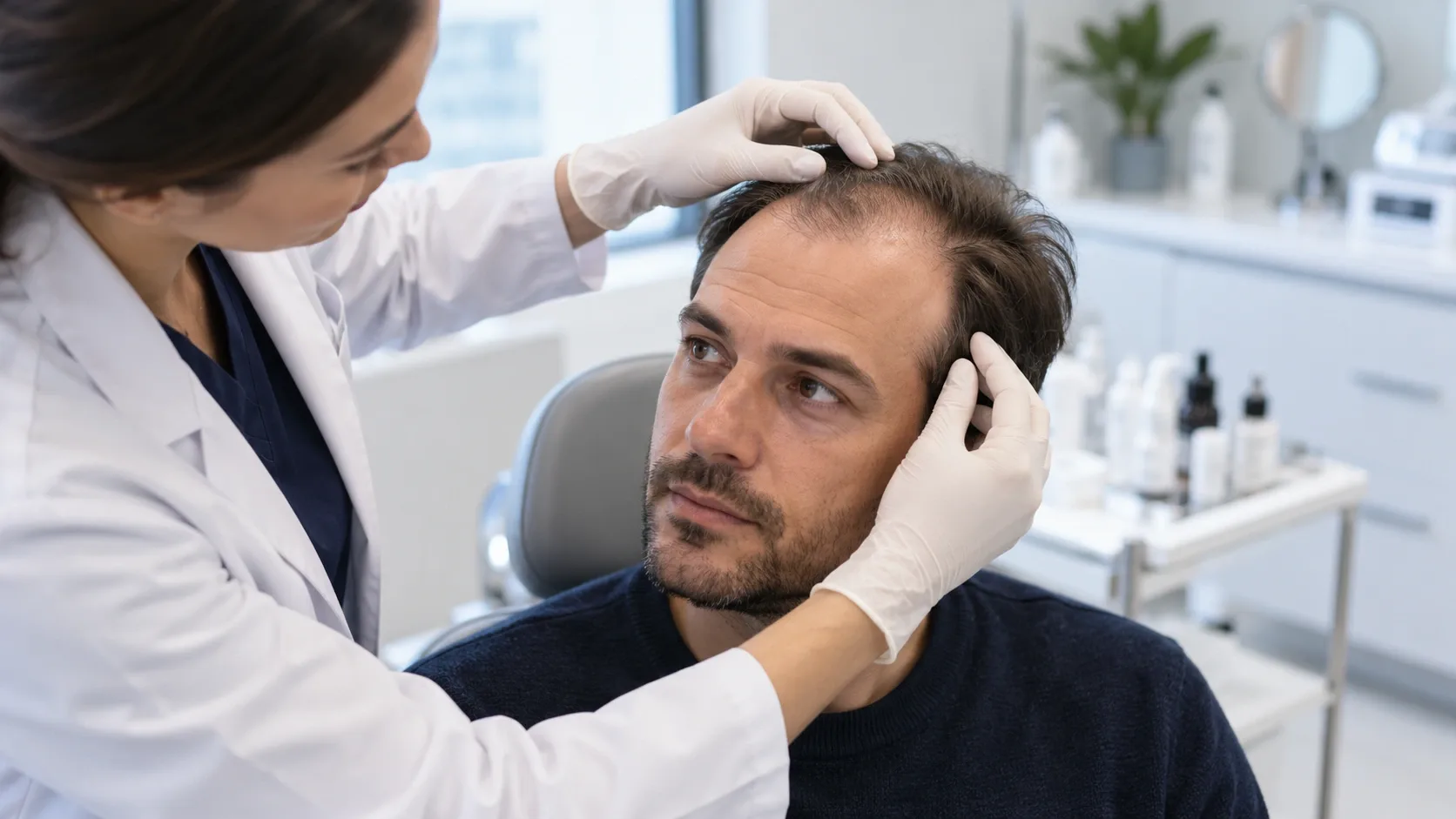
People with allergies, scalp infections, bleeding disorders, poor wound healing, abnormal scarring tendencies, or pregnancy face higher risk. A medical history review and scalp examination should always precede treatment (Plachouri and Georgiou 2019).
A careful assessment protects the patient. It also gives the clinician a baseline for comparing post-treatment changes.
Known allergies or previous reactions to injectable products
Active scalp infections, wounds, or inflammation
Bleeding disorders or anticoagulant medication use
Conditions that impair wound healing, such as poorly controlled diabetes
A tendency toward keloids or hypertrophic scars
Pregnancy or breastfeeding, where ingredient safety lacks confirmation
Other medical conditions or medications that affect treatment safety
Suitability remains individual. Not every condition above is an absolute contraindication. The clinician must weigh each factor against the proposed formulation.
Which Symptoms After Hair Mesotherapy Require Medical Attention?
Seek medical attention for increasing pain, warmth, spreading redness, pus, fever, blistering, discoloration, new hair loss, or visible scarring. Breathing difficulty, throat swelling, or faintness signals a severe allergic reaction and requires emergency care.
Mild discomfort fades. Complications escalate. Patients should watch for a clear direction of change.
Warning sign | Likely concern | Required response |
Increasing pain, warmth, swelling | Infection | Same-day clinical contact |
Pus or spreading redness | Bacterial infection | Same-day clinical contact |
Fever or general illness | Systemic infection | Urgent assessment |
Blistering or discoloration | Tissue injury | Prompt medical review |
New localized hair loss | Follicle damage | Dermatological evaluation |
Breathing difficulty or throat swelling | Anaphylaxis | Emergency services |
Patients should not wait for a scheduled follow-up when concerning symptoms develop. Early treatment of infection or allergic reaction prevents progression to scarring or systemic illness.
How Can You Reduce the Risk of Hair Mesotherapy Complications?
Choose a qualified clinician, verify infection-control standards, request full ingredient disclosure, disclose your medical history, and follow aftercare instructions. Avoid unregulated injections and self-administered products entirely.
Verification forms the core of risk reduction. Each step removes a known source of harm.
Select a healthcare professional with documented experience in hair and scalp treatments.
Confirm the clinic follows appropriate sterilization and infection-control procedures.
Ask for the names and concentrations of every injected ingredient.
Confirm products suit the injection route and come from reliable, regulated sources.
Disclose all medical conditions, allergies, medications, and previous procedures.
Follow individualized pre-treatment and aftercare instructions.
Attend follow-up appointments and report unexpected reactions promptly.
Unregulated injectables purchased online carry severe risk. Nonmedical practitioners often lack training in anatomy, sterility, and complication management. These variables explain many published adverse events (Vedamurthy 2007).
What Should You Avoid After Hair Mesotherapy?
Avoid scratching, picking, or massaging injection sites. Avoid unapproved topical products, and follow individualized guidance on hair washing, exercise, saunas, swimming, and sun exposure. Do not stop or start medication without medical advice.
Aftercare instructions vary because formulations and protocols differ. The treating clinician's guidance takes priority over generic advice.
Do not scratch, pick, or aggressively massage injection points.
Do not apply unapproved creams, serums, or oils to irritated skin.
Follow the clinic's specific timing for washing the scalp.
Follow individualized guidance on exercise, sauna use, swimming, and direct sun.
Do not stop prescribed medication or begin new medication without advice.
Irritation that persists or worsens despite proper aftercare signals a problem. Contact the treating clinician in that situation rather than self-treating.
Are Hair Mesotherapy Side Effects Different From Those of PRP?
Both procedures share injection-related risks such as pain, swelling, bruising, and inflammation. However, mesotherapy injects a prepared external solution, while platelet-rich plasma (PRP) uses a concentrate derived from the patient's own blood. Autologous blood reduces but does not eliminate PRP risk (Gupta et al. 2019).
Factor | Hair mesotherapy | PRP |
Injected material | External prepared solution | Patient's own processed blood |
Allergy risk | Moderate, depends on ingredients | Low, but still possible |
Contamination risk | Product or technique related | Blood-handling related |
Injection-site reactions | Common and similar in both | Common and similar in both |
Standardization | Weak across products | Moderate, but protocols vary |
PRP carries risks from injections, blood handling, and contamination. No controlled evidence proves that either treatment is universally safer. Patients should evaluate both options against their diagnosis and evidence base rather than marketing claims.
Is Hair Mesotherapy Safe for Long-Term Use?
Long-term safety remains uncertain because no standardized protocol exists and controlled studies are scarce. Repeated sessions require clinical reassessment rather than automatic continuation. Patients should monitor for persistent inflammation, new scalp changes, and worsening hair loss (del Cura et al. 2022).
The current evidence base relies heavily on small trials and case reports. Controlled studies describe mild, temporary reactions but cannot predict outcomes after years of repeated sessions. Case reports describe serious harm but cannot measure its frequency.
Clinical reassessment should happen at regular intervals. The clinician should confirm that hair loss has not progressed, the scalp shows no signs of chronic inflammation, and the injected ingredients still match the diagnosis. Continuing a treatment purely on schedule ignores the patient's actual response.
Are Hair Mesotherapy Side Effects Worth the Potential Benefits?
The answer depends on diagnosis, evidence, and individual risk tolerance. Mesotherapy is not a guaranteed solution and cannot revive follicles that are no longer viable. An accurate diagnosis must come before any treatment decision (Blume-Peytavi et al. 2011).
The underlying cause of hair loss determines whether mesotherapy even makes sense. Androgenetic alopecia, telogen effluvium, and alopecia areata each require different approaches.
Established options carry stronger evidence bases:
Topical minoxidil, supported by randomized controlled trials (Olsen et al. 2002)
Appropriate prescription treatments for specific diagnoses
Hair transplantation for suitable candidates with permanent follicle loss
Mesotherapy may complement these options in selected patients. It should not replace diagnosis. Patients benefit most from an individualized consultation that weighs goals, medical history, and the documented risk profile described above.
Frequently Asked Questions About Hair Mesotherapy Side Effects
Is Scalp Pain Normal After Hair Mesotherapy?
Mild, temporary injection-site pain is normal. Pain that intensifies or lasts beyond a few days is not and needs medical advice.
Needle punctures irritate local nerve endings. This discomfort typically fades within 72 hours. Persistent pain may signal infection or tissue injury and justifies a clinical review.
Can Hair Mesotherapy Cause an Infection?
Yes. Inadequate sterilization, contaminated products, or poor technique increase infection risk. Symptoms include increasing pain, warmth, pus, spreading redness, and fever.
Published literature documents severe infectious complications, including multifocal scalp abscess with fat necrosis and scarring alopecia (Kadry et al. 2008). Infection requires prompt antibiotic treatment to prevent permanent damage.
Can Hair Mesotherapy Cause Permanent Hair Loss?
Permanent hair loss has been reported in rare case reports, but its frequency is not established. Patients with new bald patches or persistent inflammation need prompt assessment.
Scarring alopecia destroys follicles permanently. Nonscarring paradoxical alopecia may partially recover (Duque-Estrada et al. 2009; del Cura et al. 2022). Early intervention offers the best chance of preserving hair.
Is Scalp Itching After Mesotherapy Dangerous?
Mild itching is common during recovery. Severe itching with swelling, spreading redness, or hives suggests an allergic reaction and requires medical attention.
Itching alone usually reflects healing. Itching combined with systemic signs signals hypersensitivity that clinicians should evaluate before the next session.
Can You Wash Your Hair After Mesotherapy?
Timing depends on the clinician's instructions, scalp condition, and protocol. Gentle washing with approved products is generally safe after the initial waiting period.
Patients should avoid harsh shampoos, hot water, and aggressive scrubbing over injection sites. The treating clinician provides specific timing guidance.
Should You Stop Hair Mesotherapy if Side Effects Develop?
Discuss mild reactions with the treating professional before the next session. Postpone treatment pending assessment when symptoms are significant, persistent, or worsening.
Continuing injections into inflamed or damaged tissue compounds the injury. Medical assessment should guide the decision to resume, modify, or end treatment.
Works Cited
del Cura, L. R., et al. "Two Cases of Paradoxical Nonscarring Alopecia after Mesotherapy with Dutasteride." Skin Appendage Disorders, vol. 8, no. 1, 2022, pp. 46-48.
Duque-Estrada, B., et al. "Alopecia Secondary to Mesotherapy." Journal of the American Academy of Dermatology, vol. 61, no. 4, 2009, pp. 707-709.
Faetani, L., et al. "Safety and Efficacy of Mesotherapy in Musculoskeletal Disorders: A Systematic Review of Randomized Controlled Trials with Meta-Analysis." Journal of Rehabilitation Medicine, vol. 53, 2021.
Gupta, A. K., et al. "Platelet-Rich Plasma as a Treatment for Androgenetic Alopecia." Dermatologic Surgery, vol. 45, no. 10, 2019, pp. 1262-1273.
Kadry, R., et al. "Multifocal Scalp Abscess with Subcutaneous Fat Necrosis and Scarring Alopecia as a Complication of Scalp Mesotherapy." Journal of Drugs in Dermatology, vol. 7, no. 1, 2008, pp. 72-73.
Olsen, E. A., et al. "A Randomized Clinical Trial of 5% Topical Minoxidil versus 2% Topical Minoxidil and Placebo in the Treatment of Androgenetic Alopecia in Men." Journal of the American Academy of Dermatology, vol. 47, no. 3, 2002, pp. 377-385.
Plachouri, K. M., and S. Georgiou. "Mesotherapy: Safety Profile and Management of Complications." Journal of Cosmetic Dermatology, vol. 18, no. 6, 2019, pp. 1601-1605.
Vedamurthy, M. "Mesotherapy." Indian Journal of Dermatology, Venereology and Leprology, vol. 73, no. 1, 2007, pp. 60-62.
Blume-Peytavi, U., et al. "S1 Guideline for Diagnostic Evaluation in Androgenetic Alopecia in Men, Women and Adolescents." British Journal of Dermatology, vol. 164, no. 1, 2011, pp. 5-15.