
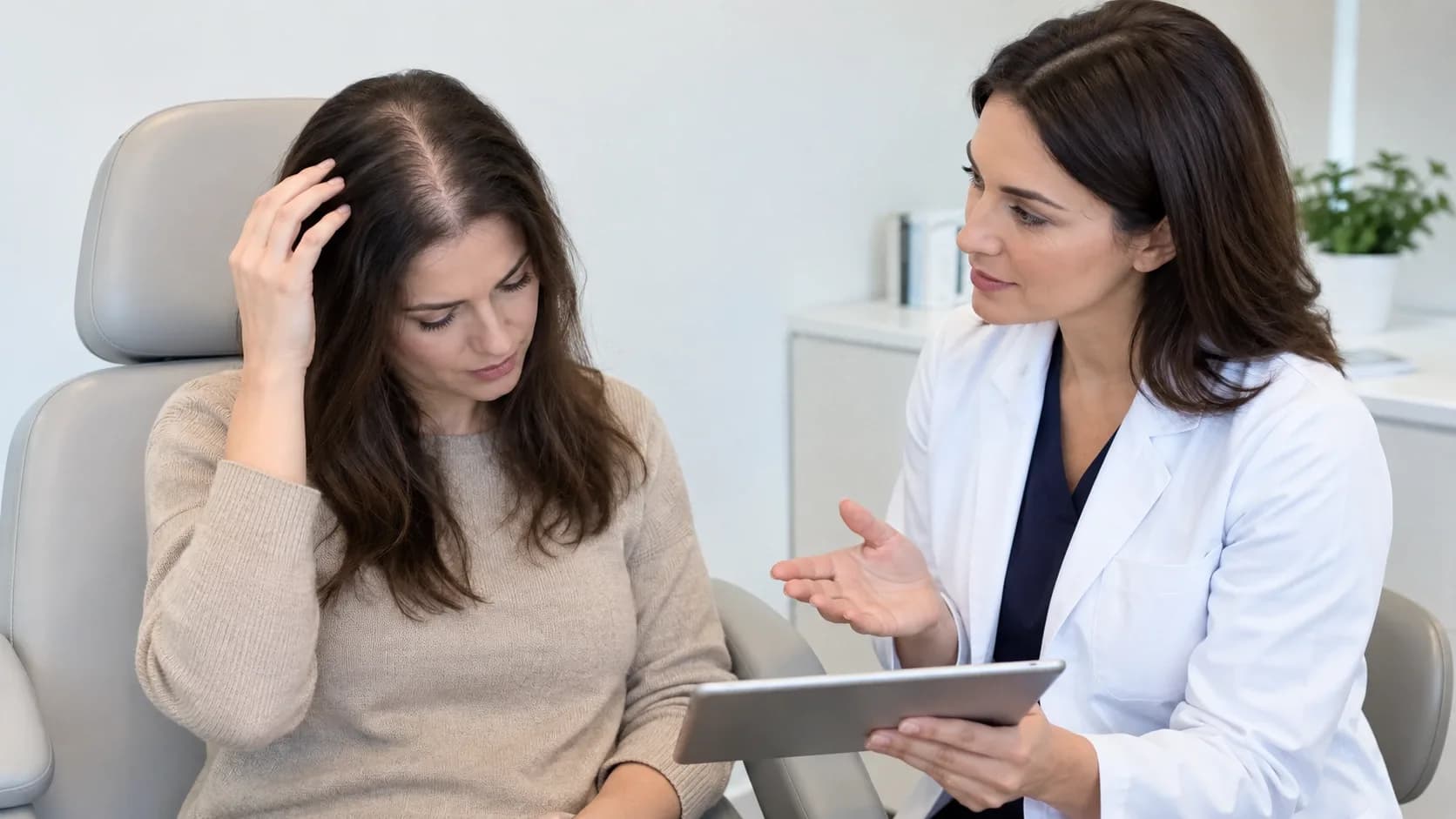
Hair Mesotherapy for Women: How Does It Work, What Benefits Can You Expect, and What Risks Should You Know?
Hair mesotherapy for women offers a minimally invasive approach to addressing female hair loss.
Hair mesotherapy for women offers a minimally invasive approach to addressing female hair loss. This treatment involves injecting a customized blend of vitamins, minerals, amino acids, and other active compounds directly into the scalp. Women experiencing diffuse hair thinning, early-stage follicular miniaturization, or reduced hair volume may consider this option as part of a broader hair restoration plan. Current clinical evidence remains encouraging but limited. Researchers call for larger randomized controlled trials to confirm long-term safety and efficacy (Gupta et al., 2023).
How Does Hair Mesotherapy Deliver Active Ingredients to the Scalp?
Mesotherapy delivers compounds through microinjections into the scalp. The clinician places these injections at a depth of 2 to 4 millimeters. This intradermal delivery creates a depot of active ingredients near the hair follicles. Topical applications sit on the skin surface. They face barriers like sebum, dead skin cells, and the stratum corneum. Intradermal injections overcome these barriers. They increase local bioavailability and extend the residence time of therapeutic agents in the target area (Gupta et al., 2023). The exact formulation matters significantly. Different clinics use different cocktails. Some solutions contain vitamins and minerals. Others include medications like minoxidil or dutasteride. The composition directly influences the biological effect.
How Does Mesotherapy Differ From Conventional Hair Loss Treatments?
Mesotherapy differs from other treatments in its delivery method and evidence base. Topical minoxidil requires daily application and faces absorption challenges. Oral medications like finasteride or spironolactone affect the entire body and carry systemic side effects. Platelet-rich plasma (PRP) uses the patient's own blood components. Hair transplantation moves follicles surgically from donor areas to thinning zones. Mesotherapy sits between these options. It offers more direct delivery than topicals but less invasiveness than surgery. However, mesotherapy currently holds weaker evidence than established treatments like topical minoxidil or PRP (Aledani et al., 2024).
Treatment | Delivery Method | Evidence Level | Key Advantage | Key Limitation |
Intradermal injections | Emerging (small studies) | Direct scalp delivery | No standardized protocol | |
Topical minoxidil | Scalp application | Strong (FDA-approved) | Proven efficacy | Daily application needed |
Oral minoxidil | Systemic | Moderate | Convenient | Cardiovascular side effects possible |
Autologous injection | Moderate to strong | Natural growth factors | Blood draw required | |
Hair transplant | Surgical | Strong | Permanent results | Invasive, donor-dependent |
Why Do Women Experience Hair Thinning and Hair Loss?
Women experience hair thinning through multiple mechanisms. The most common cause is female pattern hair loss. However, other conditions can trigger shedding. A proper diagnosis must come before any treatment begins.
What Causes Female Pattern Hair Loss?
Female pattern hair loss (FPHL), also called female androgenetic alopecia, stems from genetic susceptibility and hormonal influences. Women with this condition show progressive follicular miniaturization. The anagen phase shortens. Hairs become finer, shorter, and less pigmented. The frontal hairline typically stays intact. Thinning spreads across the crown. Dihydrotestosterone (DHT) plays a role, though the mechanism in women differs from men. The ratio of estrogen to testosterone may matter more than absolute hormone levels (Shin et al., 2022).
Which Other Causes Should Be Investigated Before Treatment?
Several conditions can mimic or accompany female pattern hair loss. Telogen effluvium causes diffuse shedding after stress, illness, or hormonal shifts. Nutritional deficiencies, especially iron deficiency, disrupt the hair growth cycle. Thyroid disorders alter follicular metabolism. Scalp diseases like seborrheic dermatitis or psoriasis create inflammation. Certain medications trigger hair shedding. A clinician must rule out these causes first. Treating the wrong condition wastes time and money. It may also delay proper care.
How Can Hair Mesotherapy Support Hair and Scalp Health?
Mesotherapy may improve the local scalp environment. It can potentially reduce shedding and enhance hair density. However, results vary based on the underlying cause and the formulation used.
Can Mesotherapy Improve the Local Scalp Environment?
Yes, mesotherapy can improve scalp microcirculation. The injection process itself stimulates blood flow. Nutrient-rich solutions feed the follicular units. Hyaluronic acid and vitamins hydrate the scalp tissue. A healthier scalp environment supports better hair growth. Improved circulation brings oxygen and nutrients to dormant follicles. This mechanism aligns with the biological need for increased blood flow during the anagen phase (Shin et al., 2022).
Can It Reduce Hair Shedding or Improve Hair Density?
Some studies report reduced shedding after mesotherapy. Hair shaft thickness may improve. Visual density can increase. However, clinicians must distinguish cosmetic improvement from genuine follicular regrowth. A hair may look thicker because the cuticle lies flatter. True regrowth requires viable follicles re-entering anagen. The 2023 systematic review by Gupta and colleagues found that several studies reported statistically significant improvements in hair growth. Yet the lack of standardized regimens makes interpretation difficult.
Can Mesotherapy Reactivate Dormant Hair Follicles?
Mesotherapy cannot reactivate permanently destroyed follicles. It can only stimulate miniaturized follicles that remain alive. Completely bald areas contain no viable follicles. These areas will not respond to mesotherapy. This distinction matters for patient selection. Women with early thinning see better results than those with advanced hair loss. The treatment requires living follicular structures to work.
What Ingredients Are Used in Hair Mesotherapy for Women?
The mesotherapy cocktail varies by provider and protocol. Common ingredients include vitamins, minerals, amino acids, hyaluronic acid, peptides, and sometimes medications.
Which Vitamins and Minerals May Be Included?
B-complex vitamins support cellular metabolism. Biotin acts as a cofactor in keratin synthesis. Zinc regulates follicular development. Copper helps with melanin production and connective tissue. Selenium provides antioxidant protection. Iron may be included when blood tests confirm deficiency. These micronutrients serve as metabolic cofactors involved in keratin synthesis and cellular oxidative balance (Gupta et al., 2023).
Why Are Amino Acids Used in Scalp Mesotherapy?
Amino acids build keratin. They form the structural backbone of hair shafts. Cysteine, methionine, and taurine appear in many formulations. These compounds support follicular protein synthesis. They help maintain hair shaft integrity. Without adequate amino acid supply, hair grows weaker and more brittle.
What Role Can Hyaluronic Acid Play?
Hyaluronic acid hydrates scalp tissue. It holds water in the extracellular matrix. This creates a favorable environment for follicular cells. Well-hydrated tissue supports better nutrient exchange. However, formulation-specific evidence remains limited. Not all hyaluronic acid products demonstrate equal scalp penetration or biological activity.
Are Peptides and Growth Factors Used?
Yes, some protocols include biomimetic peptides and growth factors. These molecules may influence dermal papilla cell activity. They potentially signal follicles to prolong anagen. However, evidence for specific peptides in scalp mesotherapy remains preliminary. Most supporting data comes from in vitro studies rather than robust clinical trials (Gupta et al., 2023).
Can Medications Such as Minoxidil Be Used in Mesotherapy?
Some clinicians add minoxidil to mesotherapy solutions. Intradermal minoxidil bypasses the need for daily topical application. Uzel and colleagues (2021) conducted a randomized placebo-controlled trial using 0.5% intradermal minoxidil in 54 women with female androgenetic alopecia. The treatment group showed increased terminal to vellus hair ratios. However, the density increase did not reach statistical significance compared to placebo. Patients should always ask exactly what substances the provider plans to inject. Regulatory approval for injected minoxidil remains limited in many regions.
Who May Benefit From Hair Mesotherapy?
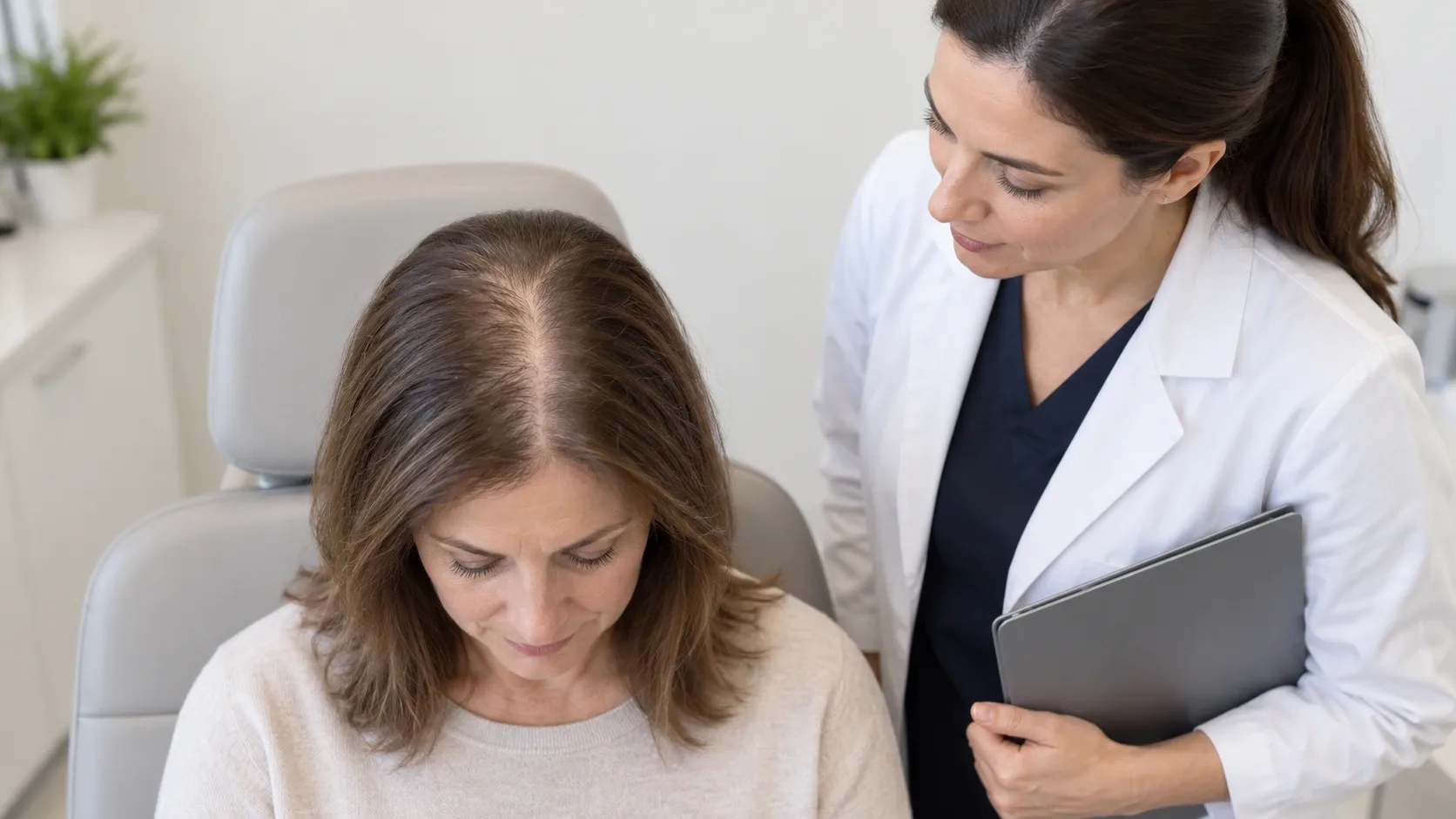
Not every woman with hair loss qualifies for mesotherapy. Patient selection determines success.
Is Mesotherapy Suitable for Women With Early Hair Thinning?
Yes, women with early diffuse thinning represent the best candidates. Reduced volume and early-stage follicular miniaturization respond better than advanced loss. The follicles remain viable. They can still re-enter a productive growth cycle. Women who notice widening part lines or decreased ponytail thickness may benefit most.
Can Women With Female Pattern Hair Loss Have Mesotherapy?
Women with diagnosed female pattern hair loss may use mesotherapy as an adjunctive treatment. It should not replace first-line therapies like topical minoxidil. A dermatologist must confirm the diagnosis first. Trichoscopy helps distinguish FPHL from other alopecias. Evidence specifically relevant to female patients remains limited but growing (Uzel et al., 2021).
Can Mesotherapy Help With Temporary Hair Shedding?
Telogen effluvium causes temporary shedding. Stress, illness, or postpartum hormonal shifts trigger this condition. Mesotherapy may help in some cases. However, clinicians must address the underlying trigger first. Without removing the cause, any treatment yields temporary results. One small study compared multivitamin mesotherapy with botulinum toxin A in 24 women with telogen effluvium. Both groups showed improvements in trichoscopic parameters. No significant difference emerged between groups (Gupta et al., 2023).
Can Women With Dry or Unhealthy Scalp Conditions Benefit?
Women with dry scalps may see improved hydration from mesotherapy. Hair quality can improve when the scalp environment normalizes. However, clinicians must first rule out dermatological diseases. Seborrheic dermatitis, psoriasis, or fungal infections require specific treatment. Mesotherapy does not treat these conditions.
Who Should Avoid or Delay Hair Mesotherapy?
Certain women should not undergo mesotherapy. Safety depends on proper patient selection.
When Does the Cause of Hair Loss Require Another Treatment?
Women with scarring alopecia should avoid mesotherapy. Active scalp infections require antibiotics or antifungals first. Untreated systemic causes like thyroid disease need medical management. Advanced follicular destruction leaves no viable targets for stimulation. In these cases, mesotherapy wastes resources and delays appropriate care.
What Medical Conditions and Medications Should Be Discussed Before Treatment?
Patients must disclose bleeding disorders. Blood-thinning medications increase bruising risk. Allergies to any cocktail components require attention. Previous reactions to injectable treatments matter. Pregnancy and breastfeeding status need discussion. Autoimmune conditions may affect healing. A complete medical history protects patient safety.
Why Is a Professional Hair and Scalp Assessment Important?
A proper assessment starts with diagnosis. Trichoscopy reveals follicular miniaturization patterns. Hair density measurements establish baselines. The clinician evaluates whether follicles remain viable. Without this assessment, treatment becomes guesswork. Women deserve personalized protocols based on objective findings.
How Is Hair Mesotherapy Performed?
Understanding the procedure helps women prepare mentally and physically.
What Happens During the Initial Consultation?
The clinician reviews medical history. They examine the hair-loss pattern. They inspect the scalp for inflammation or disease. They discuss treatment objectives. They select a formulation based on the diagnosis. This consultation typically takes 30 to 45 minutes. Photography documents the baseline condition.
How Are Mesotherapy Injections Administered?
The clinician uses fine needles. They place multiple superficial injections across the treatment zones. The nappage technique spaces injection points about 1 centimeter apart. Each site receives a small volume, often 0.05 milliliters. The needle enters at a 30 to 60 degree angle. Some providers use injection devices for precision. The solution reaches the dermal layer where follicles reside.
How Long Does a Session Take?
A typical mesotherapy session lasts 20 to 30 minutes. The exact duration depends on the treatment area size. Larger areas with more thinning require more injection points. Some protocols use automated devices that speed up the process.
Is Hair Mesotherapy Painful?
Most women feel mild stinging or pinching. Individual sensitivity varies. Some providers apply topical anesthetic cream before treatment. Vibration anesthesia devices reduce discomfort. Carvalho and colleagues (2021) demonstrated that vibration devices significantly reduce mesotherapy injection pain. The procedure remains tolerable for most patients.
How Should Women Prepare for Hair Mesotherapy?
Proper preparation improves outcomes and reduces complications.
What Should You Do Before Your Appointment?
Arrive with a clean scalp. Wash your hair the morning of treatment. Avoid heavy styling products, oils, or dry shampoo. These products can introduce bacteria. Tell the provider about all medications and supplements. Follow any individualized instructions from your clinician.
What Should You Tell Your Practitioner Before Treatment?
Disclose previous hair-loss treatments. Mention any medical conditions. Share pregnancy or breastfeeding status. Report any history of reactions to injections. This information guides formulation choices and safety protocols.
What Happens After Hair Mesotherapy?
Knowing what to expect reduces anxiety.
What Is Normal Immediately After Treatment?
Mild redness commonly appears. The scalp may feel tender. Small bumps at injection sites usually fade within hours. Some women notice temporary swelling or tightness. These reactions signal normal tissue response.
When Can You Wash Your Hair After Treatment?
Providers give specific instructions. Most recommend waiting 24 to 48 hours. Avoid vigorous scrubbing. Use gentle, sulfate-free shampoo. Pat the scalp dry instead of rubbing.
When Can You Exercise or Return to Normal Activities?
Most women resume normal activities immediately. Some providers suggest avoiding intense exercise for 24 hours. Sweat may irritate freshly treated skin. Overall, downtime remains minimal.
What Are the Possible Side Effects of Hair Mesotherapy?
All medical procedures carry risks. Women should understand both common and rare complications.
Which Short-Term Reactions Are Most Common?
Injection-site pain tops the list. Redness and itching follow. Swelling and scalp tightness occur frequently. Some women report headaches. These symptoms typically resolve within 24 to 72 hours.
Which Rare Complications Should Women Know About?
Infection remains possible with any injection. Folliculitis can develop at injection sites. Hematomas form if blood vessels puncture. Inflammatory reactions and granulomatous responses have been documented. Scarring represents a serious concern. Paradoxical hair loss has occurred in isolated cases. Frontal edema has been reported as a complication of mesotherapy for androgenetic alopecia (Melo et al., 2022).
When Should You Contact a Doctor After Treatment?
Call a doctor if swelling persists or worsens. Severe pain beyond normal expectations needs evaluation. Signs of infection include warmth, pus, or fever. Unexpected hair loss requires attention. Significant inflammatory reactions demand medical review.
How Many Hair Mesotherapy Sessions Do Women Need?
Treatment schedules vary widely. No single protocol fits all women.
What Determines the Number of Sessions?
The cause and severity of hair loss matter most. The treatment formulation influences frequency. Response to previous sessions guides adjustments. Individual clinical protocols differ between providers.
How Frequently Are Sessions Performed?
Initial phases often involve weekly or biweekly sessions. One common protocol uses treatments every two weeks for two months. Maintenance sessions follow monthly for four additional months (Gupta et al., 2023). Another approach uses approximately 8 to 12 sessions total. Some dutasteride protocols space sessions quarterly. The wide variation reflects the lack of standardization.
When Do Results Usually Become Noticeable?
Early changes in shedding may appear after 4 to 6 weeks. Hair quality improvements take 2 to 3 months. Density changes require 4 to 6 months. Women cannot judge results immediately. Hair grows slowly. The anagen phase lasts years. Shifting follicles into growth mode takes time.
What Results Can Women Expect From Hair Mesotherapy?
Realistic expectations prevent disappointment.
Can Mesotherapy Make Hair Look Thicker?
Yes, many women notice improved hair shaft quality. Visual density increases. Styling becomes easier. Texture feels fuller. These improvements stem from both biological effects and better scalp health.
Can It Increase Hair Growth?
Mesotherapy may boost existing follicle activity. It can push miniaturized follicles back toward terminal hair production. However, it cannot create new follicles. Women should expect improved existing hair rather than brand-new growth in bald areas.
How Long Can the Results Last?
Results vary individually. Maintenance treatments often prove necessary. The underlying cause of hair loss continues. Without ongoing management, follicles may miniaturize again. Treating the root cause extends results.
How Should Treatment Results Be Evaluated?
Standardized photographs track progress. Hair density measurements provide objective data. Trichoscopy reveals follicular changes. Patient-reported changes matter too. Objective clinical follow-up ensures accountability.
How Effective Is Hair Mesotherapy for Women According to Research?
The scientific community remains cautiously optimistic.
What Does Current Clinical Evidence Show?
The 2024 systematic review by Aledani and colleagues identified 11 relevant studies. They concluded that existing findings are encouraging. However, larger studies remain necessary to clarify safety, efficacy, and optimal protocols. Gupta and colleagues (2023) reviewed 27 articles and found that several studies reported statistically significant improvements. Yet they noted the lack of standardized regimens. The dutasteride study by Reguero-Del Cura and colleagues (2020) showed improvement in 62.8% of treated women versus 17.5% in the control group.
Why Is the Evidence Difficult to Interpret?
Different injectable formulations create confusion. Doses vary between studies. Injection techniques differ. Study populations remain small. Treatment schedules range widely. Long-term follow-up data is scarce. These factors make comparison nearly impossible.
Is Mesotherapy Proven to Be Better Than Minoxidil?
No. Direct comparison with topical minoxidil shows mixed results. Gajjar and colleagues (2019) found no significant difference between mesotherapy and topical 5% minoxidil in men. Uzel and colleagues (2021) found that intradermal minoxidil increased hair density but not significantly more than placebo. Systematic reviews suggest mesotherapy should not automatically replace established treatments. Topical minoxidil maintains stronger regulatory approval and larger trial evidence (Lucky et al., 2004).
Hair Mesotherapy vs Other Treatments for Female Hair Loss: What Is the Difference?
Women should understand how mesotherapy compares to alternatives.
Mesotherapy vs Minoxidil
Topical minoxidil requires daily application. Mesotherapy delivers actives through periodic injections. Minoxidil carries FDA approval for female pattern hair loss. Mesotherapy lacks equivalent regulatory backing. Minoxidil evidence spans decades. Mesotherapy evidence remains emerging. Minoxidil may cause scalp irritation. Mesotherapy carries injection-related risks.
Mesotherapy vs PRP
PRP uses the patient's own blood. Mesotherapy uses manufactured solutions. PRP contains natural growth factors. Mesotherapy cocktails vary by provider. PRP meta-analyses show significant hair density increases (Zhang et al., 2023). Mesotherapy meta-analyses remain limited. PRP requires blood draws. Mesotherapy does not.
Mesotherapy vs Low-Level Laser Therapy
LLLT uses non-invasive light stimulation. Mesotherapy uses needles. LLLT devices work at home. Mesotherapy requires clinic visits. LLLT meta-analyses show significant hair density improvements (Lueangarun et al., 2021). Mesotherapy evidence is less robust. LLLT carries virtually no downtime. Mesotherapy involves mild recovery. Both can complement other treatments.
Mesotherapy vs Hair Transplantation
Hair transplantation moves permanent follicles surgically. Mesotherapy supports existing follicles non-surgically. Transplantation suits advanced bald areas. Mesotherapy suits early thinning. Transplantation requires donor hair. Mesotherapy does not. Transplantation offers permanent results. Mesotherapy requires maintenance.
Can Hair Mesotherapy Be Combined With Other Hair Loss Treatments?
Combination approaches often yield better outcomes than single treatments.
Can Mesotherapy Be Used Alongside Minoxidil?
Yes, some protocols combine both. Mesotherapy may enhance minoxidil delivery. Topical minoxidil maintains daily stimulation between injection sessions. This combination addresses different aspects of hair loss.
Can It Be Combined With PRP?
Yes, clinicians sometimes alternate mesotherapy and PRP sessions. PRP provides growth factors. Mesotherapy delivers nutrients and medications. Together they may create a more comprehensive follicular support environment.
Can It Be Used as Part of a Broader Hair Restoration Plan?
Absolutely. Nutrition optimization, stress management, and scalp care all play roles. Mesotherapy fits into this larger strategy. It does not replace healthy habits or medical treatments.
Why Should Combination Treatments Be Individually Planned?
Every woman's hair loss differs. Causes vary. Response patterns differ. A dermatologist should design personalized protocols. Cookie-cutter approaches waste time and money.
What Should Women Ask Before Choosing a Hair Mesotherapy Provider?
Informed patients make better decisions.
Who Will Diagnose the Cause of Hair Loss?
A qualified dermatologist or trichologist should diagnose. Avoid providers who skip diagnosis. Wrong diagnosis leads to wrong treatment.
What Exactly Is Included in the Mesotherapy Solution?
Demand transparency. Know every ingredient. Ask about medication concentrations. Question the source of peptides or growth factors.
Which Products and Injection Techniques Are Used?
Ask about needle size. Inquire about injection depth. Learn about the spacing between injection points. Understand the total volume injected.
How Is Treatment Sterility Maintained?
Single-use needles are mandatory. Sterile preparation areas protect against infection. Ask about autoclaving and disinfection protocols.
How Will Progress Be Measured?
Baseline photography should occur. Trichoscopy provides objective data. Hair counts offer measurable benchmarks. Subjective assessments alone are insufficient.
What Happens If the Treatment Does Not Work?
Honest providers discuss alternatives. They do not pressure continued treatment. They refer to specialists when needed.
What Are the Most Important Expectations to Have About Hair Mesotherapy?
Women should remember several key facts. Mesotherapy is not a universal treatment for every type of female hair loss. Diagnosis must come before treatment. Results vary according to the cause of hair loss and the formulation used. Existing follicles are necessary for meaningful follicular response. Evidence remains less established than for some conventional therapies. Maintenance may be necessary. A personalized protocol suits each woman better than a fixed treatment schedule.
Frequently Asked Questions About Hair Mesotherapy for Women
Is Hair Mesotherapy Safe for Women?
Yes, when performed by qualified providers. Common side effects include mild pain, redness, and swelling. Serious complications remain rare.
Does Hair Mesotherapy Help Female Pattern Hair Loss?
It may help as an adjunctive treatment. Evidence specifically for women is growing but still limited. It should not replace first-line therapies.
Does Hair Mesotherapy Stop Hair Shedding?
It may reduce shedding in some women. Results depend on the underlying cause. It does not stop all types of hair shedding.
Can Hair Mesotherapy Regrow Thinning Hair?
It can improve the quality of existing miniaturized hairs. It cannot regrow hair in completely bald areas. Viable follicles must remain.
Is Hair Mesotherapy Painful?
Most women experience mild discomfort. Topical anesthetics and vibration devices reduce pain. The procedure is generally well-tolerated.
How Long Does a Hair Mesotherapy Session Take?
Sessions typically last 20 to 30 minutes. The exact time depends on the treatment area.
How Many Sessions Are Usually Required?
Protocols vary. Some use 8 to 12 sessions. Others use 10 sessions initially. Maintenance sessions follow.
When Will I See Results From Hair Mesotherapy?
Early changes may appear after 6 to 8 weeks. Meaningful density improvements take 3 to 6 months.
How Long Do Hair Mesotherapy Results Last?
Results vary. Maintenance treatments often extend benefits. Addressing the underlying cause improves longevity.
Can I Wash My Hair After Mesotherapy?
Most providers recommend waiting 24 to 48 hours. Follow your clinician's specific instructions.
Can I Exercise After Hair Mesotherapy?
Light activity is fine immediately. Some providers suggest avoiding intense exercise for 24 hours.
Can Hair Mesotherapy Be Combined With PRP?
Yes, many clinicians offer combination protocols. The treatments may complement each other.
Is Mesotherapy Better Than Minoxidil for Women?
No. Minoxidil has stronger evidence and regulatory approval. Mesotherapy remains an adjunctive option.
Does Hair Mesotherapy Work on Completely Bald Areas?
No. Completely bald areas lack viable follicles. Mesotherapy cannot create new follicles.
What Happens If Hair Mesotherapy Does Not Work?
Your provider should reassess the diagnosis. They may recommend alternative treatments. Options include adjusting the formulation, trying PRP, or considering other therapies.
References
Aledani, E. M., et al. "Mesotherapy as a Promising Alternative to Minoxidil for Androgenetic Alopecia: A Systematic Review." Cureus, vol. 16, no. 2, 2024, e59705.
Carvalho, R. M., et al. "Use of Vibrating Anesthetic Device Reduces the Pain of Mesotherapy Injections: A Randomized Split-Scalp Study." Journal of Cosmetic Dermatology, vol. 20, no. 2, 2021, pp. 425-428.
Delaney, S. W., and P. Zhang. "Systematic Review of Low-Level Laser Therapy for Adult Androgenic Alopecia." Journal of Cosmetic and Laser Therapy, vol. 20, no. 4, 2018, pp. 229-236.
Gajjar, P. C., et al. "Comparative Study between Mesotherapy and Topical 5% Minoxidil by Dermoscopic Evaluation for Androgenic Alopecia in Male: A Randomized Controlled Trial." International Journal of Trichology, vol. 11, no. 2, 2019, pp. 58-67.
Gupta, A. K., et al. "Systematic Review of Mesotherapy: A Novel Avenue for the Treatment of Hair Loss." Journal of Dermatological Treatment, vol. 34, no. 1, 2023, 2245084.
Lueangarun, S., et al. "A Systematic Review and Meta-analysis of Randomized Controlled Trials of United States Food and Drug Administration-Approved, Home-use, Low-Level Light/Laser Therapy Devices for Pattern Hair Loss: Device Design and Technology." Journal of Clinical Aesthetic Dermatology, vol. 14, no. 11, 2021, pp. E64-E75.
Lucky, A. W., et al. "A Randomized, Placebo-Controlled Trial of 5% and 2% Topical Minoxidil Solutions in the Treatment of Female Pattern Hair Loss." Journal of the American Academy of Dermatology, vol. 50, no. 4, 2004, pp. 541-553.
Melo, D. F., et al. "Frontal Edema Due to Mesotherapy for Androgenetic Alopecia: A Case Series." Dermatologic Therapy, vol. 35, no. 5, 2022, e15247.
Ramos, P. M., et al. "Minoxidil 1 mg Oral versus Minoxidil 5% Topical Solution for the Treatment of Female-Pattern Hair Loss: A Randomized Clinical Trial." Journal of the American Academy of Dermatology, vol. 82, no. 1, 2020, pp. 252-253.
Reguero-Del Cura, L., et al. "RF-Mesotherapy with Dutasteride: A Future Alternative Treatment for Androgenetic Alopecia." Actas Dermo-Sifiliográficas, vol. 111, no. 5, 2020, pp. 419-420.
Saceda-Corralo, D., et al. "Mesotherapy with Dutasteride for Androgenetic Alopecia: A Retrospective Study in Real Clinical Practice." Journal of Drugs in Dermatology, vol. 21, no. 7, 2022, pp. 742-747.
Shin, J. W., et al. "Integrative and Mechanistic Approach to the Hair Growth Cycle and Hair Loss." EMJ Dermatology, vol. 10, no. 1, 2022, pp. 108-114.
Tang, Z., et al. "Current Application of Mesotherapy in Pattern Hair Loss: A Systematic Review." Journal of Cosmetic Dermatology, vol. 21, no. 10, 2022, pp. 4184-4193.
Uzel, B. P., et al. "Intradermal Injections with 0.5% Minoxidil for the Treatment of Female Androgenetic Alopecia: A Randomized, Placebo-Controlled Trial." Dermatologic Therapy, vol. 34, no. 3, 2021, e14622.
Zhang, X. X., et al. "Platelet-Rich Plasma for Androgenetic Alopecia." Journal of Cutaneous Medicine and Surgery, vol. 27, no. 5, 2023, pp. 441-449.