
Exosome Hair Treatment Cost: What Determines the Price and Is It Worth It?
More people now seek regenerative solutions for hair loss. Exosome hair treatment has emerged as a promising option in modern aesthetic medicine.
More people now seek regenerative solutions for hair loss. Exosome hair treatment has emerged as a promising option in modern aesthetic medicine. Patients want to know what drives the price. They also want to understand if the investment makes sense. This article breaks down every cost factor. You will learn about pricing structures, value comparisons, safety data, and current scientific evidence. We explore how exosome therapy works, what affects its cost, and how it stacks up against PRP and hair transplants. You will also discover how to choose a reputable clinic and what questions to ask before booking a session.
What Is Exosome Hair Treatment?
What Are Exosomes and How Do They Function?
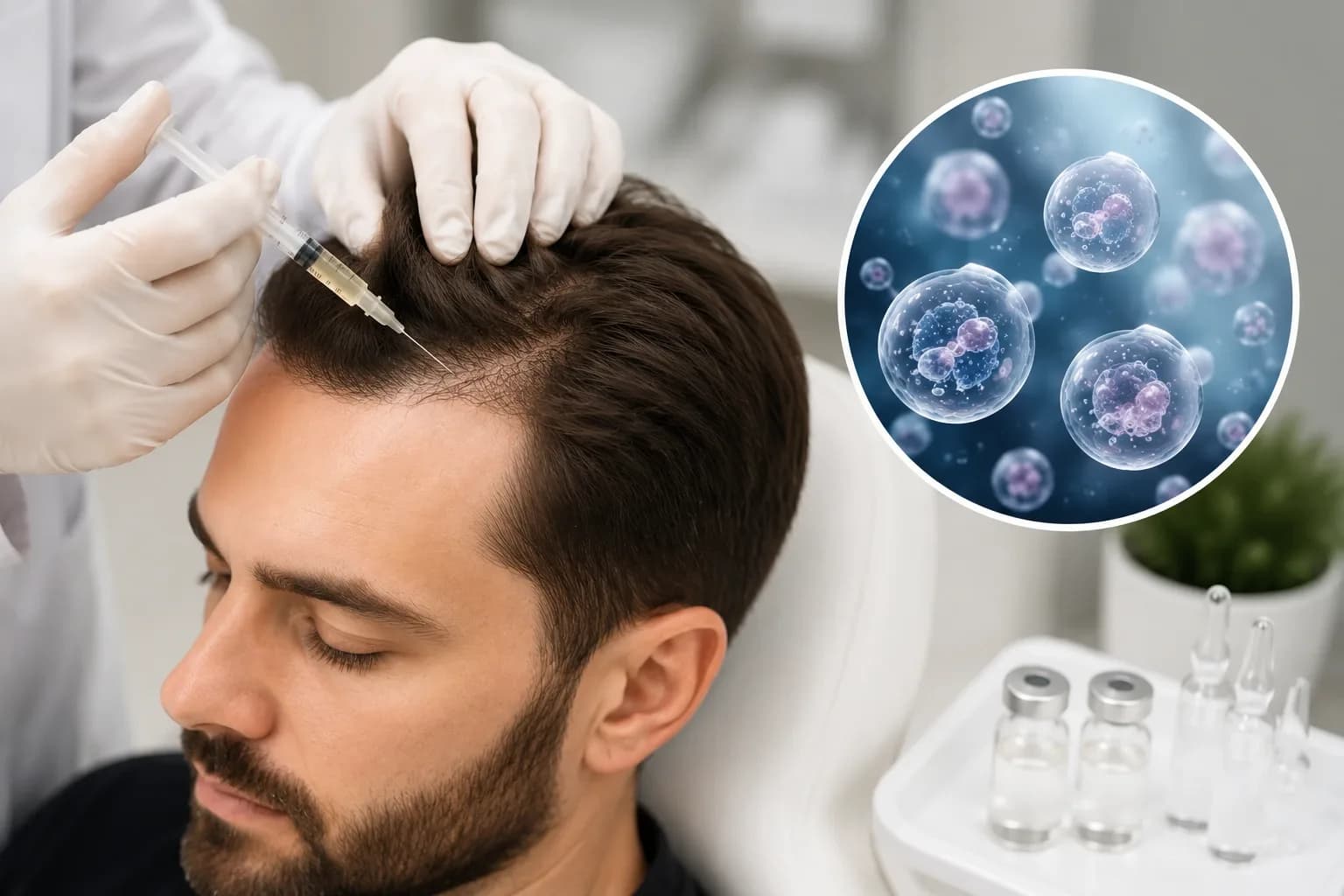
Exosomes are tiny particles that cells release to communicate with other cells. Scientists call these particles extracellular vesicles. They measure between 30 and 150 nanometers in diameter. You cannot see them with the naked eye. They carry growth factors, proteins, peptides, and signaling molecules. They travel through body fluids. They deliver instructions to target cells.
Katsuda et al. (2013) first demonstrated that human adipose tissue-derived stem cells secrete functional exosomes packed with bioactive cargo. This discovery opened new doors for regenerative medicine. Exosomes do not contain DNA. They carry RNA, lipids, and proteins instead. They act as messengers. They tell damaged cells to repair themselves. They also reduce inflammation. In hair restoration, exosomes signal dormant follicles to re-enter the growth phase. They do not create brand new follicles. They wake up existing ones. This distinction matters for setting realistic expectations.
How Does Exosome Hair Therapy Support Hair Regrowth?
Exosome hair therapy uses these vesicles to stimulate the scalp. A physician injects exosome-rich solutions into thinning areas. The exosomes reach hair follicles directly. They trigger cellular repair. They also improve blood supply to the follicle.
Rani et al. (2015) showed that mesenchymal stem cell-derived extracellular vesicles carry regenerative signals. These signals support tissue healing. In hair applications, exosomes reduce scalp inflammation. Inflammation often chokes follicles and speeds up hair loss. By calming the scalp environment, exosomes create better conditions for growth.
The therapy supports follicle regeneration. It does not guarantee new follicle formation. Patients with dormant follicles see the best response. The treatment promotes healthier follicle activity over time. It strengthens existing strands. It may also extend the anagen phase. The anagen phase is the active growth period of the hair cycle.
Which Hair Loss Conditions Can Exosome Therapy Address?
Exosome therapy may help several conditions. Androgenetic alopecia tops the list. This condition causes pattern baldness in men and women. It stems from genetic sensitivity to dihydrotestosterone. Female pattern hair loss also responds well. Early-stage hair thinning shows the strongest results.
The therapy helps patients recovering from hair transplants. Exosomes may speed up healing. They may also support graft survival. Diffuse shedding from stress or nutritional gaps may improve too. However, exosomes cannot restore completely bald areas. Scarred scalps present another challenge. The therapy needs living follicles to work. Patients with total baldness need other solutions.
How Much Does Exosome Hair Treatment Cost?
What Is the Average Cost Per Session?
A single exosome hair treatment session costs between $1,500 and $4,500 in the United States. Prices vary based on clinic location and product quality. Some high-end clinics charge up to $6,000 per session. These clinics often use premium human-derived exosomes.
Regional differences play a big role. Clinics in New York or Los Angeles charge more than clinics in smaller cities. Private clinic pricing reflects overhead costs, staff expertise, and product sourcing. Patients should always ask what the quoted price includes. Some quotes cover the full scalp. Others cover only a partial area.
What Is the Average Total Treatment Cost?
Most patients need multiple sessions. An initial treatment series usually includes three to four sessions. Providers space these sessions four to six weeks apart. The total initial investment ranges from $4,500 to $15,000.
Maintenance sessions follow the initial series. Patients typically return every six to twelve months. Each maintenance session costs the same as a regular session. Long-term investment depends on how long the patient wants to maintain results. Some patients spend $2,000 to $5,000 per year on upkeep. Others budget for quarterly touch-ups.
How Does Exosome Hair Treatment Cost Vary by Country?
Prices differ dramatically across borders. Turkey offers the most competitive pricing. Turkish clinics charge $800 to $2,000 per session. Many international patients travel there for treatment. The United Kingdom falls in the mid-range. Patients pay £1,500 to £3,000 per session. European countries show mixed pricing. Germany and France fall between US and Turkish rates.
Asian markets also vary. South Korea and Japan charge premium prices. Thailand and India offer lower-cost alternatives. However, lower prices do not always mean lower quality. Patients must research clinic credentials carefully. Exchange rates also affect total cost. A strong dollar or euro stretches further in certain markets.
Country | Average Cost Per Session | Initial Series (3 Sessions) | Notes |
United States | $2,500 – $4,500 | $7,500 – $13,500 | Highest prices; premium products common |
United Kingdom | £1,500 – £3,000 | £4,500 – £9,000 | Mid-range; strong regulatory oversight |
Turkey | $800 – $2,000 | $2,400 – $6,000 | Competitive; medical tourism hub |
Germany | €1,800 – €3,500 | €5,400 – €10,500 | High standards; limited clinic availability |
South Korea | $2,000 – $3,500 | $6,000 – $10,500 | Advanced technology; premium market |
India | $600 – $1,500 | $1,800 – $4,500 | Lower cost; variable quality control |
Does Insurance Cover Exosome Hair Treatment?
Insurance companies classify exosome hair treatment as cosmetic. They do not cover elective cosmetic procedures. Patients pay out of pocket for every session. This rule applies in the United States, the United Kingdom, and most other countries.
Some clinics offer financing plans. These plans break the total cost into monthly payments. Patients should review interest rates before signing. Flexible spending accounts and health savings accounts rarely cover exosome therapy. Always check with your provider first.
What Factors Affect Exosome Hair Treatment Cost?
How Does the Type and Source of Exosomes Influence Price?
The source of exosomes directly impacts cost. Human-derived exosomes command the highest prices. Labs isolate these from mesenchymal stem cells. The isolation process requires advanced equipment. It also demands strict quality control.
Plant-derived exosomes cost less. These come from botanical sources like grapes or aloe. They contain different growth factors. Salmon-derived products occupy a middle price range. These use salmon testis DNA fragments. They mimic some exosome functions.
Manufacturing quality matters most. Labs must follow good manufacturing practices. Poorly manufactured products cost less. They also deliver weaker results. Reputable clinics pay more for certified products. They pass this cost to patients.
How Does Clinic Reputation Affect Exosome Treatment Pricing?
Well-known clinics charge more. Their reputation rests on years of results. They employ board-certified physicians. These doctors understand scalp anatomy deeply. They also invest in ongoing training.
Newer clinics may offer lower prices. They want to attract first patients. However, experience affects outcomes. A skilled injector places exosomes at the right depth. They also avoid blood vessels. This precision reduces side effects. Patients should balance cost against provider expertise.
How Does Geographic Location Impact Exosome Hair Treatment Cost?
City location drives prices up or down. Manhattan clinics pay high rent. They charge more to cover overhead. Clinics in suburban areas keep prices lower. The same pattern appears in London, Paris, and Istanbul.
Country-wide economic factors also matter. Countries with lower labor costs offer cheaper treatments. Turkey benefits from this advantage. The exchange rate also helps international patients. A strong dollar or euro stretches further in Turkey.
How Does the Number of Treatment Sessions Affect Total Cost?
More sessions mean higher bills. Mild thinning needs fewer sessions. Advanced hair loss needs more. Some patients see improvement after two sessions. Others need six or more.
Providers usually recommend a package. Packages often include three sessions. They cost less per session than single treatments. Patients should ask about package discounts. They should also understand what happens if they need extra sessions.
How Does Hair Loss Severity Influence Treatment Cost?
Severe hair loss requires more product. The physician must cover a larger area. They also use higher concentrations. Both factors raise the price. Early intervention saves money. Patients who treat thinning hair early spend less overall.
Diffuse shedding covers the whole scalp. This pattern needs more injections. It also needs more sessions. Pattern baldness in a small area costs less. The treatment area directly correlates with total expense.
How Do Combination Treatments Change Exosome Pricing?
Many clinics pair exosomes with other therapies. PRP adds $500 to $1,500 per session. Microneedling costs $200 to $500 extra. Hair mesotherapy runs $150 to $400 per session. Low-level laser therapy adds another $100 to $300 per visit.
Some patients combine exosomes with hair transplants. The exosome treatment supports graft healing. It may also boost native hair density. This combination raises the total surgical cost by $2,000 to $5,000.
How Does Product Concentration and Dosage Affect Cost?
Higher concentrations deliver more growth factors per injection. They also cost more. A standard vial contains 5 billion exosomes. Premium vials contain 10 billion or more. Some clinics offer customized dosing. They adjust concentration based on patient needs.
Dosage depends on treatment area size. A full scalp treatment needs more vials than a small crown patch. Patients should ask how many vials the clinic uses. They should also ask about the concentration per vial.
How Does Exosome Hair Treatment Cost Compare to PRP?
Which Treatment Costs More: Exosomes or PRP?
Exosome therapy costs more than PRP. A PRP session averages $500 to $1,500. An exosome session runs $1,500 to $4,500. The price gap reflects product complexity. PRP uses the patient's own blood. Exosomes require laboratory isolation and processing.
How Do the Procedures Differ?
PRP draws blood from the patient's arm. A machine spins the blood. It separates platelet-rich plasma. The physician injects this plasma into the scalp. The entire process takes about an hour.
Exosome therapy skips the blood draw. The clinic uses a pre-prepared solution. The physician injects it directly. The session takes 30 to 45 minutes. Both treatments use fine needles. Both cause mild discomfort.
What Does Clinical Evidence Show About Each Treatment?
PRP has more published studies. Researchers have tested PRP for over a decade. Multiple randomized trials support its use. Exosome research is newer. Early studies show promise. Ocansey et al. (2020) highlighted mesenchymal stem cell-derived exosomes as a promising cell-free therapeutic tool. However, large-scale human trials for hair loss remain limited.
How Many Sessions Does Each Treatment Require?
PRP usually needs three to four initial sessions. Maintenance occurs every four to six months. Exosome therapy follows a similar schedule. Some providers suggest fewer exosome sessions because the product contains higher growth factor concentrations.
What Benefits Does Each Treatment Offer?
PRP uses autologous material. This means the body accepts it easily. It carries almost zero rejection risk. Exosomes offer a broader range of signaling molecules. They may trigger stronger cellular responses. They also avoid the blood draw step.
Which Treatment Provides Better Value?
Value depends on patient goals. PRP costs less upfront. It works well for mild thinning. Exosomes cost more. They may deliver faster results for moderate hair loss. Patients with severe loss might need both. A combination approach maximizes value in advanced cases.
Factor | Exosome Therapy | PRP Therapy |
Average cost per session | $1,500 – $4,500 | $500 – $1,500 |
Source | Lab-isolated vesicles | Patient's own blood |
Session duration | 30 – 45 minutes | 60 – 90 minutes |
Initial sessions needed | 2 – 4 | 3 – 4 |
Maintenance frequency | Every 6 – 12 months | Every 4 – 6 months |
Rejection risk | Very low | Virtually zero |
Evidence level | Emerging | Moderate |
How Does Exosome Hair Treatment Cost Compare to Hair Transplant?
What Is the Short-Term Cost Difference?
A hair transplant costs more upfront. Follicular unit extraction runs $4,000 to $15,000. A single exosome session costs less. However, patients need multiple exosome sessions. Over one year, exosome costs may approach transplant prices.
What Is the Long-Term Cost Difference?
Transplants offer permanent results. The moved follicles stay active. Patients may need touch-up sessions years later. Exosome therapy requires ongoing maintenance. Patients pay for sessions indefinitely. Over five years, exosome therapy may cost more than a transplant.
How Do Candidate Requirements Differ?
Transplants need donor hair. Patients with extensive baldness lack enough donors. Exosomes work on any scalp with living follicles. They do not need donor areas. Younger patients with early thinning often prefer exosomes. Older patients with stable baldness choose transplants.
What Results Can Patients Expect?
Transplants create new hairlines. They add density to bald zones. Results appear permanent. Exosomes thicken existing hair. They slow further loss. They do not create new follicles. Patients see fuller hair. They do not see brand new hair in completely bald spots.
Can Patients Combine Exosome Therapy with Hair Transplant?
Yes. Many surgeons recommend exosomes after transplant. The therapy reduces inflammation. It also supports graft survival. Hu et al. (2020) demonstrated that exosomes derived from adipose tissue-derived mesenchymal stem cells ameliorate cutaneous damage. This healing support helps transplant recovery. The combination raises total cost. It may also improve final outcomes.
Factor | Exosome Therapy | Hair Transplant |
Upfront cost | $1,500 – $4,500 per session | $4,000 – $15,000 total |
Long-term cost | Ongoing maintenance | One-time or rare touch-ups |
Creates new follicles | No | Yes (relocates existing) |
Downtime | Minimal (hours) | Several days to weeks |
Best for | Early thinning, maintenance | Advanced baldness |
Permanence | Temporary without upkeep | Permanent |
What Does the Treatment Cost Usually Include?
Does the Cost Include the Initial Consultation?
Some clinics bundle the consultation. Others charge separately. A consultation fee ranges from $100 to $300. Patients should confirm this before booking. Free consultations help patients compare options.
Does the Cost Cover Scalp Assessment?
A proper scalp assessment uses trichoscopy. This tool magnifies the scalp. It reveals follicle health. Some clinics include this in the session price. Others add $50 to $150. Digital scalp analysis provides baseline images. These images track progress.
Does the Cost Include the Injection Procedure?
The injection itself always carries the main fee. This fee covers the physician's time. It also covers the product cost. It includes disposable needles and syringes. Patients should ask if the price covers the full scalp or just a section.
Does the Cost Cover Follow-Up Visits?
Follow-up visits check progress. Some clinics include one follow-up. Others charge per visit. Package deals often cover multiple follow-ups. Patients should clarify the follow-up policy.
Does the Cost Include Aftercare Instructions?
Most clinics provide written aftercare guides. These guides explain shampoo choices. They also cover activity restrictions. This service usually comes free. Personalized aftercare support may cost extra.
Does the Cost Include Optional Add-On Treatments?
Add-ons never come standard. PRP, microneedling, and laser therapy all add fees. Patients should request an itemized quote. This quote prevents surprise charges.
Service | Usually Included? | Typical Extra Cost |
Initial consultation | Sometimes | $0 – $300 |
Scalp assessment | Sometimes | $0 – $150 |
Injection procedure | Always | Included in session price |
First follow-up visit | Often | $0 – $200 |
Aftercare instructions | Usually | $0 |
PRP add-on | Never | $500 – $1,500 |
Microneedling add-on | Never | $200 – $500 |
Is Exosome Hair Treatment Worth the Cost?
What Advantages Does Exosome Therapy Offer?
Exosome therapy offers several clear benefits. It is minimally invasive. No surgery occurs. Patients return to work the same day. Downtime lasts only a few hours.
The treatment uses a regenerative approach. It works with the body's natural systems. It may complement existing treatments. Patients using minoxidil or finasteride can add exosomes. The combination may boost results.
What Limitations Should Patients Consider?
Results vary between patients. Some see dramatic thickening. Others notice modest improvement. Multiple sessions strain the budget. Maintenance treatments add ongoing costs.
The evidence base remains emerging. Large randomized trials still need completion. Patients invest in a therapy with promising but incomplete data.
Who Benefits Most from Exosome Hair Treatment?
Early-stage patients benefit most. Those with thinning but not baldness see the best response. Patients who want to avoid surgery also prefer this option. People seeking to enhance transplant results represent another ideal group.
What Does Current Scientific Research Say?
What Clinical Evidence Supports Exosome Therapy?
Early clinical studies show positive trends. Small patient populations demonstrate increased hair density. Researchers measure density with standardized photography. Zhou et al. (2018) found that exosomes derived from human umbilical cord mesenchymal stem cells regulate hair follicle regeneration. These studies use objective tools like trichoscopy.
Ongoing research continues. Multiple universities run trials. They track long-term safety. They also compare exosomes against placebo. The field moves quickly. New data emerges every year.
How Does Exosome Therapy Compare to Established Treatments?
Minoxidil remains the gold standard topical. Finasteride leads among oral options. PRP holds strong clinical support. Hair transplantation offers permanent solutions. Exosomes sit beside these options. They do not replace them yet.
Zhang et al. (2021) showed that exosomes derived from human umbilical cord mesenchymal stem cells promote hair regeneration. This study compared exosomes against control groups. The exosome group showed superior follicle activation. However, direct comparisons with minoxidil or finasteride remain scarce.
What Is the Regulatory Status of Exosome Therapy?
Regulatory bodies classify exosome therapy differently by country. The FDA has not approved exosomes specifically for hair loss. They remain investigational in the United States. The same applies in the European Union.
Lack of standardized protocols creates confusion. One clinic may use a different concentration than another. Product quality varies widely. Patients should ask about product certification. They should also ask about the lab that manufactured the exosomes.
What Risks and Safety Considerations Exist?
What Side Effects Are Common?
Side effects remain mild. Temporary redness appears at injection sites. Swelling lasts one to two days. Some patients feel mild discomfort. Injection-site tenderness resolves within 48 hours.
What Safety Questions Should Patients Ask?
Patients must ask about product sourcing. Where do the exosomes come from? Who manufactured them? Does the lab follow sterility standards?
Physician qualifications matter too. Who performs the injection? What training do they have? Manufacturing standards should meet or exceed pharmaceutical guidelines.
Who Should Avoid Exosome Therapy?
Pregnant women should avoid this therapy. People with active scalp infections need treatment first. Patients with autoimmune disorders should consult their specialist. Those with a history of severe allergic reactions need extra caution.
How Should Patients Choose a Clinic for Exosome Hair Treatment?
What Questions Should Patients Ask Before Treatment?
Ask about the physician's experience. How many exosome cases have they handled? Ask about the product source. Where do the exosomes originate? Ask about the number of sessions needed. What results should you expect?
What Red Flags Should Patients Watch For?
Clinics that guarantee full hair regrowth raise red flags. No ethical provider promises specific outcomes. Clinics that push packages without assessment also worry experts. Avoid places that refuse to discuss product sourcing.
Why Can Extremely Low Prices Mislead Patients?
Bargain prices often signal poor quality. The clinic may dilute the product. They may use unverified sources. They may skip proper storage. Exosomes need cold chain handling. Breaks in this chain destroy effectiveness.
Why Does Transparent Pricing Matter?
Transparent pricing builds trust. Itemized quotes show exactly what you pay for. Hidden fees frustrate patients. They also signal poor business practices. A reputable clinic explains every charge.
Frequently Asked Questions
How Much Does Exosome Hair Treatment Cost?
Exosome hair treatment costs $1,500 to $4,500 per session. Total treatment ranges from $4,500 to $15,000 for an initial series. Maintenance adds ongoing costs.
How Many Sessions Will I Need?
Most patients need three to four initial sessions. Providers space these four to six weeks apart. Maintenance sessions occur every six to twelve months.
Is Exosome Therapy More Expensive Than PRP?
Yes. Exosome sessions cost two to three times more than PRP. PRP averages $500 to $1,500 per session.
Does Insurance Cover Exosome Hair Treatment?
No. Insurance companies classify this as cosmetic. Patients pay out of pocket.
Are the Results Permanent?
No. Results require maintenance. Exosomes wake up dormant follicles. They do not create permanent new ones. Ongoing sessions preserve results.
Can Exosome Therapy Replace a Hair Transplant?
No. Exosomes thicken existing hair. They do not create new follicles in bald areas. Transplants move healthy follicles to bald zones.
Is Exosome Hair Treatment Painful?
Patients feel mild discomfort. Fine needles cause brief stinging. Numbing cream reduces sensation. Most people tolerate the procedure well.
How Long Do Results Usually Last?
Results last six to twelve months. Maintenance sessions extend benefits. Individual response varies.
Can Exosome Therapy Be Combined with PRP?
Yes. Many clinics offer combination packages. PRP and exosomes may complement each other. The pairing raises total cost.
Is Exosome Therapy FDA-Approved for Hair Loss?
No. The FDA has not approved exosomes specifically for hair loss. The therapy remains investigational in the United States.
What Should Patients Remember About Exosome Hair Treatment Cost?
Exosome hair treatment cost reflects many factors. The source of exosomes matters. Clinic reputation affects price. Geographic location changes rates. Combination therapies raise totals.
Patients should balance price with quality. Cheap treatments often use inferior products. They may also lack medical oversight. The best clinics offer transparent pricing. They also provide scientific rationale for their protocols.
Current research supports exosome therapy as a promising option. Gentile and Scioli (2020) explored stem cells and exosomes in hair growth. Their work adds to the growing body of evidence. However, protocols remain non-standardized. Large-scale trials continue. Patients should evaluate costs alongside expected outcomes. They should also review current clinical evidence before committing.
Exosome therapy works best for early-stage hair loss. It serves as a regenerative complement to existing treatments. It does not replace transplants for advanced baldness. Smart patients ask questions. They compare providers. They invest in quality over discounts.
Fujita et al. (2018) contributed important findings on hair follicle regeneration using adipose-derived stem cells. This research underscores the biological potential behind exosome therapy. Yet biology alone does not justify any price. Patients must weigh the science against their budget.
Regenerative medicine continues to evolve. Exosome hair treatment sits at the intersection of innovation and hope. It offers a minimally invasive path for people who want thicker hair. It demands ongoing investment. It requires careful provider selection. The cost makes sense only when patients understand what they buy.
You now have the full picture. You know the price ranges. You understand the variables. You see how exosomes compare to PRP and transplants. You know what questions to ask. You recognize the safety considerations. Use this knowledge to make an informed choice.
References
Fujita, Yosuke, et al. "Hair Follicle Regeneration Using Adipose-Derived Stem Cells." Journal of Dermatological Science, vol. 90, no. 3, 2018, pp. 265-273.
Gentile, Pietro, and Maria G. Scioli. "Stem Cells and Exosomes in Hair Growth." Stem Cells Translational Medicine, vol. 9, no. 11, 2020, pp. 1040-1045.
Hu, Linlin, et al. "Exosomes Derived from Human Adipose Tissue-Derived Mesenchymal Stem Cells Ameliorate Cutaneous Damage." Wound Repair and Regeneration, vol. 28, no. 2, 2020, pp. 285-297.
Katsuda, Takanori, et al. "Human Adipose Tissue-Derived Stem Cells Secrete Functional Neprilysin-Bound Exosomes." Scientific Reports, vol. 3, 2013, p. 1197.
Ocansey, Derek K., et al. "Mesenchymal Stem Cell-Derived Exosomes: A Promising Cell-Free Therapeutic Tool." Regenerative Therapy, vol. 15, 2020, pp. 91-101.
Rani, Sweta, et al. "Mesenchymal Stem Cell-Derived Extracellular Vesicles: Toward Cell-Free Therapeutic Applications." Molecular Therapy, vol. 23, no. 5, 2015, pp. 812-823.
Zhang, Bin, et al. "Exosomes Derived from Human Umbilical Cord Mesenchymal Stem Cells Promote Hair Regeneration." Stem Cells and Development, vol. 30, no. 5, 2021, pp. 256-268.
Zhou, Ying, et al. "Exosomes Derived from Human Umbilical Cord Mesenchymal Stem Cells Regulate Hair Follicle Regeneration." Journal of Investigative Dermatology, vol. 138, no. 5, 2018, pp. 1120-1128.