
Does Hair Mesotherapy Work?
Research suggests that hair mesotherapy may benefit certain types of hair loss, but its effectiveness depends on the injected ingredients, the underlying cause of hair loss, and the individual patient.
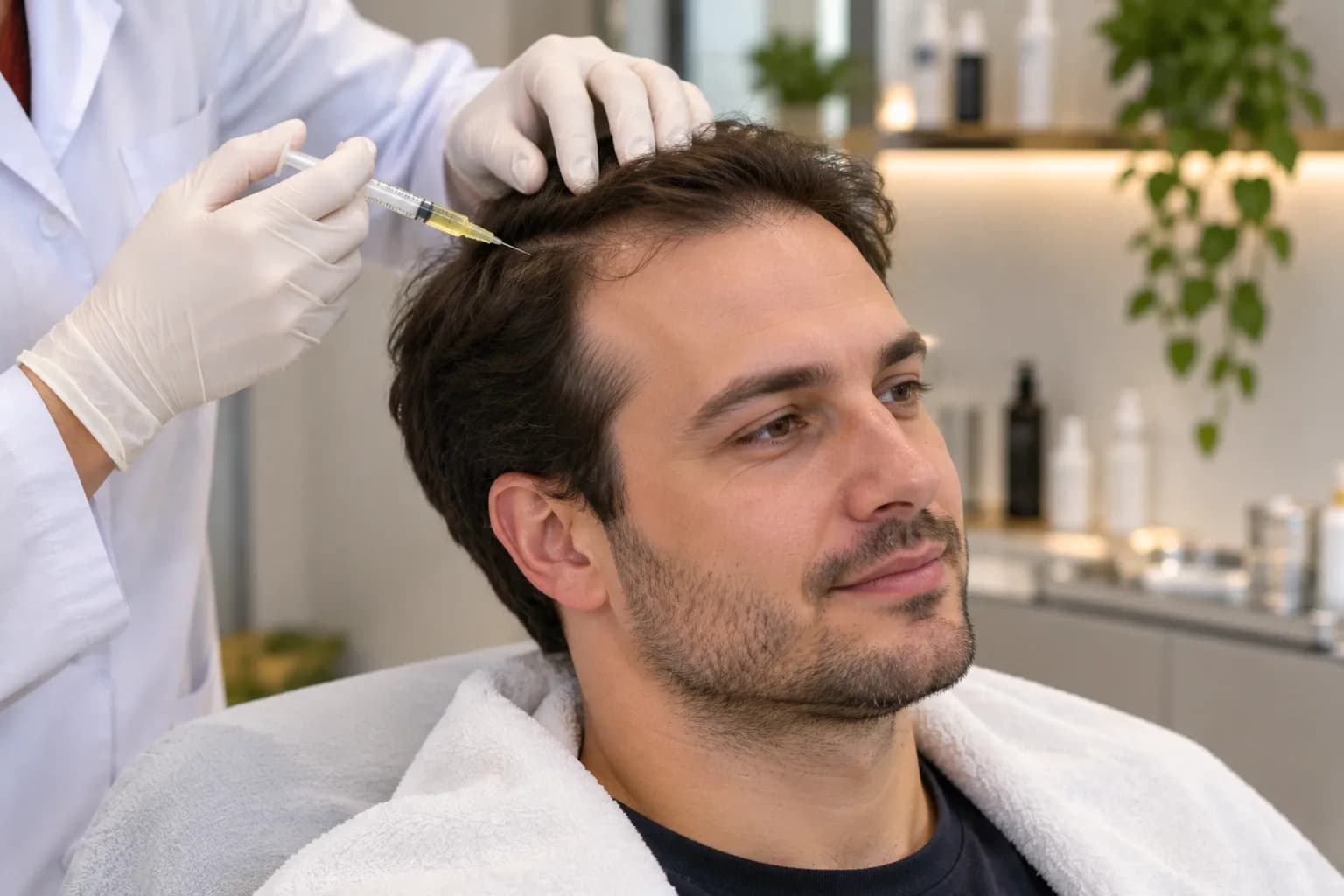
Research suggests that hair mesotherapy may benefit certain types of hair loss, but its effectiveness depends on the injected ingredients, the underlying cause of hair loss, and the individual patient. A 2024 systematic review reported promising results for mesotherapy protocols involving minoxidil, while also emphasizing that larger, better-controlled studies remain necessary (Aledani et al. 2024).
Hair mesotherapy is a minimally invasive treatment that delivers active substances directly into the scalp through microinjections. The technique bypasses the skin barrier and targets the tissue surrounding the hair follicles. This article examines how the treatment works, what science actually supports, and whether the investment makes sense for patients with thinning hair.
What Is Hair Mesotherapy and How Does It Work?
Hair mesotherapy works by injecting small amounts of active solution into the mesoderm, the middle layer of the skin, to deliver ingredients directly around the hair follicles. Practitioners believe this targeted delivery increases local bioavailability while reducing systemic exposure (Aledani et al. 2024).
The procedure uses fine needles to deposit microdoses of solution across the thinning areas of the scalp. The intended mechanism has two components. First, the injected substances act locally on the follicle environment. Second, the microinjection process itself stimulates blood flow and mild local signaling around the follicles.
This approach differs fundamentally from topical scalp treatments. Topical minoxidil, for example, must penetrate the stratum corneum before it reaches the follicle, and absorption varies between patients. Direct injection removes this barrier problem. However, injection introduces its own risks, which later sections cover in detail.
Three factors determine whether the treatment performs as intended. The formulation matters because different ingredients produce different biological effects. The injection technique matters because depth and spacing influence distribution. Most importantly, the diagnosis matters because no injection can revive a follicle that a disease process has already destroyed.
What Ingredients Are Used in Hair Mesotherapy?
No single standardized formula exists, and this lack of standardization makes hair mesotherapy effectiveness difficult to compare across studies. Formulations fall into four broad categories.
Vitamins and minerals, including biotin, zinc, and B-complex vitamins, support hair health when a documented nutritional deficiency exists. Evidence does not support their benefit in patients with normal blood levels. Amino acids and peptides, such as keratin-building blocks and copper peptides, aim to supply the raw material for hair shaft production and to signal follicle activity.
Pharmacologically active ingredients form the third category. Some protocols inject minoxidil directly into the scalp instead of applying it topically. Randomized trials of intradermal 0.5% minoxidil showed improved hair volume and terminal hair ratios in women with pattern hair loss (Uzel et al. 2021). Other protocols use dutasteride or growth factor formulations, which a 2024 review of injectable modalities found clinically significant for androgenetic alopecia (Shome et al. 2024).
Plant extracts and proprietary cocktails form the fourth category. Evidence and safety vary widely between these products, and many lack controlled trial data. Patients should ask for the complete ingredient list before consenting to any session.
What Does Scientific Research Say About Hair Mesotherapy?
Scientific research shows promising but preliminary evidence for hair mesotherapy, and no study has established it as a universally effective treatment. The strongest signal comes from protocols that inject minoxidil rather than nutrient cocktails.
The 2024 systematic review by Aledani et al. evaluated 11 studies on mesotherapy versus minoxidil 5% in androgenetic alopecia. Most included studies reported statistically significant improvements and high patient satisfaction, though two publications documented uncommon adverse effects (Aledani et al. 2024).
Earlier work sounded a cautionary note. A critical commentary on mesotherapy for androgenetic alopecia highlighted insufficient evidence and raised safety concerns, including reports of paradoxical hair loss and injection-site complications. That critique remains relevant because many of the same methodological problems persist today.
Several factors complicate interpretation. Sample sizes remain small, often under 100 patients. Protocols differ in ingredients, concentration, injection depth, and session frequency. Outcome measures range from patient self-assessment to trichogram analysis, and few studies use standardized photography or long follow-up. Promising preliminary findings are not proof of effectiveness, and the field still needs large randomized controlled trials with multi-year follow-up.
Which Types of Hair Loss Can Hair Mesotherapy Treat?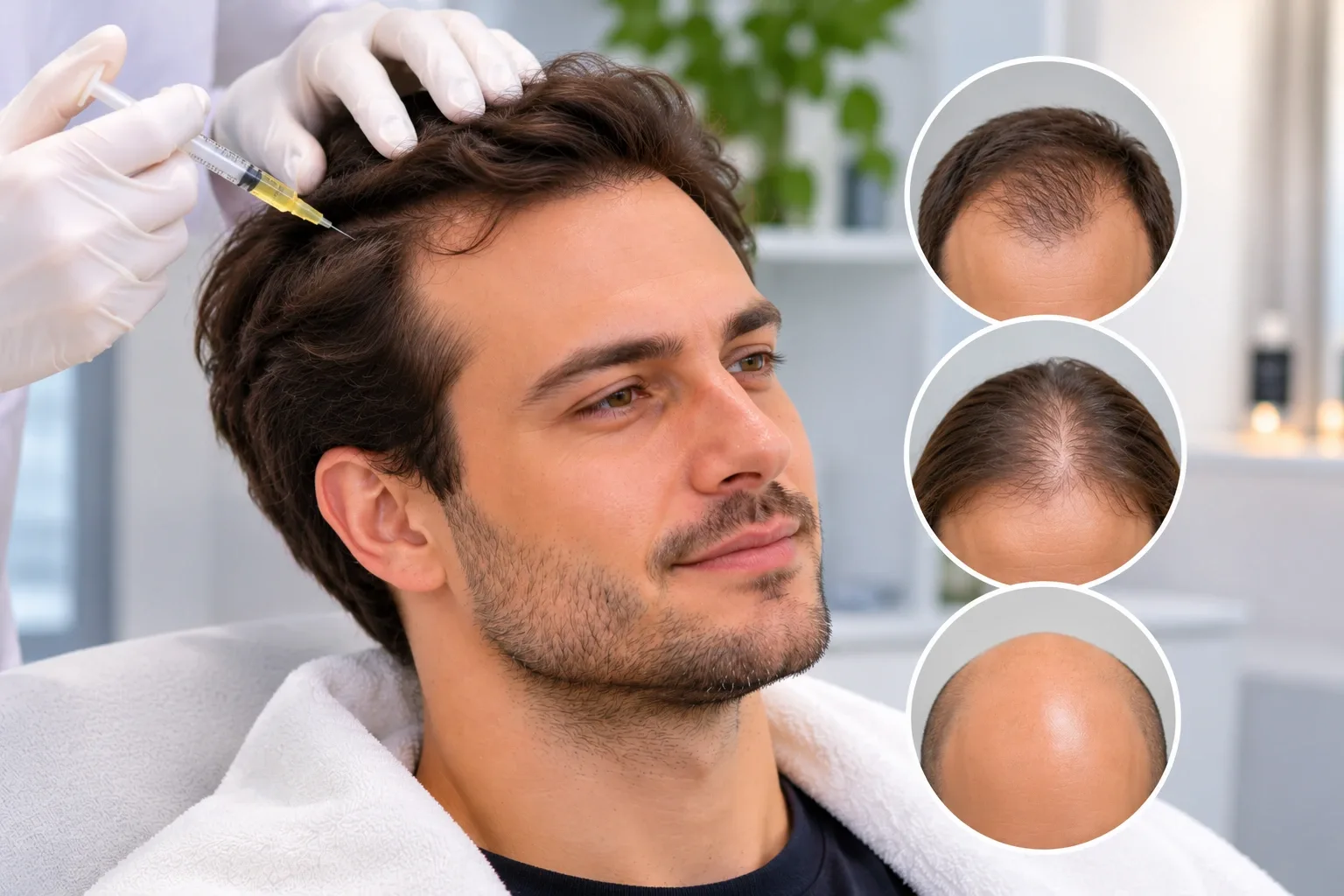
Hair mesotherapy may help early-stage androgenetic alopecia and some forms of diffuse thinning, but it cannot restore hair where follicles have been permanently destroyed. The diagnosis, not the symptom, determines suitability.
Androgenetic alopecia results from genetic sensitivity to dihydrotestosterone, which miniaturizes follicles over time. Mesotherapy protocols that inject minoxidil or dutasteride target this mechanism directly, and trials show measurable improvements in hair density for patients in early to moderate stages (Uzel et al. 2021; Shome et al. 2024).
Telogen effluvium describes temporary excessive shedding triggered by stress, illness, surgery, or nutritional deficiency. Research on mesotherapy for this condition remains limited, and most cases resolve once clinicians identify and treat the trigger (Asghar et al. 2020).
Diffuse hair thinning demands investigation first. Iron deficiency, thyroid disorders, and hormonal imbalances cause shedding that no injection will fix without treating the underlying disease. Advanced baldness and scarring alopecias present a harder boundary. Cicatricial conditions destroy the follicle structure itself, and no mesotherapy formula can regenerate tissue that scarring has replaced.
What Results Can You Expect From Hair Mesotherapy?
Realistic expectations include reduced shedding, modest increases in hair density, and improved hair appearance, but cosmetic improvement does not mean the underlying cause of hair loss has resolved.
Reduced hair shedding often appears first. Patients may notice fewer hairs on pillows and in drains within the first weeks of treatment. Hair density and thickness improve more slowly. Studies measure these changes through hair counts per square centimeter and terminal-to-vellus hair ratios, and published trials report measurable gains after several sessions (Uzel et al. 2021).
New hair growth remains possible only where viable follicles still exist. A follicle that has miniaturized but not vanished can respond to stimulation. A follicle that has disappeared cannot.
Claims about scalp hydration, texture, and hair shaft strength describe cosmetic quality, not follicular regrowth. Patients should treat such claims as secondary benefits and evaluate the treatment primarily on documented changes in hair count.
How Long Does Hair Mesotherapy Take to Show Results?
Meaningful results generally require three to six months to assess, because hair growth follows a biological cycle that no injection can accelerate beyond its natural pace. The anagen phase of the human scalp lasts two to six years, and any intervention must work through this timeline.
Early changes in shedding may appear before visible differences in density. Exiting telogen hairs fall within weeks, while new anagen hairs need months to grow long enough to affect appearance. Three variables shape the assessment period: baseline severity, the active ingredients, and the treatment schedule.
Standardized photographs and professional scalp assessments provide the only objective way to track progress. Home mirror checks introduce lighting and angle bias. Published studies use protocols ranging from weekly sessions over ten weeks to monthly sessions over six months, so no universal timeline exists.
How Many Hair Mesotherapy Sessions Are Needed?
There is no medically established session count, and treatment plans vary with the injected formulation and the patient's diagnosis. Published protocols range from single sessions to repeated courses over many months.
A rational structure starts with an initial course, often six to ten sessions at one to two week intervals, followed by reassessment. Practitioners then decide whether continued treatment offers value based on measured response rather than a fixed promise. Maintenance sessions depend on clinical response, and patients should reject any clinic that sells a mandatory long-term package before demonstrating results.
What Are the Side Effects and Risks of Hair Mesotherapy?
Common side effects include pain, redness, itching, swelling, tenderness, and bruising at injection sites. These reactions typically resolve within days. Inflammatory complications such as folliculitis and allergic reactions occur less often, and sterile technique reduces infection risk substantially.
Serious complications remain rare but documented. Published case reports describe abscesses, scarring, and paradoxical hair loss following mesotherapy procedures (Aledani et al. 2024). Ingredient-specific risks add another layer. Injected medications can produce adverse effects that topical use would not cause, because injection bypasses the skin's protective barrier.
Qualified medical practitioners, appropriate product selection, and transparent disclosure of every injected substance form the core of risk reduction. Patients should seek medical evaluation if symptoms worsen or unusual hair loss develops after treatment.
Who Is a Suitable Candidate for Hair Mesotherapy?
The best candidates are patients with early-stage hair thinning who have received a confirmed diagnosis from a qualified physician. People with androgenetic alopecia may require established treatments such as minoxidil or finasteride alongside or instead of mesotherapy, because these options carry a stronger evidence base (Adil and Godwin 2017).
Investigation comes first. Clinicians should screen for iron deficiency, thyroid disorders, and nutritional problems when shedding patterns suggest them. Active scalp infections, inflammatory conditions, allergies, and relevant medical histories require assessment before any injection. Patients with extensive permanent follicular damage should not expect mesotherapy to recreate destroyed follicles, and clinics that suggest otherwise misrepresent the biology.
What Happens During a Hair Mesotherapy Procedure?
A typical session follows five steps: consultation, scalp preparation, injection, aftercare instructions, and a short recovery period. The initial consultation reviews medical history, identifies the pattern of hair loss, and sets realistic goals. Scalp preparation includes examination, cleansing, and disinfection to prevent infection.
The injection process uses fine needles to administer small amounts of the selected solution into designated scalp areas. Sessions usually last 20 to 40 minutes. Aftercare instructions typically cover scalp washing, avoidance of strenuous exercise for 24 hours, and monitoring for adverse reactions. Mild temporary discomfort may occur, but most patients resume normal activities the same day.
Hair Mesotherapy vs. Other Hair Loss Treatments
These treatments are not interchangeable. Suitability depends on the cause and severity of hair loss, and established treatments generally carry stronger evidence than mesotherapy as a category.
Treatment | Main consideration |
Hair mesotherapy | Evidence varies by injected ingredient and protocol; treatment is not standardized |
Topical minoxidil | Established option for pattern hair loss with strong trial support |
Oral finasteride | Prescription option for androgenetic alopecia, mainly male pattern loss |
Uses the patient's own platelet concentrate; protocols and evidence vary (Gupta et al. 2019) | |
Noninvasive option with supportive evidence for pattern hair loss | |
Hair transplantation | Surgical option for selected patients with stable donor hair |
Combining treatments requires clinical judgment. A qualified dermatologist should assess potential interactions, and combination should never be assumed to improve outcomes automatically.
Is Hair Mesotherapy FDA-Approved?
No. Hair mesotherapy itself holds no FDA approval as a hair loss treatment, because regulators evaluate drugs and devices, not injection techniques (Aledani et al. 2024). Approval of an ingredient for one route or indication does not authorize its injection into the scalp. Patients should verify product authorization, practitioner qualifications, and local regulations before any session.
Is Hair Mesotherapy Worth the Cost?
Value depends on the full treatment course, not the advertised price of a single session. Total expense varies with clinic location, formulation, session count, and follow-up care. Patients should compare complete courses, factor in maintenance costs, and weigh spending against alternatives with more established evidence. No clinic can promise a financial return or guaranteed regrowth, and any such promise should end the conversation.
How to Choose a Safe Hair Mesotherapy Provider?
Safety starts with verification. Look for a qualified medical professional experienced in diagnosing hair loss. Ask for the complete ingredient list, product source, and dosage. Confirm sterile injection practices and complication management procedures. Request a realistic discussion of evidence, alternatives, outcomes, and total cost. Avoid any provider that guarantees results, claims permanent regrowth, or pressures you into prepaid multi-session packages.
Frequently Asked Questions About Hair Mesotherapy
Does Hair Mesotherapy Work for Everyone?
No. Responses vary with the cause of hair loss, follicle condition, and injected formulation. Evidence remains insufficient to guarantee consistent results for anyone, and honest providers state this clearly.
Can Hair Mesotherapy Permanently Stop Hair Loss?
No study has established mesotherapy as a permanent solution. Progressive conditions such as androgenetic alopecia require ongoing management, and hair loss typically resumes when treatment stops.
Is Hair Mesotherapy Better Than Minoxidil?
No. Topical minoxidil carries a more established evidence base. Trials showing benefits from minoxidil delivered through mesotherapy do not prove that all mesotherapy formulations perform equally (Gajjar et al. 2019).
Does Hair Mesotherapy Work on Completely Bald Areas?
No. The treatment cannot reliably regenerate follicles that scarring or long-term baldness has permanently destroyed. A specialist assessment can determine whether viable follicles remain.
Is Hair Mesotherapy Painful?
Patients report mild to moderate discomfort, stinging, or tenderness during injections. Comfort measures vary by practitioner and protocol.
Can Hair Mesotherapy Cause More Hair Loss?
Yes, in rare cases. Paradoxical hair loss appears in the medical literature as a reported adverse effect (Aledani et al. 2024). Significant increased shedding after treatment warrants professional assessment.
Can Hair Mesotherapy Be Combined With PRP or Minoxidil?
Clinicians sometimes combine these approaches in selected cases. Evidence for combined protocols varies, and a physician should assess interactions and risks before any combination begins.
Final Verdict: Does Hair Mesotherapy Work?
Hair mesotherapy shows genuine potential for certain hair loss outcomes, but its effectiveness depends on the substances injected and the condition being treated. The central limitation remains methodological: published studies report promising findings, yet protocols are inconsistent and larger controlled trials are still needed (Aledani et al. 2024).
Diagnosis must come before treatment. Patients should investigate the underlying cause of their hair loss and then discuss mesotherapy alongside established alternatives with a qualified dermatologist or hair restoration specialist. An informed decision, grounded in evidence rather than marketing, serves every patient better than any injection.
References
Adil, Aisha, and Marshall Godwin. "The Effectiveness of Treatments for Androgenetic Alopecia: A Systematic Review and Meta-Analysis." Journal of the American Academy of Dermatology, vol. 77, no. 1, 2017, pp. 136-141.
Aledani, Esraa M., et al. "Mesotherapy as a Promising Alternative to Minoxidil for Androgenetic Alopecia: A Systematic Review." Cureus, vol. 16, no. 5, 2024, e59705.
Asghar, Faisal, et al. "Telogen Effluvium: A Review of the Literature." Cureus, vol. 12, no. 5, 2020, e8320.
Gajjar, Pooja C., et al. "Comparative Study Between Mesotherapy and Topical 5% Minoxidil by Dermoscopic Evaluation for Androgenic Alopecia in Male: A Randomized Controlled Trial." International Journal of Trichology, vol. 11, no. 2, 2019, pp. 58-67.
Gupta, Aditya K., et al. "Platelet-Rich Plasma for Androgenetic Alopecia: A Review of the Literature." Journal of Cosmetic Dermatology, vol. 18, no. 4, 2019, pp. 1083-1093.
Shome, Debraj, et al. "Effectiveness of Minimally Invasive Injectable Modalities in the Management of Androgenetic Alopecia Among Adults: A Systematic Review." Journal of Cosmetic Dermatology, vol. 23, no. 9, 2024.
Uzel, Betül, et al. "Safety and Effectiveness of Mesotherapy in Female Pattern Hair Loss: A Randomized Controlled Trial." Acta Dermatovenerologica Croatica, vol. 27, 2019/2021.